
Selecting the right full-surround floor mats for your Toyota Alphard is not about finding a single “best” brand, but rather about matching a mat’s physical specifications to your vehicle’s exact generation and your daily usage patterns. Because the Alphard features a highly complex cabin floor with intricate seat tracks and multi-zone seating, generic or semi-universal mats often fail to provide adequate protection or, worse, interfere with safety controls. To make an informed decision, you must evaluate options based on three primary pillars: precise CAD-molded fitment for your specific model year, verified material composition from manufacturer labels, and unobstructed clearance for both the pedals and the sliding seat mechanisms.
Rather than relying on subjective brand rankings, owners should look for manufacturers that offer detailed compatibility guarantees for specific Alphard variants. A high-quality full-surround mat must seamlessly integrate with the luxury MPV’s unique layout without compromising the sliding functionality of the second-row captain’s chairs or the folding mechanism of the third row. By focusing on observable quality indicators—such as edge rigidity, backing texture, and certified material safety—you can secure a set of mats that preserves your vehicle’s interior value while ensuring a safe, odor-free cabin environment.
Identifying Critical Coverage Zones in the Alphard Cabin
The Toyota Alphard is celebrated for its expansive, lounge-like interior, but this unique architecture presents distinct challenges for floor protection. A true full-surround floor mat must address three highly specialized zones, each with its own set of physical demands and safety considerations. Understanding these zones allows you to inspect potential purchases for the exact cutouts and coverage levels required.
Products mentioned in this guide
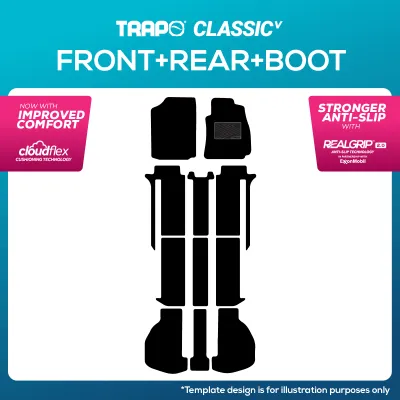
Prices are valid at publication and may change. Please refer to the product page for the latest price.
The Front Row and Driver’s Footwell The driver’s side is the most critical area for safety and requires absolute precision. The mat must offer deep tray coverage that extends high up into the footwell, protecting the carpet behind the pedals and covering the left-side dead pedal completely. However, this coverage must never compromise pedal travel. Look for mats with dedicated, rigid cutouts around the accelerator organ pedal (which is floor-mounted in newer Alphard generations) and the suspended brake pedal. The mat must remain perfectly stationary, utilizing robust floor anchors that match the factory locking clips to prevent any forward slippage during sudden braking.
The Second-Row Passenger Cabin and Sliding Tracks The second row of the Alphard is the centerpiece of the vehicle, often featuring heavy, power-adjustable captain’s chairs or Executive Lounge seats. These seats slide along long, exposed metal tracks embedded in the floor. A poorly designed full-surround mat can easily slide into these tracks, causing the electric motors to bind or damaging the delicate track liners. High-quality mats for this zone feature precise, heat-pressed borders that run parallel to the tracks without overlapping them. The mat must also cover the central aisle leading to the third row, providing a continuous barrier against dirt while maintaining a low profile to prevent passengers from tripping as they move through the cabin.
The Third Row and Rear Cargo Well In the rear of the Alphard, the third-row seats fold up against the side walls, exposing a deep, recessed floor well designed for luggage storage. This area is highly susceptible to scuffs, dirt, and liquid spills from groceries or wet gear. The ideal full-surround mat set includes a dedicated cargo liner that covers the bottom of this well and extends up the vertical sides. It must be flexible enough to allow the third-row seats to lock securely into their floor anchors when deployed, yet durable enough to withstand the sliding of heavy suitcases when the seats are folded away.
Assessing Material Types and Observable Quality Indicators
When comparing different floor mat brands, the materials used in construction dictate everything from long-term durability to cabin air quality. In Singapore’s hot and highly humid climate, choosing the wrong material can lead to premature degradation, warping, or unpleasant chemical odors. You can evaluate the quality of these materials by looking for specific physical traits and manufacturer certifications.

Thermoplastic Elastomer (TPE) TPE has become a popular choice for modern automotive mats due to its rubber-like elasticity and plastic-like durability. When evaluating TPE mats, check the manufacturer’s product label for temperature resistance specifications and non-toxic, odor-free certifications. High-quality TPE should feel firm yet flexible, quickly returning to its original shape when bent. Inspect the underside for a high-friction, anti-slip texture or integrated nibs that grip the carpet fibers. The edges of a premium TPE mat should be reinforced and rigid, ensuring they do not curl inward over time and allow dirt to spill underneath.
Cross-linked Polyethylene (XPE) with Leather or Coil Tops For those seeking a more luxurious aesthetic that matches the Alphard’s premium interior, multi-layer mats utilizing an XPE foam core are a common choice. These mats typically feature a synthetic leather top layer, often paired with a removable vinyl coil overlay to trap dirt. When assessing these, closely examine the stitching along the quilted patterns; loose or uneven threads are a primary failure point where moisture can penetrate. The edge binding should be double-stitched and sealed. Check the manufacturer’s care instructions to verify if the leather layer is treated with a waterproof coating, as untreated synthetic leather can absorb moisture in humid conditions, leading to mold growth underneath.
Heavy-Duty Rubber and Thermoplastic Compounds Traditional heavy-duty rubber mats offer excellent liquid containment but can be heavy and difficult to maneuver. If considering this category, look for deep channel depths designed to trap water, mud, and spilled drinks. The overall weight of the mat should be substantial enough to keep it flat without curling at the corners. Ensure the material is rated as UV-resistant, as intense sunlight streaming through the Alphard’s large windows can cause low-grade rubber to dry out, crack, and release volatile organic compounds into the closed cabin.
Verifying Fitment, Safety Clearances, and Configurations
Before finalizing any purchase, it is vital to perform a rigorous compatibility check. The Toyota Alphard has undergone several generational updates, and even within a single model year, multiple interior configurations exist. Assuming a mat will fit simply because it is labeled “for Alphard” is a common mistake that can result in return shipping fees or unsafe driving conditions.
Confirming Generation and Model Year The floor pan contours of the Alphard have changed significantly across its production history. A mat designed for an older generation will not align with the floor anchors, seat mounts, or pedal positions of a newer model. Always verify the exact production year and chassis code of your vehicle. Pay close attention to facelift years, as minor mid-cycle updates can sometimes introduce subtle changes to the center console shape or the front footwell dimensions.
Identifying Seating and Console Configurations The second-row seating configuration is the most critical variable when selecting rear mats. An 8-seater Alphard features a bench-style second row, requiring a completely different mat layout than a 7-seater equipped with individual captain’s chairs. Furthermore, high-end trims like the Executive Lounge feature wider, power-adjustable seats with integrated leg rests that require specific clearances. You must also check the design of your front center console; some models feature a walkthrough space to the rear, while others have a large, fixed console box that requires a split or specially contoured front mat.
Executing Safety and Clearance Checks Once you receive your mats, perform a physical safety inspection before driving. Install the driver’s mat and verify that it locks securely onto the factory floor pegs. Press the accelerator and brake pedals completely to the floor to ensure there is absolutely no contact with the mat’s edges. In the rear, slide the second-row seats through their entire range of motion. The seats should glide smoothly without catching on the mat or forcing the edges to bunch up. If you observe any binding, resistance, or lifting of the mat, remove it immediately and consult the manufacturer.
Decision Framework: Matching Material Profiles to Your Needs
To choose the right floor mat profile, you must balance your aesthetic preferences, maintenance habits, and the specific demands of your passengers. Use the following framework to align your practical needs with the correct material characteristics.
When to Choose TPE or Molded Thermoplastics This profile is highly recommended for owners who prioritize utility, easy maintenance, and maximum hygiene. If your Alphard serves as a daily family vehicle carrying young children, or if you frequently transport outdoor gear, TPE mats are highly practical. They can be removed in seconds, sprayed down with a garden hose, wiped dry, and reinstalled immediately. Their molded, high-walled design ensures that liquid spills are completely contained, preventing moisture from reaching the factory carpet and causing musty odors in humid climates.
When to Choose XPE with Leather or Coil Surfaces This profile is ideal for executive transport, private hire services, or owners who want to maintain the vehicle’s high-end, limousine-like ambiance. The padded XPE core provides an extra layer of sound insulation, helping to reduce road noise for a quieter cabin experience. The coil top layer is excellent at hiding dust and dry dirt between cleanings, keeping the floor looking pristine even after carrying multiple passengers. However, this option requires a commitment to regular maintenance, including vacuuming the coils and wiping down the synthetic leather borders with specialized interior cleaners to prevent dirt buildup.
Accounting for Aftermarket Modifications Before purchasing any standard full-surround mat set, inspect your Alphard for any aftermarket interior modifications. If your vehicle has been fitted with custom wood flooring, aftermarket seat swivels, wheelchair ramps, or modified console units, standard CAD-molded mats will likely not fit. In these scenarios, you will need to seek custom-cut solutions or modify the mats under professional guidance to ensure they do not interfere with the modified components or compromise vehicle safety.
Frequently Asked Questions (FAQ)
Do full-surround mats interfere with the Alphard's sliding door tracks?
Full-surround mats can interfere with the sliding door tracks if they are not precisely molded or if they shift during use. The Alphard’s power sliding doors rely on sensitive obstruction sensors; if a mat edge curls or lifts into the path of the door guide or the seat rail, the door may reverse or jam. When selecting mats, ensure they feature low-profile, heat-sealed edges around the B-pillar and C-pillar entry points. Always test the doors and seats immediately after installation to verify there is no physical contact with the mat.
How should I clean multi-layer leather and coil floor mats?
To clean multi-layer mats, start by separating the top coil layer from the base leather mat if they are designed to detach. Shake out or vacuum the coil layer to remove trapped dust and debris, then rinse it with water if necessary. For the synthetic leather base, wipe it down with a damp microfiber cloth and a mild, non-solvent interior cleaner. Avoid harsh chemicals or soaking the leather layer, as trapped moisture can lead to mold. Ensure all layers are completely dry before reinstalling them to prevent trapping dampness against your Alphard’s original carpet.

Community discussion
Share your experience or ask a question. Comments are reviewed before publication.