
When comparing full-surround car mats for anti-slip performance, the most effective choice depends on verifying specific backing materials, retention mechanisms, and vehicle-specific fitment rather than relying on unverified brand rankings. Because independent, standardized friction testing data is rarely available for every aftermarket brand, evaluating safety requires looking at the physical design features that prevent sliding. A secure full-surround mat must lock into your vehicle’s factory floor anchors, match the exact contours of your footwell, and feature a high-friction backing that grips the underlying carpet without causing damage.
Key Factors That Determine Anti-Slip Performance
To understand how a full-surround car mat remains stable, it is essential to distinguish between surface friction and mechanical retention. Surface friction relies on the contact between the mat’s backing and the vehicle’s carpet, which prevents minor shifting during normal driving. Mechanical retention, however, uses physical locking mechanisms like factory clips, hooks, or twist-locks to anchor the mat firmly to the vehicle’s chassis. While friction keeps the mat aligned, mechanical retention is the primary line of defense against sudden, forceful sliding under heavy braking.
Mat weight, structural rigidity, and memory retention also play critical roles in preventing dangerous movement. A high-quality full-surround mat must maintain its shape over years of use; if a mat lacks structural rigidity, it can easily curl or bunch up at the edges, creating a severe hazard near the pedals. Materials with excellent memory retention will return to their original molded shape even after being bent during installation or exposed to high cabin temperatures on hot days.
Products mentioned in this guide
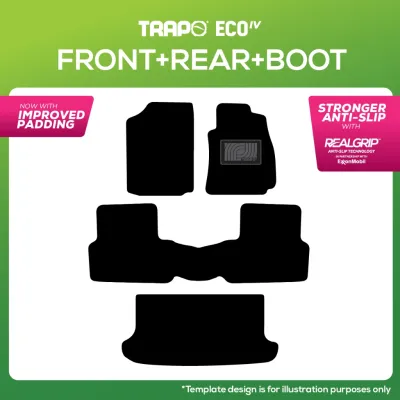
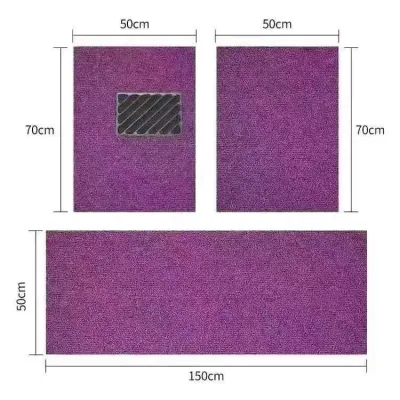
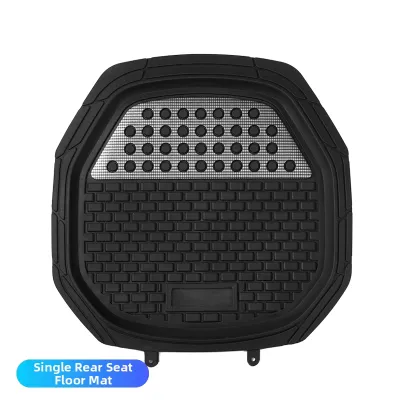
![[TOP CAR MAT FOR TOYOTA] Car Models Car Mat / Anti-Slip Mat [BLACK BASE BLACK LINING]](https://img.lazcdn.com/g/p/512c6ee72f263de3847c1e6d93877991.jpg_400x400q80.jpg_.webp)
![[TOP CAR MAT FOR HONDA] Car Models / Car Mat / Anti-Slip Mat [BLACK BASE BLACK LINING ONLY]](https://img.lazcdn.com/g/p/87866292ee9b67d5659f00343ed1bd9d.jpg_400x400q80.jpg_.webp)
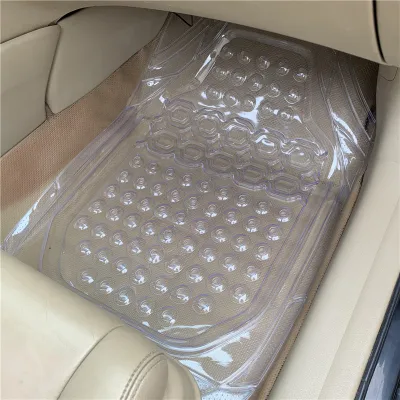
Prices are valid at publication and may change. Please refer to the product page for the latest price.
Furthermore, the three-dimensional design of full-surround mats uses the vehicle’s own interior contours to limit lateral and longitudinal movement. These mats are molded to climb up the walls of the footwell, wrapping around the transmission tunnel, seat mounts, and door sills. When the mat fits tightly against these vertical surfaces, it physically cannot slide because there is no empty space for it to shift into. This contour-matching design works in tandem with the backing material to ensure the mat remains perfectly stationary.
Comparing Common Backing Materials and Designs
Thermoplastic elastomer (TPE) is highly regarded in the automotive industry for its balance of flexibility, durability, and slip resistance. TPE mats are typically injection-molded or pressure-molded to match specific vehicle floor pans, offering excellent dimensional stability. Unlike cheaper plastics, high-grade TPE remains pliable across a wide temperature range, ensuring the backing maintains consistent, high-friction contact with the floor carpet without warping or becoming brittle.

Natural rubber and heavy-duty PVC are also common choices for aftermarket mats. Natural rubber offers excellent inherent grip and weight, which helps keep the mat planted, though it can be heavier and may emit a distinct odor when new. PVC is a more budget-friendly alternative but can become stiff in cold conditions or soften excessively in extreme cabin heat, potentially compromising its structural integrity and anti-slip properties over time.
The design of the backing surface is just as important as the material itself. Traditional designs use sharp nibs or spikes that bite into the vehicle’s carpet fibers to prevent lateral movement. While effective, aggressive spikes can wear down or damage delicate carpet pile over time. Modern alternatives include honeycomb patterns, textured micro-structures, or specialized fiber backings that use thousands of tiny polyester loops to cling to the carpet without causing fiber damage.
There are distinct trade-offs between high-friction backing designs and ease of maintenance. A backing with deep, aggressive textures or fiber-based grip systems provides superior stability but can trap dirt, pet hair, and moisture, making the mats more difficult to clean when removed from the vehicle. Conversely, smoother backings are easier to wipe down but rely almost entirely on mechanical retention clips and perfect dimensional fit to remain secure.
How to Verify Anti-Slip Claims Before Buying
When shopping on online marketplaces or specialty automotive sites, look closely at the product images and descriptions to verify that the mats feature dedicated retention clip holes that match your vehicle’s factory floor anchors. Universal-fit mats that claim to fit all models rarely align with factory anchor points, leaving them prone to sliding. If your vehicle uses twist-lock pegs, hook slots, or snap-in posts, the mat must have the exact corresponding interface built into its design.
Examine the manufacturer’s specifications for material composition. High-quality listings will explicitly state whether the mat is made from 100% TPE, natural rubber, or multi-layer composite materials. Avoid products that use vague terms like “synthetic leather” or “soft foam” without specifying the underlying structural and backing layers, as these materials often lack the rigidity needed to prevent curling and sliding over long-term use.
User reviews can provide valuable insights into real-world performance, but they must be evaluated critically. Search reviews specifically for terms like “slide,” “pedal,” “bunch,” or “fit.” Look for feedback from owners of your exact vehicle model and year, as a mat that fits perfectly in one car model may have poor clearance or loose tolerances in another. Pay close attention to reports of the mat shifting during long drives or warping after exposure to hot cabin temperatures.
Safety Checks and Installation Boundaries
Before driving with newly installed full-surround mats, you must perform a comprehensive clearance check of all foot pedals. With the engine off, fully depress the accelerator, brake, and clutch pedals to ensure they do not catch, rub, or rest against the edges of the mat. There must be a clear, unobstructed gap around each pedal throughout its entire range of motion to prevent dangerous pedal entrapment.
Never stack aftermarket full-surround mats on top of existing carpet floor mats or rubber liners. Stacking raises the height of the floor surface, significantly increasing the risk of pedal interference and preventing the mat’s anti-slip backing from contacting the vehicle’s primary carpet. Always remove all existing floor mats before installing new full-surround liners, ensuring the new mat sits directly on the vehicle’s original factory carpet.
If you encounter any resistance, misalignment, or physical interference during installation, stop immediately. For example, if the mat covers seat track rails, blocks air vents, or presses against electronic seat sensors under the front seats, do not force it into place or attempt to modify the mat yourself. Misaligned mats can interfere with seat adjustment mechanisms or damage sensitive airbag and occupancy sensors. In such cases, consult the mat manufacturer or a qualified automotive professional to verify compatibility.
Decision Framework: Choosing the Right Mat for Your Needs
To make the safest and most practical choice, start by inspecting your vehicle’s floor pan. If your car is equipped with factory floor anchor points, prioritize mats that feature integrated, matching mechanical retention clips. This mechanical connection is the single most effective way to guarantee the mat remains locked in place, preventing any forward slippage toward the pedal box.
Consider your typical driving environment and climate. If you frequently encounter wet, muddy, or sandy conditions, opt for high-friction TPE or heavy-duty rubber mats with deep channels and raised perimeter walls. These designs not only trap liquid and debris but also provide a stable, high-traction surface for your heels, reducing the likelihood of your feet slipping while operating the pedals.
Finally, verify the complexity of your vehicle’s interior layout. Cars with highly contoured floor pans, raised center consoles, or complex under-seat electronic track sensors require highly precise, model-specific molded mats rather than generic or semi-custom designs. Taking the time to verify the exact model year, trim level, and drivetrain configuration ensures a glove-like fit that naturally resists shifting.
Frequently Asked Questions (FAQ)
Can I use double-sided tape to stop my car mats from sliding?
Using double-sided tape or aftermarket adhesives is not a reliable or safe solution for securing sliding car mats. The high temperatures inside a parked vehicle can cause adhesive backing to melt, leaving a sticky, difficult-to-remove residue on your factory carpet and potentially damaging the fibers. Furthermore, adhesive tape degrades quickly under the constant pressure and movement of your feet, providing only a temporary fix that can fail unexpectedly while driving. If a mat requires tape to stay in place, it is poorly designed or incompatible with your vehicle and should be replaced.
Do heavier full-surround mats automatically provide better anti-slip performance?
No, weight alone does not guarantee that a car mat will remain secure. While a heavier rubber mat may feel more substantial, its anti-slip performance depends entirely on its coefficient of friction against the carpet and the presence of mechanical retention clips. A heavy, unanchored mat can still slide forward under the force of your feet, and its increased mass can actually make it more dangerous if it bunches up or jams behind the pedals during sudden braking. Always prioritize precise fitment and secure locking clips over sheer weight.
How often should I check my car mats for slipping hazards?
You should perform a quick visual and physical check of your car mats at least once a month, as well as after every car wash or interior cleaning. Whenever the front seats are adjusted or passengers enter and exit the vehicle, check to ensure the mats have not shifted or unclipped from their anchor points. Additionally, inspect the mats during seasonal temperature changes, as extreme heat or cold can cause lower-quality materials to warp, curl, or lose their original shape, potentially creating new interference hazards near the pedals.
Community discussion
Share your experience or ask a question. Comments are reviewed before publication.