
When searching for the ideal car carpet mat, many drivers turn to full-surround designs to protect their vehicle’s footwells from dirt, moisture, and daily wear. However, there is no single “best” brand that guarantees a perfect fit for every vehicle. The quality of fit and coverage depends entirely on how accurately a manufacturer’s digital mold matches your specific vehicle’s chassis, model year, and trim level.
While some premium brands utilize advanced 3D laser scanning to map every contour of a car’s floor pan, others rely on generic templates that can leave vulnerable gaps. The primary trade-off when comparing brands lies between rigid, custom-molded thermoplastic liners and flexible, multi-layer stitched mats. Custom-molded options offer superior edge retention and spill containment but support fewer vehicle models, whereas semi-custom stitched options fit a wider range of cars but are more prone to warping and sliding over time.
Key Dimensions for Comparing Fit and Coverage
Evaluating full-surround car mats requires looking beyond aesthetic appeal. To find a brand that delivers genuine protection and longevity, you must compare how different manufacturers engineer their mats across several critical physical and structural dimensions.
Products mentioned in this guide
![[TOP CAR MAT FOR TOYOTA] Car Models Car Mat / Anti-Slip Mat [BLACK BASE BLACK LINING]](https://img.lazcdn.com/g/p/11bbe1614016c4b0ef5c8c3adc859894.jpg_400x400q80.jpg_.webp)
Prices are valid at publication and may change. Please refer to the product page for the latest price.
Edge Height and Lip Design
The vertical walls, or lips, of a full-surround car carpet mat are its primary defense against liquid spills, mud, and debris. Premium molded brands typically feature raised edges that stand two to three inches high, pressed tightly against the plastic trim of the footwell. This rigid vertical barrier ensures that water from wet shoes or accidental spills remains trapped within the mat’s basin.
In contrast, lower-tier brands often use softer, stitched vinyl edges that lack internal structural support. Over time, foot pressure and heat can cause these soft edges to fold inward, creating gaps where dirt can slip underneath and stain the factory carpet. When comparing brands, look for reinforced outer lips that maintain their vertical shape even when stepped on.
Pedal and Console Clearance
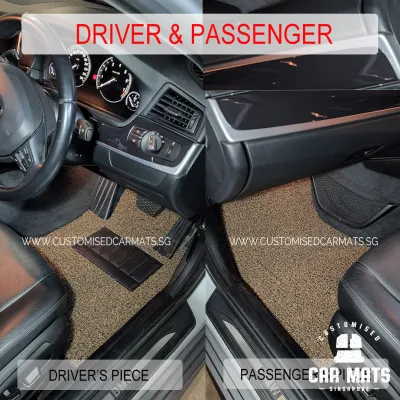
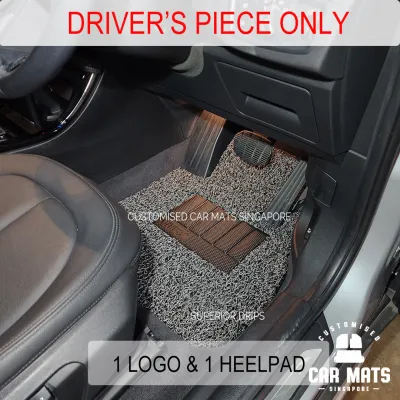
The driver’s side footwell is the most complex area of a vehicle’s interior. A high-quality full-surround mat must contour precisely around the accelerator, brake, and dead pedal without restricting their movement. Brands that use precise 3D scanning design custom cutouts or recessed areas that allow the pedals to travel through their full range of motion.
Poorly designed mats often feature bulky, universal shapes that can bunch up behind the pedals, presenting a severe safety hazard. Additionally, the mat must hug the center console wall tightly. If the mat bulges outward near the console, it can interfere with your foot transitions between the accelerator and the brake pedal.
Material Forming Process
The manufacturing process directly dictates how well a mat retains its shape over years of use. There are two primary construction methods used by leading brands:
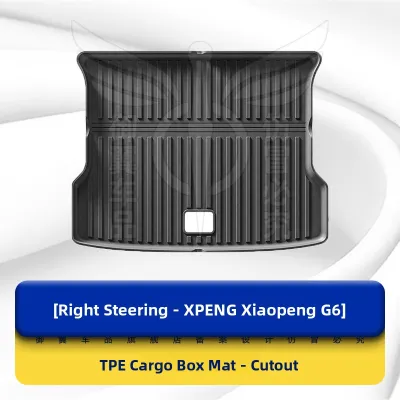
- Thermoformed or Injection-Molded TPE: Thermoplastic Elastomer (TPE) mats are molded under high heat and pressure to match a specific vehicle's floor pan. This process creates a rigid, durable tray that resists curling, cracking, and warping. TPE is highly resistant to temperature fluctuations, making it ideal for harsh climates.
- Stitched Multi-Layer Synthetic Leather (PU): These mats feature a top layer of polyurethane leather, a middle layer of soft foam, and a backing material. While they offer a luxury aesthetic and a softer feel underfoot, the internal foam layers can break down over time, especially in high-humidity environments. Once the foam degrades, the mat loses its structural integrity and begins to sag.
Rear Seat and Hump Coverage
The rear cabin presents a unique challenge due to the transmission tunnel, often referred to as the center hump. High-quality brands address this by engineering a single-piece rear mat that drapes seamlessly over the hump and extends deep under the front seats. This design prevents the mat from shifting when rear passengers climb in and out.
Cheaper alternatives often split the rear coverage into three separate pieces—two side mats and a separate hump cover. This multi-piece approach is highly prone to sliding, leaving the factory carpet exposed to dirt and friction wear.
How to Verify Brand Claims Before Purchasing
Because full-surround mats are a significant investment, relying solely on manufacturer marketing claims can lead to disappointing results. Use these practical verification steps to assess a brand’s actual fitment quality before making a purchase.

Model-Specific Tooling
When browsing a brand’s catalog, look for explicit confirmation of model-specific tooling. A reputable manufacturer will ask for your exact vehicle year, make, model, drivetrain (such as all-wheel drive versus front-wheel drive, which often alters the floor pan shape), and trim level.
Avoid brands that group multiple model years together under a single “universal fit” label unless they can demonstrate that the vehicle manufacturer did not alter the floor pan design during those years. For example, hybrid and electric variants of popular vehicles often have different floor contours than their gasoline counterparts due to under-floor battery placement.
Real-World User Photos
Marketing images are almost always shot in pristine, high-end vehicle trims under perfect lighting, and they are often digitally enhanced. To get an accurate representation of how a mat fits, search online marketplaces, automotive forums, and owner clubs for real-world installation photos.
Pay close attention to photos showing the mats after several months of use. Look for signs of warping along the door sills, gaps around the seat tracks, and wear patterns on the driver’s heel pad. If multiple users report that the edges are curling away from the side panels, it indicates poor material memory.
Return and Fitment Guarantees
Even with extensive research, minor manufacturing variances can occur. Prioritize brands and retailers that offer an explicit fitment guarantee and a clear return policy.
Before purchasing, verify who covers the return shipping costs if the mats do not fit your vehicle as advertised. Because full-surround mats are bulky, return shipping can be expensive. A brand that stands behind its fitment quality will often offer hassle-free returns or exchanges for verified compatibility issues.
Decision Framework: Matching Mat Types to Your Needs
To choose the right full-surround car carpet mat, you must balance your vehicle’s specific layout with your daily usage patterns. Use the following guidelines to determine which style of mat aligns with your requirements.
Choose precision-molded TPE brands if:
- You drive a popular, mass-market vehicle: Manufacturers invest heavily in precise 3D tooling for high-volume models, ensuring an exceptionally accurate fit.
- You face wet weather or outdoor conditions: The rigid, tray-like design of molded TPE is unmatched at containing water, mud, sand, and spills.
- You prioritize low maintenance: TPE mats can be easily removed, hosed down, and dried in minutes without absorbing moisture.
Choose flexible, semi-custom stitched brands if:
- You drive an older, rare, or niche vehicle: Stitched mats are easier to manufacture in small batches, making them more widely available for uncommon car models.
- You have aftermarket interior modifications: If you have installed custom seat brackets, floor-mounted audio equipment, or unique trim pieces, a flexible mat can be slightly tucked or modified to fit around these additions.
- You prefer a softer, luxury aesthetic: Stitched synthetic leather mats provide a more cushioned feel and a classic look that complements luxury sedan interiors.
Verify first if your vehicle has:
- Specialized floor anchors: Ensure the mat design features precise cutouts that lock onto your vehicle's factory retention hooks to prevent sliding.
- Motorized seat tracks: Some modern vehicles feature low-clearance seat tracks that slide close to the floor. Thick mats can block these tracks, causing the seat motor to bind.
- Under-seat heating and ventilation vents: The mat must not block these vents, as doing so can restrict airflow and cause the climate control system to work harder.
Installation and Safety Boundaries
Installing a full-surround car carpet mat is a straightforward process, but it requires strict adherence to safety protocols to ensure the mats do not interfere with the safe operation of your vehicle.
Pedal Interference Check
The most critical safety step occurs immediately after installation. With the vehicle parked and the engine turned off, manually depress the accelerator, brake, and clutch pedals (if applicable) through their entire range of motion.
Verify that the pedal arms do not catch on the edge of the mat, and ensure the pedals return to their resting positions smoothly. If you feel any resistance or if a pedal catches on the mat’s lip, remove the mat immediately and do not drive the vehicle until the fitment issue is resolved.
Seat Track and Anchor Clearance
Once the mats are positioned, slide both front seats fully forward and fully backward. Watch the seat rails to ensure they do not pinch, bunch, or tear the mat material. If your vehicle is equipped with motorized seats, listen for any straining sounds from the motor, which indicates the mat is obstructing the track.
Additionally, ensure that the mat’s built-in retention clips are securely locked onto the factory floor anchors. These anchors are engineered to keep the mat from sliding forward under foot pressure, which is a common cause of pedal entrapment.
Anti-Slip Backing Verification
Before driving, inspect the underside of the mats. High-quality full-surround mats feature a high-friction backing—such as rubberized nibs, hook-and-loop fasteners, or specialized grip textures—that locks onto the factory carpet.
Attempt to slide the installed mat forward and backward with your hands. If the mat moves easily, the backing is incompatible with your vehicle’s carpet texture. A sliding mat poses a severe safety hazard and should not be used.
Frequently Asked Questions (FAQ)
Do full-surround mats affect the resale value of a car?
Yes, indirectly. By providing comprehensive coverage, high-quality full-surround mats protect the original factory carpeting from permanent stains, wear, and moisture damage, which helps preserve the vehicle’s interior condition. However, if a poorly fitting mat traps moisture underneath, it can lead to mold or rust, which negatively impacts value. Always ensure the factory carpet is completely dry before installing new mats.
Can I use full-surround mats over the factory carpet or existing mats?
No. Full-surround mats must always be installed directly onto the bare factory carpet. Stacking mats on top of existing carpet or rubber mats is a major safety hazard, as it prevents the retention anchors from locking and increases the risk of the mats sliding forward and jamming the pedals. Always remove all existing floor mats before installing a new set.
Community discussion
Share your experience or ask a question. Comments are reviewed before publication.