
Quick Answer: Front vs. Side Window Sunshades
Choosing between a front windshield sunshade and a side window car magnetic sunshade depends on your parking habits and passenger needs. If your main objective is to lower overall cabin temperature and protect your dashboard from cracking under intense solar exposure, a front windshield sunshade is the single most effective accessory. Because the front windshield is the largest, most angled pane of glass on your vehicle, it lets in the highest volume of solar radiation.
Conversely, if your goal is to protect passengers from direct side-glare and skin-burning ultraviolet (UV) rays, side window magnetic sunshades are the superior choice. In a tropical climate like Singapore, where year-round sunshine and high ambient temperatures quickly turn parked cars into thermal ovens, combining both types yields the most comprehensive heat rejection.
Safety Disclaimer: Fully opaque magnetic sunshades of any configuration must only be deployed when the vehicle is stationary and parked. Never install or use opaque shades on any window while the vehicle is in motion, as they completely obstruct the driver’s line of sight, blind spots, and mirror visibility, creating an extreme safety hazard and violating local traffic safety regulations.
Products mentioned in this guide
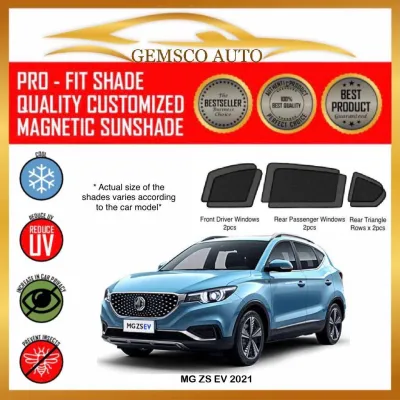
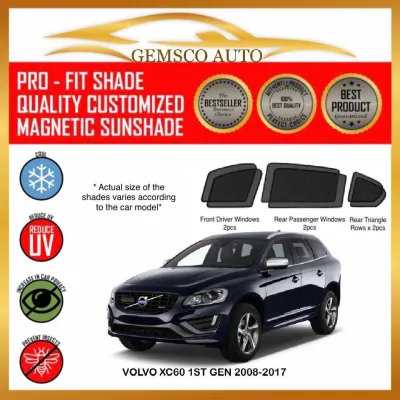
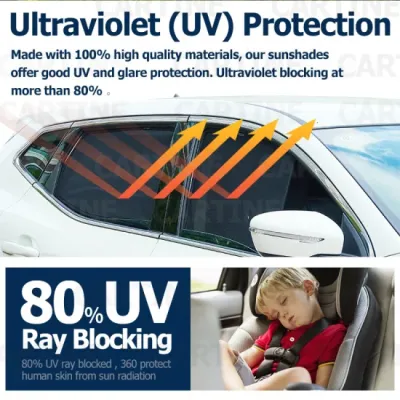
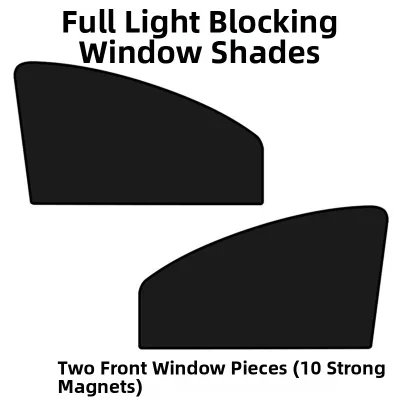
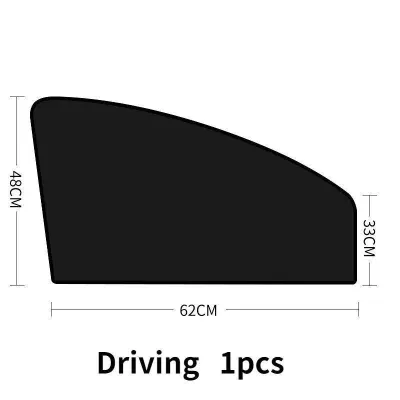
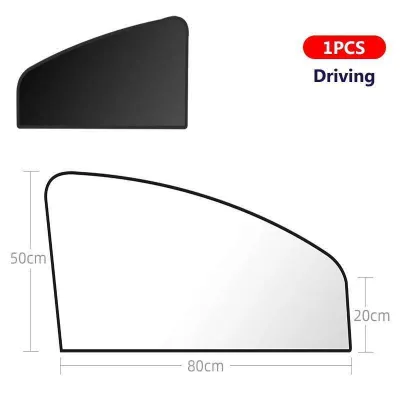
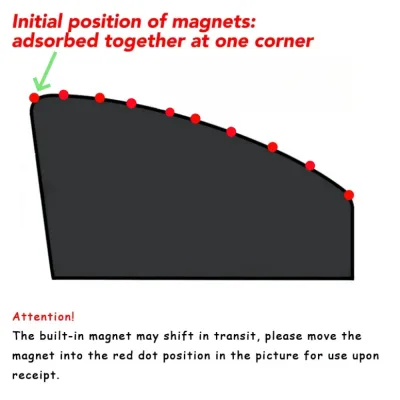
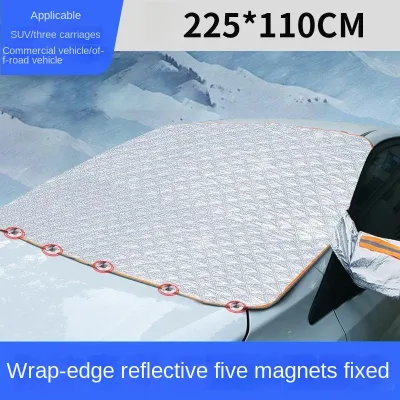
Prices are valid at publication and may change. Please refer to the product page for the latest price.
Heat Rejection and UV Protection: Front vs. Side Coverage
To understand how these two sunshade configurations perform, it helps to look at how solar energy enters a stationary vehicle. When sunlight strikes car glass, it consists of visible light, infrared radiation (which carries heat), and ultraviolet (UV) radiation. Once this energy passes through the glass, it is absorbed by the dark surfaces of your interior, such as the dashboard, steering wheel, and seats. These surfaces then re-radiate this energy as long-wave infrared heat, which cannot easily escape back through the glass, resulting in the greenhouse effect.

Front Windshield Magnetic Sunshades
The front windshield represents the largest thermal gateway in almost any vehicle. Because of its aerodynamic, sloped angle, the windshield receives direct overhead sunlight for a significant portion of the day, allowing massive amounts of solar energy to penetrate the cabin. This intense exposure directly targets the dashboard, steering wheel, and front seats, raising their surface temperatures to levels that can cause physical discomfort upon contact.
Over time, unshielded exposure to UV radiation degrades the polymers used in modern dashboards. This degradation leads to fading, unsightly cracking, and a phenomenon known as outgassing, where plasticizers evaporate from the heated dashboard and condense as a stubborn, oily film on the inside of your windshield. Using a high-quality front windshield shade intercepts this solar energy right at the glass boundary, preventing it from ever reaching the interior plastics.
When shopping for a front windshield shade, avoid relying on generic marketing claims of “maximum cooling.” Instead, check the manufacturer’s product specifications for material thickness and construction details. Look for multi-layered designs that incorporate a highly reflective outer layer, such as aluminum foil or a specialized silver reflective coating, paired with a thermal barrier core like polyethylene bubble wrap or a dense honeycomb structure. These layers work together to reflect visible light and infrared radiation outward while trapping a layer of dead air to slow down thermal conduction into the cabin.
Side Window Magnetic Sunshades
While the front windshield lets in the largest volume of overhead heat, side windows are highly vulnerable to low-angle solar radiation during morning and late afternoon hours. Side window magnetic sunshades are designed to address this specific vulnerability, focusing heavily on localized passenger comfort and interior preservation.
These shades are particularly valuable for protecting rear-seat occupants, such as young children in car seats or elderly passengers, whose skin is highly sensitive to direct sunlight and UV exposure. Because side windows are oriented vertically, passengers sitting next to them are directly exposed to lateral glare, which can cause significant eye strain and skin discomfort during long drives. Side shades act as a physical barrier that diffuses this harsh light.
Because side windows are smaller and divided across multiple doors, a single shade is insufficient for comprehensive protection. To achieve effective coverage, you typically need a coordinated set that covers both the front-side and rear-side windows. When evaluating side window magnetic sunshades, pay close attention to the fabric density—often specified as grams per square meter (GSM)—and the opacity of the mesh material. A denser mesh blocks a higher percentage of UV rays and visible light but may reduce visibility, which is why these opaque variants are strictly reserved for parking use. Always check the packaging to verify that the shade’s dimensions match your specific vehicle model to prevent light leakage around the edges.
Safety and Legal Limits: When You Can and Cannot Use Them
Operating a motor vehicle requires an unobstructed 360-degree field of view to ensure the safety of the driver, passengers, and other road users. In Singapore, the Land Transport Authority (LTA) enforces strict regulations regarding driver visibility and any modifications or accessories that might impair it. Fully opaque magnetic sunshades, whether designed for the front windshield or the side windows, fall squarely under these safety considerations.
You must never drive with fully opaque magnetic sunshades installed on any window. Doing so severely compromises your ability to monitor traffic, check your side mirrors, observe blind spots, and react to pedestrians or cyclists. Even a temporary blockage of your side windows can lead to catastrophic side-impact collisions, especially when changing lanes or negotiating tight turns at intersections.
To maintain safety and compliance, observe these guidelines:
- Parked Use Only: Opaque magnetic sunshades must be treated strictly as stationary parking accessories. They should only be deployed once the vehicle is safely parked, the engine is switched off, and the parking brake is engaged.
- Pre-Drive Removal: Before starting your engine or shifting into gear, you must remove all opaque magnetic shades from the windows and store them securely in the trunk, seatback pockets, or footwells.
- Mesh vs. Opaque: Do not confuse parked-use opaque magnetic shades with semi-transparent mesh screens that are designed to remain on rear side windows while driving. Even with mesh screens, you must ensure they do not reduce the visible light transmission (VLT) below the legally mandated limits of 70% for the front windshield and front side windows, and 50% for the rear side windows and rear windshield. If a magnetic shade is thick enough to block heat effectively when parked, it is almost certainly too dark to be legally or safely used while driving.
Vehicle Compatibility: Will a Car Magnetic Sunshade Stick to Your Car?
Before purchasing a set of magnetic sunshades, you must verify whether your vehicle’s physical construction can actually support them. Magnetic sunshades operate by utilizing small, powerful magnets—usually neodymium or ferrite—sewn into the fabric hem of the shade. These magnets are designed to latch onto the exposed metal frame surrounding your car’s window opening.
However, modern automotive design has introduced materials and construction methods that can interfere with magnetic adhesion. Many contemporary vehicles feature door frames made of aluminum or high-strength composites rather than traditional steel to reduce overall vehicle weight and improve fuel efficiency. Furthermore, luxury models and newer electric vehicles often feature thick plastic trim pieces, decorative chrome moldings, or heavy rubber weatherstripping that completely encase the inner metal frame, leaving no exposed ferrous metal for the magnets to grip.
To avoid purchasing a product that will not stick, perform a simple, low-risk magnet test on your vehicle before buying:
- Retrieve a standard household magnet, such as a flexible fridge magnet or a small utility magnet.
- Open your car door and locate the inner metal frame that runs along the top and sides of the window glass.
- Gently place the magnet against different points along this inner frame, particularly where the rubber seals meet the metal.
- Observe the attraction: if the magnet snaps firmly to the frame and stays in place, your vehicle is compatible with standard magnetic shades. If the magnet slides off, feels incredibly weak, or shows zero attraction, your door frame is non-magnetic.
If your vehicle fails the magnet test, do not buy standard magnetic sunshades. Instead, look for alternative mounting styles designed for non-magnetic frames:
- Adhesive Magnetic Strips: Some premium kits include thin, flexible metal strips with an adhesive backing. You stick these strips onto your plastic door trim to create a magnetic contact point for the shade.
- Suction-Cup Shades: These attach directly to the glass pane itself, making them completely independent of the door frame material.
- Static-Cling Shades: These utilize thin, flexible PVC material that adheres to the glass via static electricity, offering a clean look without requiring magnets or adhesives.
Decision Framework: Which Type Fits Your Parking Habits?
To determine the best sunshade configuration for your vehicle, evaluate your daily driving patterns, parking environments, and passenger requirements. Use the following conditional framework to guide your purchase decision.
Choose a Front Windshield Sunshade If:
- You Park Outdoors Frequently: If your vehicle spends hours parked in open-air carparks, such as HDB estates or industrial parks, a front windshield shade is your first line of defense.
- You Want to Protect Interior Electronics: The dashboard houses sensitive electronics, including your instrument cluster, head unit, and dashcam. Keeping this area shaded prevents thermal damage and premature component failure.
- You Seek the Greatest Single-Piece Cooling Effect: If you only want to purchase and install a single accessory, the front windshield shade provides the most dramatic drop in cabin temperature by blocking the largest entry point for solar radiation.
Choose Side Window Magnetic Sunshades If:
- You Frequently Carry Rear Passengers: If you regularly transport children, family members, or pets, side shades are essential for blocking lateral glare and localized UV exposure during parked breaks.
- You Have Premium Leather Interior Trim: Side windows let in light that directly strikes the outer edges of your leather seats and door panels, leading to localized fading, drying, and cracking. Side shades preserve these vulnerable areas.
- You Park in Angled or Variable Sunlit Spaces: If your parking spot receives direct sun from the side during the morning or afternoon, side shades block the low-angle rays that a front windshield shade cannot reach.
Choose Both Configurations If:
- You Park in Fully Exposed Open-Air Sites for Long Periods: If your car is left under the blazing sun for eight or more hours a day while you are at work, using both front and side shades creates a fully insulated, darkened cabin that minimizes heat soak.
- You Want Maximum AC Efficiency: By keeping the entire cabin significantly cooler while parked, your air conditioning system will not have to work as hard to lower the temperature when you return, saving fuel and reducing wear on your compressor.
Regardless of which option you choose, always measure your vehicle’s glass and door frame dimensions before buying. Do not rely solely on generic size labels like “Medium” or “Large.” Use a physical measuring tape to record the height and width of your windshield and the inner dimensions of your side door frames, then compare these measurements against the product specifications to ensure a precise, gap-free fit.
Frequently Asked Questions (FAQ)
Can I use a magnetic sunshade on a car with tinted windows?
Yes, you can safely use magnetic sunshades on a vehicle that already has aftermarket window tinting installed. In fact, combining window tint with a physical sunshade provides an additive heat-rejection effect that is highly effective for parked vehicles. The window film works by absorbing or reflecting solar energy at the glass surface, while the physical sunshade blocks any remaining heat and light from penetrating deeper into the cabin.
Because magnetic sunshades mount directly to the metal frame surrounding the window opening rather than the glass itself, they do not rub against or scratch the delicate tint film applied to the inside of the glass. Always ensure that your window tint complies with local Land Transport Authority (LTA) regulations regarding visible light transmission (VLT) for driving, and remember to remove the opaque magnetic shades before moving your vehicle.
Will the magnets damage my car's paint or window seals?
High-quality magnetic sunshades are designed with magnets that are fully encased within a soft fabric hem or a durable rubberized sleeve, which prevents direct metal-on-metal contact. However, damage can occur if dirt, grit, or road debris becomes trapped between the shade’s hem and your vehicle’s painted frame. To prevent scratches, periodically wipe down your inner door frames and the hem of the sunshades with a clean microfiber cloth.
When installing or removing the shades, avoid dragging them across the painted surfaces of your vehicle. Instead, use a gentle peeling motion: grasp the shade by the edge and peel it away from the frame to break the magnetic bond cleanly. Pulling the shade off forcefully at an angle can place unnecessary stress on your rubber weatherstripping or cause the magnets to snap sharply against the glass, which could damage the seals or the window itself over time.
Community discussion
Share your experience or ask a question. Comments are reviewed before publication.