
Choosing the right car blindspot mirror is one of the simplest yet most effective ways to improve road safety, especially when navigating tight lane merges or reversing into narrow parking spaces. The choice between a frameless and a framed design depends on whether you prioritize a seamless, factory-like aesthetic with maximum reflective surface area, or post-installation adjustability and a distinct visual border.
For drivers who prefer an unobtrusive, integrated look that preserves the original lines of the vehicle while maximizing the usable glass area, a frameless mirror is the ideal choice. Conversely, if you share your vehicle with other drivers of different heights and require the ability to tilt and adjust the mirror angle after it has been mounted, a framed mirror with a swivel joint is more practical. Budget considerations also play a role, as framed models are often highly cost-effective, while frameless models offer premium aesthetics at a slightly higher price point.
Key Differences Between Frameless and Framed Blindspot Mirrors
Understanding the structural differences between these two designs is essential before making a purchase. A frameless car blindspot mirror consists of a piece of convex glass with a high-strength adhesive backing applied directly to the rear surface. Because there is no outer bezel, the glass extends all the way to the edge, resulting in a minimal profile that sits almost flush against your vehicle’s original equipment manufacturer (OEM) side mirror.
Products mentioned in this guide
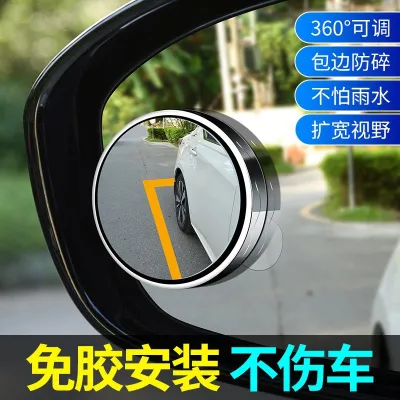
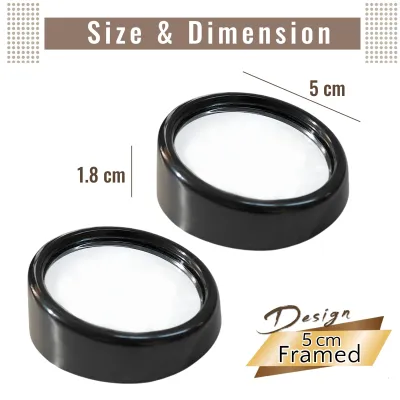
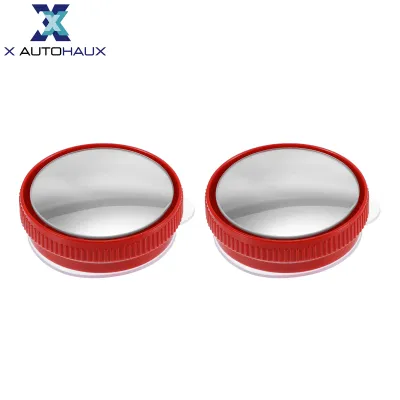
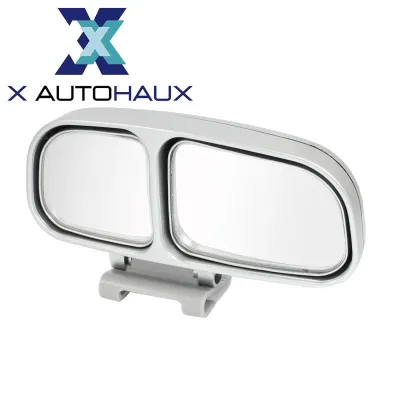
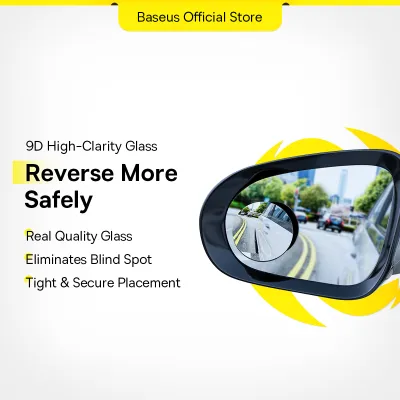
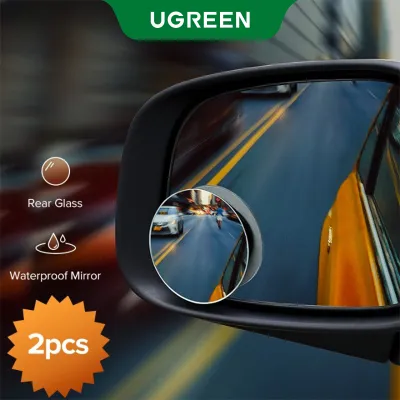
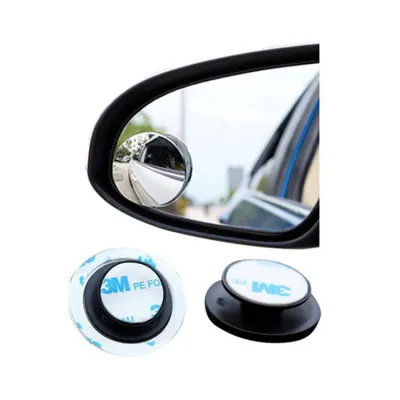
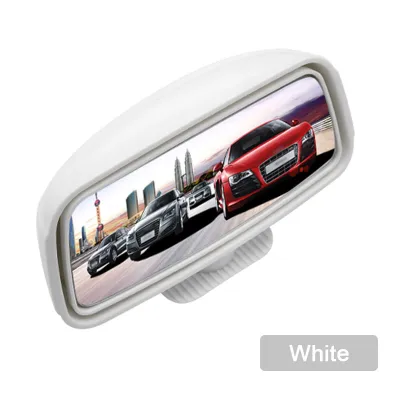
Prices are valid at publication and may change. Please refer to the product page for the latest price.
In contrast, a framed blindspot mirror encases the convex glass within a protective plastic or aluminum housing. This housing is typically attached to a mounting base, often featuring an integrated ball-joint or swivel mechanism. The entire assembly is then adhered to the OEM mirror glass, which naturally causes the accessory to protrude further outward from the mirror surface.
These structural variations directly impact how the accessory interacts with your vehicle’s existing components. The flush profile of a frameless mirror keeps the center of gravity close to the OEM glass, minimizing vibration while driving. Framed mirrors, because of their protruding housing and swivel bases, present a larger aerodynamic profile. At highway speeds, this extra surface area can catch the wind, potentially causing slight vibrations or putting additional strain on the motorized folding mechanisms of modern side mirrors.
Comparing Visibility and Field of View
When evaluating a car blindspot mirror, the primary performance metric is how effectively it expands your field of view. Frameless mirrors maximize the usable glass area by eliminating the outer border entirely. Every millimeter of the accessory’s footprint is dedicated to reflection, which is particularly beneficial on smaller side mirrors where space is limited. This edge-to-edge reflection provides a wider, uninterrupted view of adjacent lanes, making it easier to spot fast-moving motorcycles and low-profile vehicles.

Framed mirrors lose a portion of their overall footprint to the surrounding bezel. While this reduction might seem minor, even a two-millimeter border around a small circular mirror can noticeably reduce the active viewing area. However, some drivers prefer this design precisely because of the frame. The physical border creates a clear visual separation between the flat OEM mirror view and the highly distorted convex view, helping the brain quickly process which image represents the immediate blind spot.
Both designs utilize convex glass to bend light and widen the viewing angle, but they often employ different curvature radiuses. Frameless models frequently feature a more subtle, wider convex curve designed to blend smoothly with the perspective of the main mirror. Framed models, particularly budget-oriented ones, sometimes use a more aggressive “bubble” curve. While a sharper curve provides a wider angle of view, it also increases distance distortion, making trailing vehicles appear much further away than they actually are.
Durability, Weather Resistance, and Maintenance
Singapore’s tropical climate presents unique challenges for exterior automotive accessories. The combination of intense UV exposure, high humidity, and sudden heavy downpours demands durable materials and robust adhesives. Frameless mirrors rely on a direct bond between the glass backing and the OEM mirror surface, typically using high-grade automotive acrylic foam tape. Because there are no plastic parts exposed to the sun, frameless mirrors are highly resistant to UV degradation and will not warp, fade, or become brittle over time.
Framed mirrors introduce more materials into the equation, which can affect long-term durability. The plastic housings on budget framed mirrors are susceptible to UV damage, which can cause them to fade from black to a dull grey or crack after prolonged exposure to intense sunlight. Additionally, the swivel joints on adjustable framed mirrors can loosen over time due to road vibrations and wind resistance, causing the mirror to droop or shift out of alignment during a drive.
Maintenance and cleaning routines also differ between the two styles. The physical barrier of a framed mirror creates a small recess where water, road grime, and car wash soap can pool. Over time, this trapped moisture leads to unsightly mineral deposits (water spots) along the edges of the glass that are difficult to clean. Frameless mirrors, having no border, allow rainwater and wash water to run off freely. However, because the glass edges of a frameless mirror are completely exposed, they are slightly more vulnerable to chipping if struck by road debris or during automated car washes.
Installation, Fit, and Aesthetics
Installing a car blindspot mirror is a straightforward process, but it requires careful preparation to ensure a permanent bond. For both designs, the most critical step is thoroughly cleaning the mounting area on the OEM mirror. Road grime, wax, and glass treatments must be completely removed using isopropyl alcohol. Applying adhesive to an unprepared surface is the leading cause of accessory loss on the highway.
Before mounting a frameless mirror, you must identify the exact placement because these mirrors are fixed once applied. Attempting to peel off and reposition a frameless mirror after the adhesive has made contact will severely weaken the bond, often requiring you to replace the adhesive tape entirely. Framed mirrors with swivel bases offer a more forgiving installation process. While the base itself must be positioned carefully, you can easily fine-tune the mirror’s angle after it is stuck to the glass.
From an aesthetic standpoint, frameless mirrors are widely considered the superior option for modern vehicles. They blend seamlessly with the existing mirror glass, looking like a factory-installed safety feature rather than an aftermarket add-on. Framed mirrors are much more conspicuous. On premium or luxury vehicles, the bulky plastic housing of a framed mirror can disrupt the clean lines of the car’s exterior design.
Before purchasing either type, it is vital to check your vehicle’s manual and inspect your side mirrors. If your car is equipped with auto-dimming glass, heated mirrors, or integrated turn signals, you must ensure that the placement of the blindspot mirror does not cover these sensors or heating elements. Placing a thick adhesive pad over a heated mirror can also unevenly distribute heat, potentially stressing the glass.
Feature Comparison: Adjustability and Tinting
Beyond the basic physical design, secondary features like adjustability and glass treatments significantly impact daily usability. The primary advantage of a framed mirror is its adjustability. If multiple drivers of varying heights share the same car, a swivel-mounted framed mirror allows each driver to adjust the blindspot view to match their seating position without needing to adjust the main power mirror. Frameless mirrors are fixed, meaning they are optimized for only one driving position unless you use specialized, angled wedge adapters during the initial installation.
Night driving comfort is another crucial factor to consider. Standard convex glass can reflect and amplify the headlights of trailing vehicles, leading to distracting glare. To combat this, manufacturers offer mirrors with specialized anti-glare coatings or colored tints, most commonly blue or light yellow.
When choosing a tinted mirror, the manufacturing method matters. High-quality frameless mirrors typically feature an integrated anti-glare coating baked directly into the glass or applied as a durable vacuum-deposited layer. This ensures a clear, distortion-free view that will not degrade. Budget framed mirrors sometimes use a cheap tinted film applied over standard glass. Over time, exposure to the sun and window cleaning chemicals can cause these films to bubble, peel, or scratch, severely compromising visibility.
Summary Table: Frameless vs Framed Blindspot Mirrors
| Feature | Frameless Blindspot Mirrors | Framed Blindspot Mirrors |
|---|---|---|
| Usable Glass Area | Maximum (edge-to-edge reflection) | Reduced (partially blocked by outer bezel) |
| Adjustability Post-Installation | Fixed (requires precise initial alignment) | High (typically features a swivel or ball-joint) |
| Aesthetics and OEM Integration | Sleek, seamless, factory-like appearance | Distinct aftermarket look, more prominent profile |
| Cleaning and Maintenance | Easy to wipe clean; water runs off freely | Traps dirt and water spots in frame crevices |
| UV and Heat Resistance | High (glass and adhesive construction) | Moderate to Low (plastic housing can degrade) |
| Typical Price Range | Moderate | Budget-friendly |
Final Verdict: How to Choose the Right Mirror for Your Vehicle
Selecting the perfect car blindspot mirror comes down to matching the design to your specific driving habits, vehicle configuration, and aesthetic preferences. Use the following decision framework to guide your purchase:
Choose Frameless if:
- You want a clean, minimalist aesthetic that integrates seamlessly with your vehicle's OEM side mirrors.
- You are the sole driver of the vehicle, meaning you do not need to constantly adjust the mirror angle.
- You want the absolute maximum reflective surface area possible to ensure optimal visibility of lane-splitting motorcycles.
- You want a highly durable option that will not degrade, fade, or yellow under intense tropical sunlight.
Choose Framed if:
- The vehicle is shared among multiple drivers who require quick, post-installation adjustability to match their seating positions.
- You prefer a distinct visual border that clearly separates the blindspot view from the standard mirror view.
- You are looking for a highly budget-friendly safety upgrade.
Verify first if:
- Your vehicle's side mirrors feature built-in blind spot monitoring (BSM) warning lights, auto-dimming sensors, heating elements, or integrated turn signal indicators. Ensure the mounting position of your chosen mirror does not obstruct these safety systems. Always refer to your vehicle's manufacturer manual and the accessory's documentation to confirm compatibility before installation.
Frequently Asked Questions (FAQ)
Are blindspot mirrors legal for use on cars in Singapore?
Yes, adding small convex blindspot mirrors to your car’s existing side mirrors is legal in Singapore. These accessories are classified as minor safety enhancements rather than unauthorized vehicle modifications. However, they must be installed securely so they do not fall off while driving, and they must not protrude beyond the maximum width of your vehicle’s original side mirror housings. To ensure compliance, always refer to the latest Land Transport Authority (LTA) guidelines regarding vehicle dimensions and external attachments.
Do blindspot mirrors work effectively at night?
Yes, blindspot mirrors are highly effective at night for detecting the headlights of vehicles in adjacent lanes, but they can occasionally reflect harsh glare from trailing headlights. To minimize this issue, look for mirrors featuring a blue anti-glare tint or a specialized optical coating. Premium frameless mirrors with integrated anti-glare coatings offer superior night-time clarity and less distortion compared to budget framed mirrors that rely on cheap stick-on tinted films, which can degrade and cloud your view over time.
How do I safely remove a blindspot mirror without damaging my car's side mirror?
To safely remove a blindspot mirror, you must soften the adhesive without applying excessive force to the delicate OEM glass. Use a hairdryer on a low-to-medium heat setting to gently warm the mirror assembly for a few minutes. Once the adhesive is warm and pliable, slide a piece of dental floss or high-strength fishing line behind the blindspot mirror and use a sawing motion to cut through the foam tape. Clean any remaining adhesive residue using a dedicated automotive adhesive remover, ensuring you first check the product’s label to confirm it is safe for use on automotive glass and plastics. Never use metal screwdrivers, razor blades, or pry tools, as these can easily scratch or shatter your vehicle’s side mirror.
Community discussion
Share your experience or ask a question. Comments are reviewed before publication.