
Finding the ideal full-surround floor mats for a Toyota Camry in Singapore requires balancing aesthetic preferences with strict safety and environmental considerations. There is no single “best” brand for all models because the optimal fit depends on your Camry’s specific generation—such as the XV50, the popular XV70, or the newer XV80 hybrid. The manufacturing precision of the right-hand drive (RHD) mold is the absolute deciding factor.
To make the right choice, prioritize brands that utilize high-precision 3D laser scanning specifically calibrated for RHD vehicles. Material selection involves distinct trade-offs: TPE (Thermoplastic Elastomer) is unmatched for durability, easy maintenance, and zero off-gassing under the intense Singapore sun, while multi-layer synthetic leather offers a plush, executive look at the expense of potential warping if cheap foam cores are used. Above all, a full-surround mat must never compromise safety by interfering with the Camry’s floor-mounted accelerator pedal or seat adjustment rails.
Core Dimensions for Evaluating Full-Surround Fit and Coverage
Unlike traditional flat mats, full-surround mats feature raised vertical walls designed to line the entire footwell. In a Camry, this means covering the driver’s dead pedal on the far right, extending up the sides of the center console, and wrapping over the door sill scuff plates. To evaluate these mats, you must look past marketing buzzwords and inspect physical characteristics.
Products mentioned in this guide

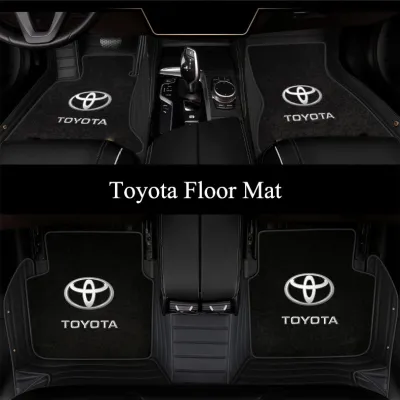
Prices are valid at publication and may change. Please refer to the product page for the latest price.
The vertical edges must possess sufficient rigidity; flimsy walls will collapse inward over time, creating unsightly gaps that trap dirt and moisture against your factory carpet. Furthermore, the mat must feature precise, reinforced cutouts that align perfectly with the factory twist-lock retention clips on the Camry’s floor.
3D Scanning Precision and Dead-Corner Coverage
High-quality manufacturers use advanced laser scanning to project thousands of data points, mapping the complex geometry of the Camry’s footwell. This includes the subtle curves around the seat mounts and the exhaust tunnel hump. Manual molding often misses these nuances, leading to mats that bunch up or lift.
To verify coverage in deep recesses—such as the tight space behind the pedals or the corners near the door hinges—always ask the seller for actual installation photos inside a right-hand drive Camry. Generic, computer-generated mockup images or left-hand drive photos are highly unreliable indicators of how the mat will actually sit in your vehicle.
Pedal Clearance and Seat Track Interference
Modern Camry generations, such as the XV70 and XV80, feature an organ-type accelerator pedal hinged at the floor rather than suspended from above. Because of this design, any floor mat must have a precise, unobstructed cutout around its base. If a mat is too thick or slides forward, it can trap the pedal in a depressed position or prevent you from fully engaging the brakes.
Additionally, inspect the rear passenger footwell. The high vertical edges of the rear mat must not encroach upon the seat track paths, which can block the front seats from sliding smoothly or damage the electric adjustment motors in higher-spec Camry trims.
Anti-Slip Backing and Factory Retention Clips
Even with a perfect contour, mats will shift under foot pressure if they lack proper backing. Look for backing materials engineered to grip the Camry’s specific factory carpet pile without damaging it. While aggressive plastic nibs work well on loose carpets, modern vehicle carpets often respond better to micro-hook or Velcro-style textures that distribute grip evenly.
Most importantly, the driver-side mat must lock directly into the factory floor anchors. Never buy a mat that covers or bypasses these twist-locks, as they are your primary defense against sudden mat slippage during emergency braking.
Material Comparison: How TPE, Leather, and PVC Hold Up in Singapore
Singapore’s tropical climate poses unique challenges for automotive interior materials. When parked outdoors in open-air HDB or commercial carparks, cabin temperatures can easily exceed 60 degrees Celsius. This intense heat, combined with high relative humidity, accelerates the degradation of cheap plastics, causing them to warp, shrink, or release volatile organic compounds (VOCs).

Therefore, choosing a material that retains its structural integrity and remains odorless under extreme thermal stress is crucial for maintaining a precise, safe fit over the lifespan of your Camry.
TPE (Thermoplastic Elastomer)
TPE represents the gold standard for drivers seeking a rugged, low-maintenance, and highly stable material. Unlike traditional rubber, high-quality TPE is injection-molded under extreme pressure, allowing it to maintain a rigid, permanent 3D shape that will not sag or warp in Singapore’s heat.
TPE is naturally free of harmful plasticizers, meaning it will not emit toxic chemical smells or leave a greasy residue on the inside of your windshield when the car is parked in the sun. The primary trade-off is aesthetic: TPE mats have a matte, utilitarian finish that resembles an all-weather utility liner, which some owners feel clashes with the Camry’s upscale executive cabin.
Synthetic Leather with XPE Foam Core
For those who prefer a premium, luxury aesthetic that complements the Camry’s leather upholstery, synthetic leather (often polyurethane or PU) mats are a popular choice. These mats typically feature a multi-layer construction consisting of a waterproof synthetic leather top layer, a dense XPE (cross-linked polyethylene) foam core for cushioning and sound dampening, and an anti-slip bottom layer.
However, the quality of the XPE foam is critical. Low-grade foam cores will break down under high cabin temperatures, causing the high vertical walls to lose their tension and fold inward. Additionally, pay close attention to the stitching; cheap decorative diamond stitching can allow spilled liquids to penetrate the foam core, leading to trapped moisture and mold growth in Singapore’s humid air.
Heavy-Duty PVC and Coil Combinations
Heavy-duty PVC and coil mats (often referred to as “spaghetti mats”) are widely available as budget-friendly options, but they are generally unsuitable for true full-surround applications. PVC is naturally stiff and heavy, making it difficult to mold into high, self-supporting vertical walls without adding metal reinforcements that can scratch your car’s plastic trim.
Furthermore, cheap PVC is highly prone to off-gassing under UV exposure, releasing strong chemical odors that can cause headaches and degrade cabin air quality. While the coil layer is excellent at trapping sand and dirt, cleaning it thoroughly requires high-pressure washing and extensive drying time, which can lead to musty odors if reinstalled while still damp.
The RHD Factor: Avoiding Left-Hand Drive Molds on E-Commerce Platforms
The single most common mistake Singaporean Camry owners make when purchasing full-surround mats online is buying templates designed for left-hand drive (LHD) markets. Because major global e-commerce platforms cater heavily to LHD regions like North America and mainland China, many listings use generic “Toyota Camry” tags without clearly specifying the steering configuration.
The floor pan of an LHD Camry is a mirror image of an RHD model. If you attempt to install an LHD mat in a Singapore-registered RHD Camry, the driver’s mat will not align with the dead pedal on the right, the center console contours will bulge outward, and the cutouts for the accelerator and brake pedals will be completely misaligned, creating an immediate and severe safety hazard.
To ensure you receive the correct configuration, use this pre-purchase verification checklist:
- Verify explicit RHD labeling: Ensure the product title or description explicitly states "RHD", "Right-Hand Drive", or "Singapore/UK/Australia Fitment."
- Inspect the driver-side product photo: Look closely at the shape of the driver's mat. The raised section designed to cover the dead pedal must be located on the right-hand side of the footwell when viewed from the driver's seat perspective.
- Check the steering wheel position in installation photos: If the seller's gallery only shows cars with the steering wheel on the left, proceed with extreme caution and demand RHD-specific photos.
- Confirm with the seller directly: Before clicking buy, send a direct message to the merchant asking them to confirm that the mold is cut specifically for a right-hand drive Toyota Camry, detailing your specific model year (e.g., 2019 XV70 or 2025 XV80).
Installation Checklist for a Secure, Gap-Free Fit
To ensure your new full-surround mats settle correctly into your Camry’s contours and do not slip during use, follow this step-by-step installation guide:
- Step 1: Deep clean and dry the footwells: Before placing your new full-surround mats, thoroughly vacuum the factory carpet to remove all grit, sand, and organic debris. Ensure the carpet is completely dry; trapping moisture beneath a waterproof synthetic leather or TPE mat in Singapore's humid climate will inevitably lead to mold, mildew, and persistent cabin odors.
- Step 2: Remove all existing floor mats: Never layer your new full-surround mats on top of existing carpet or rubber mats. Stacking mats reduces the clearance between the floor and the pedals, which can prevent the brake pedal from fully depressing or cause the accelerator to catch on the mat's edge.
- Step 3: Secure the factory retention clips: Position the driver's mat carefully and align the factory floor anchor holes with the twist-lock clips on the Camry's floor. Twist the locks into the secure position; this mechanical connection is the most critical step in preventing the mat from sliding forward during sudden stops.
- Step 4: Smooth out creases and shape the edges: If your mats arrived folded or creased from shipping, use Singapore's natural climate to your advantage. Lay them flat in the sun for an hour to let the foam core soften and expand. Alternatively, use a household hair dryer on a low, moving heat setting to gently warm the creased areas, then press them firmly against the Camry's interior panels to conform to the contours.
- Step 5: Execute the pedal sweep safety test: With the engine off, sit in the driver's seat and depress both the accelerator and brake pedals slowly to their absolute limits. Verify visually and by feel that neither pedal contacts, rubs, or catches on any part of the floor mat. If there is any interference, adjust the mat's position or trim the edges according to the manufacturer's instructions before driving.
Frequently Asked Questions (FAQ)
Should I remove the factory carpet mats before installing full-surround mats?
Yes, you must always remove any existing aftermarket or thick factory carpet mats before installing a full-surround mat system. Stacking multiple layers of mats is a major safety hazard because it alters the distance to your pedals and prevents the safety retention clips from locking the primary mat securely to the floor. While some ultra-thin, low-profile carpet liners integrated directly into the vehicle’s floor can remain, any thick, removable mats must be taken out of the vehicle entirely to ensure a stable, gap-free, and safe installation.
How can I flatten out creases in new synthetic leather mats?
To remove creases caused by shipping and packaging, you can leverage Singapore’s warm climate by placing the mats flat on a clean surface in direct sunlight for one to two hours. The ambient heat will naturally soften the inner XPE foam core, allowing it to expand back to its original molded shape. For stubborn creases, you may use a household hair dryer on a low heat setting, keeping the dryer moving constantly to avoid overheating any single spot. Never use high-heat industrial heat guns, open flames, or sharp heavy objects, as these can melt the synthetic leather surface, damage the waterproof backing, or puncture the material.

Community discussion
Share your experience or ask a question. Comments are reviewed before publication.