
Finding the ideal honda vezel car mat is not about choosing a single, universally perfect brand. Instead, it requires matching your vehicle’s specific generation with the right material construction to ensure safety, durability, and a precise fit. The Honda Vezel, a highly popular compact SUV in Singapore, has undergone significant design changes across its production years, meaning a mat that fits one model year perfectly may fail entirely on another.
To secure the best fit, you must evaluate how a brand designs its mats for your specific chassis. A true “full-surround” mat should hug the contours of the footwell, rising along the sidewalls to protect the carpet from dirt, mud, and water, without shifting during daily drives.
Your choice ultimately comes down to a conditional decision framework based on your lifestyle and maintenance preferences. If you prioritize maximum pedal safety, ease of cleaning, and a highly durable waterproof barrier, injection-molded Thermoplastic Elastomer (TPE) mats are the superior choice. If you prefer a more luxurious cabin aesthetic, enhanced sound dampening, and maximum sidewall coverage, multi-layer stitched leather or XPE (Cross-linked Polyethylene) foam mats are highly appealing, provided you verify their structural integrity and ensure they do not deform or interfere with your pedals. Regardless of the brand or style you choose, safety remains the absolute priority: aesthetic coverage must never compromise the free movement of your accelerator or brake pedals.
Products mentioned in this guide
![[PRE-ORDER] ENZO Car Mat - Honda Vezel 1st Gen Model RU Petrol (2013-2021) [Ship Out Within 14 days)](https://img.lazcdn.com/g/p/2f247a89dd4fe6acf51bd749acd78217.jpg_400x400q80.jpg_.webp)
![[PRE-ORDER] ENZO Car Mat - Honda Vezel 2nd Gen Model RV (2021-Present) [Ship Out Within 14 days)](https://img.lazcdn.com/g/p/215e345eb75f3bca7f48a87e43c100ae.jpg_400x400q80.jpg_.webp)
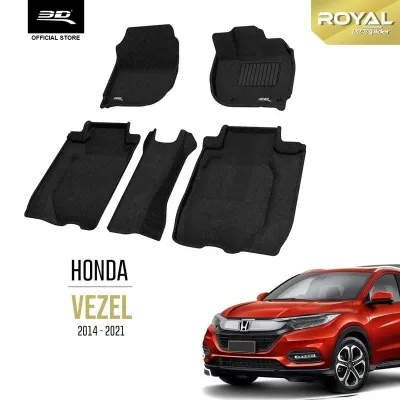
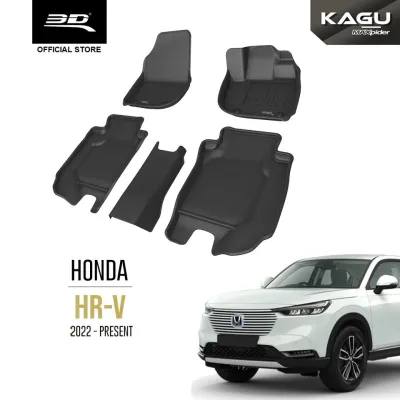
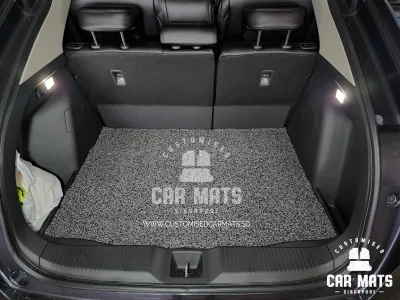
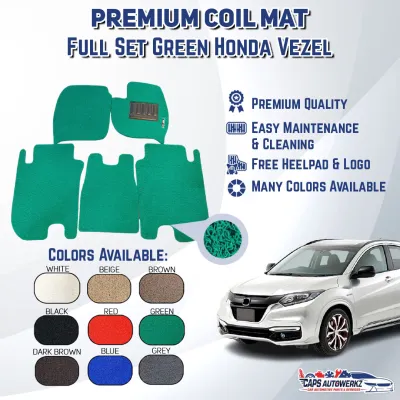
Prices are valid at publication and may change. Please refer to the product page for the latest price.
Identifying Your Vezel Generation and Floor Layout
Before browsing online marketplaces or visiting local automotive accessory shops in Singapore, you must accurately identify your Honda Vezel’s generation and chassis code. The floor dimensions, seat mounting points, and center console shapes differ substantially between generations, meaning a generic “Honda Vezel” label is highly likely to result in a poor fit.
The first-generation Honda Vezel (RU chassis, 2013–2020) features a distinct floor pan layout across its petrol (RU1) and hybrid (RU3) variants. Because the hybrid battery pack is packaged differently, the floor contours near the front seats and the rear center tunnel can vary. A mat designed for a petrol RU1 might not sit flush in a hybrid RU3, leading to gaps or sliding.
The second-generation Honda Vezel (RV chassis, introduced from 2021 to the present, including the RV3 petrol and RV5 e:HEV hybrid models) represents a complete ground-up redesign. The floor layout of the RV chassis is flatter, the center console base is shaped differently, and the rear passenger space has been reconfigured to optimize legroom. Consequently, first-generation RU mats are completely incompatible with second-generation RV models. Attempting to force a first-generation mat into an RV chassis will result in dangerous bunching near the pedals and loose edges that can catch on passengers’ shoes.
To verify your exact vehicle specifications, check your vehicle registration details (such as your Land Transport Authority log card in Singapore) or locate the manufacturer’s plate on the passenger-side door jamb. This plate displays your exact chassis code (e.g., RU1, RU3, RV3, or RV5) and manufacturing year. Armed with this precise information, you can filter out incompatible products and communicate effectively with sellers.
You should strongly avoid purchasing “universal” or “semi-custom” mats that claim to fit multiple Honda SUV models, such as the CR-V or Civic, alongside the Vezel. Universal mats rely on broad, simplified shapes that leave large areas of your original carpet exposed. More importantly, they lack the precise edge contouring and anchoring points required to keep the mat locked in place under your feet, posing a continuous shifting risk while driving.
Comparing Full-Surround Honda Vezel Car Mat Materials
When searching for the perfect honda vezel car mat, you will primarily choose between two dominant manufacturing styles: rigid 3D molded mats and multi-layer stitched mats. Each approach offers distinct advantages and trade-offs regarding floor coverage height, aesthetic appeal, ease of maintenance, and long-term structural stability in Singapore’s humid, tropical climate.

TPE Injection-Molded Mats
Thermoplastic Elastomer (TPE) injection-molded mats are highly regarded for their exceptional durability and precise engineering. These mats are manufactured using high-pressure injection molding based on digital 3D scans of the Vezel’s footwells. This process ensures that every curve, ridge, and factory retention hook location is replicated with millimeter-level accuracy. The resulting mat behaves like a rigid, custom-fit tray that drops perfectly into place.
One of the primary benefits of TPE is its outstanding resistance to environmental wear. In Singapore, where cabin temperatures can soar when parked under the direct sun, lower-quality plastic or rubber mats can warp, emit unpleasant chemical odors, or become sticky. High-grade TPE remains stable across extreme temperature ranges, retaining its shape and structural integrity over years of use. Furthermore, TPE is completely waterproof and non-porous, making it incredibly easy to clean. When the mats accumulate dirt, sand from East Coast Park, or spilled liquids, you can simply remove them, hose them down with water, wipe them dry, and reinstall them within minutes.
From a safety perspective, TPE mats are generally superior to stitched alternatives. Because they are molded as a single, semi-rigid piece, they possess high structural strength that prevents them from folding, curling, or bunching up over time. Even though their sidewalls are typically lower than those of stitched leather mats—usually rising only a few centimeters to form a protective lip—this lower profile ensures they stay far away from the moving parts of your pedal assembly.
However, the rigid nature of TPE means they offer a more utilitarian, modern aesthetic rather than a traditional luxury feel. They do not provide much acoustic insulation, so road noise transmission through the floorboards remains unchanged. Additionally, because they do not climb as high up the footwell walls, they leave the upper carpeted sections of the transmission tunnel and the sides of the footwells exposed to scuffs from passenger footwear.
Leather and XPE Stitched Mats
Multi-layer stitched mats, often marketed under terms like 5D, 6D, or 7D mats, are designed to provide maximum coverage and a premium, executive interior feel. These mats typically consist of a top layer of synthetic polyurethane (PU) leather, a middle layer of cross-linked polyethylene (XPE) foam for cushioning and structure, and a bottom non-slip mesh layer. They are stitched together to form a thick, padded barrier that covers almost every visible square inch of the vehicle’s floor carpet, extending high up the sidewalls, the center console sides, and deep into the footwells.
The primary appeal of stitched mats lies in their luxurious appearance and comfort. The padded PU leather adds a soft feel underfoot and coordinates beautifully with the Vezel’s interior upholstery. The thick XPE foam core also acts as an effective sound-dampening barrier, absorbing a portion of the road and tire noise that enters through the floor, which can make your daily commute quieter.
Despite these benefits, stitched mats carry notable risks, particularly in Singapore’s hot and humid climate. Many budget-friendly stitched mats rely on cheap adhesives to bond their multiple layers. Under prolonged exposure to high cabin heat, these adhesives can break down, causing the layers to delaminate, bubble, or sag. When the high sidewalls of a stitched mat lose their structural rigidity and begin to sag inward, they can lean against the accelerator or brake pedal arms, creating a highly dangerous obstruction.
Furthermore, the thick, padded construction can sometimes create clearance issues. If the stitching near the driver’s heel pad is too thick or poorly positioned, it can interfere with the smooth travel of your heels or restrict the full downward stroke of the pedals. To mitigate these risks, you must look for reputable brands that use high-density XPE foam cores, reinforced double-stitched edges, and built-in rigid retention clips that lock the high sidewalls securely to the plastic trim of your Vezel’s center console and door sills.
How to Evaluate Brand Fitment Claims and Coverage
To ensure you receive a honda vezel car mat that actually fits your car’s floor geometry, you must learn to critically evaluate product descriptions and brand claims. Many sellers use generic marketing images and broad compatibility lists that do not reflect the physical reality of the product you will receive. Use the following checklist to verify fitment before finalizing your purchase.
First, look for explicit verification of 3D laser scanning or digital modeling. Reputable brands will state clearly that their molds are derived from 3D scans of the specific Honda Vezel chassis code (such as RU or RV). Avoid listings that bundle the Vezel with unrelated vehicles or use generic phrases like “fits most Honda models.”
Second, scrutinize user-uploaded review photos on ecommerce platforms or automotive forums. These real-world images are far more valuable than polished manufacturer renders. Pay close attention to how the mat sits in critical zones:
- The Driver's Footrest (Dead Pedal): The mat should cover this area completely without lifting off the floor or leaving a floppy flap of material that can catch your shoe when transitioning to the brake.
- The Center Console Base: The edges of the mat should run flush along the plastic trim of the center console without gaps or overlapping bulges.
- The Front Door Sills: Look for mats that tuck neatly under or sit flush against the door sill scuff plates to prevent dirt from slipping underneath.
- The Rear Center Tunnel: In the Vezel, the rear floor features a raised center tunnel. The rear mat—whether a single-piece design or a three-piece set—must contour perfectly over this tunnel without lifting or sliding when rear passengers move their feet.
Third, verify how the rear mats interact with the Vezel’s unique interior features. The Honda Vezel is famous for its highly versatile “Magic Seats” (Ultra Seats), which allow the rear seat cushions to fold upward or the seatbacks to fold completely flat. A poorly designed rear mat with excessive thickness or incorrect edge cuts can block the seat mounting brackets or interfere with the smooth operation of these folding mechanisms. Make sure the product description or user reviews confirm that the mats do not restrict seat movement.
Finaly, avoid any brand or seller that suggests you can “easily trim” the mats with scissors to achieve a perfect fit. Trimming a car mat not only ruins its aesthetic appeal and compromises its waterproof containment lips, but it also indicates that the mat is a generic, semi-custom shape rather than a true custom-fit product. A high-quality full-surround mat should require zero physical modifications during installation.
Critical Safety Checks and Installation Verification
Installing a new set of full-surround car mats is a straightforward task, but it demands strict adherence to safety protocols. A misplaced or unsecured floor mat is a serious driving hazard that can lead to unintended acceleration or restricted braking capability. Before operating your Honda Vezel with new mats installed, you must perform several critical safety checks.
Before purchasing or installing any aftermarket floor coverings, always consult your Honda Vezel owner’s manual for specific instructions and warnings regarding floor mats. The manufacturer’s guidelines provide crucial safety boundaries that must be respected.
Once your new mats are placed in the vehicle, perform a comprehensive physical clearance test while the engine is completely turned off and the vehicle is securely parked:
- Full Pedal Travel Test: With the engine off, depress the accelerator and brake pedals slowly and firmly all the way to the floor. Verify that the pedal arms do not rub or get caught on the mat's edge. If you feel any resistance or if the pedal does not return instantly, remove the mat immediately.
- Heel Clearance Check: Move your feet between the pedals to ensure your heels do not catch on any raised ridges, stitched seams, or heel pads.
- Retention Clip Engagement: Ensure the mat features built-in eyelets that lock directly to the Vezel's factory floor retention hooks. Unanchored mats will slide forward, posing a severe pedal blockage risk.
- Sidewall Attachment: For stitched mats, ensure the side clips are secured under the plastic trim of the console and door sills to prevent the tall fabric walls from sagging inward over time.
- Sensor and Wiring Clearance: Ensure the mats do not pinch, cover, or pull on any exposed wiring harnesses or sensors under the front seats, which is crucial for hybrid Vezel models.
If you encounter any fitment issues, interference with the pedals, or if the mat cannot be securely anchored using the factory retention system, do not attempt to drive the vehicle. Stop immediately and consult the mat manufacturer or seek assistance from a qualified automotive accessory professional to resolve the issue safely.
Frequently Asked Questions (FAQ)
Do I need to remove the factory mats before installing full-surround mats?
Yes, you must always remove your original factory carpet or rubber mats before installing a new set of full-surround car mats. Stacking multiple layers of mats is highly dangerous. It increases the overall thickness of the flooring, which significantly reduces the clearance between the floor and the underside of your accelerator and brake pedals. Furthermore, stacking mats prevents the new full-surround mat from engaging properly with the factory floor retention hooks, leaving the entire assembly free to slide forward while you are driving. Always strip the footwells down to the original vehicle carpet before laying down your new mats.
Will full-surround mats block the Vezel's under-seat air vents?
Depending on the specific model year, trim level, and market destination of your Honda Vezel, there may be climate control air vents located on the floor directly beneath the front driver and passenger seats. These vents are designed to distribute conditioned air to the rear passengers. Poorly designed full-surround mats—especially multi-layer stitched rear mats that feature high, rigid vertical barriers—can block these vent openings, restricting airflow and reducing rear cabin comfort. Before purchasing, look under your front seats to confirm if your Vezel has these floor vents, and choose a mat brand that features precise cutouts to keep these ventilation paths completely clear.

Community discussion
Share your experience or ask a question. Comments are reviewed before publication.