
Finding a reliable dual sport helmet under S$200 in Singapore requires balancing budget constraints with strict safety standards and practical features. While premium helmets offer advanced carbon fiber composites and high-end aerodynamics, the S$200 price bracket contains highly capable, road-legal options if you know what to look for. To make an informed decision, riders must focus on verifying safety certifications, understanding material trade-offs, and evaluating fitment rather than relying on brand prestige alone.
Navigating the local motorcycle gear market can be challenging, especially with the influx of unbranded or non-compliant gear online. A dual sport helmet is a unique hybrid, designed to perform both on paved roads and off-road trails. This dual-purpose nature means the helmet must handle high-speed wind resistance on highways while providing adequate ventilation and dust protection at slower, off-road speeds. For budget-conscious riders in Singapore, finding a helmet that achieves this balance without compromising on safety is the ultimate goal.
Setting Realistic Expectations for a S$200 Dual Sport Helmet
When shopping for a dual sport helmet within a S$200 budget, understanding the physical and material limitations of this price point is essential. At this level, helmet shells are almost exclusively manufactured from polycarbonate or ABS thermoplastic materials. While these plastics are highly impact-resistant and excellent at absorbing energy during a crash, they are inherently heavier than the fiberglass, Kevlar, or carbon fiber composites found in premium helmets. A typical budget dual sport helmet will weigh between 1,500 and 1,700 grams, which can lead to noticeable neck fatigue during extended riding sessions.
Products mentioned in this guide
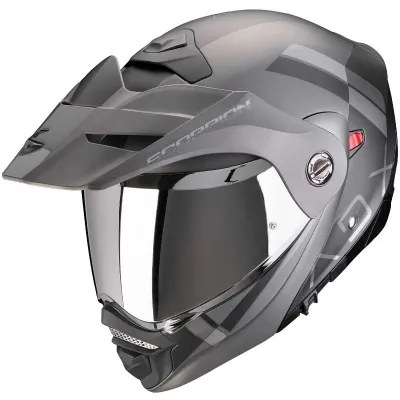
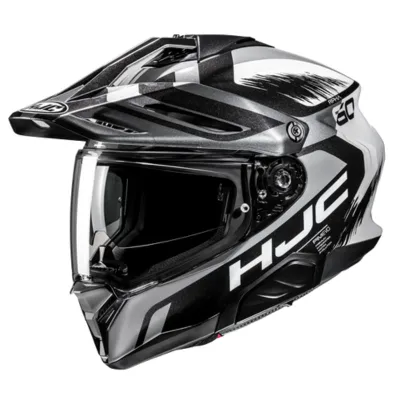
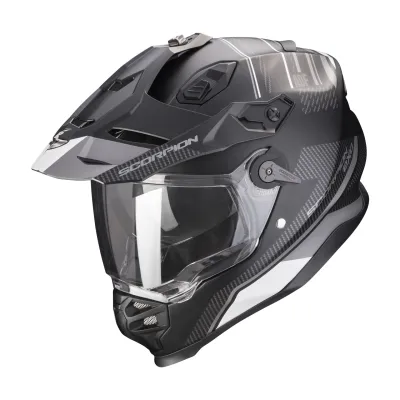
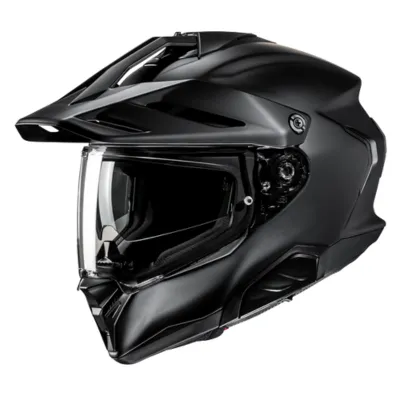
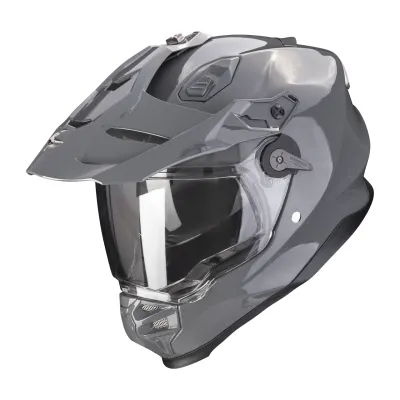
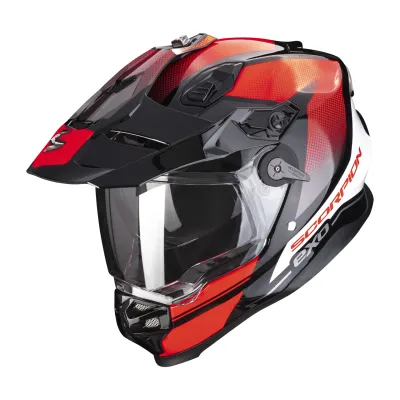
Prices are valid at publication and may change. Please refer to the product page for the latest price.
In addition to weight, aerodynamic refinement and noise isolation are areas where budget helmets compromise. Premium helmets undergo extensive wind tunnel testing to minimize drag and wind noise. In contrast, a sub-S$200 helmet will likely have simpler shell shapes and less sophisticated visor seals. This can result in a louder ride, particularly at highway speeds where wind rushes around the peak and shield. The visor mechanisms may also feel more basic, lacking the smooth, multi-position detents found on high-end models.
It is also important to clarify what “dual sport” means at this price point. While premium adventure helmets feature complex modular designs, integrated drop-down sun visors, and sophisticated communication system integration, a budget dual sport helmet is often a streamlined, street-legal motocross helmet. It features the classic extended chin bar, a sun peak, and a clear face shield, but lacks the electronic and mechanical luxuries of more expensive touring gear. Recognizing these trade-offs allows you to prioritize safety and core functionality over non-essential convenience features.
Verifying Mandatory Safety Certifications
Safety should never be compromised for price, making the verification of legitimate safety certifications the most critical step in your purchasing process. In Singapore, all motorcycle helmets used on public roads must comply with safety standards approved by the Land Transport Authority (LTA). Historically, this has been indicated by the PSB TEST label affixed to the back of the helmet. When shopping locally, always look for this physical sticker or verify with the retailer that the helmet model is officially approved for use on Singapore roads.

Beyond local approvals, reputable budget helmets will carry recognized international safety certifications. The most common are the European ECE standard (specifically ECE 22.05 or the newer, more stringent ECE 22.06) and the American DOT standard. The ECE 22.06 standard is particularly reassuring, as it involves rigorous testing for rotational impacts, visor penetration, and varying impact speeds. These certifications are typically displayed as permanent decals on the rear of the helmet shell or sewn directly into the chin strap webbing.
Riders must remain vigilant against counterfeit certification labels, which are common on cheap, unbranded helmets sold through online marketplaces. A genuine safety label is not just a sticker; it represents destructive testing and quality control. To protect yourself, avoid purchasing unbranded “novelty” helmets that claim to be dual sport but lack verifiable manufacturer details. Before buying, cross-reference the exact helmet model on the manufacturer’s official website or check international safety databases to confirm that the model has indeed passed the certified testing standards.
Evaluating Essential Dual Sport Features
To get the most value out of a budget dual sport helmet, you must carefully evaluate its physical features to ensure they match your riding style. The defining feature of a dual sport helmet is the sun peak. At the S$200 price point, look for a peak that is adjustable, allowing you to tilt it slightly to block the sun or improve aerodynamics. More importantly, ensure the peak features large cutouts or vents. These openings allow air to pass through at higher speeds, preventing the helmet from pulling your head back and causing neck strain. Some budget models also use breakaway plastic screws designed to snap off during a crash, preventing the peak from catching on the ground and twisting your neck.
Another critical feature is the integration of the face shield and goggle compatibility. A versatile dual sport helmet should allow you to use it in multiple configurations. Check if the face shield can be raised high enough to accommodate off-road goggles underneath without removing the shield entirely. Alternatively, verify how easy it is to remove the shield completely for dedicated off-road days. The eyeport must be wide enough to fit standard goggle frames comfortably against your face, and the rear of the helmet shell should feature a molded ridge or channel to keep the goggle strap from sliding down.
Ventilation is paramount when riding in Singapore’s hot and humid climate, especially during slow-speed off-road maneuvers or stop-and-go city traffic. Inspect the helmet’s ventilation system closely. Look for a prominent chin vent with an adjustable open-and-close mechanism, as well as forehead intake vents and rear exhaust vents. A common issue with low-cost helmets is cosmetic venting, where plastic vent covers are glued to the shell but no actual holes are drilled through the protective inner EPS liner. Peer inside the helmet and lift the comfort liner to verify that physical air channels run through the foam liner to facilitate actual airflow.
Assessing Fit, Comfort, and Interior Quality
A helmet’s protective capabilities are heavily dependent on how well it fits your head. Even the most certified helmet will fail to protect you if it slips off or shifts during an impact. When trying on a dual sport helmet, perform the “cheek squeeze” test. The interior cheek pads should press firmly against your cheeks, pushing them slightly forward like a “chipmunk face,” without causing pain or pressure points on your jawbone. Next, perform the rotational test: with the chin strap securely fastened, try to rotate the helmet side-to-side and up-and-down. The skin on your face and scalp should move with the helmet; if the helmet slides freely over your skin, it is too large.
The interior materials play a massive role in daily comfort, particularly under the tropical sun. Sweat, hair oils, and road grime will quickly accumulate inside the helmet, leading to unpleasant odors and skin irritation. Therefore, a fully removable and washable comfort liner and cheek pads are non-negotiable features for a budget helmet in Singapore. Look for liners made from moisture-wicking, quick-drying, and hypoallergenic fabrics. Being able to pop the liner into a wash bag and clean it regularly will significantly extend the hygienic lifespan of your gear.
Finally, inspect the chin strap retention system. Budget helmets typically feature either a classic double D-ring system or a micro-metric quick-release buckle. The double D-ring is widely considered the safest and most reliable mechanism; it has no moving parts to fail, is infinitely adjustable, and is required for track use. Micro-metric buckles offer convenience for daily commuters who take their helmets on and off frequently, but you must ensure the buckle mechanism is constructed from robust metal rather than cheap, flexible plastic that could shear under tension.
Avoiding Budget Traps and Hidden Costs
When shopping near the S$200 limit, it is easy to fall into traps that turn a seemingly good deal into a costly mistake. One major red flag is an exceptionally low price. If a seller is offering a “brand new” dual sport helmet for under S$50, it is highly likely a counterfeit or a low-quality novelty helmet that will offer zero protection in an accident. Other warning signs include helmets sold without their original packaging, missing user manuals, or from sellers who cannot provide clear warranty details or proof of purchase.
You must also calculate the true total cost of ownership before making your purchase. A helmet priced at S$150 might seem like a great bargain, but if it lacks essential accessories, the costs can quickly add up. For example, riding in Singapore’s heavy downpours can cause your visor to fog up instantly, creating a severe safety hazard. If the helmet does not come with an anti-fog insert (such as a Pinlock lens) or is not pre-drilled to accept one, you may have to spend an additional S$40 to S$60 on aftermarket solutions. Similarly, if you plan to ride off-road, factor in the cost of compatible goggles if they are not included in your initial budget.
Lastly, always verify the retailer’s return and exchange policies, especially when purchasing from online marketplaces. Helmet fit is highly subjective and depends on your specific head shape (such as round oval or intermediate oval). A helmet that fits perfectly on paper may cause painful pressure points on your forehead after twenty minutes of actual riding. Ensure you have the option to exchange the helmet for a different size or return it for a refund if the fit is not correct, keeping all tags and protective films intact until you are completely satisfied with the fit.
Frequently Asked Questions (FAQ)
Can I use a budget dual sport helmet for high-speed highway riding?
Yes, you can use a budget dual sport helmet on the highway, but you must be prepared for specific aerodynamic challenges. The extended sun peak is designed to block glare and deflect branches, but at highway speeds (such as on the PIE or TPE), it acts like a sail. When you look up or turn your head to check your blind spots, the wind can catch the peak, causing sudden neck strain and buffeting. To minimize this, look for a helmet with a highly aerodynamic peak featuring large wind cutouts, or choose a model that allows you to easily remove the peak for long highway commutes. Additionally, expect higher wind noise levels compared to dedicated street helmets, making earplugs a highly recommended accessory for highway travel.
How often should I replace a polycarbonate dual sport helmet?
As a general industry standard, a polycarbonate dual sport helmet should be replaced every three to five years of active use, or seven years from its manufacture date, whichever comes first. Over time, exposure to UV rays, extreme heat, sweat, and hair oils gradually degrades the outer plastic shell and the shock-absorbing EPS liner inside. You can usually find the precise manufacture date stamped on a tag on the chin strap or on a sticker underneath the comfort liner. Crucially, this lifespan rule is completely overridden if the helmet experiences any significant impact. If you are involved in a crash, or if the helmet is dropped from a height onto a hard surface like concrete, it must be replaced immediately. The internal EPS liner is designed to deform once to absorb impact energy, and even if there is no visible damage to the outer shell, its protective capability is permanently compromised.
Community discussion
Share your experience or ask a question. Comments are reviewed before publication.