
Quick Answer: Core Features That Define Mat Quality
To find the best full-surround carmat, you must look beyond flashy marketing terms and focus on verifiable engineering standards. The most critical features to compare across brands include precise pedal clearance, secure Original Equipment (OE) anchoring, a high-quality material core, and exact edge coverage.
Arbitrary industry labels like “7D” or “10D” do not automatically guarantee a superior product compared to a well-designed “3D” mat. True quality is defined by vehicle-specific laser scanning, material safety certifications, and a secure fitment that never interferes with your vehicle’s controls.
Evaluating Carmat Safety: Verifying Pedal Clearance and Anchoring
Safety is the single most important factor when evaluating any aftermarket interior accessory. A poorly designed floor covering can slip forward, trapping the accelerator or restricting the travel of the brake pedal, which presents an immediate driving hazard. When comparing brands, your first step must be to verify how the mat accommodates pedal movement.
Products mentioned in this guide
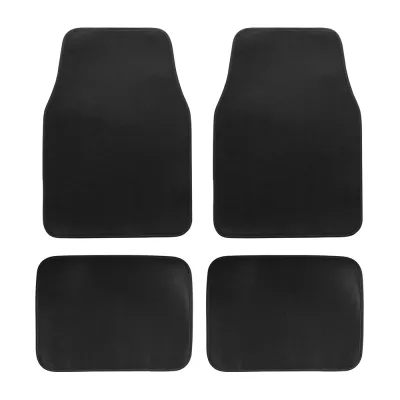
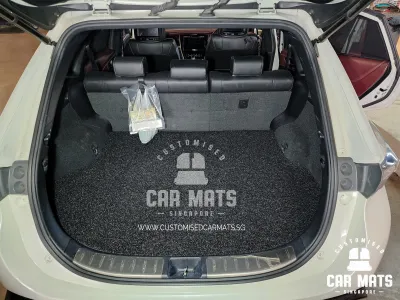
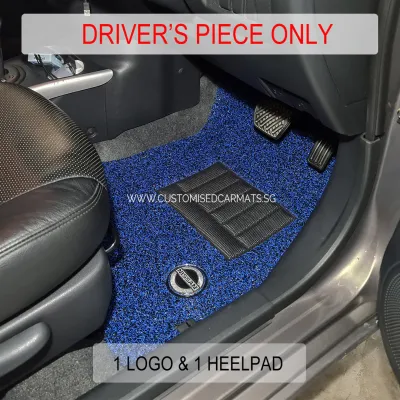
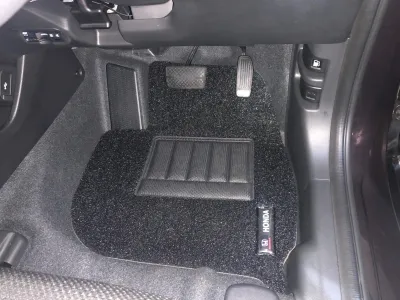

Prices are valid at publication and may change. Please refer to the product page for the latest price.

Look for brands that design their mats with deep, molded recesses around the pedal box. The mat must leave an unobstructed path for the accelerator, brake, and clutch pedals throughout their entire range of travel. If your vehicle features a floor-mounted organ-style accelerator pedal, the mat must contour perfectly around its base rather than covering it.
Secure anchoring is another non-negotiable safety feature. High-quality brands utilize heavy-duty retention clips that lock directly into your vehicle’s factory floor anchors. Whether your car uses twist-locks, push-buttons, or floor hooks, the mat must feature matching, factory-compatible receiving holes. Avoid brands that rely solely on loose Velcro strips or double-sided tape, as these adhesives quickly degrade under Singapore’s high cabin temperatures.
In addition to mechanical clips, examine the underside of the mat. Premium brands apply a high-friction, anti-slip backing—often consisting of microscopic nibs or a patented webbed fiber texture. This backing grips the underlying factory carpet fibers, preventing the mat from shifting forward or sideways under heavy foot pressure.
You should also check the clearance around the front seat rails and the dead pedal. The mat should cover the dead pedal area smoothly without lifting or curling at the edges, which could catch your shoe when transitioning to the brake. Furthermore, verify that the side walls of the mat do not obstruct the forward and backward sliding motion of the front seats.
Before finalizing any installation, always consult your vehicle’s owner manual to identify the exact floor anchor specifications and safety guidelines. If a newly purchased mat does not align perfectly with your factory anchors, or if you detect any resistance when fully depressing the pedals with the engine off, stop the installation immediately. Do not attempt to trim or modify the mat yourself; instead, consult the manufacturer or a qualified automotive professional.
Material Breakdown: Evaluating Inner Cores and Surfaces
Full-surround floor mats are engineered using a multi-layer lamination process, and comparing these layers is key to understanding their longevity. To make an informed decision, you must evaluate both the visible surface layer and the hidden structural inner core.
For the inner core, the most common materials are injection-molded Thermoplastic Elastomer (TPE) and Cross-linked Polyethylene (XPE) foam. TPE is a highly durable, rubber-like material that offers exceptional resistance to wear, water, and temperature fluctuations. XPE foam is lighter and provides excellent sound dampening and cushioning underfoot, but it can compress permanently over time under constant heel pressure if it lacks a supportive outer shell.
The surface layer typically consists of either stitched Polyurethane (PU) leather or a heavy-duty wire coil, often referred to as a noodle mat. Stitched PU leather provides a luxurious, executive aesthetic with a padded feel, while wire coils excel at trapping dirt, sand, and moisture away from your shoes.
In Singapore’s tropical climate, material durability is put to the test. A car parked under the intense sun can reach internal cabin temperatures exceeding 60°C. Under these extreme conditions, low-grade PU leather surfaces can become sticky, warp, or emit a strong chemical odor known as off-gassing. For local drivers, high-quality TPE or premium, UV-resistant wire coils are often the most practical choices due to their superior heat tolerance and ease of maintenance.
When comparing brands, always look for verifiable material safety specifications rather than relying on generic marketing slogans. Reputable manufacturers will provide independent testing certifications, such as SGS or RoHS compliance, which prove that the materials do not release harmful volatile organic compounds (VOCs) when exposed to high heat.
Coverage and Fitment: Decoding 3D, 5D, and 7D Labels
The automotive accessory market is filled with confusing terminology, with brands labeling their products as 3D, 5D, 7D, or even higher. These designations are not standardized industry ratings; instead, they are marketing terms used to describe the design complexity and layering of the mat.
A traditional “3D” mat generally refers to a semi-rigid, tray-like mat with raised edges that match the floor’s basic contours. “5D” and “7D” mats typically introduce additional layers—such as a removable wire coil top layer over a stitched synthetic leather base—and feature higher side walls that extend further up the footwell, transmission tunnel, and door sills.
Rather than choosing a mat based on these arbitrary numbers, you should evaluate the actual coverage area and manufacturing precision. High-quality full-surround mats should protect the entire carpeted area, including the dead pedal, the sides of the center console, and the rear seat passenger threshold. The coverage should be comprehensive but clean, leaving no loose gaps where dirt or liquids can slip underneath.
Verify whether the brand uses vehicle-specific 3D laser scanning. A custom-scanned mat is molded to the exact millimeter of a specific vehicle make, model, and production year. Universal or “semi-custom” templates often fit poorly, leaving vulnerable carpet exposed or bunching up against the seat tracks, which creates both aesthetic and safety hazards.
Pay close attention to the height and rigidity of the side walls. The vertical edges must be stiff enough to stand upright without sagging over time, ensuring they contain spilled liquids and debris. However, they must not be so high or rigid that they rub against door seals, scratch plastic interior trim, or interfere with the operation of the glovebox or console panels.
Practical Checklist for Comparing Mat Brands
To simplify your comparison when shopping online or visiting local automotive accessory shops, use a structured evaluation matrix. This helps you look past aesthetic differences and focus on engineering quality.
The following table outlines the key decision dimensions you should verify with the seller or manufacturer before committing to a purchase.
| Evaluation Dimension | High-Quality Standard | Budget / Low-Quality Indicator | What to Verify Before Buying |
|---|---|---|---|
| Fixation Method | Direct integration with factory OE retention clips; high-friction, non-damaging anti-slip backing. | Reliance solely on loose Velcro strips, double-sided tape, or gravity. | Check if the mat includes matching clips for your car’s specific floor anchors. |
| Edge Height & Rigidity | Rigid, self-supporting side walls that maintain their shape without sagging or folding. | Soft, floppy edges that sag, leaving gaps where dirt and liquids can slip behind. | Ask if the vertical walls use reinforced thermoplastic cores to prevent sagging. |
| Surface Maintenance | Easily wiped clean with a damp cloth or hose-washed; quick-drying and stain-resistant. | Deep fabric seams that trap dirt; materials that absorb water and require hours to dry. | Confirm if the top layer is detachable (e.g., dual-layer coil mats) for easier washing. |
| Material Safety | Verifiable certifications (SGS, RoHS) proving zero off-gassing at high temperatures. | Strong chemical or plastic odor that persists for weeks; no safety certifications. | Request material safety datasheets or certification labels from the seller. |
| Warranty & Support | Clear manufacturer warranty (1 to 3 years) covering warping, cracking, or premature wear. | No warranty, or vague guarantees that exclude normal wear and tear. | Read the fine print to see if the warranty covers heat-induced warping or peeling. |
Note: Treat any unknown parameters as critical items to verify directly with the seller before purchasing.
Final Decision: Matching Mat Types to Your Needs
Choosing the right full-surround carmat depends on your daily driving habits, passenger profile, and maintenance preferences.
If you prioritize maximum durability, have young children, or frequently engage in outdoor activities, an injection-molded TPE mat is highly recommended. These mats are completely waterproof, odorless, and can be easily pulled out and hosed down at a self-service car wash. They offer a clean, modern, utilitarian look that withstands heavy abuse without showing wear.
If you prefer a premium, executive aesthetic and drive a luxury or chauffeured vehicle, a multi-layer stitched PU leather mat may suit your needs. These mats elevate the cabin’s visual appeal with intricate stitching patterns and a softer underfoot feel. However, you must be prepared to wipe them down regularly with a damp microfiber cloth and avoid stepping on them with muddy or wet shoes to prevent premature wear in the creased areas.
Before placing an order with any online marketplace or local distributor, enforce a strict verification rule. Double-check your vehicle’s exact manufacturing year, trim level (which can alter floor dimensions), and transmission type. Crucially, ensure the mats are designed specifically for Right-Hand Drive (RHD) configurations, as Singapore vehicles require RHD layouts. Buying a Left-Hand Drive (LHD) set by mistake will result in a dangerous fitment issue on the driver’s side pedal box.
Frequently Asked Questions (FAQ)
Do full-surround mats block the air conditioning vents under the front seats?
Yes, poorly designed or generic full-surround mats can block the rear passenger air conditioning vents located under the front seats. When evaluating different brands, look closely at the rear-facing edge of the front mats. Premium, laser-scanned mats feature precise cutouts that leave these under-seat vents completely unobstructed. Blocking these vents severely restricts airflow to the rear cabin, forcing your air conditioning system to work harder and reducing overall passenger comfort in Singapore’s warm climate. Always verify this specific design detail with the seller before purchasing.
How can I safely remove the initial chemical odor from new car mats?
To safely eliminate any lingering manufacturing odors, place the new mats in a shaded, well-ventilated outdoor area—such as a sheltered balcony or utility yard—for 48 to 72 hours before installing them in your vehicle. This allows any volatile organic compounds to dissipate naturally. Never use harsh chemical deodorizers, ozone generators, or direct heat guns to speed up the process. Excessive heat can warp the mat’s inner core or damage the adhesives holding the layers together, while strong chemical sprays may leave hazardous residues that concentrate inside your closed car cabin.

Community discussion
Share your experience or ask a question. Comments are reviewed before publication.