
Finding the ideal full-surround car mat for your Toyota Harrier requires moving past generic brand promises and focusing on precise physical compatibility. Because the Harrier features a highly contoured footwell, a premium cabin aesthetic, and specific safety anchor points, a poorly fitting mat can compromise both the vehicle’s luxury feel and its operational safety. The best option for your vehicle is one that matches your specific generation’s floor pan layout, accommodates the factory retention clips, and uses materials certified to withstand high cabin temperatures without off-gassing.
To make an informed decision, you must evaluate how different brand categories handle the Harrier’s unique interior geometry. Whether you are driving a newer petrol or hybrid model, the floor layout varies around the center console, dead pedal, and rear passenger footwells. Prioritizing laser-measured, model-specific designs over universal alternatives ensures that your investment protects your carpet while keeping your foot pedals completely unobstructed.
Understanding Full-Surround Coverage for the Toyota Harrier
Full-surround car mats, often referred to as 3D or 5D mats, differ significantly from traditional flat rubber or carpet mats. While standard mats only cover the flat horizontal surfaces of the footwell, full-surround options feature raised vertical walls that line the sides of the footwell, the dead pedal, and the lower portions of the center console. In a premium SUV like the Toyota Harrier, this extended coverage is designed to prevent dirt, mud, and spilled liquids from slipping over the edges and staining the factory carpet.
Products mentioned in this guide
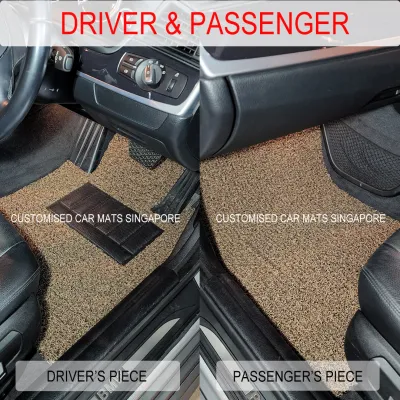
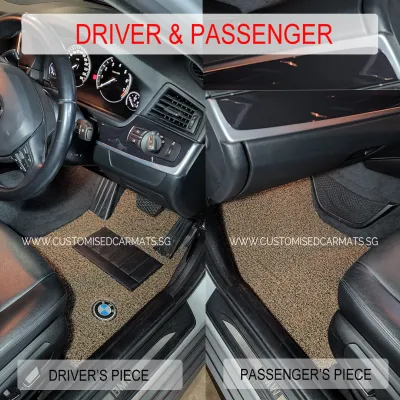
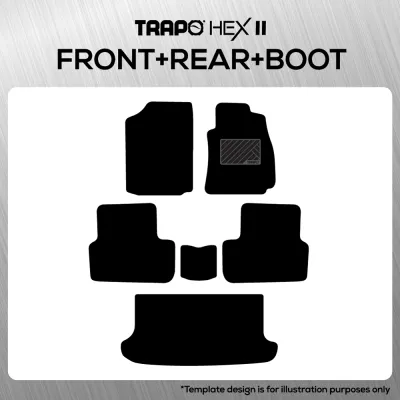
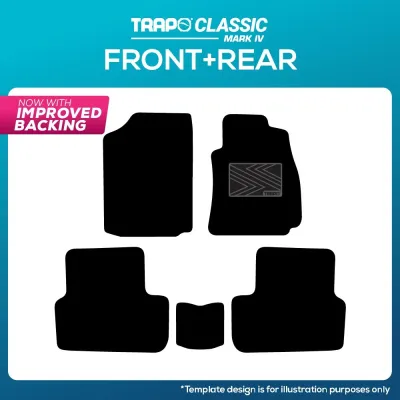
Prices are valid at publication and may change. Please refer to the product page for the latest price.
For the Toyota Harrier, specific coverage zones require close attention during your selection process. The driver’s side must feature a precisely molded section for the dead pedal that remains flat against the floor without curling. On the passenger side, the mat should climb smoothly up the transmission tunnel wall without sagging or creating gaps. In the rear, a high-quality full-surround mat typically features a single-piece bridge that covers the center hump completely, protecting the carpet from passenger foot traffic.
It is critical to recognize that the Toyota Harrier has evolved across multiple generations, most notably the XU60 and the XU80. The floor pans, seat rail configurations, and hybrid battery vent placements differ between these generations and drivetrain options. A mat designed for a petrol XU60 will not fit a hybrid XU80 properly. Always verify that the manufacturer lists compatibility with your exact model year, chassis code, and drivetrain before finalizing your purchase.
Core Criteria for Comparing Car Mat Brands
When comparing aftermarket car mat brands for your Harrier, precision fit is the most critical benchmark. High-end brands utilize 3D laser-scanning technology to map the exact contours of the Harrier’s footwells, resulting in a rigid, semi-flexible shell that drops into place with millimeter accuracy. Universal or semi-custom “trim-to-fit” mats should generally be avoided for this vehicle, as manual cutting rarely achieves a clean seal along the raised edges and often leaves vulnerable gaps where dirt can accumulate.

Edge height and containment capability determine how well the mat protects your interior during heavy downpours or accidental spills. In tropical climates where sudden rainstorms are common, passengers frequently bring wet shoes and umbrellas into the cabin. The vertical walls of the mat must be rigid enough to retain their shape over years of use, ensuring they do not fold inward and allow trapped water to drain onto the underlying carpet.
Odor and chemical off-gassing are major quality indicators, particularly in vehicles parked under direct sunlight in hot climates. Closed cabins can reach extreme temperatures, causing low-grade plastics and synthetic leathers to release unpleasant and potentially harmful volatile organic compounds. Look for brands that provide material safety certifications, such as SGS or RoHS compliance, and check user feedback specifically regarding initial chemical smells.
Weight, backing texture, and stability are vital for keeping the mats firmly in place. A premium full-surround mat should feature an anti-slip backing—often consisting of microscopic fibers or a textured rubberized pattern—that grips the factory carpet fibers without damaging them. Additionally, the driver’s side mat must align perfectly with the Harrier’s factory floor anchors, securing the mat against any forward or lateral movement during driving.
Evaluating Material Quality and Maintenance
The materials used by car mat manufacturers largely dictate their durability, appearance, and cleaning requirements. Thermoplastic Elastomer (TPE) has become highly popular for modern premium mats due to its rubber-like flexibility, high durability, and excellent resistance to wear. TPE mats are highly functional, completely waterproof, and can be easily pulled out of the vehicle and hosed down with clean water when dirty.
Cross-linked Polyethylene (XPE) is another common material, often used as an inner cushioning layer in multi-layer synthetic leather mats. These multi-layer mats feature a top layer of polyurethane (PU) leather, which provides a luxurious, stitched appearance that complements the Harrier’s upscale interior. However, synthetic leather options require more delicate maintenance; they should be wiped down with a damp microfiber cloth and mild interior cleaner rather than being soaked or scrubbed with harsh brushes.
Before purchasing, check the manufacturer’s product specifications for temperature resistance. In regions with intense solar heat, interior plastics and accessories can degrade rapidly. High-quality TPE and premium synthetic leathers are formulated to resist warping, cracking, or becoming sticky when exposed to high cabin temperatures. Avoid brands that do not specify their material composition, as cheap PVC or low-grade rubber mats are highly prone to degrading and curling at the edges under thermal stress.
Do not assume that a mat is safe or durable simply because a listing uses marketing terms like “military-grade” or “indestructible.” Instead, rely on the stated material composition, warranty terms, and specific care instructions provided by the manufacturer. Proper maintenance, such as avoiding the use of silicone-based dressings that make the mats dangerously slick, will prolong the life of the materials and preserve their original texture.
Verifying Safety Clearances and Installation Fit
Operating safety must always take precedence over aesthetic preferences when installing aftermarket interior accessories. The driver’s side mat represents a critical safety interface; it must never interfere with the full travel of the accelerator, brake, or emergency brake pedals. Before driving, physically press each pedal to the floor to confirm there is ample clearance and that the mat does not catch or bunch up behind the pedal arms.
Seat rail interference is another common issue with poorly designed full-surround mats. The high vertical edges along the sides of the footwell must not block the forward and backward movement of the front seats along their tracks. Furthermore, you must verify that the mats do not obstruct any under-seat heating or ventilation ducts, nor pinch the wiring harnesses connected to the seat-mounted airbag sensors.
Proper engagement with the vehicle’s original retention systems is non-negotiable. The Toyota Harrier utilizes twist-lock or clip-style floor anchors on the driver’s side to prevent the mat from sliding forward under the pedals. The aftermarket mat you choose must feature matching, factory-compatible grommets that lock securely onto these anchors. Never rely solely on the friction of the backing to keep the driver’s mat in place.
If you encounter any fitment issues during installation—such as a mat that requires forceful bending, trimming, or one that alters the natural feel of your pedals—stop immediately. Do not attempt to modify the mat yourself unless the manufacturer’s instructions explicitly outline a safe trimming procedure. If the fit remains compromised, remove the mat and consult the manufacturer or a qualified automotive accessory professional to find a compatible alternative.
Decision Framework: Matching Brands to Your Priorities
To select the right full-surround car mat category for your Toyota Harrier, you should align your choice with your daily usage patterns and aesthetic preferences. If your primary goal is maximum utility, easy cleanup, and robust protection against mud, water, and dirt, heavy-duty thermoplastic (TPE) brands are the most suitable choice. These mats offer a modern, clean look and can be quickly washed clean, making them ideal for active lifestyles or families.
If you prefer to maintain or enhance the Harrier’s executive cabin feel, premium synthetic leather or multi-layer stitched mats are a compelling option. These mats blend seamlessly with the leather upholstery and soft-touch surfaces of the Harrier’s dashboard and door panels. However, you must be prepared for more frequent, gentle maintenance, as dirt and dust can settle into the stitched seams and require regular vacuuming and wiping.
Before making any purchase on an online marketplace or from a local distributor, verify that the product listing explicitly matches your exact Harrier model year, generation, and drivetrain. Pay close attention to whether your vehicle is a right-hand drive (RHD) model, as mats designed for left-hand drive (LHD) markets will have reversed pedal cutouts and are completely incompatible and unsafe to use.
Finally, avoid any brand that requires extensive manual cutting to fit your footwells, or any product that lacks a robust, non-slip backing compatible with the Harrier’s factory carpet. A mat that slides or shifts even slightly during a drive is a safety hazard that compromises your control of the vehicle. Prioritizing a certified, laser-measured, model-specific fit ensures your interior remains protected without sacrificing safety.
Frequently Asked Questions (FAQ)
Do I need to remove the factory carpet mats before installing full-surround mats?
Yes, you must always remove the original factory carpet mats before installing full-surround mats. Stacking mats on top of one another is highly dangerous, as it increases the overall thickness of the floor covering and can easily cause the accelerator or brake pedal to catch on the mat. Additionally, stacking prevents the full-surround mat’s anti-slip backing from gripping the vehicle’s floor carpet directly, and it makes it impossible to secure the mat to the factory retention clips. Always refer to the aftermarket brand’s installation manual to ensure the floor is completely clear before laying down the new mats.
How do I ensure the mats fit the rear seats of my specific Harrier model?
To ensure a proper fit in the rear passenger area, you must verify that the mats do not block the rear air conditioning vents, which are typically located under the front seats. Additionally, check if your specific Harrier generation features under-seat storage compartments or hybrid battery cooling vents that require unobstructed airflow. A properly designed full-surround mat will feature precise cutouts or contours that accommodate these elements without restricting air circulation or access to vehicle features. Always double-check the manufacturer’s compatibility notes regarding hybrid versus petrol rear floor configurations.

Community discussion
Share your experience or ask a question. Comments are reviewed before publication.