
To protect a sedan from Singapore’s demanding tropical climate, you must prioritize a multi-layer car cover that balances robust external defenses with internal breathability. The ideal cover features a highly reflective silver or aluminum outer layer with a minimum UPF 50+ rating, heat-sealed or taped seams rather than simple stitching, strategically placed air vents to prevent moisture buildup, and a soft, non-abrasive inner lining like spunlace cotton. Finding the right car cover sedan owners can rely on requires looking past basic marketing buzzwords and focusing on these specific material properties and construction standards.
Selecting an inadequate cover can lead to severe paint damage, trapped moisture, and rapid material degradation. By understanding the science behind waterproof coatings and heat reflection, you can make an informed decision that preserves your vehicle’s clear coat, interior trim, and overall resale value.
Why Singapore's Tropical Climate Demands Specific Car Cover Features
Singapore’s equatorial climate presents an exceptionally harsh combination of environmental stressors that can rapidly degrade automotive exteriors. The island experiences intense, year-round ultraviolet (UV) radiation, frequent and heavy tropical downpours, and relative humidity levels that consistently hover above 80%. These elements do not act in isolation; they work in tandem to accelerate the wear and tear on your vehicle’s paint, rubber seals, and interior plastics.
Products mentioned in this guide
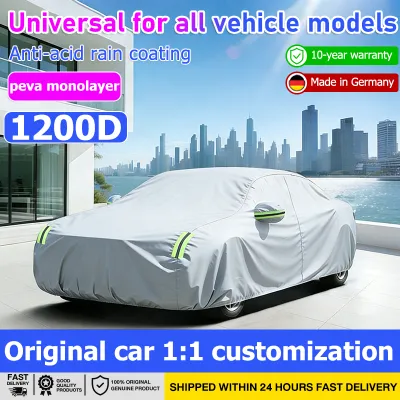
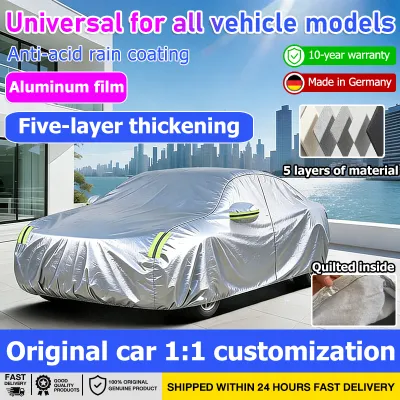
![[24 hours delivery] Upgraded and thickened universal car cover size:M/L/XL/XXL/3XL car cover outdoor protection sunscreen car cover waterproof car shade car cover sun protection car cover outdoor sunscreen](https://img.lazcdn.com/g/p/808f8e56d0f1744f116eabe475a3a1ff.jpg_400x400q80.jpg_.webp)
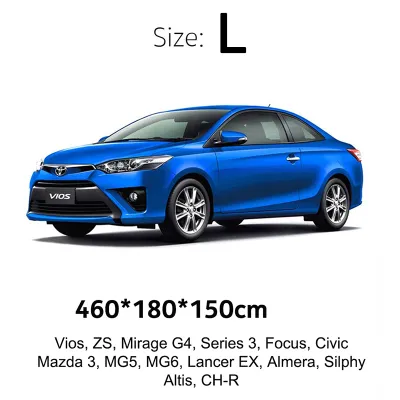
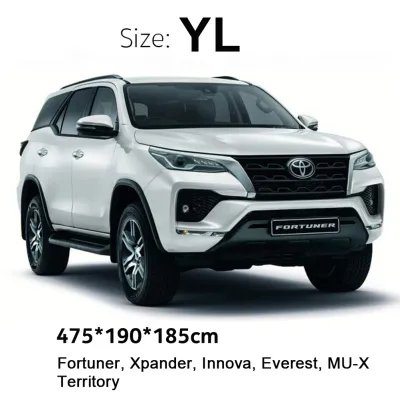
Prices are valid at publication and may change. Please refer to the product page for the latest price.
Standard car covers designed for milder, temperate climates often fail within months when exposed to these local conditions. Intense solar radiation makes cheap fabrics brittle, causing them to tear easily during sudden monsoon winds. At the same time, heavy rain can quickly overwhelm basic water-resistant coatings, soaking the vehicle underneath and leaving water spots that are difficult to remove.
The most significant danger in a tropical environment, however, is trapped moisture. When a completely sealed, non-breathable cover is placed over a vehicle, it acts like a greenhouse. It traps rising ground moisture and condensation against the car’s warm bodywork, which can lead to paint blistering, clear coat clouding, and mold growth inside the cabin. Therefore, a successful protection strategy requires a delicate balance between robust external shielding and internal breathability.
Waterproofing Specs: Beyond Basic Water Resistance
When shopping for a car cover sedan, understanding the distinction between “water-resistant” and “waterproof” is critical. Water-resistant covers are typically treated with a temporary hydrophobic spray that repels light drizzle but succumbs to sustained rainfall. For Singapore’s intense monsoon downpours, a fully waterproof barrier is non-negotiable to prevent water from pooling on your vehicle’s surface.

A truly waterproof cover utilizes advanced synthetic materials and specialized coatings to prevent water molecules from penetrating the fabric. These specifications are usually detailed on the product label or technical sheet. However, a waterproof fabric is only as good as its weakest point: the stitching. Without proper seam protection, water will inevitably seep through the tiny needle holes created during manufacturing.
Furthermore, because a waterproof barrier blocks water from entering, it also blocks moisture from escaping. This requires specific design features like ventilation flaps to maintain airflow without compromising rain protection. Finally, the cover must remain securely positioned to prevent water from pooling on flat surfaces like the roof or hood, which puts immense pressure on the fabric and seams.
Outer Materials and Coatings
To ensure long-term durability, look for outer layers made from heavy-duty synthetic polymers. High-density polyester, such as 300D or 600D Oxford cloth, provides excellent tear resistance and serves as a strong foundation. The “D” stands for denier, which measures the thickness of the individual fibers; a higher denier indicates a thicker, more durable weave.
This base fabric is typically laminated or coated with Polyurethane (PU) or Polyethylene (PE) to achieve its waterproof rating. PE and PU coatings create a continuous, non-porous barrier that completely blocks liquid water. When reviewing product specifications, check if the manufacturer states a water column rating (measured in millimeters). A rating of 2,000mm or higher indicates the fabric can withstand heavy, wind-driven rain without leaking. Always verify these technical specifications against the manufacturer’s official documentation rather than relying on generic “all-weather” claims.
Seam Construction and Breathability
High-quality waterproof covers feature heat-sealed or taped seams. This process involves applying a hot-melt adhesive tape over the stitched seams on the underside of the cover, effectively sealing the needle holes. When evaluating a cover, inspect the product descriptions or inner lining photographs to confirm that the seams are fully taped and not merely double-stitched.
To combat high humidity, the cover must incorporate strategically positioned air vents. These vents are typically designed as downward-facing flaps located near the top of the cover or along the sides. They allow warm, humid air and rising condensation to escape while preventing direct rain from entering, even during windy storms. This continuous airflow is vital for keeping the temperature under the cover stable and preventing paint damage.
UV Protection and Heat Reflection: Keeping Your Sedan Safe
Singapore’s position near the equator means your sedan is subjected to high levels of ultraviolet (UV) radiation throughout the year. Unprotected exposure to UV-A and UV-B rays degrades the chemical bonds in your car’s clear coat, leading to oxidation, fading, and a chalky finish. Inside the vehicle, intense solar heat causes dashboard plastics to warp, leather seats to dry and crack, and rubber door seals to perish prematurely.
A premium car cover acts as a physical shield against this solar assault. However, simply blocking the light is not enough; the cover must actively reflect solar energy away from the vehicle. This is achieved through highly reflective outer coatings that bounce back infrared and ultraviolet rays.
Using a dark-colored or non-reflective cover in Singapore can actually cause more harm than good. Dark fabrics absorb solar heat, raising the temperature underneath the cover to extreme levels. This localized greenhouse effect accelerates the breakdown of both the cover’s synthetic fibers and the vehicle’s exterior trim.
UPF Ratings and UV Blockers
When selecting a cover, look for products that explicitly state an Ultraviolet Protection Factor (UPF) rating. A rating of UPF 50+ is the gold standard, indicating that the fabric blocks approximately 98% of harmful UV radiation. This level of protection prevents solar rays from penetrating the cover and reaching your sedan’s delicate clear coat.
Additionally, verify if the fabric has been treated with UV inhibitors during the manufacturing process. These chemical stabilizers prevent the cover itself from becoming brittle, fading, or tearing after prolonged exposure to the sun. A cover without UV stabilizers will quickly degrade, losing its waterproof and protective qualities within a single season.
Reflective Layers for Heat Reduction
To maximize heat reduction, prioritize covers featuring an aluminum or silver-colored outer coating. These metallic finishes act like a mirror, reflecting a significant portion of solar radiation back into the atmosphere. This reflective property can keep the cabin temperature substantially lower than if the car were left uncovered in direct sunlight.
While highly reflective silver covers are incredibly effective, they can sometimes cause glare for neighbors or oncoming traffic if parked close to a public road. Consider your parking environment and any local estate guidelines before purchasing. If glare is a concern, look for lighter pastel shades that still offer reasonable heat reflection without the mirror-like finish of aluminum.
Paint Protection: Inner Linings and Custom Car Cover Sedan Fit
Protecting your vehicle from the elements should not come at the cost of mechanical paint damage. When wind blows across a covered vehicle, it causes the fabric to move and flap against the bodywork. If the inner lining of the cover is rough, or if there is fine dust trapped between the cover and the paint, this movement acts like fine-grit sandpaper, leaving a web of micro-scratches and swirl marks across your clear coat.
To prevent this friction damage, a high-quality car cover sedan design must feature a soft, non-abrasive inner lining. Spunlace cotton, high-density fleece, or soft microfiber linings are excellent choices. These materials provide a gentle cushion against the paint, absorbing minor movements without scratching the polished surface.
Equally important is the fit of the cover. Universal-fit covers are designed to fit a wide range of vehicle shapes and sizes, which often results in excess, baggy fabric on a standard sedan. This loose material is highly susceptible to catching the wind during Singapore’s sudden squalls, causing violent flapping that can damage the paint and eventually tear the cover off the vehicle.
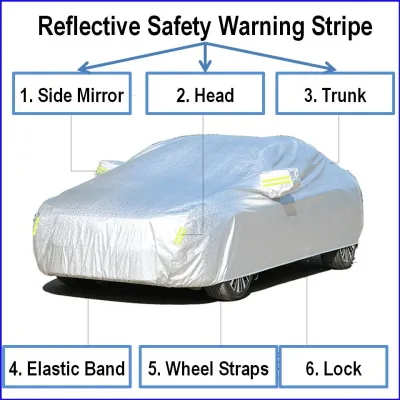
In contrast, a sedan-specific or custom-fit cover is tailored to the exact dimensions of your vehicle’s make and model. It features dedicated mirror pockets, contoured shaping for the hood and trunk, and elasticized hems that wrap snugly under the bumpers. Many also include built-in tie-down straps or buckle systems that pass under the chassis, ensuring the cover remains secure even during severe weather. Always verify your vehicle’s exact model year, dimensions, and mounting positions against the cover manufacturer’s compatibility database before purchasing.
Safe Usage and Maintenance Rules for High Humidity
Using a car cover in a tropical, high-humidity climate requires strict adherence to safe operating rules to avoid trapping moisture or damaging your vehicle. The absolute golden rule of car cover usage is to never apply a cover to a dirty or wet sedan. If you cover a car that has road grime, dust, or rain spots on it, the cover will press these abrasive particles into the clear coat, and the trapped moisture will create a breeding ground for mold and mildew.
Before applying the cover, ensure the vehicle’s bodywork is completely clean and dry. If you have just driven through a rain shower, wash the car to remove any acidic road spray, and dry it thoroughly with microfiber towels before putting the cover on.
Regular maintenance of the cover itself is also essential to preserve its protective coatings. Over time, the cover will accumulate bird droppings, tree sap, industrial fallout, and atmospheric dust. If left untreated, these acidic substances can eat through the waterproof and UV-resistant layers. Refer to the manufacturer’s care instructions for specific cleaning guidelines; typically, this involves washing the cover while it is installed on the car using a soft brush and a mild, pH-neutral car shampoo, then rinsing it thoroughly.
Never pack away a wet or damp cover into its storage bag. Doing so will inevitably lead to mold, mildew, and unpleasant odors, which can ruin the inner lining and transfer contaminants back onto your car’s paint during the next use. Hang the cover in a shaded, well-ventilated area until it is completely dry before folding it.
Finally, establish a safety boundary for extreme weather events. While a high-quality cover is designed to withstand wind and rain, severe tropical storms with gale-force winds can put immense stress on any cover. If a major storm is forecast, double-check that all tie-down straps are securely fastened and tightened. If the vehicle is parked in a highly exposed area, it may be safer to temporarily remove the cover to prevent wind damage to both the cover and the vehicle’s mounting points.
Frequently Asked Questions (FAQ)
Can I use an indoor car cover outdoors in Singapore?
No, you should never use an indoor car cover outdoors in Singapore. Indoor covers are designed solely to protect against dust in enclosed garages and lack the essential waterproof coatings, UV-inhibiting stabilizers, and heavy-duty tie-down straps required to survive outdoor conditions. If exposed to Singapore’s intense sun and heavy rain, an indoor cover will quickly saturate with water, trap moisture directly against your paint, and degrade within weeks due to UV damage.
Will a car cover trap moisture and cause rust in high humidity?
A poorly designed or improperly used cover can trap moisture and promote rust, but a high-quality, breathable cover will not. To prevent condensation buildup in Singapore’s humid climate, always choose a cover equipped with built-in air vents and breathable multi-layer fabrics that allow water vapor to escape. Additionally, strictly follow the rule of only applying the cover to a completely clean and dry vehicle, and avoid leaving the cover on for weeks at a time without checking the car.
Community discussion
Share your experience or ask a question. Comments are reviewed before publication.