
The Short Answer: Activated Charcoal in Tropical Climates
Activated charcoal does work to mitigate car odors in Singapore, but its performance is heavily constrained by the region’s persistent tropical humidity. While charcoal is highly effective at trapping odor-causing volatile organic compounds (VOCs), it must continuously compete with ambient water vapor for space within its microscopic pores. In an environment where relative humidity regularly exceeds 80 percent, the charcoal’s active surface area can quickly become saturated with moisture rather than odors.
Consequently, you should view activated charcoal as a conditional maintenance tool rather than a passive, zero-effort solution. Its long-term success depends entirely on strategic placement inside the cabin, regular solar recharging, and active management of the vehicle’s internal climate. When managed correctly alongside routine cabin maintenance, these charcoal bags offer a practical, chemical-free way to maintain a fresher interior.
How High Humidity Impacts Adsorption Capacity
To understand why tropical humidity poses such a challenge, it helps to look at the physical science behind how activated charcoal functions. Activated charcoal is carbon that has been treated with high temperatures or chemicals to develop a vast network of microscopic pores. This structure gives a small amount of charcoal an incredibly large surface area. Odors are neutralized through a process called adsorption, where gas-phase pollutants and volatile compounds physically adhere to the internal surfaces of these pores.
Products mentioned in this guide
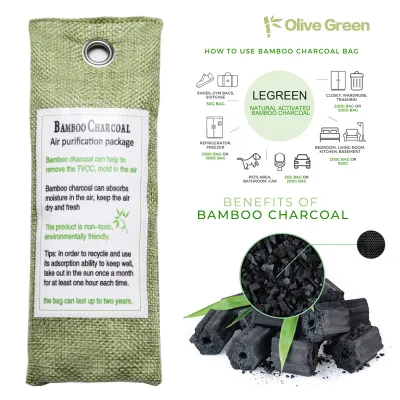


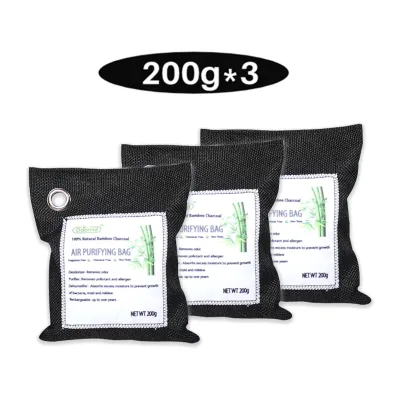
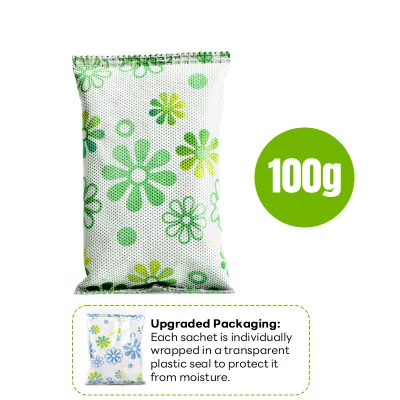
![[ Bundle of 16 ] Purfresh Moisture Absorber 600ML-Activated Charcoal x 16 Boxes](https://img.lazcdn.com/g/p/278a31e3b2d552f23900db3022e7bbaa.jpg_400x400q80.jpg_.webp)
Prices are valid at publication and may change. Please refer to the product page for the latest price.

Adsorption is fundamentally different from absorption. While absorption involves a substance being drawn into the bulk of a material—much like water soaking into a kitchen sponge—adsorption binds molecules strictly to the exposed surface area of the microscopic pores. Because this process relies on physical surface contact, any substance that blocks or occupies these pores will immediately reduce the charcoal’s ability to capture other airborne molecules.
In Singapore’s climate, water vapor is the primary competitor for these adsorption sites. Water molecules are highly polar and easily drawn into the charcoal’s micropores. When the air is thick with humidity, water vapor rapidly occupies the active sites that would otherwise trap odor molecules from food, sweat, or damp upholstery. Once these pores are filled with water, the charcoal becomes temporarily saturated, allowing odor-causing compounds to bypass the filter entirely and remain suspended in the cabin air.
This saturation process accelerates dramatically inside an enclosed vehicle. When a car is parked outdoors, solar heat creates a greenhouse effect, raising the interior temperature and causing any moisture trapped in the carpets, floor mats, or seat cushions to evaporate. As the cabin cools down later, this highly concentrated humidity is drawn directly into the most accessible porous materials nearby. Without regular intervention, a charcoal bag that might remain active for several months in a dry climate can lose its effectiveness in a matter of weeks under these conditions.
Observable Signs of Charcoal Saturation
Because the adsorption process occurs at a microscopic level, you cannot visually inspect the pores to see if they are full. Instead, you must rely on sensory cues and physical changes to determine when your charcoal purifier has stopped working. The most obvious indicator is the gradual return of musty, stale, or damp odors inside the cabin, particularly after the vehicle has been parked overnight with the windows closed.
Physical changes in the product can also signal that it has reached its moisture limit. Depending on the design of the bag, you may notice a distinct increase in its overall weight as it binds a significant volume of water from the air. In some cases, the loose, granular texture of the charcoal inside the fabric may begin to feel clumped, dense, or slightly damp to the touch. These physical changes indicate that the material is holding excess moisture and can no longer perform its primary function.
While many product labels suggest a fixed lifespan of up to two years, these estimates are rarely calculated based on constant exposure to tropical humidity. Rather than relying strictly on calendar dates, monitor the actual air quality inside your vehicle and inspect the physical state of the bag regularly. Always refer to the manufacturer’s environmental guidelines to understand how local humidity levels affect the expected operational window of your specific product.
Maintenance and Recharging Strategies for Humid Conditions
Fortunately, the physical bond between activated charcoal and adsorbed molecules is reversible, meaning you can restore its effectiveness through a simple maintenance process known as recharging. The most reliable and safest way to recharge a charcoal bag is to expose it to direct sunlight. Placing the bag outdoors under intense sunlight for two to three hours allows solar heat and ultraviolet (UV) radiation to break the weak physical bonds holding the trapped water and odor molecules.
As the charcoal heats up, the bound moisture evaporates back into the open air, clearing out the microscopic pathways and restoring the material’s adsorption capacity. In Singapore, timing this process requires a bit of planning due to sudden weather changes. Choose a clear, hot afternoon and place the bags on a dry, clean surface such as a balcony or a sunny ledge. Turning the bags over halfway through the exposure ensures that the heat penetrates the charcoal core evenly.
Where you position the charcoal inside your vehicle also plays a critical role in preventing premature saturation. Avoid placing the bags directly in front of or underneath active air conditioning vents. Air conditioning systems generate cold, highly concentrated air currents that can lead to localized condensation. If cold air blows directly onto a charcoal bag, it can cause moisture to pool on the fabric cover, saturating the charcoal instantly and rendering it temporarily useless.
Instead, place the bags in areas with passive, stable airflow where they can work gradually without being subjected to extreme temperature differentials. Suitable locations include:
- Under the front seats: Keeps the bags out of sight while allowing them to capture odors rising from the floor carpets.
- In the door pockets: Positions the charcoal near the cabin's mid-level air currents without blocking passenger space.
- On the rear parcel shelf: Exposes the bag to natural sunlight through the rear windscreen, which can provide a mild, continuous self-recharging effect during daytime driving.
A critical safety warning: never attempt to speed up the recharging process using artificial heat sources like household microwaves, ovens, or hair dryers unless the manufacturer’s product label explicitly details safe instructions for doing so. Applying uncontrolled, high-intensity heat to dry charcoal can damage the protective fabric casing, melt synthetic stitching, or even pose a combustion hazard. Stick to natural solar heat as the primary, low-risk restoration method.
When to Replace Charcoal or Consider Alternatives
While regular sunlight recharging can significantly extend the life of your activated charcoal, the material will eventually reach a point of permanent degradation. Over time, certain complex, heavy chemical compounds bind so tightly to the carbon pores that solar heat cannot dislodge them. If a charcoal bag fails to improve cabin freshness for more than a day or two after a thorough, multi-hour sunlight recharge, the active surface area has likely become permanently saturated, and the bag must be replaced.
Physical wear on the outer container is another clear sign that it is time for a replacement. If you notice tearing, thinning of the fabric, or charcoal dust leaking onto your car seats or carpets, dispose of the bag immediately. Replacement bags are relatively inexpensive, typically costing under S$10 to S$20, making them a highly budget-friendly maintenance tool when swapped out as needed.
If replacing the charcoal does not resolve the odor issues, you must look beyond passive air purifiers and investigate the root causes of cabin moisture. Start by inspecting your vehicle’s cabin air filter, which is typically located behind the glove compartment. A clogged, damp cabin air filter can harbor mold and mildew, continuously blowing musty air into the cabin every time you turn on the air conditioning. Refer to your vehicle’s owner manual for the correct replacement interval and procedure, or consult a qualified automotive technician to inspect the system.
Additionally, check for hidden moisture sources within the cabin. Wet floor mats from rainy-day footwear, damp umbrellas left in the footwells, or a blocked air conditioning drain line can cause water to pool under the carpets. A blocked AC drain line is a common issue in humid climates; it causes condensation to back up and overflow into the passenger footwell, creating a breeding ground for persistent mold. If you suspect a leak or a blocked drain, seek professional mechanical assistance to clear the line and dry the vehicle’s sub-flooring.
For severe, deeply entrenched odors—such as those caused by spilled milk, pet accidents, or long-term mold growth—passive charcoal bags and basic surface cleaning will not suffice. In these scenarios, professional interior detailing is required. Professional detailers use specialized equipment, such as hot-water extraction vacuums and deep-cleaning agents safe for automotive upholstery, to physically extract the odor-causing contaminants from deep within the seat foam and carpet fibers. Always verify that any cleaning products used are authorized for your specific interior materials, whether leather, vinyl, or fabric.
Frequently Asked Questions (FAQ)
Can I leave activated charcoal in the car overnight?
Yes, it is entirely safe to leave activated charcoal bags in your car overnight. Because they do not rely on electricity, chemicals, or synthetic fragrances, they act as safe, passive purifiers while your vehicle is parked. However, keep in mind that nighttime humidity in Singapore is often exceptionally high. The charcoal will continue to draw in moisture from the stagnant cabin air overnight, which makes regular daytime sunlight recharging even more important to maintain its long-term effectiveness.
Does activated charcoal remove cigarette smoke from car interiors?
Activated charcoal can help reduce the lingering smell of cigarette smoke by adsorbing airborne smoke particles and volatile organic compounds suspended in the cabin air. However, it cannot completely eliminate smoke odors on its own. Cigarette smoke leaves behind a sticky, chemical residue that physically embeds itself into the car’s headliner, seat fabrics, carpets, and hard surfaces. To fully remove smoke odors, you must combine the use of charcoal bags with a thorough deep cleaning of all interior surfaces, or seek professional detailing services to extract the embedded residue.

Community discussion
Share your experience or ask a question. Comments are reviewed before publication.