
A motorcycle raincoat does not inherently compromise your riding jacket’s safety, but improper layering can severely degrade your gear’s protective capabilities. Wearing a raincoat underneath a standard riding jacket or choosing an oversized, loose-fitting outer layer can displace impact armor, restrict physical mobility, and alter how the jacket behaves during a slide. To maintain optimal safety, riders must understand how adding an extra waterproof layer affects the fit, friction, and structural integrity of their primary protective gear.
The primary safety functions of a riding jacket rely on three pillars: abrasion resistance from heavy-duty textiles or leather, impact protection via CE-rated armor at the elbows, shoulders, and back, and high visibility. When you introduce an additional waterproof layer, you alter the physical dynamics of how these elements interact with your body and the road surface.
In wet conditions, the friction dynamics of a crash change. Initially, water on the asphalt acts as a lubricant, extending slide distances. However, as the slide progresses, the friction between the road and the gear generates intense heat, and any water trapped within the fabric fibers can rapidly vaporize or cause the material to stretch and fail prematurely. Understanding how a motorcycle raincoat interacts with your primary safety gear is essential for maintaining your safety margins during sudden tropical downpours, such as those common during Singapore’s monsoon seasons.
Products mentioned in this guide
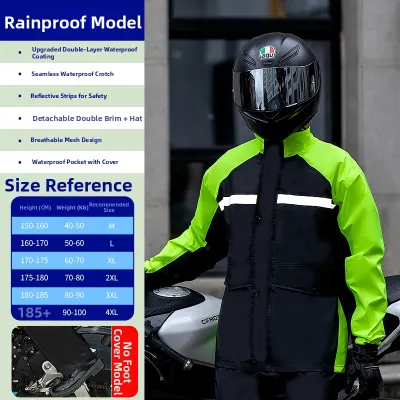
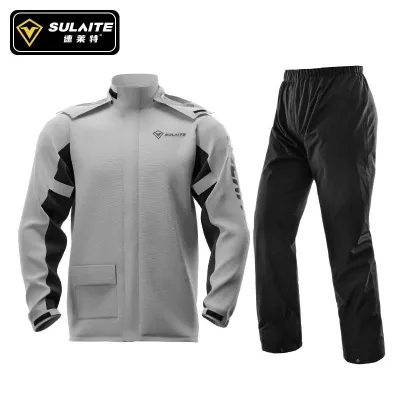
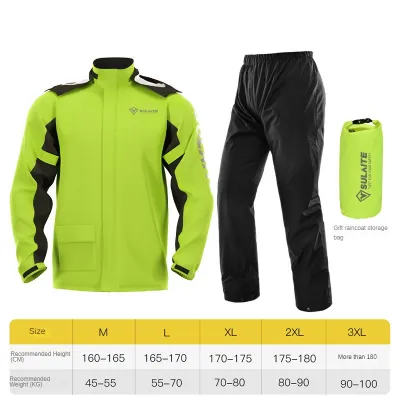
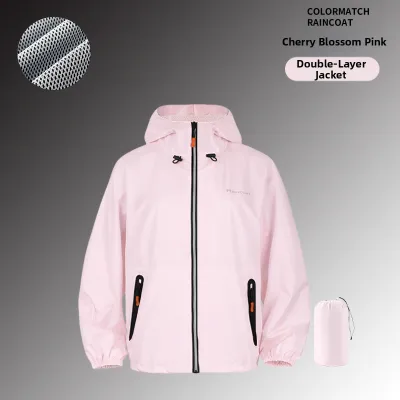
![[Ready Stock] Waterproof Rain Coats Oxford Cloth Raincoat Motorcycle Rain Coat Jacket Men Raincoats Windproof Reflective Strip Elastic Waistband Suit Impermeable Rain Jackets Suit Baju Hujan](https://img.lazcdn.com/g/p/d0538d9c2c04e137b5ee85f105977ae5.jpg_400x400q80.jpg_.webp)
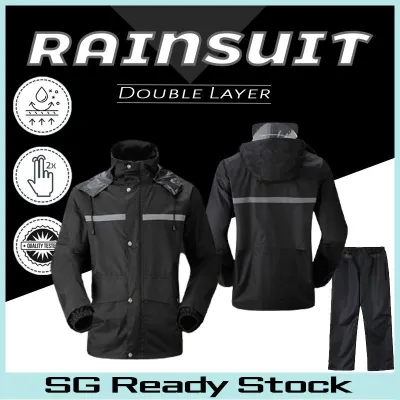
Prices are valid at publication and may change. Please refer to the product page for the latest price.
How Layering Affects Your Riding Jacket's Protection
To understand the impact of layering, one must examine how protective motorcycle gear is engineered. Riding jackets are designed to fit snugly against the body so that the impact-absorbing armor protectors remain securely positioned over the joints. When a rider inserts or overlays a non-motorcycle-specific raincoat, the physical dimensions of the gear assembly change, which can pull the armor away from its designated zones.
Furthermore, the materials used in riding jackets behave differently when wet. Heavy-duty Cordura, nylon, and leather are highly resistant to tearing and abrasion when dry. However, when these materials become waterlogged, they can stretch, become significantly heavier, and lose some of their structural rigidity. This waterlogging can cause the jacket to sag, allowing internal armor pockets to shift during an impact or slide.
The interaction between the outer raincoat and the asphalt also introduces safety variables. During a slide, a lightweight, non-motorcycle-rated raincoat will shred within fractions of a second. This rapid destruction can cause the shredded material to bunch up, potentially catching on the road surface and initiating a violent tumble rather than a smooth slide. A smooth slide is always preferable because it distributes the impact forces and allows the jacket’s abrasion-resistant panels to do their job.
Wearing a Motorcycle Raincoat Over Your Jacket: Safety Impacts
Wearing a motorcycle raincoat over your riding jacket is widely considered the most effective way to manage wet weather while riding. This configuration acts as a primary shield, protecting both the rider and the underlying safety gear from the elements. However, this method is not without its own set of safety considerations and potential drawbacks that riders must carefully evaluate.

The Protective Benefits of Outer Layering
When you wear a dedicated motorcycle raincoat over your jacket, the primary benefit is the preservation of your jacket’s structural integrity. By blocking water from reaching the outer shell of your riding jacket, the raincoat prevents the fabric or leather from becoming waterlogged. A dry jacket retains its original engineered weight, ensuring that the rider does not experience the physical fatigue associated with carrying kilograms of absorbed water.
Additionally, keeping the jacket dry prevents the stretching of textile fibers and the stiffening or degradation of leather. Leather jackets are particularly vulnerable to water damage; repeated soaking and drying cycles leach out natural oils, causing the leather to dry out, crack, and lose its tensile strength over time. By shielding the leather with an external waterproof barrier, you extend the lifespan of your protective gear and ensure its abrasion-resistant properties remain intact.
Furthermore, a dry jacket maintains its original fit. When textile fibers absorb water, they can loosen, which can cause the internal armor pockets to sag or shift. Keeping the jacket dry ensures that the CE-rated armor at your elbows and shoulders remains firmly pressed against your body, ready to absorb impact forces exactly where they are needed most.
Safety Risks and Abrasion Limitations
Despite the clear benefits, wearing a raincoat as an outer layer introduces specific safety risks that riders must manage. Standard motorcycle raincoats are designed solely for waterproofing and windproofing; they generally lack any meaningful abrasion resistance. If you slide on asphalt, the outer raincoat will shred almost instantly, meaning you must rely entirely on the underlying riding jacket for slide protection.
Another significant risk is aerodynamic flapping. If an outer raincoat is too loose, the wind resistance at highway speeds will cause the fabric to flap violently. This constant movement not only causes rapid rider fatigue but can also catch on motorcycle components, mirrors, or passing obstacles. More critically, a flapping or shifting raincoat can slide up and obscure the high-visibility panels and reflective elements built into your riding jacket, reducing your visibility to other motorists in low-light storm conditions.
To mitigate these risks, riders should follow these actionable guidelines:
- Select a Snug Fit: Choose a motorcycle-specific raincoat designed with elastic adjusters, hook-and-loop straps, or drawcords at the waist, biceps, and collar to eliminate excess fabric flapping.
- Prioritize High-Visibility Features: Ensure the raincoat itself features prominent retroreflective striping and high-visibility yellow or orange panels to compensate for covering your jacket's reflective elements.
- Verify Range of Motion: Before riding, put on your full gear assembly—including the riding jacket and the outer raincoat—and sit on your motorcycle to ensure you can reach the handlebars and controls comfortably without restriction.
The Risks of Wearing Rain Gear Under Your Riding Jacket
While wearing rain gear under a riding jacket might seem like an appealing way to maintain a streamlined profile, this practice introduces severe safety compromises. Positioning a waterproof barrier beneath your primary protective layer fundamentally alters how your gear fits and how your body regulates temperature, creating hazards that can lead to both physical injuries and riding errors.
Armor Displacement and Fit Issues
The most critical hazard of wearing a raincoat under your riding jacket is the displacement of protective armor. Riding jackets are engineered to fit snugly over a standard base layer or a thin mid-layer. Inserting a bulky, non-breathable raincoat underneath the jacket crams excess material into tight spaces, which physically pushes the CE-rated elbow, shoulder, and back armor out of their correct anatomical positions.
During a crash, armor that has shifted even a few centimeters can fail to protect the joint, leading to severe fractures or joint dislocations. Furthermore, this tight, bunched-up layering restricts blood flow to your arms and hands, leading to numbness, tingling, and reduced tactile feedback from your motorcycle’s throttle, front brake, and clutch levers. This restriction slows your reaction times, increasing the likelihood of an accident in hazardous wet conditions.
Additionally, because the rain gear is worn underneath, the outer riding jacket is left completely exposed to the downpour. The jacket will quickly become saturated with water, increasing its weight significantly. This extra weight causes the wet fabric to sag and stretch, further loosening the fit of the armor and allowing it to shift freely when you slide or impact the ground.
Moisture Trapping and Material Stress
Wearing a waterproof, non-breathable layer close to your body also creates severe physiological issues, especially in warm, humid climates like Singapore. An inner raincoat acts as a vapor barrier, trapping sweat and body heat against your skin. Because the air cannot circulate, your body’s natural cooling mechanism fails, which can rapidly lead to heat exhaustion, dehydration, and a dangerous loss of concentration.
Conversely, in cooler riding conditions, this trapped moisture can cause rapid heat loss once you stop riding or if the temperature drops. The dampness against your skin conducts heat away from your body much faster than dry air, leading to shivering, muscle stiffness, and a further decline in riding control.
Because of these severe drawbacks, riders should avoid wearing separate rain gear under their riding jackets. This method should only be used if you are utilizing an ultra-thin, highly breathable, manufacturer-specific waterproof liner that is explicitly designed to integrate with your specific jacket model without affecting the armor pockets or overall fit.
How to Verify Armor Placement When Wearing a Raincoat
When you choose to layer a motorcycle raincoat over your riding jacket, you must perform a systematic safety check to ensure your protective gear remains fully functional. Do not assume that your armor is correctly positioned just because it felt right before you put on the outer layer. Use this practical checklist to verify your gear’s protective geometry before every wet-weather ride:
- Perform the Pinch and Slide Test: Once you have zipped up both your riding jacket and the outer motorcycle raincoat, assume your active riding posture. Reach over with your opposite hand and physically pinch the armor inserts at your elbows and shoulders. Try to slide the armor side-to-side; if the armor moves more than two centimeters away from the center of the joint, your gear is too loose, and the armor may fail to protect you during an impact.
- Adjust Internal and External Straps: Most modern riding jackets feature adjustment straps on the forearms, biceps, and waist. Before putting on your outer raincoat, tighten these straps to lock the armor pockets firmly against your limbs. Once the outer raincoat is on, use its built-in adjusters (such as hook-and-loop tabs or elastic drawstrings) to compress any excess fabric and prevent wind from getting underneath the layers.
- Check the Back Protector Alignment: Stand up straight, then lean forward into your typical riding position. Have a fellow rider check, or use a mirror to verify, that your back protector remains centered over your spine. Ensure the top of the back protector does not ride up to press against the base of your helmet, which can restrict your ability to look up and scan the road ahead.
- Monitor Mid-Ride Gear Shifting: As you ride, pay close attention to how your gear feels. If you feel the sleeves twisting, the armor sliding down your forearms, or the raincoat collar pulling back against your throat, these are warning signs that your gear has shifted. Do not attempt to adjust your gear while in motion. Instead, safely pull over at a secure location, such as a petrol station or a sheltered parking bay, to readjust your layers and restore proper armor alignment.
Safer Alternatives to Separate Motorcycle Raincoats
For riders who frequently commute in wet weather or embark on long-distance tours, relying on separate, loose-fitting raincoats can become tedious and introduce unnecessary safety risks. Fortunately, the motorcycle gear industry has developed several integrated solutions that offer superior waterproofing without compromising your impact or abrasion protection.
- Waterproof Riding Jackets (Laminated Membranes): The gold standard for wet-weather riding is a jacket with a laminated waterproof membrane (such as Gore-Tex or proprietary equivalents). In these jackets, the waterproof barrier is bonded directly to the outer abrasion-resistant shell. This design prevents the jacket from absorbing water entirely, eliminating waterlogging and keeping the jacket lightweight and snug. Because the waterproofing is built into the outer shell, your CE-rated armor remains perfectly positioned inside the dry interior.
- Drop-in Waterproof Liners: Many multi-season adventure and touring jackets come with manufacturer-specific, removable waterproof liners. These liners are engineered to zip directly into designated attachment points inside the jacket, ensuring they lay perfectly flat against the interior. Because they are designed specifically for that jacket model, they do not displace the armor or restrict your joint mobility, offering a much safer and more comfortable fit than generic under-layers.
- Motorcycle-Specific Over-suits: If you prefer using an external rain barrier, opt for a high-quality, motorcycle-specific one-piece or two-piece over-suit. These suits are engineered with pre-curved limbs to accommodate bulky armor, heavy-duty heat shields on the inner legs to prevent melting on hot exhaust pipes, and robust storm flaps over the zippers to prevent water intrusion at highway speeds.
- Essential Buying Criteria: When shopping for wet-weather riding gear in Singapore, look for clear safety and performance labels. Ensure the gear features fully taped or sealed seams, a waterproof rating of at least 10,000 mm hydrostatic head, and high-visibility certification (such as EN ISO 20471). Always verify that any integrated armor carries a CE Level 1 or Level 2 certification (EN 1621-1 for limbs and EN 1621-2 for back protectors) to guarantee adequate impact absorption.
Frequently Asked Questions (FAQ)
Can I use a regular hardware store raincoat for motorcycle riding?
No, you should never use a standard hardware store or fashion raincoat for motorcycle riding. These generic raincoats are made from thin, fragile plastics or PVC materials that lack any abrasion resistance and will shred instantly upon contact with asphalt. Furthermore, they are not aerodynamically designed, meaning they will flap violently at speed, balloon with air, and potentially tear apart or restrict your vision and physical control. They also lack heat-resistant panels, posing a severe risk of melting onto your motorcycle’s hot exhaust or engine components.
Does a wet riding jacket lose its abrasion resistance?
A wet riding jacket can experience a temporary reduction in its protective performance, depending on the material. High-quality synthetic textiles like Cordura generally maintain their tensile strength when wet, but the waterlogged fibers can stretch more easily, potentially allowing armor pockets to shift during a slide. Leather, on the other hand, absorbs water readily, which temporarily softens the hide and can slightly reduce its immediate tear resistance. To maintain your gear’s protective qualities, always dry your jacket naturally in a well-ventilated area away from direct heat sources, and apply leather conditioner to leather jackets once dry to prevent stiffening and cracking.
Should I size up my riding jacket to fit a raincoat underneath?
No, you should never size up your primary riding jacket to accommodate an under-layer. Buying an oversized jacket means that when you are not wearing the raincoat underneath, the jacket will be too loose, causing the CE-rated armor to slip away from your elbows and shoulders during a crash. Your riding jacket must always be sized to fit your body perfectly with only a standard base layer or thin mid-layer underneath. If you need wet-weather protection, use a properly sized outer motorcycle raincoat or invest in a jacket with an integrated waterproof membrane.
Community discussion
Share your experience or ask a question. Comments are reviewed before publication.