
Every driver has experienced that sudden jolt of adrenaline when a vehicle seemingly materialises out of nowhere in an adjacent lane. This dangerous phenomenon is caused by a blind spot—an area around your vehicle that cannot be directly observed while looking forward or through standard rearview and side mirrors. While many motorists immediately turn to aftermarket stick-on blind spot mirrors as a quick fix, others argue that a simple, scientifically backed adjustment of your existing side mirrors can completely eliminate these hidden zones. Deciding between these two approaches requires evaluating your vehicle’s design, your daily driving environment, and your willingness to adapt to a non-traditional mirror setup. For many modern passenger cars, proper adjustment is entirely sufficient, but specific vehicle geometries and driving conditions make physical blind spot mirrors an invaluable safety addition.
Understanding Your Vehicle's Blind Spots
To make an informed decision, you must first understand the physical limitations of standard automotive mirrors. Most factory-installed driver-side mirrors are flat (planar) glass, which provides an accurate representation of distance but offers a very narrow field of view. The passenger-side mirror is typically convex, curving slightly outward to widen the view at the expense of distance perception. Despite this curvature, standard mirrors cannot cover the entire lateral space alongside your vehicle. A blind spot exists because there is a physical gap between where your peripheral vision ends and where the mirror’s reflective angle begins.
In Singapore, where vehicles are right-hand drive (RHD), this physical limitation takes on a specific spatial dynamic. Because you sit on the right side of the cabin, your physical distance from the left (passenger) mirror is much greater than your distance from the right (driver) mirror. This increased distance narrows your field of view through the left mirror, creating a significantly larger and more dangerous blind spot on your left side. Conversely, while the right-side blind spot is physically smaller due to your proximity to the glass, it remains a critical hazard during quick lane changes.
Products mentioned in this guide
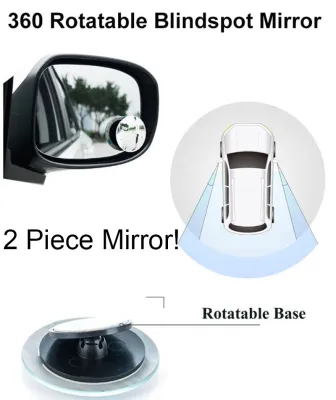
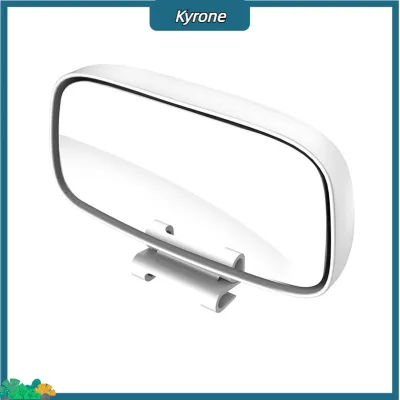
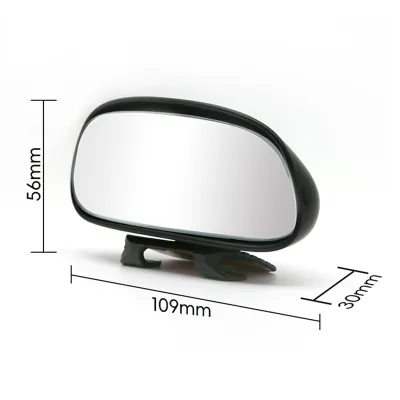

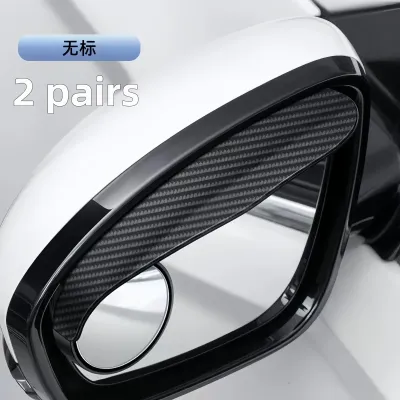
Prices are valid at publication and may change. Please refer to the product page for the latest price.
This spatial challenge is amplified by the unique composition of local traffic. Multi-lane expressways like the PIE, AYE, and CTE are highly congested, featuring a dense mix of passenger cars, heavy commercial vehicles, and highly agile motorcycles. Motorcycles and compact delivery scooters are particularly vulnerable to disappearing within these blind zones. Because of their small physical profile, a motorcycle filtering between lanes can easily be completely obscured by your vehicle’s C-pillar or the narrow viewing angle of unadjusted flat mirrors, making lane changes a high-risk maneuver if your mirrors are not optimized.
How to Diagnose Your Current Mirror Adjustment
Determining whether your current mirror setup is safe requires an honest self-assessment of how you adjust them. Most drivers were taught a traditional method: positioning the side mirrors so that the flank of their own vehicle is visible in the inner edge of the glass. While this setup provides a comforting point of reference, it is highly inefficient. By keeping your own car’s bodywork in view, you are pointing the mirrors too far inward, creating a massive overlap with your central cabin rearview mirror. This means you are essentially looking at the same rearward space three times, while leaving the critical lateral spaces next to your rear doors completely unmonitored.

To modernise your setup, you should test the outward-pushing adjustment method, often referred to as the SAE standard. To adjust your right (driver-side) mirror, lean your head to the right until it almost touches the driver’s side window, then adjust the mirror outward until you can just barely see the rear fender of your car. For the left (passenger-side) mirror, lean your head to the left toward the center console, and adjust that mirror outward until you can just see the left rear fender. When you sit back in your normal driving position, you should no longer see your own car in either side mirror. Instead, your side mirrors now cover the lanes directly adjacent to you, while your cabin rearview mirror covers the space directly behind.
You can easily diagnose the effectiveness of this setup with a simple tracking test while driving in a multi-lane scenario. Watch a vehicle approaching from behind in your cabin rearview mirror. As it starts to overtake you and moves out of the rearview mirror’s frame, its front bumper should immediately appear in your side mirror without any delay or “disappearing” phase. If the vehicle completely vanishes from your rearview mirror before it becomes visible in your side mirror, your side mirrors are still angled too far inward, leaving a dangerous blind spot that must be corrected.
Another clear warning sign of an inadequate setup is your physical behavior behind the wheel. If you find yourself constantly having to twist your torso or crane your neck excessively to verify if a lane is clear, your mirrors are not doing their job. While a quick shoulder check is always necessary, a properly adjusted mirror system should allow you to detect the presence of an adjacent vehicle with a simple glance, requiring only a minor turn of the head to confirm.
When Proper Adjustment Is Enough
For a large portion of motorists, buying physical accessories is entirely unnecessary if they utilize modern vehicle features and correct habits. If your car is a modern sedan or hatchback, it may already be equipped with factory-engineered solutions designed to combat this issue. Many European and Japanese models come standard with aspherical or “double-curvature” driver-side mirrors. These mirrors feature a subtle vertical line near the outer edge; the glass beyond this line curves outward more aggressively, naturally expanding your field of view and eliminating the need for any stick-on additions.
Furthermore, if your vehicle is equipped with an active Blind Spot Monitoring (BSM) system, aftermarket mirrors are rarely needed. These systems use radar or ultrasonic sensors located in the rear bumper to detect vehicles in adjacent lanes, alerting you with a warning light on the side mirror glass or A-pillar, accompanied by an audible beep if you signal a lane change. When combined with properly angled standard mirrors, these active safety suites provide a highly reliable, multi-layered defense system that makes physical stick-on convex mirrors redundant.
Your typical driving environment also dictates whether standard mirrors are sufficient. If your daily commute consists primarily of structured, predictable driving on well-marked expressways with consistent traffic flow, properly adjusted standard mirrors are more than capable of keeping you safe. In these scenarios, traffic moves at uniform speeds, and lane changes are generally planned and gradual, allowing your adjusted mirrors to provide a clear, reliable picture of the surrounding lanes.
Regardless of how perfectly your mirrors are adjusted or what advanced electronic systems your car possesses, you must always remember that the physical shoulder check remains the ultimate, non-negotiable fail-safe. No mirror setup can completely replace a quick glance over your shoulder to the left or right before changing lanes. A shoulder check covers the physical gap that no glass can reach, ensuring that a low-profile motorcycle or a vehicle traveling at a high rate of speed is fully accounted for before you initiate any lateral movement.
When Stick-On Blind Spot Mirrors Are Necessary
Despite the benefits of proper mirror adjustment, certain vehicles and driving environments present physical limitations that standard mirrors simply cannot overcome. Older vehicle models, basic trim levels lacking electronic driver aids, and vehicles with specific structural designs are prime candidates for aftermarket stick-on mirrors. For instance, sport utility vehicles (SUVs), multi-purpose vehicles (MPVs), panel vans, and station wagons often feature thick C-pillars, high beltlines, and small rear windows. These design traits create massive physical obstructions that block your direct line of sight during shoulder checks, making a wide-angle convex mirror a vital tool.
Your daily driving environment in Singapore can also make these accessories a practical necessity. If your daily route involves navigating dense, highly congested urban areas like the Central Business District (CBD), or negotiating complex, fast-merging slip roads and short expressway entry ramps, your reaction windows are incredibly narrow. In heavy bumper-to-bumper traffic, vehicles and motorcycles constantly cut in and out of lanes from unpredictable angles. A stick-on convex mirror provides an immediate, continuous wide-angle view of your immediate flanks, allowing you to monitor rapid traffic movements without constantly taking your eyes off the road ahead.
However, adding stick-on mirrors involves several distinct trade-offs that you must carefully evaluate. The most significant drawback is distance distortion. Because these mirrors use highly curved convex glass to achieve a wide field of view, objects will appear much smaller and significantly further away than they actually are. Relying solely on a stick-on mirror to judge whether it is safe to merge can lead to dangerous miscalculations. Additionally, these mirrors can catch and scatter headlight glare from vehicles behind you at night, which can be highly distracting. Finally, because they must be stuck directly onto your existing mirror glass, they physically block a portion of your primary, undistorted reflection, reducing your overall rearward visibility if not positioned correctly.
Selecting and Installing Blind Spot Mirrors Safely
If you decide that your vehicle or driving habits require the added security of stick-on mirrors, selecting the right product and installing it correctly is paramount to maintaining road safety. When browsing online marketplaces or local automotive accessory shops, you will encounter various shapes and designs. Round convex mirrors are the most common and affordable, but they can take up a significant amount of your main mirror’s surface area. Fan-shaped or shield-shaped designs are often preferred because they fit neatly into the outer corners of your mirror housing, maximizing the wide-angle view while minimizing the obstruction of your primary glass.
You must also choose between fixed and adjustable swivel-base designs. Swivel-base mirrors allow you to fine-tune the angle of the stick-on mirror independently of the main side mirror, which is highly beneficial if multiple people drive the same vehicle. However, they protrude further from the mirror surface, which can increase wind noise or make them more susceptible to damage during automatic car washes. Frameless designs offer a cleaner aesthetic and a slightly larger reflective surface area compared to framed options of the same physical size.
For installation, optimal placement is critical. Before applying any adhesive, consult your vehicle’s manual to ensure the placement does not interfere with auto-dimming features, heating elements, or built-in turn signal indicators on your side mirrors. Generally, the best position is the outer lower corner of the side mirror housing. This placement places the wide-angle view exactly where a blind spot naturally begins, while leaving the upper and inner portions of your main mirror free to provide an undistorted view of the lane behind you.
To install the mirror safely, follow these precise steps:
- Clean the surface: Thoroughly clean the side mirror glass using an alcohol-based glass cleaner to remove all dirt, grease, and wax residue. Ensure the surface is completely dry.
- Test fit: Before removing the adhesive backing, hold the stick-on mirror against the glass to verify the position and ensure it does not block critical views.
- Apply and press: Peel off the adhesive backing (typically high-strength acrylic foam tape), position the mirror carefully, and press firmly for at least thirty seconds to ensure a secure bond.
- Allow to cure: Avoid washing your car, exposing it to heavy rain, or adjusting the mirror swivel for at least 24 hours to allow the adhesive to fully cure and prevent the accessory from detaching while driving.
Once installed, you must undergo an adaptation period. Do not immediately rely on the new mirrors in heavy traffic. Spend a few days practicing distance judgment in a quiet, low-traffic environment. Observe how vehicles passing you look in both the main mirror and the stick-on mirror, training your brain to accurately interpret the distorted distance representation before using them on busy expressways.
Frequently Asked Questions (FAQ)
Are stick-on blind spot mirrors legal in Singapore?
Yes, small stick-on blind spot mirrors are generally legal and tolerated for use on passenger vehicles in Singapore, provided they meet specific safety criteria. They must be securely attached to the existing mirror housing or glass to prevent them from detaching and becoming road hazards. Furthermore, they must not protrude beyond the original width of your vehicle’s side mirrors, feature any dangerous sharp edges, or obstruct the primary view of your main side mirrors in a way that compromises safe vehicle operation during official vehicle inspections.
Do blind spot mirrors cause glare at night?
Yes, because blind spot mirrors utilize convex glass to achieve a wider field of view, they can catch, scatter, and amplify the headlights of trailing vehicles, potentially causing distracting glare during night driving. To mitigate this issue, look for stick-on mirrors that feature an anti-glare or blue-tinted coating designed to reduce light reflection. Alternatively, if you use an adjustable swivel-base model, you can angle the stick-on mirror slightly downward to direct intense headlight beams away from your eyes, while still relying on your main mirror and mandatory physical shoulder checks to verify adjacent lanes in the dark.
Community discussion
Share your experience or ask a question. Comments are reviewed before publication.