
Driving in highly congested urban environments demands constant vigilance. In Singapore, where expressways like the Pan Island Expressway (PIE) and Central Expressway (CTE) carry dense traffic alongside thousands of maneuvering motorcycles, a split-second gap in visibility can lead to critical situations. Many drivers wonder if their standard factory mirrors are sufficient or if they need to upgrade their setup. If you frequently find yourself startled by vehicles suddenly appearing in your peripheral vision, or if you struggle to judge the distance of lane-filtering motorbikes, upgrading your vehicle with an option like the A-Tech blind spot mirror is a highly practical, low-cost solution. This secondary optical tool is designed to eliminate dangerous blind spots by expanding your lateral field of view, helping you make safer lane changes and park with greater precision.
Before purchasing any aftermarket accessory, verify your vehicle’s model, mirror dimensions, and mounting surface from your specific vehicle documentation to ensure compatibility, as you should never infer compatibility from generic category terms. If your vehicle features advanced electronic mirror systems, heated glass, or auto-dimming features, refer to your original-vehicle instructions before installing any adhesive accessories. If you are unsure about modifying your mirrors or if the installation instructions conflict with your car’s manual, consult a qualified automotive professional before proceeding.
Understanding Blind Spots and Factory Mirror Limitations
To understand why you might need an upgrade, it is essential to look at how vehicle blind spots occur. Blind spots are the areas of the road adjacent to your vehicle’s rear quarters that cannot be seen in your central rearview mirror or your standard side mirrors. When a vehicle in an adjacent lane approaches you, it transitions from your rearview mirror to your side mirror. However, because of the physical structure of your car—specifically the B-pillars and C-pillars that support the roof—there is a physical gap where the approaching vehicle is too far forward to be seen in the side mirror, yet not far enough forward to be caught by your peripheral vision. This is the danger zone.
Products mentioned in this guide
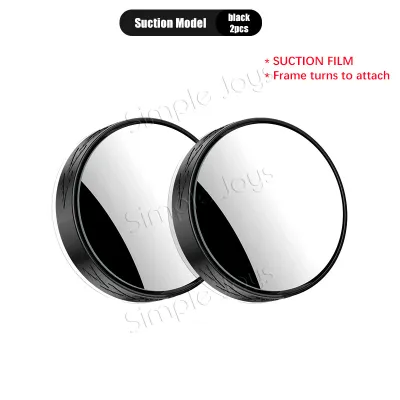
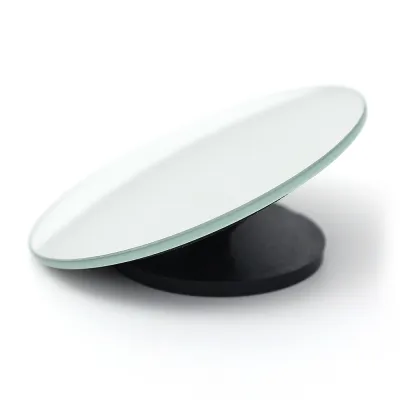
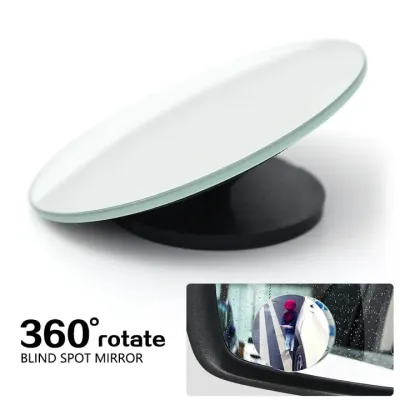
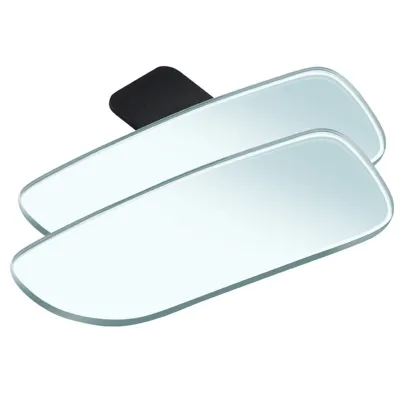
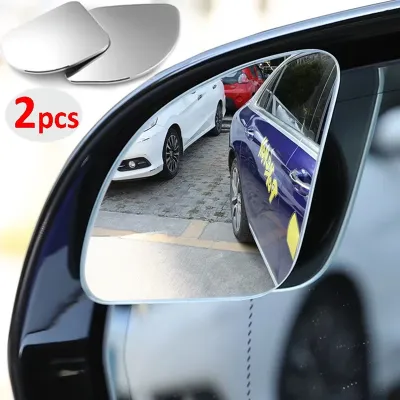
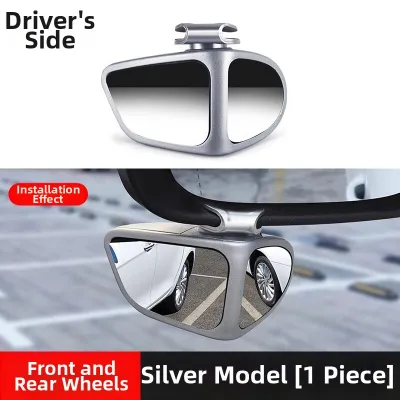
Prices are valid at publication and may change. Please refer to the product page for the latest price.
Standard factory side mirrors are engineered with specific optical profiles. Flat mirrors, which are common on the driver’s side in many markets, offer a highly accurate 1:1 reflection with zero distortion, allowing you to judge speed and distance perfectly. However, their field of view is incredibly narrow. To compensate, many manufacturers install convex side mirrors, which curve slightly outward to widen the viewing angle. While convex mirrors help, they still cannot capture a full 180-degree lateral view without severe edge distortion. The physical dimensions of the mirror housing limit how much of the adjacent lane can be reflected.
This is where an add-on blind spot mirror, such as an A-Tech blind spot mirror, becomes highly valuable. These compact accessories feature a highly pronounced convex curvature, compressing a much wider field of view into a small surface area. When attached to your existing mirror glass, they act as a dedicated wide-angle lens. This allows you to monitor the immediate lateral lanes and low-lying ground areas without losing the long-distance tracking capabilities provided by your primary, flatter side mirror glass.
Self-Diagnosis: Signs Your Visibility Needs an Upgrade
Determining whether your specific vehicle requires a visibility upgrade involves observing your daily driving experiences and performing a few simple diagnostic checks.

The most immediate sign that your visibility needs an upgrade is the “startle” factor. If you regularly experience moments where a car, taxi, or delivery motorcycle suddenly appears right next to your front door without you seeing it approach, your current mirror configuration is failing to cover critical gaps. This issue is amplified on Singapore’s multi-lane expressways, where rapid lane-filtering by motorcycles is common. If you find yourself hesitating during lane changes because you lack confidence in what your mirrors are showing you, it is a clear indicator that your visual field is incomplete.
Your vehicle’s physical profile also plays a significant role in creating optical dead zones. Modern vehicle designs prioritize aerodynamics and crash safety, which often results in thicker C-pillars, higher beltlines, and smaller rear windows. If you drive a larger vehicle, such as a Sport Utility Vehicle (SUV) or a Multi-Purpose Vehicle (MPV), your physical blind spots are inherently much larger than those of a compact hatchback or sedan. The elevated ride height of these vehicles also makes it incredibly difficult to see lower-profile sports cars or motorcycles riding close to your rear doors, making an auxiliary wide-angle mirror highly beneficial.
You can perform a simple mirror adjustment test to evaluate your current setup. Sit in your normal driving position and adjust your central rearview mirror to frame your rear window perfectly. Next, adjust your side mirrors outward until the inner edges barely show the side of your own car. Have a friend walk slowly from the rear of your car outward into the adjacent lane. If there is a point where the person completely disappears from both the rearview mirror and the side mirror before entering your physical peripheral vision, your factory mirrors cannot cover the gap. A blind spot mirror is highly recommended to bridge this specific visual void.
Low-speed maneuvering struggles are another common sign of visibility gaps. Navigating tight multi-story car parks, parallel parking along high concrete curbs, or reversing into narrow parking lots can be incredibly stressful if you cannot see the ground near your rear wheels. If you find yourself constantly adjusting your power side mirrors downward to avoid scraping your alloy wheels, or if you struggle to spot low bollards and pillars, your vehicle lacks low-level lateral visibility. A wide-angle add-on mirror can be positioned to permanently reflect these low-lying obstacles, saving you from expensive wheel and bodywork repairs.
When a Blind Spot Mirror Is Not the Right Solution
While blind spot mirrors are highly effective, they are not a universal fix for every vehicle or driver, and there are specific scenarios where installing one is not the right solution.
If your vehicle is equipped with a modern, factory-installed electronic Blind Spot Monitoring (BSM) system, adding a physical blind spot mirror may be redundant and counterproductive. Electronic BSM systems use radar or ultrasonic sensors mounted in the rear bumper to detect approaching vehicles, alerting you with visual indicators on the mirror glass or A-pillar, often accompanied by auditory warnings if you signal. Adding a physical stick-on mirror over your factory glass can clutter your visual field. In some cases, it may even block the built-in LED warning indicators or interfere with the auto-dimming and heating elements of your factory mirror. Always consult your vehicle’s manufacturer instructions before applying any adhesive accessories to specialized mirror glass.
Visual obstruction is another critical risk to consider. To be effective, a blind spot mirror must be relatively small. If you purchase an oversized add-on mirror, it will occupy a significant portion of your primary side mirror’s surface area. Your primary mirror is absolutely essential for judging the speed and distance of fast-approaching vehicles further down the road. If a bulky plastic-framed convex mirror blocks this view, you are trading long-distance safety for short-distance lateral coverage. This compromise can make highway driving highly dangerous, as you will struggle to judge whether a vehicle in the distance is approaching too fast for you to safely merge.
Finally, there is the risk of over-reliance. It is a fundamental safety boundary that no mirror, camera, or sensor can completely eliminate the need for a physical shoulder check. Convex mirrors compress a wide field of view, which inherently distorts your perception of depth and distance; objects in a convex mirror are always much closer than they appear. If a driver intends to use a blind spot mirror as a shortcut to avoid turning their head, they are creating a severe safety hazard. If you are unwilling to maintain the habit of performing physical head turns before changing lanes, relying solely on an optical add-on will eventually lead to a collision.
Selecting and Safely Installing an A-Tech Blind Spot Mirror
If you have diagnosed a genuine need for a visibility upgrade, selecting the right product and installing it correctly is crucial for both safety and durability.
When evaluating your options, prioritize high-quality glass lenses over cheap plastic alternatives. Glass mirrors resist scratching from road debris and wiper action, and they maintain optical clarity under harsh sunlight. Look for a frameless design, as this maximizes the usable reflective surface area without adding unnecessary bulk to your factory mirror housing. You must also choose between a fixed convex mirror and an adjustable swivel-mounted model. Swivel models allow you to fine-tune the angle of the blind spot mirror independently of the main mirror, which is highly advantageous if multiple drivers of different heights share the same vehicle.
Before mounting the accessory, thorough surface preparation is essential to ensure a long-lasting bond. First, check the product label of your chosen blind spot mirror for specific adhesive instructions and compatibility warnings. To clean the factory mirror glass, use a clean microfiber cloth and isopropyl alcohol, which is highly effective for removing road grime, wax, and water spots. Only use cleaners authorized for non-porous glass surfaces; avoid household glass cleaners that leave a water-repellent silicone film, as this will prevent the double-sided adhesive tape from bonding properly. Take care not to spill or apply isopropyl alcohol onto the surrounding plastic mirror housing, rubber seals, or car paint, as it is only authorized for non-porous glass surfaces and may damage other materials. Additionally, check your vehicle manual to ensure that applying adhesive will not damage specialized mirror coatings, such as auto-dimming or heated glass elements. Singapore’s hot, humid climate and frequent heavy rainstorms place immense stress on adhesives, so ensure the tape is rated for high-temperature and moisture resistance before final application.
Determining the placement strategy is your next step. Before peeling off the adhesive backing, use a small piece of temporary tape to position the mirror on your glass, then sit in the driver’s seat to evaluate the view.
- Outer Lower Corner: This is the most popular position for highway driving. It projects the wide-angle view furthest outward into the adjacent lanes, making it ideal for spotting overtaking cars and lane-filtering motorcycles on expressways.
- Inner Lower Corner: This position is highly favored for urban driving and parking. It directs the wide-angle view downward toward your vehicle's rear wheel and the curb line, making it much easier to navigate tight parking spaces and avoid curb damage.
- Outer Upper Corner: Some drivers prefer this position to keep the lower portion of the primary mirror completely clear, though it may slightly reduce your view of low-lying ground obstacles.
Once you have selected the ideal position, peel the adhesive backing, press the mirror firmly onto the cleaned glass for the duration recommended by the manufacturer, and allow the adhesive to cure completely. After installation, sit in your normal driving position and re-adjust both your primary side mirror and the new blind spot mirror to eliminate redundant viewing angles. To verify the setup, perform a static test by having someone walk past your vehicle, ensuring there is a continuous visual transition from your rearview mirror to your side mirror, then to the blind spot mirror, and finally into your peripheral vision. Always conduct a low-speed dynamic verification in a safe, controlled environment before driving on public roads.
Frequently Asked Questions (FAQ)
Are blind spot mirrors legal for use on cars in Singapore?
Yes, aftermarket blind spot mirrors are legal for passenger cars in Singapore, provided they do not compromise road safety or violate Land Transport Authority (LTA) guidelines. The add-on mirror must be securely attached to the vehicle so it cannot fall off and create a road hazard. Furthermore, it must not protrude beyond the original width of the vehicle’s side mirror housing, and it must not obstruct the driver’s primary, legally mandated field of view of trailing traffic. Avoid excessively large or poorly positioned mirrors that block your main side mirror view.
Where is the best position to stick a blind spot mirror?
The best position depends on your primary driving challenges. For safer lane changes and better highway visibility, mount the mirror on the outer lower corner of your side mirror, as this extends your view furthest into adjacent lanes. If your main concern is parallel parking, reversing, or avoiding high curbs in tight car parks, mount the mirror on the inner lower corner to direct the wide-angle view downward toward your rear wheels and the ground.
Can I rely solely on a blind spot mirror instead of doing a shoulder check?
No, you must never rely solely on a blind spot mirror. Convex mirrors compress a wide angle of view into a small space, which severely distorts your perception of depth and distance. An approaching vehicle or motorcycle will appear much further away in the convex mirror than it actually is in reality. A blind spot mirror is designed purely as an extra layer of visual awareness; it is not a replacement for a physical shoulder check. Always turn your head to verify that the lane is clear before executing any maneuver.
Community discussion
Share your experience or ask a question. Comments are reviewed before publication.