
Every driver has experienced that sudden moment of panic when a vehicle seemingly materialises out of nowhere in an adjacent lane. This occurs because every vehicle possesses physical areas around its exterior that cannot be captured by standard factory-installed rearview and side mirrors. Understanding whether your vehicle has a dangerous blind spot is the first step toward improving your on-road safety and deciding if an aftermarket blind spot mirror is a necessary addition to your vehicle.
Understanding Blind Spots and the Risks They Pose
A blind spot is any area around a vehicle that remains invisible to the driver when looking through the standard mirror configuration while facing forward. These hidden zones are not the result of driver negligence; rather, they are physical limitations imposed by the structural design of modern passenger cars. Thick structural pillars, high door waistlines, and narrow rear windscreens all contribute to restricting the driver’s direct and reflected field of view.
The primary physical culprit behind these visual gaps is the design of standard side mirrors. Most vehicles come equipped with flat or slightly curved glass on the driver’s side and convex glass on the passenger’s side. While flat glass provides an accurate representation of distance, it offers a narrow angle of view. Consequently, as an overtaking vehicle moves out of the coverage area of your interior rearview mirror, it enters a physical gap before it becomes visible in your side mirror or your peripheral vision.
Products mentioned in this guide
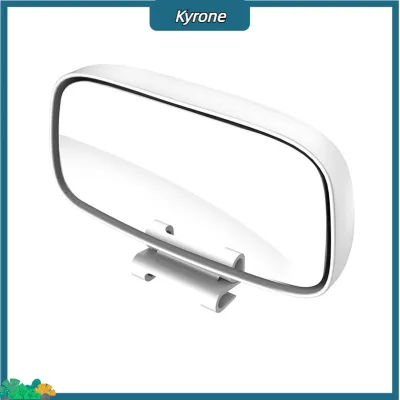
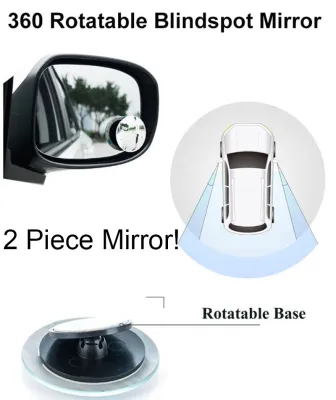
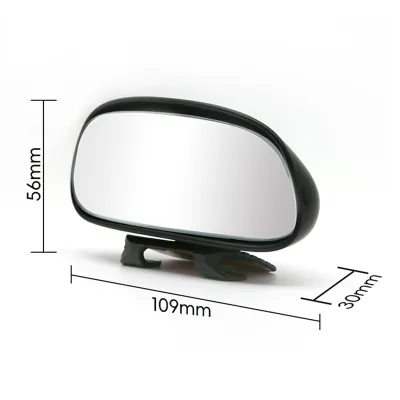

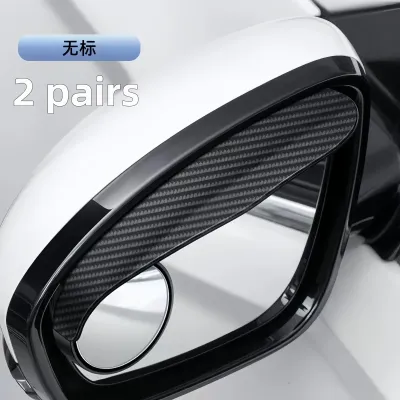
Prices are valid at publication and may change. Please refer to the product page for the latest price.
The safety risks associated with these unmonitored zones are particularly acute during daily driving maneuvers. On fast-flowing expressways, a sudden lane change into an occupied blind spot can result in high-speed side-swipe collisions. In dense urban environments, these visual gaps pose a severe hazard to vulnerable road users, such as motorcyclists, cyclists, and personal mobility device users, who can easily be hidden from view alongside a vehicle’s rear doors. Reversing out of parking spaces in busy commercial areas or residential estates also presents a high risk of low-speed collisions with pedestrians who are positioned outside the sweep of standard mirrors.
How to Test Your Vehicle for Dangerous Blind Zones
To determine if your vehicle requires supplementary mirrors, you must systematically evaluate your current visual coverage. Relying on guesswork while driving at high speeds is dangerous, so you should conduct a controlled diagnostic test before making any modifications or purchasing accessories.

The Parked Car Test
The safest and most accurate way to map your vehicle’s physical blind zones is to perform a stationary test in a spacious, quiet environment, such as an empty deck of a multi-storey carpark or an open-air parking lot. Sit in your normal driving position with your seat belt fastened and adjust your seat to your standard driving posture. Have a friend or family member walk slowly in a wide circle around your vehicle, starting from directly behind the rear bumper and moving forward along both the left and right sides.
As your helper walks, track their progress using only your interior rearview mirror and your left and right side mirrors, keeping your head facing forward. Note the exact physical locations where the person disappears entirely from your rearview mirror and has not yet appeared in either of your side mirrors. This physical gap represents your vehicle’s active blind zone. If your helper can stand completely hidden within this space, your vehicle has a significant blind spot that requires correction.
The Driving Observation
Once you have mapped your vehicle’s blind zones in a stationary setting, pay close attention to your visual habits during normal, low-traffic driving. Observe how much physical effort is required to verify that an adjacent lane is clear before you signal and initiate a turn. If you find that you must perform an extreme shoulder check—turning your upper torso and head completely around to look through the rear side windows—to spot vehicles that were recently behind you, your mirror setup is not providing adequate coverage.
While a quick shoulder check is a fundamental driving habit, excessive physical rotation can cause you to unintentionally steer off-course or lose track of traffic conditions directly in front of you. A well-adjusted mirror system should require only a moderate turn of the chin toward the shoulder to confirm that the adjacent lane is clear. If you feel that you are driving blind for several seconds during this physical check, your vehicle’s visual gaps are too large for safe operation.
Assessing Current Mirror Adjustment
Before blaming your vehicle’s structural design for large blind spots, you must objectively evaluate how your side mirrors are currently adjusted. Sit in your driving seat and look directly into your left and right side mirrors. If you can see a significant portion of your own car’s side panels or rear wings in the inner third of the mirror glass, your mirrors are adjusted too far inward.
While seeing your own vehicle’s bodywork can provide a comforting sense of spatial reference, it severely limits your outward field of view. This overlap means your side mirrors are simply repeating the information already captured by your central rearview mirror, rather than extending your vision outward into the adjacent lanes. This inward angling artificially enlarges your vehicle’s physical blind spots, making it much more difficult to spot passing vehicles.
Signs That You Actually Need a Blind Spot Mirror
Not every vehicle or driver requires aftermarket accessories to achieve safe visibility, but certain factors make a blind spot mirror a highly beneficial addition to your daily drive.
Vehicle Characteristics
The physical dimensions and structural architecture of your vehicle are the primary determinants of your blind zone size. Larger vehicles, such as sport utility vehicles (SUVs), multi-purpose vehicles (MPVs), and commercial panel vans, naturally possess much larger blind spots than compact hatchbacks or sedans. These larger vehicles often feature thick rear pillars (C-pillars and D-pillars) and high cargo lines that completely block direct rearward visibility.
Furthermore, vehicles with highly aerodynamic fastback profiles or heavily tinted rear passenger windows can severely restrict the amount of light and detail that reaches the driver’s eyes during shoulder checks. If you drive a vehicle with these physical characteristics, relying solely on standard flat side mirrors is rarely sufficient, and adding a small convex mirror can provide the wide-angle perspective needed to bridge the visual gap.
Driving Environment
Your daily driving routes play a significant role in determining whether you should install a blind spot mirror. If your commute involves navigating dense urban traffic with narrow lanes, frequent lane merging, and a high volume of motorcycles and delivery riders, a wide-angle view is essential. Motorbikes can accelerate quickly and slip into your blind zones within a matter of seconds, making them incredibly difficult to spot with standard mirrors alone.
Similarly, if you frequently drive on multi-lane expressways where lane changes must be executed quickly and precisely, having a continuous, uninterrupted view of the lanes adjacent to your vehicle is critical. In wet weather conditions, which are common in tropical climates, heavy rain can obscure your side windows with water droplets, making physical shoulder checks less effective; in these scenarios, a clear wide-angle mirror can assist in maintaining situational awareness.
Driver Confidence
Driving safety is closely linked to driver confidence and comfort. If you experience persistent anxiety or hesitation when changing lanes, even after adjusting your mirrors correctly and performing physical shoulder checks, a supplementary blind spot mirror can provide valuable visual reassurance. This accessory acts as an extra layer of confirmation, helping to verify that the space is clear before you initiate a lane change.
For drivers with physical limitations, such as neck stiffness, back pain, or reduced mobility that makes quick shoulder checks difficult or painful, a blind spot mirror is a practical safety aid. While it does not completely replace the need to be aware of your surroundings, it minimizes the physical strain required to monitor adjacent lanes, allowing you to maintain better control of your vehicle.
When You Might Not Need One (And What to Do Instead)
Before purchasing and sticking an aftermarket mirror onto your vehicle, it is important to understand that there are highly effective alternative solutions, and in some cases, an add-on mirror can actually be counterproductive.
Proper Mirror Adjustment (The SAE Method)
Many drivers can completely eliminate their vehicle’s blind spots simply by adopting the Society of Automotive Engineers (SAE) mirror adjustment method. To adjust your mirrors using this technique, lean your head to the right until it almost touches the driver’s side window, then adjust your right side mirror outward until you can just barely see the side of your car. Next, lean your head to the left toward the center of the vehicle (aligned with the rearview mirror) and adjust your left side mirror outward until you can just see the left side of your car.
When you sit back in your normal driving position, you should not see any of your own vehicle’s bodywork in either side mirror. When a vehicle approaches from behind, it will first appear in your central rearview mirror; as it begins to overtake you and leaves the rearview mirror, it will immediately appear in your side mirror. This seamless transition virtually eliminates the traditional blind spot without the need for physical accessories.
Built-in Technology
If you drive a modern vehicle equipped with advanced driver assistance systems (ADAS), you may already have comprehensive blind spot coverage. Systems such as electronic Blind Spot Monitoring (BSM) use radar sensors in the rear bumper to detect approaching vehicles and alert you via warning lights in the side mirrors or an audible chime if you signal a lane change when a vehicle is present.
Other modern features, such as rear cross-traffic alerts, blind-spot view cameras that display a live video feed on your instrument cluster when you signal, and 360-degree camera systems, provide excellent coverage of the areas around your vehicle. If your car is equipped with these active safety technologies and you have verified that they are functioning correctly, adding a physical blind spot mirror is generally unnecessary and may duplicate information you are already receiving.
The Risk of Visual Clutter
Adding an aftermarket blind spot mirror to a vehicle with small factory side mirrors can sometimes do more harm than good. Because these add-on mirrors must be stuck directly onto the existing glass surface, they inevitably cover a portion of your primary mirror. In smaller cars, this can significantly reduce your main rearward view, making it harder to judge the distance and speed of vehicles traveling directly behind you.
Furthermore, looking at a split-view mirror can create visual confusion, especially at night when headlight reflections from multiple angles can be distracting. If the add-on mirror is poorly positioned, it can block your view of the curb when parallel parking, which is a critical reference point for many drivers. Therefore, you must carefully weigh the benefit of a wider angle against the loss of primary mirror surface area.
How to Choose and Install a Blind Spot Mirror Safely
If you have conducted the parked car test and concluded that your vehicle’s physical blind spots cannot be resolved through mirror adjustment alone, you should select and install an aftermarket mirror using a methodical approach.
Size and Shape Selection
When browsing for a blind spot mirror, prioritize compact, high-quality glass designs over cheap plastic alternatives. Glass mirrors offer superior optical clarity, do not yellow or degrade under intense sunlight, and are less prone to scratching during routine cleaning. Choose a shape that complements your vehicle’s existing mirror housing; round, semi-circular, or slim rectangular designs are the most common options.
Ensure that the accessory is appropriately sized for your vehicle. For a standard sedan or hatchback, a mirror with a diameter of 5 centimeters (2 inches) is usually sufficient to provide a wide-angle view without overwhelming the main glass surface. For larger vehicles like SUVs or vans, a slightly larger or rectangular mirror may be appropriate, but it should never cover more than one-fifth of your primary mirror’s surface area.
Optimal Placement
Before peeling off the adhesive backing, sit in your vehicle and experiment with different placements to find the position that minimizes obstruction while maximizing your field of view. The most common and effective placement is on the outer lower corner of your side mirror housing. This position ensures that the blind spot mirror captures the adjacent lane while leaving the upper and inner portions of your main mirror free to monitor traffic directly behind you.
Alternatively, some drivers prefer placing the mirror on the outer upper corner, which can be useful if you want to keep the lower portion clear for viewing curbs while parking. Whichever position you choose, make sure the mirror does not interfere with the physical movement of your power-adjustable mirror glass. If your side mirrors fold automatically when the car is locked, verify that the added thickness of the blind spot mirror does not catch on the outer mirror housing.
Installation and Maintenance
To ensure a permanent, secure bond that can withstand heavy tropical downpours and high-pressure car washes, you must prepare the glass surface meticulously. First, refer to your vehicle’s manual to check for any specific coatings on your side mirrors that could be damaged by solvents. If safe, clean the target area thoroughly using isopropyl alcohol and a clean microfiber cloth to remove all dirt, road grime, and wax residue. Allow the glass to dry completely.
+-----------------------------------------------------------------+
|                     TYPICAL SIDE MIRROR                         |
|                                                                 |
|   +---------------------------------------------------------+   |
|   |                                                         |   |
|   |                      MAIN VIEW                          |   |
|   |               (Vehicles directly behind)                |   |
|   |                                                         |   |
|   |                                  +-------------------+  |   |
|   |                                  | RECOMMENDED       |  |   |
|   |                                  | PLACEMENT ZONE    |  |   |
|   |                                  | (Outer Lower or   |  |   |
|   |                                  |  Outer Upper)     |  |   |
|   |                                  +-------------------+  |   |
|   +---------------------------------------------------------+   |
+-----------------------------------------------------------------+
Peel the protective backing from the double-sided adhesive tape on the rear of the blind spot mirror. Press the mirror firmly onto the cleaned glass surface for at least thirty seconds to activate the pressure-sensitive adhesive. Avoid washing your car or exposing the mirror to heavy moisture for at least twenty-four hours to allow the bond to cure fully. Remember that a blind spot mirror is a supplementary safety tool; it provides a wide-angle perspective but distorts distance, meaning objects in the mirror are much closer than they appear. Always combine mirror checks with a physical shoulder check before executing any lane change.
Frequently Asked Questions (FAQ)
Do blind spot mirrors replace the need for shoulder checks?
No, blind spot mirrors are supplementary driving aids and do not replace the necessity of physical shoulder checks. While they significantly expand your field of view and help you detect the presence of an adjacent vehicle, their convex design inherently distorts depth perception. This distortion makes it difficult to accurately judge how fast an approaching vehicle is moving or exactly how close it is to your bumper. A physical shoulder check remains a mandatory safety practice to confirm that a lane is completely clear before you begin steering.
Can I install a blind spot mirror on a car with heated side mirrors?
Yes, you can generally install adhesive blind spot mirrors on heated side mirrors without damaging the heating elements. The heating elements are located on a separate grid behind the main mirror glass, meaning the low level of heat generated will not melt or degrade high-quality automotive-grade adhesives. However, you should ensure the adhesive is applied only to a clean glass surface. If you ever need to remove the blind spot mirror in the future, do not attempt to pry it off forcefully, as this can crack the main glass or damage the internal motorized adjustment gears; instead, apply gentle heat from a hair dryer to soften the adhesive before carefully peeling it away.
Community discussion
Share your experience or ask a question. Comments are reviewed before publication.