
Determining whether you need an auxiliary blind spot mirror depends on your vehicle’s design, your mirror adjustment habits, and your daily driving environment. If you frequently experience anxiety during lane changes on busy multi-lane expressways or struggle to spot lane-splitting motorcycles in dense urban traffic, an auxiliary mirror can be a highly practical addition. However, before purchasing any aftermarket accessory, you should systematically assess your current visibility gaps to see if your factory mirrors can be optimized first.
How to Identify Your Vehicle's Blind Spots
To map out your vehicle’s visual dead zones, start by optimizing your factory side mirrors. Many drivers adjust their side mirrors so they can see the side of their own car. While this provides a familiar reference point, it creates significant overlap with the rearview mirror and reduces your lateral field of view. To implement the standard Society of Automotive Engineers (SAE) adjustment method, lean your head to the right until it almost touches the driver’s side window, then adjust that mirror until you can just see the rear quarter of your car. Next, lean your head to the left toward the center of the vehicle and adjust the passenger-side mirror in the same manner. When you sit normally, you should no longer see your own vehicle’s flanks, which significantly widens your lateral view.
Once adjusted, perform a safe, stationary visibility test. Park in a quiet area with stationary objects nearby. Sit in your normal driving position and observe how objects pass from your rearview mirror to your side mirrors. If a parked car behind you disappears from your rearview mirror before it appears in your side mirror, that gap represents a physical blind spot. You can also have a helper walk slowly around the rear quarters of your vehicle to map the exact zones where they disappear from view.
Products mentioned in this guide
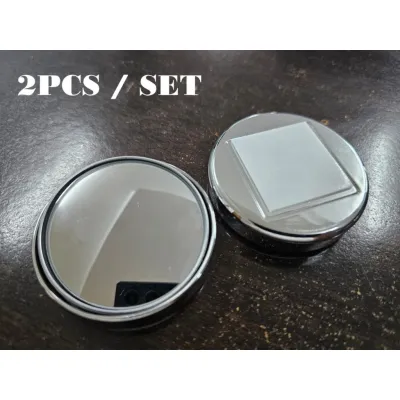
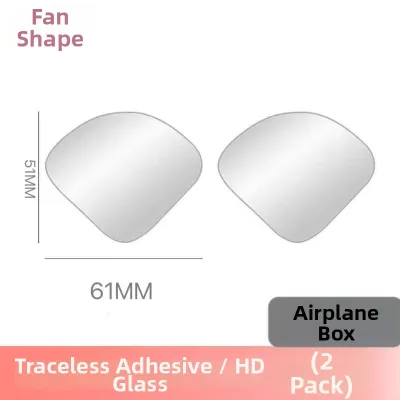
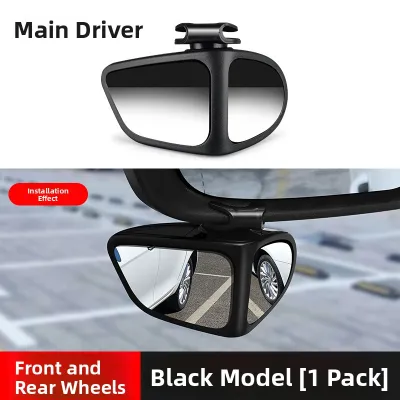
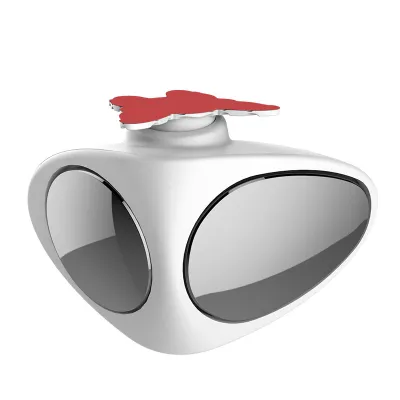
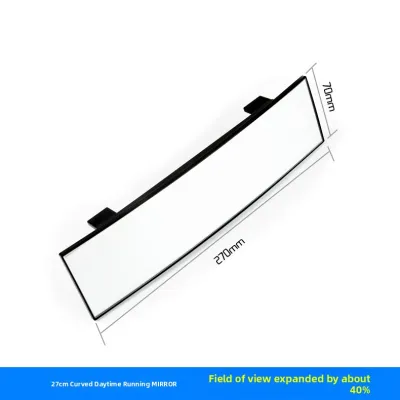

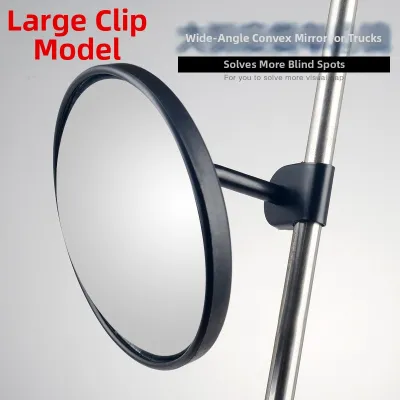
Prices are valid at publication and may change. Please refer to the product page for the latest price.
In addition to mirror alignment, identify any structural obstructions inherent to your vehicle’s design. Thick windshield pillars (A-pillars), center pillars (B-pillars), and rear pillars (C-pillars) can block significant portions of your view, especially when merging or turning. Large rear headrests, high parcel shelves, and cargo barriers also create permanent physical barriers to your rearward line of sight.
Signs You Need an Auxiliary Blind Spot Mirror
Even with optimized mirror adjustments, certain driving scenarios and vehicle designs make an auxiliary blind spot mirror highly beneficial. If you regularly navigate fast-moving, multi-lane expressways, changing lanes safely requires rapid, confident decision-making. If you find yourself repeatedly straining forward or twisting your torso to verify that a lane is clear, your factory setup is likely leaving a critical gap. Similarly, if you struggle to judge the distance between your rear wheels and the curb during tight parallel parking maneuvers, an auxiliary mirror angled downward can prevent costly wheel scrape.

Vehicle geometry plays a major role in visibility. Tall sport utility vehicles (SUVs), multi-purpose vehicles (MPVs), panel vans, and station wagons naturally suffer from larger blind spots due to their height and extended body profiles. Vehicles with small, steeply raked rear windows or high beltlines also restrict the natural sightlines of the driver. If you drive a vehicle with these physical characteristics, relying solely on standard flat side mirrors often leaves substantial blind zones along the rear quarters.
Furthermore, your local driving environment should dictate your visibility needs. In highly congested urban areas, such as dense city centers where motorcycles, bicycles, and personal mobility devices frequently filter through traffic, the risk of missing a small, fast-moving profile is elevated. A standard side mirror may not capture a motorcycle riding closely alongside your rear door. An auxiliary mirror with a wider field of view can help you spot these smaller road users before you begin a lateral maneuver.
When Your Factory Mirrors Are Enough
Adding an auxiliary mirror is not always necessary, and in some cases, it can introduce unwanted complications. If your vehicle is equipped with a functional electronic Blind Spot Monitoring (BSM) system, you may already have sufficient coverage. These systems use radar or ultrasonic sensors to detect vehicles in your blind spots and provide visual or audible alerts. While you must still perform physical checks, adding a physical convex mirror to a vehicle with active electronic monitoring can create redundant visual clutter.
Some vehicles come factory-equipped with dual-curvature or aspheric side mirrors. These mirrors feature a flat inner section for accurate distance judgment and a curved outer section designed specifically to show a wider angle. If your vehicle already has these specialized glass panels, your lateral dead zones are likely minimized, making aftermarket add-ons unnecessary.
Before installing an auxiliary mirror, consider the potential drawbacks. Small convex mirrors must be attached directly to your factory mirror glass or housing. If your factory side mirrors are relatively small, sticking an auxiliary mirror onto the glass will block a portion of your primary view. This can make it harder to judge the speed and distance of vehicles further behind you. Additionally, looking at multiple mirror surfaces simultaneously can cause visual confusion and distract you from executing a quick, decisive shoulder check.
Choosing the Right Blind Spot Mirror for Your Needs
If you determine that your vehicle requires an auxiliary mirror, selecting the right design involves matching the accessory to your specific visibility gaps. You must evaluate how the mirror mounts to your vehicle and how its optical design affects your perception of space. Before purchasing, measure your factory mirror housing to ensure the accessory fits securely without overhanging the edges or blocking the motorized adjustment mechanism.
Clip-On vs. Adhesive Mounts
Clip-on blind spot mirrors attach to the outer frame of your factory mirror housing using small brackets or tension screws. This mounting style is highly adjustable and can be easily removed or repositioned without leaving sticky residue on your paint or glass. It is an excellent option for shared vehicles, rental cars, or drivers who want to test different positions before committing. However, clip-on models tend to protrude more, which can increase wind noise at high speeds and potentially interfere with automated folding mirror systems.
Adhesive-mounted mirrors stick directly onto the surface of your factory mirror glass using automotive-grade double-sided tape. They offer a much sleeker, low-profile appearance that integrates cleanly with your vehicle’s aesthetics. Because they are bonded directly to the glass, they are highly stable and resist vibrations when driving on rough roads or at highway speeds. The primary trade-off is that they are difficult to reposition once applied, and removing them requires careful effort to avoid scratching the glass or damaging the mirror’s heating elements.
Convex vs. Flat Mirrors
Convex auxiliary mirrors feature a curved lens that bends light to provide a significantly wider field of view. This design is highly effective at revealing vehicles, motorcycles, and obstacles that are completely hidden from your flat factory mirrors. The main limitation of a convex lens is optical distortion; objects will appear smaller and much further away than they actually are. Drivers must train themselves to use convex mirrors solely to detect the presence of an object, rather than to judge its distance or speed.
Flat auxiliary mirrors do not distort images, meaning objects appear at their true distance. While they do not expand your overall field of view as dramatically as convex lenses, they are highly useful for specific, targeted tasks. For example, a small, flat mirror angled downward can be dedicated entirely to showing your rear tire’s relationship to the curb. This setup is ideal for drivers who prioritize precise alignment during parking over a wide-angle view of adjacent lanes.
Safe Installation and Adjustment Guidelines
To ensure your auxiliary mirror functions safely and remains securely attached, proper installation is critical. Start by preparing the mounting surface. Clean the factory mirror glass or housing thoroughly using a dedicated glass cleaner or isopropyl alcohol, as authorized by your vehicle’s manual. Avoid using harsh household detergents that can degrade the glass coatings or leave a film. Ensure the surface is completely dry and free of dust, wax, or moisture before proceeding, especially if you are applying an adhesive mount.
When positioning the mirror, place it where it minimizes obstruction of your primary view. For most vehicles, the outer lower corner or the outer upper corner of the factory mirror glass is the most effective location. Placing it on the outer edge ensures you retain a clear, unobstructed view of the lane directly behind you in the center of your main mirror. If your vehicle has heated mirrors or auto-dimming glass, consult your owner’s manual to ensure the adhesive or mounting brackets will not interfere with these electrical components.
Once mounted, adjust the auxiliary mirror so its field of view begins exactly where your primary mirror’s view ends. There should be minimal overlap between the two reflections. The auxiliary mirror should show the adjacent lane and the area immediately next to your rear door. After adjustment, perform a final physical check while stationary to verify that the new sightlines cover your previously identified blind spots. Finally, take a short test drive in a quiet, low-traffic area to get accustomed to the new visual layout before driving on busy expressways.
Frequently Asked Questions (FAQ)
Are blind spot mirrors legal in Singapore?
Yes, auxiliary blind spot mirrors are generally legal in Singapore as they are considered safety accessories. However, you must ensure that any aftermarket mirror you install does not violate Land Transport Authority (LTA) guidelines. The mirror must be securely mounted, must not protrude beyond the maximum approved width of your vehicle, and must not obstruct your forward view through the windshield or side windows. It is always advisable to check the latest LTA regulations regarding vehicle modifications to ensure compliance.
Can blind spot mirrors replace electronic blind spot monitoring systems?
No, physical blind spot mirrors cannot replace electronic blind spot monitoring (BSM) systems. Auxiliary mirrors are passive optical tools that require the driver to actively look at and interpret the reflection. They do not provide automated visual flashes, audible warnings, or steering interventions if a vehicle enters your blind spot. While they are excellent, cost-effective supplementary tools, they should be used in conjunction with active electronic systems and proper physical shoulder checks, rather than as a complete replacement.
Community discussion
Share your experience or ask a question. Comments are reviewed before publication.