
Many modern vehicles come equipped with factory-installed USB ports, leading drivers to assume they do not need an aftermarket 12V accessory charger. However, these built-in ports often fail to charge modern smartphones quickly enough during navigation, or they may only serve as low-power data links for the infotainment system. You only need a separate 12V car USB charger if your vehicle’s built-in ports deliver insufficient power (typically under 10 to 15 watts), lack the modern USB-C connectors your devices require, or are positioned in a way that creates cluttered, unsafe cable routing across your dashboard. Before buying any new charging accessories, you should systematically evaluate your vehicle’s existing ports, the physical layout of your center console, and your specific device power requirements.
How can you tell if your car's built-in USB ports are for charging or just data?
You can identify whether a built-in USB port is designed for charging or strictly for data transfer by looking at the physical symbols printed next to the port, checking your vehicle’s owner manual, or observing how your phone responds when connected. These indicators provide immediate clues about the port’s primary engineering purpose.
Many older or budget vehicles feature USB ports connected directly to the head unit, which are primarily designed to transmit media files rather than supply high-amperage power. To identify these, look closely at the console molding. A port marked with the standard USB trident symbol is typically a data-only or low-power port. Conversely, ports designed specifically for charging often feature a lightning bolt symbol, a battery outline, or are explicitly labeled with amperage ratings such as “2.1A” or “Charge Only.”
Products mentioned in this guide
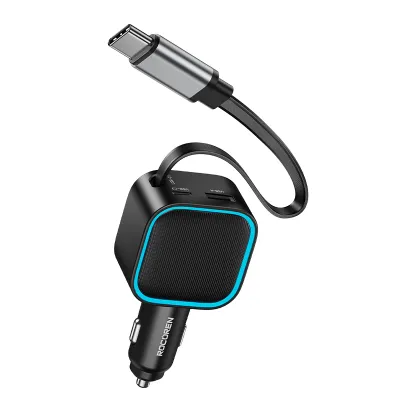
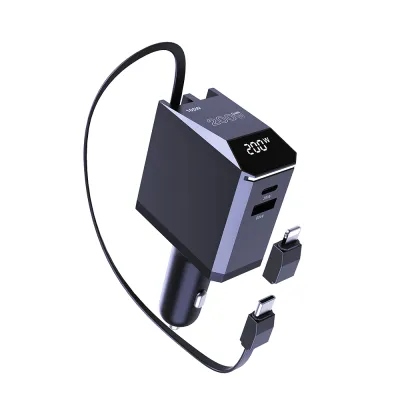
1 Lazada user ratings
Works exactly as described. It charges my phones at full speed and now I can even charge my laptop in the car.
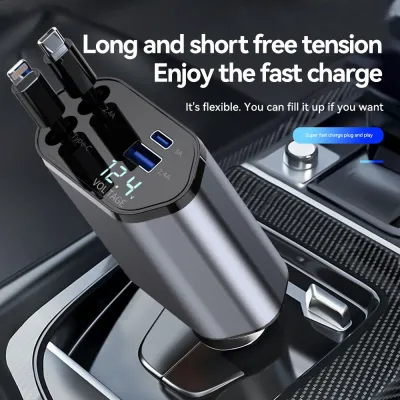
104 Lazada user ratings
👌Ease of Use: Multi-device compatible, fast delivery
Compact and portable size, Retractable cable design,
well packed and fast delivery.
Compact and portable size,
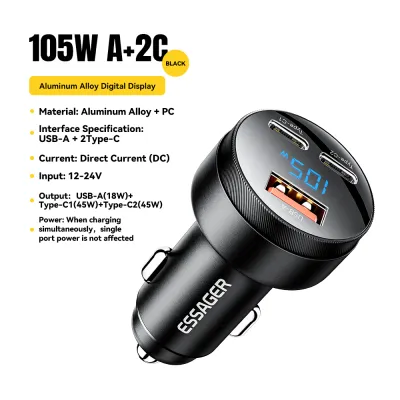
66 Lazada user ratings
Works more than great and fast
Got a great deal, I like it.
Really good, super satisfied
Charges super fast.
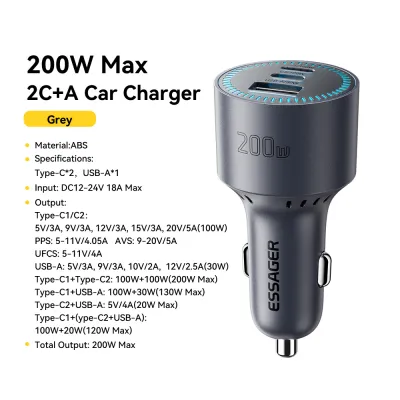
10 Lazada user ratings
Awesome car charger, it charges my Samsung S25 Ultra at max speed.
Received it and I'll test it to see how well it works.
I'm satisfied.
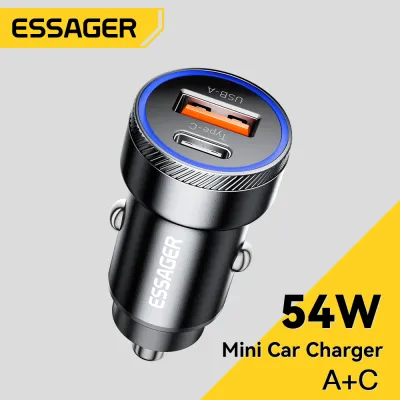
500 Lazada user ratings
Received in good condition. Item are accounted for and as pictured. Great price 🤩 Great buy 👏🏻👏🏻 Happy with the purchase Thank you Seller
Both TYPE A and C able to quick charge with the right cable, unlike some cheap claimed 100w charger which is quick only with TYPE A.
Smooth and classy design, great value for the price, compact design and easy to carry, convenient charging for my car,
Provides quick charging for iPhone., Nice packing and on time delivery
Beautiful on the cover. it supports quick charge.👍
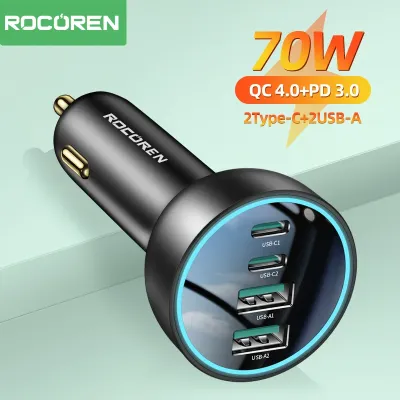
72 Lazada user ratings
Provides maximum output for the entire family, Compatible with multiple devices, Convenient and versatile charger, No more fighting over the…Read full reviewShow less
Provides maximum output for the entire family, Compatible with multiple devices, Convenient and versatile charger, No more fighting over the charger, Great value for the price, Low temperature charging keeps my devices safe, Super fast charging speeds!, Sleek design, looks great in my car,
Quality: 10 Appearance: 10 Performance: 10Super fast charging speeds!, 10No more fighting over the charger, 10Great value for the price, 10P…Read full reviewShow less
Quality: 10 Appearance: 10 Performance: 10Super fast charging speeds!, 10No more fighting over the charger, 10Great value for the price, 10Provides maximum output for the entire family, 10 Ok sya maganda ot gumagana naman
The rocoren product .. from the table good .. its stable .. you guys who have used too much of the wire. Plug the battery. you can try the r…Read full reviewShow less
The rocoren product .. from the table good .. its stable .. you guys who have used too much of the wire. Plug the battery. you can try the rocoren .. love it. the quality is so good👌👌👌
Slow delivery... shipped from abroad for a long time .... charging in the car is very slow .... don't know if it can be used to fully charge…Read full reviewShow less
Slow delivery... shipped from abroad for a long time .... charging in the car is very slow .... don't know if it can be used to fully charge or not.
Low temperature charging keeps my devices safe, Love the gray color, No more fighting over the charger,
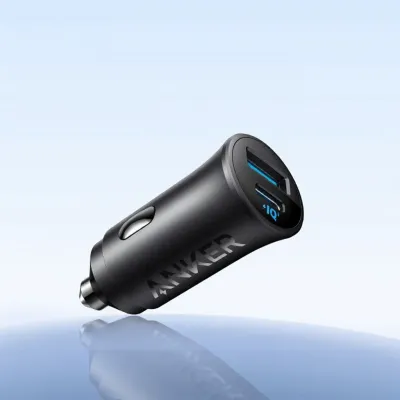
4 Lazada user ratings
Since I started using Anker's chargers, I've gradually switched all my charging cables to the Anker family. They're really effective, durabl…Read full reviewShow less
Since I started using Anker's chargers, I've gradually switched all my charging cables to the Anker family. They're really effective, durable, charge quickly, and safe. Plus, there are so many models and lengths to choose from!
It's convenient, just plug it in and get quick charging without any hassle.
The charging speed is really fast, and I'm very happy with it.
Prices are valid at publication and may change. Please refer to the product page for the latest price.
Your vehicle’s owner manual is the most reliable source for verifying these specifications. The manual typically lists the exact amperage and voltage for every USB port in the cabin. If the manual states a port outputs 5V at 0.5A, it is a low-power data port. If it states 5V at 2.1A or higher, it is a dedicated charging port.
You can also perform a simple diagnostic check with your mobile device. Plug your phone into the port using a high-quality cable. If your car’s infotainment screen immediately prompts you to set up a media connection, or if your phone displays a file-transfer notification, you are plugged into a data port. Monitor the battery percentage over a ten-minute drive; if the percentage does not rise or rises extremely slowly, the port is not designed for rapid charging.
Is the power output of your factory USB ports enough for modern devices?
Your factory USB ports are likely insufficient if they output the older standard of 2.5 watts (0.5 amps at 5 volts), which cannot keep up with the power consumption of a modern smartphone running GPS navigation and streaming music simultaneously. To determine if your ports are adequate, you must compare their rated output against your device’s minimum power requirements.

Modern smartphones and tablets require significantly more power than older mobile devices. While a standard factory USB-A port might output 5 watts of power, modern devices often require 15 to 25 watts to charge at an optimal rate. If you use your phone for resource-intensive tasks while driving—such as running GPS navigation apps, streaming music over Bluetooth, and maintaining a cellular connection in areas with variable signal strength—your phone may consume power faster than a low-output factory port can supply it.
This mismatch leads to a common frustration: after a long drive with your phone plugged in, you arrive at your destination only to find your battery percentage has actually decreased. This occurs because the device is drawing more current to power the screen, processor, and GPS chip than the 0.5-amp or 1.0-amp factory port can deliver.
To determine if your built-in ports are sufficient, check your device’s charging specifications. Most modern smartphones support fast charging protocols that require specific voltages and currents, such as 9V at 2A (18W). If your vehicle’s ports only output standard 5V power, your device will default to its slowest charging speed. You can verify this by checking the lock screen of your device while plugged in; if it does not display “Fast Charging” or “Super Fast Charging,” your factory port is acting as a bottleneck.
Do your built-in ports have the right connectors and clearance for your cables?
Built-in ports often lack physical compatibility with modern cables because many older vehicles only feature USB-A ports, whereas modern devices ship with USB-C to USB-C cables. Additionally, the physical location of these ports inside deep cubbies or near cup holders can restrict clearance for bulky cable boots and interfere with safe vehicle operation.
Physical compatibility is a critical factor when deciding whether to rely on built-in ports. Many vehicles manufactured before the mid-2020s feature only USB-A ports, while the majority of new smartphones, tablets, and wireless chargers ship with USB-C cables. While you can purchase adapter cables that convert USB-A to USB-C, these cables often cannot support fast-charging standards due to the physical limitations of the older USB-A interface.
Furthermore, the physical design of your car’s center console can restrict how you connect your devices. Factory USB ports are frequently tucked away in tight spaces, such as inside a deep center armrest storage bin, behind a sliding cup holder cover, or at the very bottom of a narrow dashboard cubby. If you use a heavy-duty cable with a thick, reinforced connector boot, you may find there is insufficient clearance to plug the cable in without bending it at a severe angle. Over time, this physical stress can damage both the cable and the vehicle’s internal port.
Cable routing also presents a safety concern. If your built-in port is located near the gear shifter or physical climate controls, a cable running to a phone mounted on your windshield or dashboard can drape across these essential controls. This clutter can interfere with your ability to shift gears smoothly or adjust your air conditioning. In a right-hand drive market like Singapore, where cabin space in compact vehicles is highly optimized, keeping the driver’s physical interface free of dangling wires is essential for safe operation.
When should you use the 12V accessory socket instead of built-in USB ports?
You should use the 12V accessory socket (commonly known as the cigarette lighter socket) when you need fast-charging protocols like USB Power Delivery, need to charge multiple high-draw devices at once, or need to position your power source closer to your phone mount. An aftermarket 12V adapter bypasses the limitations of your vehicle’s built-in USB ports by drawing direct, higher-wattage power from the car’s electrical system.
The 12V accessory socket remains a highly versatile power source in modern vehicles because it can support high-wattage aftermarket adapters. While factory-installed USB ports are often limited by the vehicle’s internal wiring and infotainment system integration, the 12V socket connects to a dedicated high-amperage circuit. This allows a quality 12V USB charger to deliver 30W, 45W, or even 100W of power, which is sufficient to fast-charge multiple devices simultaneously or even power a laptop.
You should opt for a 12V accessory charger if you frequently travel with passengers who all need to charge their devices at the same time. A multi-port 12V adapter can distribute high wattage across several USB-C and USB-A ports without causing the charging speeds to drop. This is also the ideal solution if you use high-draw accessories like a dashcam, which often requires a continuous, stable power source that factory USB ports cannot reliably provide.
Before purchasing a 12V adapter, you must check the physical characteristics and behavior of your vehicle’s accessory socket. First, locate the socket to ensure an adapter will not interfere with your hand movements near the gear selector or handbrake. Second, determine if the socket is ignition-switched. In many vehicles, the 12V socket loses power when the ignition is turned off. However, in some models, the socket remains live constantly. If your vehicle has an always-on socket, leaving a high-draw adapter or device plugged in while the car is parked for extended periods can drain your starter battery. Finally, always consult your vehicle’s manual to verify the maximum wattage rating of the 12V circuit—usually labeled as 120W or 180W—to ensure you do not exceed the safe operating limits of your car’s electrical system.

Community discussion
Share your experience or ask a question. Comments are reviewed before publication.