
Choosing between a direct and indirect tire pressure monitoring system (TPMS) depends on whether your vehicle is pre-equipped with wheel-speed sensors or physical pressure valves, and whether you prioritize real-time, individual tire accuracy over low-maintenance simplicity. Direct systems offer precise, sensor-based readings for each wheel, while indirect systems offer a maintenance-free, software-driven estimation using existing braking hardware. Understanding these technologies allows you to make an informed decision that aligns with your vehicle’s specifications and your long-term maintenance budget.
Maintaining correct tire pressure is one of the most critical aspects of vehicle safety, directly influencing handling, braking distance, and fuel efficiency. In tropical climates with sudden, heavy downpours, properly inflated tires are essential for maintaining traction and preventing hydroplaning on wet roads. By understanding how your vehicle monitors this pressure, you can better interpret dashboard warning lights, perform accurate system resets, and select compatible replacement parts when it is time for an upgrade.
Understanding How Direct and Indirect Sensors Operate
Direct tire pressure monitoring systems utilize physical hardware installed inside each wheel assembly to measure tire conditions. Each sensor unit is typically integrated with the tire’s valve stem or secured to the inner wheel barrel. These sensors contain a pressure transducer, a temperature sensor, a wireless radio transmitter, and a small internal lithium battery. The sensor measures the actual physical air pressure and temperature inside the tire cavity and transmits this data via radio frequency to the vehicle’s central receiver. This allows the vehicle’s onboard computer to display real-time, individual pressure readings for each tire on your dashboard.
Products mentioned in this guide
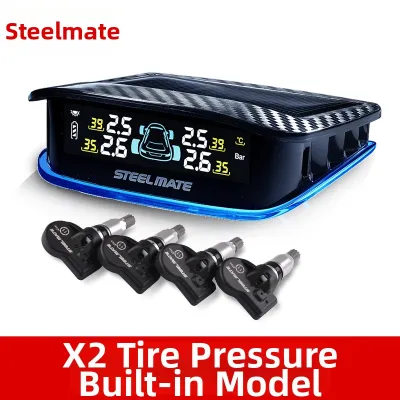
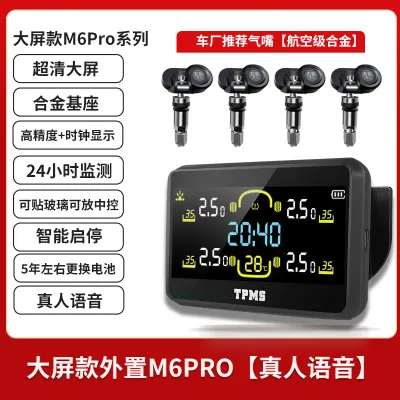
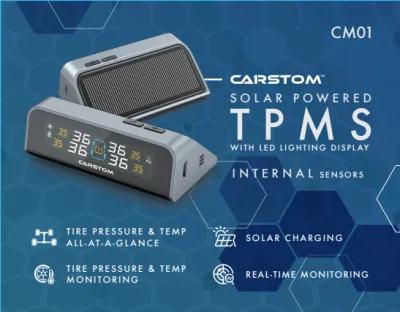
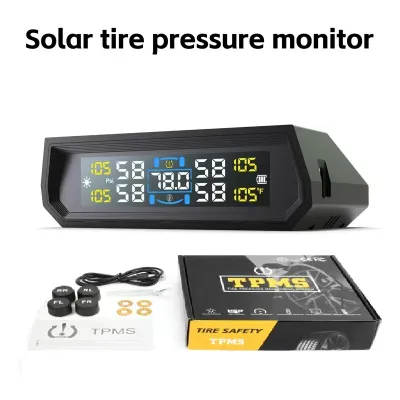
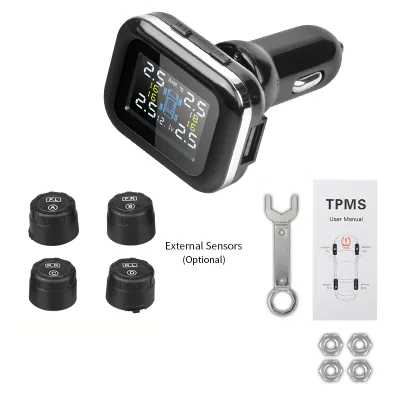
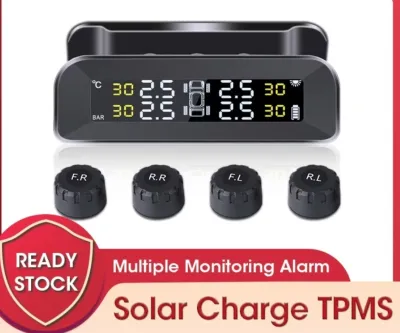
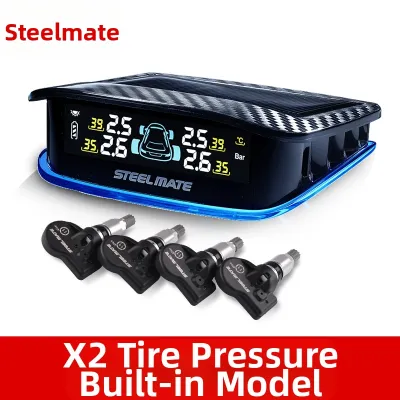
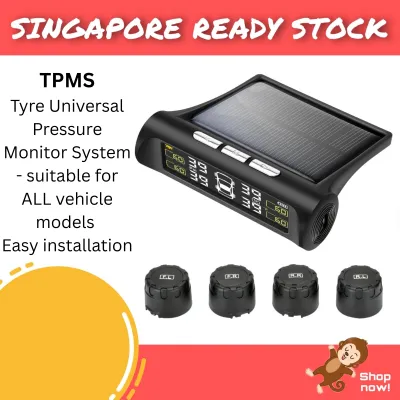
Prices are valid at publication and may change. Please refer to the product page for the latest price.
Indirect tire pressure monitoring systems do not use physical pressure sensors inside the tires. Instead, they rely on the vehicle’s existing Anti-lock Braking System (ABS) and Electronic Stability Control (ESC) wheel speed sensors. When a tire loses air pressure, its physical diameter decreases slightly, causing it to rotate at a faster speed than a fully inflated tire to cover the same distance. The ABS sensors continuously monitor the rotational speed of each wheel, and the vehicle’s Electronic Control Unit (ECU) runs software algorithms to compare these speeds. If the system detects that one wheel is spinning faster than the others over a sustained period, it infers a drop in pressure and triggers the dashboard warning light.
The fundamental distinction between the two technologies is physical measurement versus algorithmic estimation. Direct TPMS measures the actual air pressure inside the tire cavity, providing immediate and precise data. Indirect TPMS calculates rotational differences from outside the tire, relying on software to estimate when a pressure drop has occurred based on wheel behavior.
Comparing Accuracy, Maintenance, and Long-Term Costs
Direct TPMS is highly accurate and responds almost instantly to sudden punctures or slow leaks, even when the vehicle is stationary. Because it measures the air directly, it can detect if all four tires are losing pressure simultaneously due to seasonal temperature drops. However, this high level of accuracy comes with ongoing maintenance requirements. The internal batteries of direct sensors are sealed within the sensor housing and cannot be replaced individually; when a battery depletes, the entire sensor unit must be replaced. Additionally, the metal valve stems of direct sensors are susceptible to road grime, moisture, and galvanic corrosion, which can lead to slow leaks if paired with incompatible valve caps.

Indirect TPMS requires no physical sensors inside the wheels, making it virtually maintenance-free. There are no internal sensor batteries to wear out, and there is no extra wheel hardware to corrode or damage during tire mounting. However, indirect systems are less sensitive to slow, uniform pressure loss across all four tires. Because the system compares rotational speeds relative to each wheel, if all four tires lose pressure at the same rate, the rotational differences may remain negligible, delaying the warning light. Furthermore, indirect systems require manual recalibration every time you adjust your tire pressure, rotate your tires, or install a new set of tires, as the software must learn the new rotational baselines.
From a cost perspective, indirect systems are highly economical over the lifespan of the vehicle because they utilize existing ABS hardware. Direct systems, conversely, introduce recurring expenses. When sensor batteries fail or sensors are damaged during tire changes, you must budget for replacement units, professional programming, and wheel balancing. In local workshops, these component and labor costs (quoted in S$) can accumulate, particularly for premium vehicles with proprietary sensor protocols.
Environmental factors, uneven tire wear, and aggressive tread patterns can also impact the performance of indirect systems. If you install tires with deep, aggressive treads or drive on highly uneven surfaces, the resulting variations in wheel rotation can sometimes trigger false positive alerts. Direct systems remain unaffected by tread patterns or road surface conditions because they measure internal pressure directly.
Verifying Vehicle Compatibility and Installation Safety
Before purchasing replacement sensors or attempting to modify your tire monitoring setup, you must verify which system your vehicle supports natively. Consult your vehicle owner’s manual, inspect the dashboard display for individual tire pressure readouts, and check the tire information placard located on the driver’s side door jamb. Vehicles equipped with direct TPMS typically display specific pressure values for each tire on the instrument cluster, whereas vehicles with indirect systems usually feature only a generic low-pressure warning icon without individual tire data.
If you are considering an aftermarket direct TPMS kit for a vehicle that did not come equipped with one, you must verify several compatibility factors. Ensure the aftermarket valve stems match your wheel’s valve hole dimensions and that the sensor body provides adequate clearance from the brake calipers and suspension components. Aftermarket kits often include external sensor caps that screw onto existing valve stems or internal sensors that replace the factory stems entirely, transmitting data to a standalone dashboard display.
For any installation involving internal sensors, tire dismounting, or system programming, always consult a qualified professional. Dismounting a tire requires specialized equipment to avoid tearing the tire bead or damaging an existing sensor. A professional technician will ensure that new sensors are programmed with the correct protocol codes, properly torqued to prevent leaks, and balanced correctly to avoid high-speed vibrations. Attempting to force incompatible sensors onto a wheel or bypassing ABS-related warning lights can compromise your vehicle’s active safety systems and lead to electrical faults.
Decision Framework: Choosing the Right Tire Pressure Monitor
To determine which tire pressure monitoring approach fits your driving habits and vehicle setup, evaluate your specific operational needs against the characteristics of each system.
Choose a direct TPMS setup if:
- You require precise, real-time pressure and temperature readings for individual tires.
- You frequently swap between different wheel sets, such as dedicated track wheels or seasonal setups, and need immediate verification of each tire's status.
- You drive in regions with significant temperature fluctuations where tire pressure can change rapidly overnight.
- You want immediate low-pressure alerts before you begin driving, rather than waiting for the vehicle to travel a certain distance to calculate rotational differences.
Choose an indirect TPMS setup if:
- Your vehicle's ECU already supports indirect monitoring natively, and you prefer to maintain the factory configuration.
- You want to minimize long-term maintenance costs and avoid the hassle of replacing dead sensor batteries or dealing with corroded valve stems.
- You perform regular manual tire pressure checks with a handheld gauge and only require the onboard system as a secondary safety backup.
Always verify compatibility first if you plan to use run-flat tires. Because run-flat tires feature stiff sidewalls designed to support the vehicle’s weight even when completely deflated, a loss of pressure is difficult to detect visually. Consequently, run-flat tires require a highly reliable, responsive monitoring system—typically a direct TPMS—to ensure you are alerted immediately to a puncture before exceeding the tire’s temporary driving limits.
Maintaining Your System and Responding to Warning Lights
When the TPMS warning light illuminates on your dashboard, your immediate priority is safety. Safely pull over to a level surface away from traffic and perform a visual inspection of all four tires. Use a reliable manual tire pressure gauge to measure the actual pressure of each tire, comparing the readings to the recommended cold inflation pressures listed on your vehicle’s door jamb placard. Do not attempt to reset the warning light or continue driving until you have identified and corrected any underinflation.
Recalibration is a critical step in maintaining system accuracy. For indirect systems, you must manually initiate the recalibration process through your vehicle’s infotainment system or dashboard menu after every tire inflation adjustment, tire rotation, or tire replacement. This action instructs the ECU to establish the current wheel rotational speeds as the new baseline for a fully inflated tire. For direct systems, some vehicles feature an automatic relearn function that detects new sensor positions after a short drive, while other models require a manual relearn sequence or a specialized OBD-II programming tool at a professional workshop.
If the TPMS warning light flashes for approximately one minute before remaining solid, this indicates a system malfunction rather than a low-pressure condition. This behavior often points to a dead sensor battery, a damaged sensor, or a communication error between the sensors and the receiver. When this occurs, or if the warning light persists after you have verified correct tire pressures and attempted a system reset, seek professional diagnostics to identify the fault and restore active safety monitoring.
Frequently Asked Questions (FAQ)
Can I mix direct and indirect TPMS sensors on the same vehicle?
No, direct and indirect TPMS technologies are mutually exclusive and cannot be mixed on the same vehicle. A vehicle’s electronic control unit is programmed to monitor tire pressure using either physical sensor signals or ABS wheel speed calculations, not both simultaneously. If you install aftermarket direct sensors on a vehicle designed for an indirect system, the factory dashboard will not recognize the sensors unless you install a completely independent, standalone aftermarket display unit.
Do I need to recalibrate my tire pressure monitor after rotating my tires?
Yes, recalibration is necessary after rotating your tires, but the process depends on the system type. For indirect systems, you must manually trigger a system reset through the dashboard menu so the computer can learn the new rotational baselines of the tires in their new positions. For direct systems, you may need to perform a sensor relearn procedure so the vehicle’s receiver knows which sensor is now located at which corner of the car, though some modern vehicles feature automatic sensor localization.
Will installing an aftermarket direct TPMS void my vehicle's warranty?
Installing a standalone aftermarket TPMS, such as external valve-cap sensors that transmit to a separate wireless display, generally does not void your vehicle’s factory warranty. However, if the installation requires splicing into the vehicle’s original wiring harness or modifying the factory ECU, any subsequent electrical damage or system failures caused by those modifications will not be covered under the manufacturer’s warranty. Always consult a professional installer and review your warranty terms before making electrical modifications.
Community discussion
Share your experience or ask a question. Comments are reviewed before publication.