
Choosing between a digital and an analog car tire pressure gauge comes down to a fundamental choice: do you prefer the instant, numerical clarity of an electronic screen, or the reliable, battery-free operation of a mechanical dial? Neither tool is universally superior for every driver, as both can deliver the accuracy required to keep your vehicle running safely and efficiently. Your decision should depend on how you plan to store the tool, your comfort with routine maintenance like battery replacements, and how easily you can read physical markings in low-light conditions.
Maintaining proper tire inflation is one of the simplest yet most critical aspects of vehicle ownership. Under-inflated tires increase rolling resistance, which accelerates tread wear and reduces fuel economy, while over-inflated tires compromise traction and ride comfort. To make an informed purchase, you must understand how these two distinct technologies measure air pressure, how they hold up over years of storage in a glove box or garage, and how to verify their compatibility with your specific vehicle. Always refer to your vehicle’s original owner’s manual for exact tire specifications and safety guidelines before performing any maintenance.
Core Differences Between Digital and Analog Gauges
To understand which tool fits your routine, it helps to look at how each type processes the air pressure coming from your tire valve. Analog gauges rely entirely on physical mechanics to translate air pressure into a readable format. The most common analog design is the dial gauge, which utilizes a curved, hollow metal component known as a Bourdon tube. When pressurized air enters the gauge, this tube attempts to straighten out, and this subtle movement is transferred through a series of small gears to turn the needle on the dial face. Another common analog style is the stick or pencil gauge, which uses a simple internal piston and a calibrated spring; the incoming air pushes the piston, which in turn forces a marked plastic slide out of the bottom of the sleeve.
Products mentioned in this guide
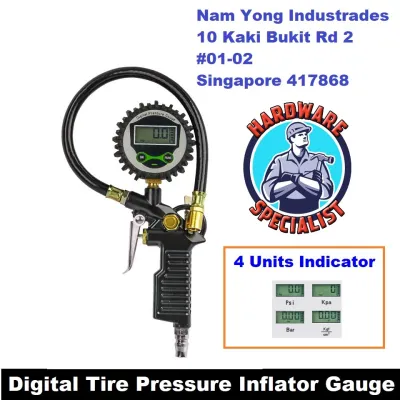


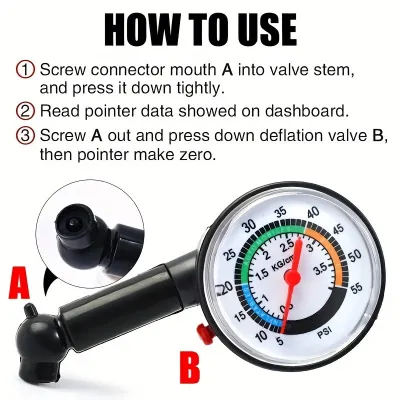

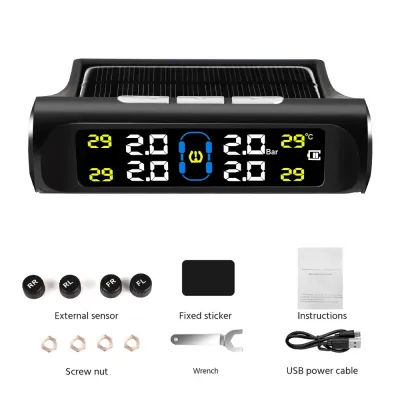
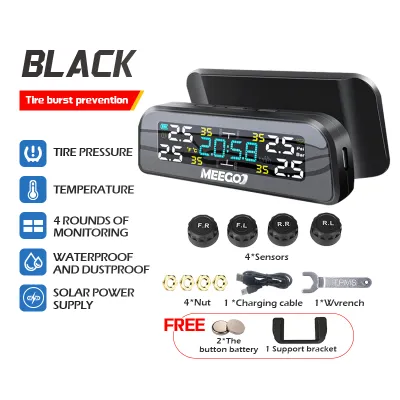
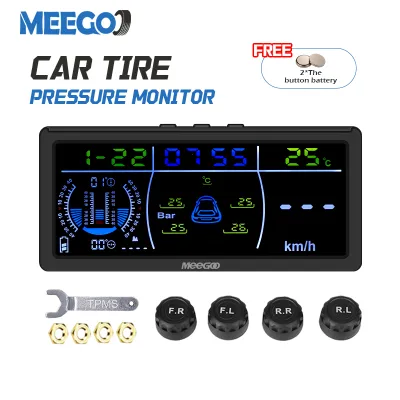
Prices are valid at publication and may change. Please refer to the product page for the latest price.
Digital gauges, on the other hand, replace these delicate mechanical linkages with electronic sensors. When you press a digital gauge onto a tire valve, the air pressure acts upon a micro-strain gauge or a piezoresistive sensor. This sensor contains a tiny silicon diaphragm that deforms slightly under pressure, altering its electrical resistance. An internal microprocessor detects this change in resistance, calculates the corresponding pressure value, and displays it as a clear numerical readout on an LCD or LED screen.
This mechanical-versus-electronic distinction directly dictates how each tool is powered. Analog gauges are completely self-contained and require no external power source, meaning they are always ready to use, even if they have been sitting in a cold trunk for years. Digital gauges require batteries—typically small button cells or standard AAA batteries—to power the sensor, microprocessor, and display screen. If the batteries die, the gauge becomes temporarily unusable, making routine battery checks a necessary part of digital gauge ownership.
Comparing Readability, Precision, and Usability
When evaluating these tools in real-world conditions, readability is often the most immediate difference you will notice. Digital gauges excel at providing clear, unambiguous numbers, often displaying measurements down to a tenth of a PSI. This eliminates the guesswork associated with reading an analog dial, where you must visually estimate where the needle falls between the printed hash marks. However, it is crucial to understand that a digital display showing “32.5 PSI” does not automatically mean the tool is more accurate than an analog counterpart; display precision is simply the resolution of the screen, whereas actual accuracy depends entirely on the manufacturer’s calibration standards.

Lighting conditions also play a major role in how usable a gauge is during roadside checks. Many digital gauges feature bright, backlit screens and even illuminated nozzles, making them incredibly easy to use at night or inside dark parking structures. Analog gauges can be challenging to read in low light unless they feature a specialized glow-in-the-dark dial face. Even then, luminescent paint requires exposure to a light source to “charge” before it can glow, which can be inconvenient during an unexpected nighttime tire inspection.
Ergonomics and physical design are equally important when you are kneeling next to a dirty wheel. Many high-quality gauges, both digital and analog, are equipped with flexible rubber hoses that connect the gauge body to the valve chuck. This flexible hose is highly advantageous because it allows you to hold the display or dial at a comfortable viewing angle while reaching valve stems that may be positioned awkwardly behind wheel spokes or deep within tight wheel wells. Rigid stick gauges, by contrast, require you to align the entire tool straight onto the valve stem, which can be physically awkward and difficult to read simultaneously.
Durability, Maintenance, and Budget Considerations
The long-term reliability of your gauge depends heavily on its construction and how well it is protected from environmental wear. Analog dial gauges are highly sensitive to physical impacts; dropping a dial gauge can bend the internal gears, knock the needle off its zero point, or crack the protective glass face. Over time, the internal Bourdon tube can also suffer from mechanical fatigue, leading to a gradual drift in calibration. Digital gauges have fewer moving parts to wear out, making them somewhat more resilient to minor vibrations, but they are highly vulnerable to moisture, extreme temperatures, and battery corrosion.
Proper storage is essential to preserve the lifespan of either gauge type. Leaving a digital gauge in a glove box during hot summer months can degrade the liquid crystal display and accelerate battery discharge. If a digital gauge is left unused for extended periods, the batteries inside can leak, releasing corrosive acid that permanently destroys the electronic circuitry. To prevent this, store your gauge in a padded, moisture-resistant case inside the cabin of the vehicle rather than loose in a damp trunk or tool chest.
From a budget perspective, tire pressure gauges span a wide range of price points, but the cost is generally driven by build quality rather than the measurement technology itself. Basic mechanical stick gauges are typically the most affordable option, making them popular as emergency backups. Mid-tier options include standard digital gauges and consumer-grade dial gauges. The premium tier is occupied by heavy-duty dial gauges with solid brass fittings, reinforced rubber hoses, and protective shockproof boots, as well as professional-grade digital gauges featuring programmable target pressures and multiple unit conversions. When shopping, prioritize durable materials like brass chucks and thick rubber housing over flashy electronic features.
How to Choose the Right Gauge for Your Needs
To decide which type of gauge to buy, consider your personal maintenance habits and driving scenarios. You should choose an analog gauge if you value absolute reliability and want a tool that is guaranteed to work in an emergency without worrying about dead batteries. Analog is also the preferred choice for drivers who want a simple, classic mechanical tool that can withstand years of storage in a glove compartment with minimal upkeep.
Conversely, you should choose a digital gauge if you prefer instant, highly legible numerical readouts and frequently check your tire pressure in low-light conditions. The backlit screens and illuminated tips found on many digital models make them exceptionally user-friendly for drivers who find small printed dial lines difficult to read. Digital gauges are also highly convenient if you regularly need to switch between different measurement units, such as PSI, bar, or kPa.
Before making a final purchase, always verify the physical compatibility of the gauge with your specific vehicle. Check the valve connector type on your wheels; while the vast majority of passenger cars use standard Schrader valves, some specialty wheels or aftermarket valve stems may require different adapters. Additionally, verify the gauge’s maximum pressure rating against your vehicle’s tire specifications. A gauge with a maximum limit of 60 PSI is perfect for standard passenger cars and SUVs, as it offers excellent detail within the typical 30 to 40 PSI range. However, if you drive a heavy-duty truck, tow a trailer, or also maintain high-pressure bicycle tires, you will need a gauge rated up to 100 PSI or higher to ensure safe and accurate measurements.
Best Practices for Accurate Tire Pressure Checks
Regardless of the gauge type you choose, following a consistent measurement routine is vital for obtaining accurate readings. Always check your tire pressure when the tires are “cold.” This means the vehicle should be parked for at least three hours, or driven less than two kilometers, before you take a measurement. As you drive, the friction between the tire and the road generates heat, which causes the air inside the tire to expand and temporarily raises the pressure. Checking warm tires will give you an artificially high reading, which may lead you to under-inflate them.
When taking a reading, ensure you achieve a proper, airtight seal between the gauge chuck and the tire valve stem. Press the gauge firmly and squarely onto the valve. A brief hiss of escaping air is normal as the connection is made, but if you hear a continuous hissing sound, the seal is incomplete. Adjust the angle of the gauge until the hissing stops; a poor seal allows air to escape during the measurement, resulting in an inaccurate, lower-than-actual reading on your display or dial.
Finally, always cross-reference your readings with the vehicle manufacturer’s recommended tire pressure rather than the information printed on the tire itself. The pressure listed on the tire sidewall is the maximum inflation pressure the tire can safely hold under maximum load, not the optimal pressure for your vehicle’s handling, braking, and fuel efficiency. The correct recommended cold inflation pressure is typically located on a placard or sticker inside the driver’s side door jamb, or detailed within your vehicle’s original owner’s manual.
Frequently Asked Questions (FAQ)
Do digital tire pressure gauges lose accuracy over time?
Yes, digital sensors can experience electronic drift over years of use, though they generally remain highly stable compared to mechanical alternatives. The most common cause of inaccurate digital readings is a low battery, which can prevent the microprocessor from functioning correctly. To maintain accuracy, replace the batteries regularly and verify the gauge’s readings against a known, calibrated standard or a professional tool at a reputable service center.
Can I use the same gauge for both car and bicycle tires?
You can, provided the gauge is compatible with the valve type and pressure range of both vehicles. Most cars use Schrader valves, while many road bicycles use narrower Presta valves. Some gauges feature dual-head chucks or include brass adapters to accommodate both styles. Additionally, ensure the gauge’s pressure range is appropriate; a gauge designed for a 32 PSI car tire may not be able to measure or survive the 100 PSI required by some road bicycle tires.
Why does my gauge show a different reading than the gas station air pump?
Gas station air pumps are subjected to heavy daily use, weather exposure, and frequent drops, which often leaves their built-in gauges poorly calibrated or damaged. Additionally, you have likely driven several kilometers to reach the station, meaning your tires are warm and showing an elevated pressure. For the most accurate and consistent maintenance, always rely on your own personal, well-maintained car tire pressure gauge when the tires are completely cold.
Community discussion
Share your experience or ask a question. Comments are reviewed before publication.