
Maintaining correct tire pressure is one of the most critical yet overlooked aspects of vehicle maintenance. Properly inflated tires ensure optimal traction, balanced handling, shorter braking distances, and even tread wear, directly impacting your safety on the road. To keep tires at their recommended levels, drivers must rely on a dependable tire pressure gauge. Choosing between a digital and an analog gauge requires understanding how each technology performs under real-world conditions, from dim parking garages to roadside emergencies.
While both tools serve the same fundamental purpose, they operate on entirely different mechanisms. Analog gauges rely on physical springs and mechanical movement to display pressure on a dial or a sliding scale, whereas digital gauges use electronic sensors to output a numerical reading on an LCD or LED screen. Evaluating your specific driving habits, storage conditions, and physical preferences will help you determine which design provides the most reliable service for your vehicle.
Accuracy and Readability: Comparing the Displays
The primary function of any tire pressure gauge is to deliver a reading you can interpret quickly and correctly. Analog dial gauges feature a physical needle that sweeps across a printed scale, which can present challenges in low-light environments like unlit roadsides or covered car parks. Reading these small, closely spaced tick marks requires clear vision and direct line-of-sight alignment to avoid parallax errors, where the needle appears to point to a different value when viewed from an angle.
Products mentioned in this guide
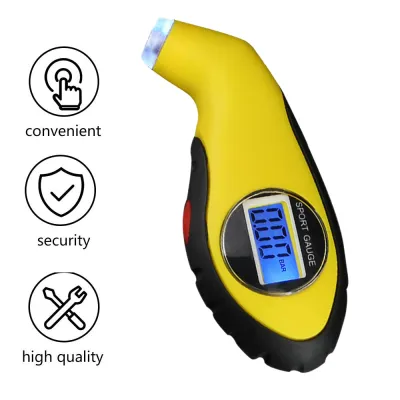
![[Ready Stock] KIPRUN TG105 Digital Car Tire Tyre Air Pressure Gauge Meter LCD Display Manometer Barometers Tester for Car Truck Motorcycle Bike](https://img.lazcdn.com/g/p/07a52bd518e442d1dbbff71990d43383.jpg_400x400q80.jpg_.webp)

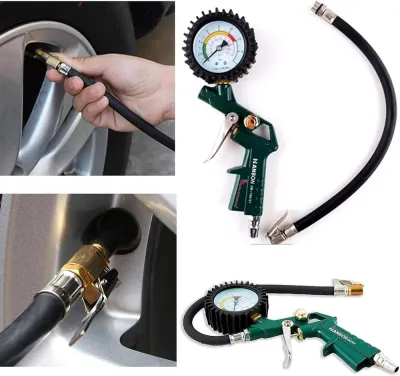
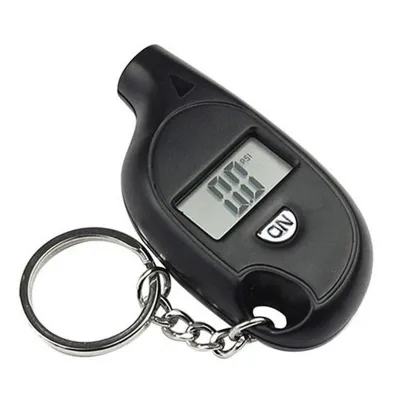
![[SG STOCK] 25D AIR TYRE INFLATOR GUN Car Vehicle Tire Pressure Gauge Pump Automotive Repair Hand Tools](https://img.lazcdn.com/g/p/1dd3e6ce8f45c7157aa63e83c383f87a.png_400x400q80.png_.webp)
Prices are valid at publication and may change. Please refer to the product page for the latest price.
Digital gauges address this limitation by presenting clear, numerical digits on an electronic screen. Many digital models include integrated backlights, making them highly legible during nighttime checks or inside dark garages. However, digital screens can suffer from glare under direct, intense sunlight, which may require you to shade the screen with your hand to read the numbers. Additionally, the refresh rate of some digital displays can cause a slight delay before the final reading stabilizes on the screen.
To ensure you are getting reliable measurements, always verify the manufacturer’s stated accuracy tolerance and measurement increments before purchasing. This information is typically printed on the product packaging or detailed in the user manual, often expressed as a percentage of full scale (such as ±1%) or as a specific pressure range (such as ±0.5 PSI). Choosing a gauge with clear, fine increments—such as 0.1 PSI for digital or 1 PSI divisions for analog—allows for more precise monitoring of your tire conditions.
Durability, Maintenance, and Power Requirements
Long-term reliability is a key consideration for any tool stored in a vehicle’s glovebox or boot. Analog gauges utilize delicate internal mechanical components, including Bourdon tubes, gears, and springs, to translate air pressure into needle movement. These physical parts are inherently susceptible to damage from physical shocks, drops, or severe vibrations over time. A single hard drop onto concrete can knock an analog gauge out of calibration or bend the internal needle, rendering the tool inaccurate without any obvious external signs of damage.

Digital gauges lack these sensitive moving parts, making them generally more resilient to physical impacts and drops. However, they introduce a different maintenance dependency: batteries. A digital gauge requires a reliable power source to operate its sensors and display screen. If stored in a vehicle for long periods, the batteries can slowly drain, leaving you with a dead tool during an unexpected roadside emergency. To mitigate this, look for models with clear battery life indicators and straightforward battery compartment designs that do not require specialized tools to open.
Environmental factors also play a significant role in the performance of both gauge types. Extreme temperatures can affect the accuracy of electronic sensors and cause liquid crystal displays (LCDs) to become sluggish or temporarily unreadable. Conversely, high humidity or exposure to moisture can corrode the battery contacts and internal circuitry of a digital gauge. While analog gauges are immune to battery failure, extreme cold can stiffen the internal lubricants or springs, while moisture can lead to internal rust if the gauge is not sealed properly.
Convenience and Everyday Usability
The physical design of a tire pressure gauge directly influences how easily you can perform routine maintenance checks. The connection point between the gauge and the tire valve—known as the chuck—comes in various configurations, primarily push-on and clip-on styles. A push-on chuck requires you to hold the gauge firmly against the valve stem to maintain a seal, which can be tiring if the valve is positioned at an awkward angle. Clip-on chucks attach securely to the valve thread, allowing for hands-free operation and reducing the risk of air leakage during the reading.
Hose flexibility is another critical factor, especially when navigating tight wheel wells, large brake calipers, or complex wheel spoke designs. Gauges equipped with a flexible rubber or braided hose make it much easier to reach valve stems without bending or straining the valve itself. Additionally, a built-in bleed valve is an invaluable feature for everyday usability. This small button allows you to release excess air from an overinflated tire while the gauge remains connected, saving you from repeatedly attaching and detaching the tool to achieve the correct pressure.
Digital models often offer advanced features that simplify the measurement process across different vehicles. These include automatic shut-off functions to preserve battery life, memory recall to store previous readings, and the ability to switch instantly between multiple units of measurement, such as PSI, kPa, and Bar. Analog gauges, by contrast, offer single-unit simplicity. While they lack advanced electronic features, they require no setup or button presses, allowing you to get a reading instantly simply by pressing the chuck onto the valve stem.
Decision Framework: Which Gauge Fits Your Needs?
Selecting the right tire pressure gauge depends on aligning the tool’s strengths with your personal maintenance habits and vehicle requirements. An analog gauge is highly suitable for drivers who prioritize mechanical simplicity and want a tool that is always ready to use, even after years of storage in a glovebox. Because they do not rely on batteries, analog dial or stick gauges are excellent choices for emergency kits, off-road vehicles, or secondary cars that are not driven daily.
A digital gauge is the preferred option if you frequently check your tires at night, require highly precise decimal readings, or manage multiple vehicles with different pressure specifications. The backlit screen and instant unit conversion make it easy to switch between a passenger car requiring PSI and an imported trailer or specialty vehicle specified in Bar or kPa. Furthermore, individuals with visual impairments or those who struggle to read small, closely spaced lines on a physical dial will find the large, high-contrast numbers of a digital screen much easier to interpret.
Before making your final decision, verify the specific pressure requirements of your vehicle by checking the tire information placard on the driver’s door pillar or consulting the owner’s manual. Ensure the gauge you choose has an operating range that comfortably covers your target pressure. For example, if your vehicle requires 35 PSI, a gauge with a maximum range of 60 PSI will offer more precise resolution and readability than one designed for heavy-duty commercial vehicles that reads up to 150 PSI.
Safe Usage and Calibration Verification
To maintain vehicle safety and ensure accurate tire wear, you must follow proper measurement procedures. Always check your tire pressure when the tires are cold, meaning the vehicle has been parked for at least three hours or driven less than two kilometers. Driving heats up the air inside the tires, causing the pressure to rise temporarily; checking hot tires will result in an artificially high reading, leading you to underinflate your tires relative to the manufacturer’s cold inflation specification.
Regularly inspect your tire pressure gauge for signs of physical wear or calibration drift. For analog gauges, check that the needle rests exactly on the zero mark when not connected to a valve; a needle that hovers above or below zero indicates internal spring fatigue or damage. For digital gauges, watch for flickering displays, slow response times, or highly inconsistent readings when testing the same tire multiple times in succession. Ensure all fittings, hoses, and chuck seals are tight and free from cracks or air leaks.
If you suspect your gauge is damaged or delivering inaccurate readings, stop using it immediately. Operating a vehicle with incorrectly inflated tires compromises braking performance, increases the risk of a high-speed blowout, and accelerates tire wear. Compare your gauge’s readings against a known accurate reference tool, or consult a qualified tire professional to verify its calibration. If the gauge fails to return to zero, shows visible cracks in the housing, or consistently disagrees with other reliable tools, replace it promptly to ensure your safety on the road.
Frequently Asked Questions (FAQ)
How often should I replace my tire pressure gauge?
You should replace your tire pressure gauge based on its physical condition and performance consistency rather than a strict calendar timeline. Inspect the tool regularly for signs of wear, such as cracked rubber hoses, worn chuck seals that leak air during testing, or a physical needle that no longer returns to the zero mark. If you drop your gauge onto a hard surface, its internal calibration may be compromised even if the exterior housing appears undamaged. Always check the manufacturer’s documentation for specific guidance on service life, warranty periods, or professional calibration recommendations to ensure your tool remains safe and reliable.
Can I use the same gauge for both car and bicycle tires?
Whether you can use the same gauge depends on the pressure range of the tool and the valve types on your vehicles. Standard passenger car tires typically require pressures between 30 and 40 PSI, whereas some bicycle tires, particularly road bikes, can require pressures exceeding 100 PSI. Using a low-pressure car gauge on a high-pressure bicycle tire can damage the gauge’s internal mechanism, while using a high-pressure gauge on a car tire may yield inaccurate readings because the measurement falls too close to the bottom of the gauge’s scale. Additionally, ensure the gauge’s chuck is compatible with your valves, as cars use Schrader valves, while many bicycles use Presta valves, which require a specific adapter.
Community discussion
Share your experience or ask a question. Comments are reviewed before publication.