
Riding a motorcycle in wet weather requires gear that can withstand both falling rain and the high-speed wind pressure that forces water through fabric. When browsing for a sulaite rain coat, you will encounter various technical terms, ratings, and material specifications designed to measure protection. Understanding what these ratings actually mean is essential for selecting gear that keeps you dry and safe on the road.
Protection ratings on motorcycle rain gear generally cover three main areas: weatherproofing, physical durability, and rider visibility. By decoding these specifications, you can evaluate how a garment will perform under different riding conditions, whether you are dealing with a light drizzle or a heavy tropical downpour. Here is a practical breakdown of how to interpret these ratings and choose the right gear for your needs.
What Waterproof and Weather Resistance Labels Actually Mean
When reading the specifications of a sulaite rain coat, the first distinction to understand is the difference between “water-resistant” and “fully waterproof” garments. Water-resistant gear is typically treated with a surface coating, such as Durable Water Repellent (DWR), which causes water to bead up and roll off. While this is effective for short exposures or light mist, the fabric will eventually saturate under sustained rainfall. Fully waterproof gear, on the other hand, utilizes an internal membrane or specialized barrier designed to block water completely, even when subjected to external force.
Products mentioned in this guide
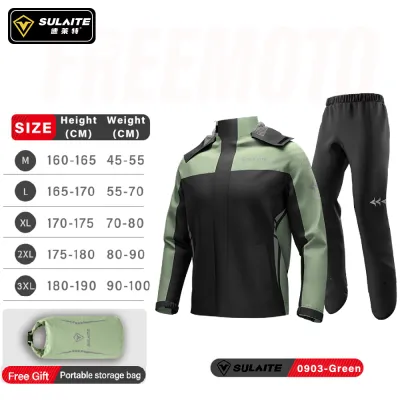
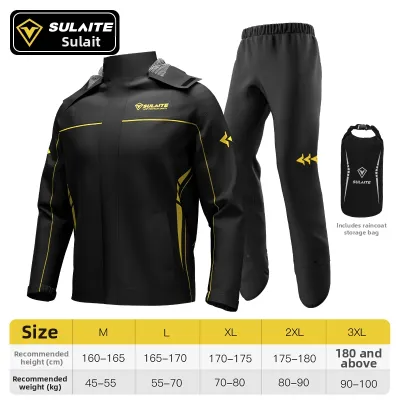
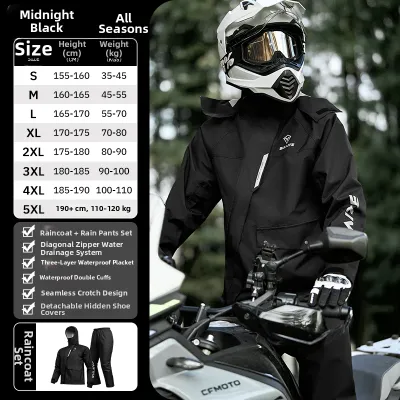
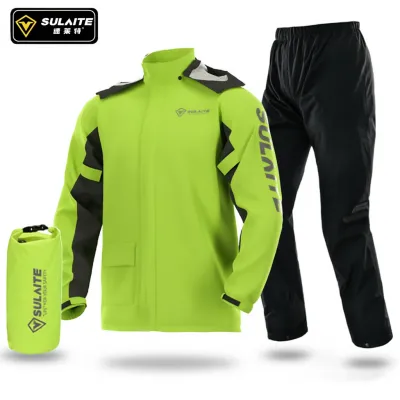
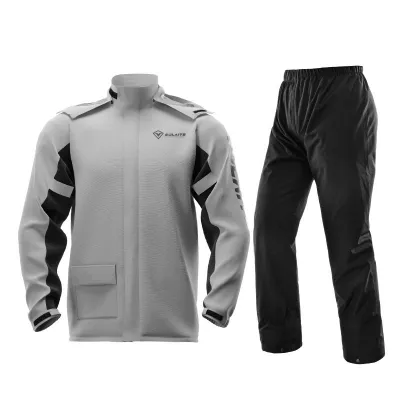
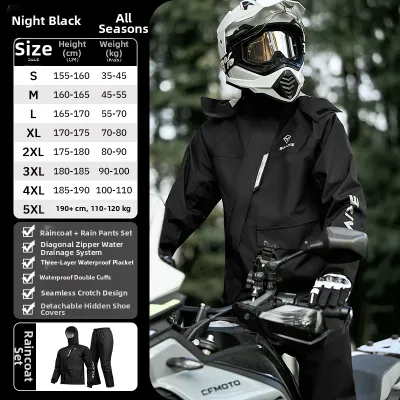
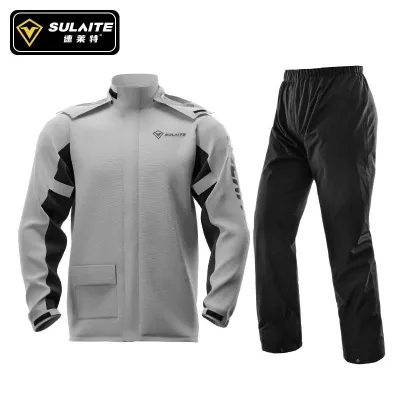
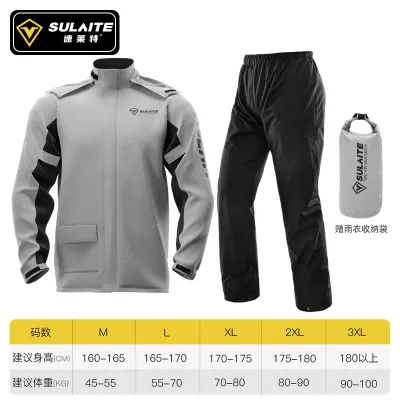
Prices are valid at publication and may change. Please refer to the product page for the latest price.
To measure this capability, manufacturers use hydrostatic head ratings, expressed in millimeters (mm or mm/H2O). This rating represents the height of a water column that the fabric can support before water begins to seep through. You can typically locate this value on the product tag or the manufacturer’s technical specification sheet:
- 5,000 mm: Suitable for light rain and short, low-speed commutes.
- 10,000 mm: The baseline for moderate rain, generally sufficient for standard urban riding.
- 15,000 mm to 20,000 mm or higher: Engineered for heavy, sustained downpours and highway speeds, where wind pressure forces water against the fabric with significant velocity.
Fabric performance is only one part of the equation. High-speed riding can easily force water through the tiny needle holes created during the stitching process. To prevent this, look for garments that specify “fully taped seams” or “heat-sealed seams,” where a waterproof tape is thermally applied over all interior stitching. Additionally, verify that the jacket features wide storm flaps—ideally with double-layered fabric and secure hook-and-loop closures—to protect the main zippers from wind-driven water ingress.
Evaluating Abrasion Resistance and Material Durability
While keeping dry is a primary concern, motorcycle rain gear must also offer physical durability to withstand the wind forces of riding and protect you in the event of an accident. The thickness and strength of the fabric are key factors in determining how well a rain coat resists tearing and abrasion.

To evaluate fabric density, check the Denier (D) count printed on the product’s compliance label or specification sheet. Denier measures the linear mass density of the fibers; a higher number indicates a thicker, heavier thread. For example, a rain coat constructed with a 600D polyester outer shell offers significantly higher tear resistance and slide protection than one made from a lightweight 190T or 210D nylon. Thicker fabrics are also less prone to “flapping” or buffeting at high speeds, which can cause rider fatigue and accelerate wear on the garment.
You should also examine the construction of the rain coat to identify reinforced panels in high-impact zones. These areas—specifically the shoulders, elbows, knees, and seat—experience the highest stress during a ride and are the most likely contact points during a slide. High-quality gear often features double-layered fabric or heavier-duty materials in these zones to prevent premature wear and provide an extra layer of protection.
It is important to note that material names alone do not guarantee physical safety. For verified protection, look for recognized abrasion testing classifications, such as CE EN 17092 ratings, printed on the garment’s internal tag. If a rain jacket is designed solely as a thin, packable outer weather shell, it may not carry an EN 17092 rating on its own. In such cases, the garment is intended to be worn over an existing, certified armored jacket that provides the necessary abrasion resistance.
Impact Protection: Armor Pockets vs. Over-Jacket Designs
When selecting a rain coat, you must consider how it integrates with impact protection, such as shoulder, elbow, and back armor. Motorcycle rain gear generally falls into one of two design categories, each with its own set of specifications.
The first category consists of rain coats with built-in armor pockets. These garments are designed to function as standalone riding jackets that also offer waterproofing. They feature dedicated interior pockets designed to hold impact protectors, which should be verified for CE Level 1 or Level 2 compatibility. If you choose this style, check the product documentation to confirm whether the armor inserts are included or must be purchased separately.
The second category comprises over-jacket designs, which are engineered purely as lightweight, oversized outer shells. These garments do not include armor pockets because they are designed to be worn directly over your standard, armored riding jacket. This approach allows you to maintain your preferred level of impact protection while simply adding a windproof and waterproof layer on top when the weather turns.
Regardless of the design, proper fit is critical to safety. If your rain coat has built-in armor, look for adjustment straps on the sleeves and waist. These straps allow you to tighten the fabric, ensuring that the protective pads remain securely positioned over your joints and do not shift during a fall. If the garment is too loose, the armor can easily rotate away from the impact zones, rendering it ineffective. Always consult the manufacturer’s specific sizing and fit guidelines; a loose fit can also catch the wind, creating a sail effect that compromises your stability on the motorcycle.
Visibility Specs for Night and Heavy Rain Riding
Heavy rain and overcast skies drastically reduce visibility on the road, making it difficult for other motorists to see you. Therefore, a rain coat’s visibility specifications are just as important for your safety as its waterproof ratings.
When evaluating visibility features, differentiate between high-visibility base colors and retroreflective elements. High-visibility colors, such as fluorescent yellow, green, or orange, are highly effective during daytime riding because they stand out against dark asphalt and grey skies. However, these colors rely on ambient light to be effective. At night or in extremely dark storm conditions, you must rely on retroreflective materials. These specialized strips or piping use microscopic glass beads or prisms to reflect light directly back to its source, such as a trailing vehicle’s headlights.
To ensure maximum safety, evaluate the placement and surface area of the reflective elements. A safe design should offer 360-degree visibility, with reflective strips positioned on:
- The Front: Across the chest or shoulders to be visible to oncoming traffic.
- The Back: Across the upper back or shoulders, which is highly visible to vehicles approaching from behind.
- The Sleeves: Along the outer arms, ensuring you remain visible from the sides when navigating intersections or changing lanes.
Before purchasing, verify these specifications against the physical garment. Standard marketing photos are often taken under bright studio lights, which can make reflective elements appear brighter than they are in real-world, low-light conditions. Ensure the reflective strips are wide and securely bonded to the fabric to withstand the elements.
Matching Gear Specifications to Singapore's Riding Conditions
Choosing the right rain gear requires matching the garment’s technical specifications to your specific riding environment and habits. In tropical climates like Singapore, where sudden, intense downpours are common alongside high humidity and warm temperatures, finding the right balance of protection is essential.
Your daily riding routine should dictate your specification priorities:
- Daily Urban Commuters: If you primarily ride short distances in city traffic, prioritize quick-donning designs, high-visibility colors, and moderate waterproofing (such as a 10,000 mm rating). A lightweight, easily packable design is ideal for quick transitions when a sudden storm hits.
- Long-Distance Tourers: If you frequently ride long distances or on high-speed expressways, prioritize maximum hydrostatic ratings (15,000 mm or higher), heavy-duty abrasion-resistant fabrics (higher Denier counts), and adjustable ventilation panels. Ventilation is particularly important to prevent the buildup of sweat and humidity inside the jacket, which can cause severe discomfort.
To maintain the performance of your gear over time, always consult and follow the manufacturer’s care instructions. Improper washing or storage can rapidly degrade waterproof coatings, delaminate taped seams, and damage reflective materials. Avoid using harsh household detergents, bleach, or fabric softeners, and never put your rain gear in a high-heat dryer unless explicitly authorized by the care label.
Finally, remember that no single rating or garment can guarantee absolute safety on the road. Regularly inspect your rain gear for signs of wear, such as peeling seams or fading reflective strips, and ensure a proper, secure fit before every ride. Operating within the manufacturer’s recommended usage limits and maintaining a safe riding style are your best lines of defense in adverse weather.
Frequently Asked Questions (FAQ)
Can I wear a Sulaite rain coat over my existing motorcycle jacket?
Yes, but you must select the correct size and cut. Many Sulaite rain coats are designed specifically as over-jacket shells, meaning they are cut larger to accommodate the bulk of an armored riding jacket underneath. Always consult the manufacturer’s sizing chart, which often specifies whether to choose your standard size for an over-jacket fit or if you need to size up. Ensuring a proper fit prevents the rain coat from restricting your movement or shifting your underlying protective pads out of alignment.
How do I maintain the waterproof rating of my rain gear?
To preserve the waterproof membrane and Durable Water Repellent (DWR) coating, rinse off road grime and salt with clean, cold water after riding. If a deeper wash is necessary, hand wash the garment using a mild, technical detergent designed specifically for outdoor or waterproof apparel. Avoid harsh detergents, fabric softeners, and bleach, as these chemical agents can strip the DWR coating and degrade the seam tape. Always air-dry the garment completely in a shaded, well-ventilated area before folding and storing it to prevent mold and fabric degradation.
Community discussion
Share your experience or ask a question. Comments are reviewed before publication.