
How to Read a Penrite Gear Oil Label for Your Vehicle
Decoding a Penrite gear oil label is the most reliable way to ensure your vehicle’s drivetrain operates smoothly and remains protected under harsh driving conditions. Every bottle of Penrite gear oil features three critical data points that dictate its performance and compatibility: the SAE viscosity grade, the API service classification, and manufacturer-specific OEM specification codes. Understanding these values allows you to select a fluid that matches the precise mechanical tolerances of your transmission or differential.
While product labels provide essential technical details, the vehicle manufacturer’s owner’s manual remains the ultimate authority on fluid selection. Before purchasing or applying any gear oil, always check the applied product’s label against the treated vehicle’s manufacturer instructions. If these instructions conflict, if your vehicle’s components are unidentified, or if the specific application is not covered, stop immediately and consult a qualified professional or the vehicle manufacturer.
Using the incorrect gear oil can lead to severe mechanical issues, including gear scoring, synchronized gear wear, differential failure, or a voided manufacturer warranty. Taking a few minutes to verify each specification on the label ensures you avoid costly transmission rebuilds and maintain optimal vehicle safety.
Products mentioned in this guide
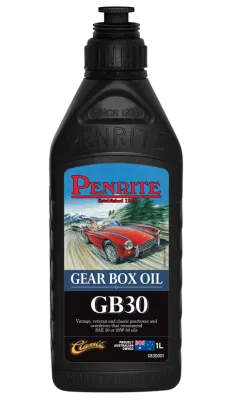
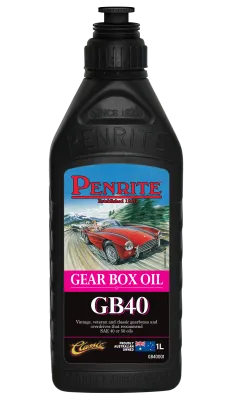
Prices are valid at publication and may change. Please refer to the product page for the latest price.
Understanding Viscosity Grades on the Label
The Society of Automotive Engineers (SAE) viscosity grade is prominently displayed on the front of every Penrite gear oil bottle, typically formatted as a dual number such as 75W-90, 80W-90, or 85W-140. This rating system describes how easily the oil flows at both low and high operating temperatures, which is critical for maintaining a protective barrier between moving metal parts.

The number preceding the “W” (which stands for Winter) indicates the fluid’s cold-temperature flow characteristics. A lower cold-rating number, such as 75W, means the oil remains highly fluid in colder temperatures, reducing drag and wear during initial startup. The second number, such as 90 or 140, represents the oil’s kinematic viscosity at normal operating temperature, measured at 100 degrees Celsius. A higher second number indicates a thicker, more robust oil film that resists thinning under extreme heat.
Multi-grade gear oils use specialized additives to provide consistent protection across a wide temperature range, making them far more versatile than older single-grade fluids. This ensures the oil is thin enough to circulate rapidly upon startup, yet remains thick enough to cushion gear teeth under heavy loads once the vehicle reaches its standard operating temperature.
In tropical climates like Singapore, extreme cold-start “W” ratings are less critical because ambient temperatures remain high year-round. However, the high-temperature operating rating (the second number) is exceptionally vital. High ambient heat, heavy stop-and-go city traffic, and carrying heavy loads place immense thermal stress on gearboxes and differentials. Selecting the correct high-temperature viscosity rating ensures the protective oil film does not shear or thin out excessively, preventing accelerated wear under demanding local driving conditions.
Decoding API Performance Classifications (GL-4 vs. GL-5)
The American Petroleum Institute (API) service classification on a Penrite label indicates the oil’s performance level and suitability for specific gear designs. The two most common classifications you will encounter on gear oil packaging are API GL-4 and API GL-5, and using the wrong one can cause severe mechanical damage.
API GL-4 fluids are typically specified for manual transmissions, particularly those equipped with yellow-metal synchronizers made of brass or bronze. These fluids are formulated with moderate levels of extreme pressure (EP) additives. They provide sufficient wear protection for helical or spiral bevel gears while allowing the synchronizers to generate enough friction to match gear speeds smoothly during shifts.
API GL-5 fluids are designed for high-load, high-sliding applications, such as hypoid differentials. Because hypoid gears experience intense sliding friction, GL-5 oils contain a significantly higher concentration of sulfur-phosphorus EP additives. These additives chemically bond to the gear surfaces to prevent metal-to-metal welding under extreme pressure.
Using a standard GL-5 oil in a manual gearbox that requires a GL-4 fluid poses a major mechanical risk. The highly aggressive sulfur-phosphorus additives in standard GL-5 fluids can chemically attack and corrode soft yellow metals. During gear shifts, the strong chemical bond formed by the EP additives can actually peel away microscopic layers of the brass or bronze synchronizers, leading to rapid wear, stiff gear changes, and eventual transmission failure.
To address this, some Penrite products feature dual-rated labels, such as “GL-4 / GL-5 compatible” or synchronized-safe formulations. These specialized fluids utilize advanced, non-aggressive EP additives that deliver the high-load protection of a GL-5 while remaining completely safe for sensitive yellow metals. However, you must verify this specific compatibility claim on the Penrite product label before use rather than assuming all GL-5 fluids are safe for manual gearboxes.
Identifying OEM Specifications and Approval Codes
Beyond general viscosity and API classifications, modern vehicle manufacturers often require gear oils to meet strict Original Equipment Manufacturer (OEM) standards. This is especially true for European vehicles and specific Asian models that utilize complex gearbox designs with unique friction requirements.
These manufacturer-specific codes are typically located on the back of the Penrite bottle under headings such as “Meets or Exceeds,” “Suitable for,” or “Performance Levels.” Examples of these codes include specifications like MB 235.0, ZF TE-ML 02, or Ford M2C200-C. Matching these alphanumeric codes is essential for ensuring the fluid’s additive chemistry is fully compatible with your vehicle’s internal seals, friction materials, and electronic sensors.
It is important to distinguish between an official OEM “Approval” and a “Suitable for” designation on the label. An official OEM approval means the vehicle manufacturer has physically tested and certified that specific Penrite formulation, granting a formal license. A “Meets the requirements of” or “Suitable for” label indicates that Penrite has formulated the fluid to match the OEM’s technical specifications and guarantees its performance, but the product may not have gone through the formal, costly OEM licensing process.
Always cross-reference these exact alphanumeric codes with your vehicle’s service booklet to ensure complete compatibility. If your vehicle is under warranty, using a fluid with the exact OEM-approved specification is often a mandatory requirement to keep the warranty intact.
How to Confirm Compatibility with Your Vehicle
To ensure a safe and successful fluid change, follow this systematic checklist before purchasing and pouring any Penrite gear oil:
- Step 1: Consult the Owner's Manual — Locate the exact fluid specifications in your vehicle's owner's manual. Ensure you check the correct section, as manual transmissions, automatic transmissions, transfer cases, and differentials often require entirely different fluid types.
- Step 2: Match the Viscosity Grade — Compare the recommended SAE viscosity grade in your manual with the front label of the Penrite bottle.
- Step 3: Verify the API Rating — Ensure the API classification (such as GL-4 or GL-5) matches your manual, paying close attention to whether your manual gearbox contains yellow-metal synchronizers.
- Step 4: Cross-Check OEM Codes — Match any manufacturer-specific alphanumeric codes listed in your manual with those printed on the back of the Penrite bottle.
If your vehicle’s owner’s manual is missing, the label on the bottle is ambiguous, or your vehicle features a modified or aftermarket drivetrain, do not guess. Stop immediately and consult a qualified professional mechanic or your vehicle’s authorized dealership before purchasing or pouring any gear oil.
Frequently Asked Questions (FAQ)
Can I mix different brands of gear oil if the specifications match?
While mixing gear oils of different brands with identical API and OEM specifications is generally safe in an emergency, it is not recommended for long-term operation. Different manufacturers use unique proprietary additive packages that may not interact optimally when mixed, potentially reducing the fluid’s overall protective capabilities. For maximum component life and warranty compliance, perform a complete drain and refill with a single product.
Is synthetic gear oil better than mineral oil for my daily driver?
Synthetic gear oils offer superior thermal stability, better oxidation resistance, and longer drain intervals compared to mineral oils. These benefits are highly advantageous for vehicles subjected to heavy towing, high-performance driving, or the extreme operating temperatures of stop-and-go city traffic. However, a high-quality mineral gear oil is perfectly adequate for standard daily driving, provided it strictly matches the viscosity and performance specifications required by your vehicle manufacturer.
Community discussion
Share your experience or ask a question. Comments are reviewed before publication.