
Selecting a safe motorcycle raincoat requires balancing impact protection with weather resistance. To ride safely through heavy downpours, look for gear with a minimum waterproofing rating of 10,000mm hydrostatic head, a breathability rating of at least 5,000g/m²/24h, and certified CE Level 1 or Level 2 impact armor.
Evaluating these specifications ensures that your gear can withstand both the physical forces of a road slide and the intense pressure of wind-driven rain. For riders in tropical climates, finding the right balance between water resistance and air circulation is the key to staying comfortable and focused on the road.
Understanding the Two Pillars of Raincoat Safety: Impact and Weather
Standard rain gear is designed to keep you dry while walking, but it fails instantly under the mechanical stresses of motorcycling. When riding, you face two distinct environmental threats simultaneously: the physical impact of a potential fall and the relentless force of wind and rain.
Products mentioned in this guide
![Motorcycle Raincoat [Jacket & Pants] For Women Men High Quality Rain Coat Waterproof Rain Jacket Night Reflect Motorbike Bike Outdoor 雨衣](https://img.lazcdn.com/g/p/2d81d184a9cfa2e073c168fd7a7fe8ae.jpg_400x400q80.jpg_.webp)
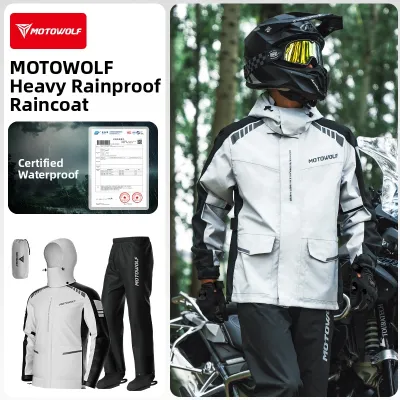
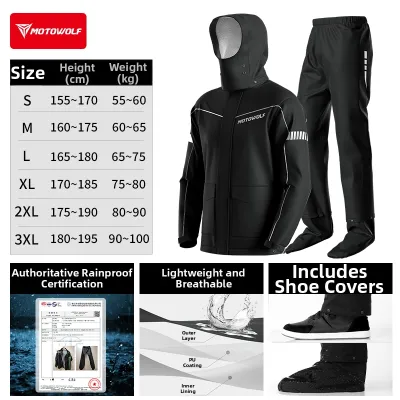
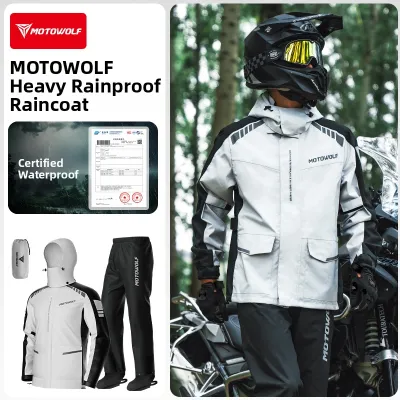
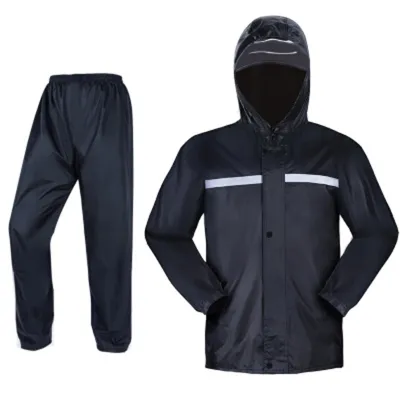
![🇸🇬 [In Stock]Motorcycle raincoat Bicycle raincoat Waterproof jacket Reflective waterproof breathable PVC jacket raincoat](https://img.lazcdn.com/g/p/9f54116258c264d1edd034c6e88eaebb.png_400x400q80.png_.webp)
Prices are valid at publication and may change. Please refer to the product page for the latest price.
A dedicated motorcycle raincoat must address both of these challenges. It is not enough to stay dry if the fabric shreds upon contact with asphalt, nor is it safe to wear heavy protective armor that becomes waterlogged, heavy, and distracting during a storm.
To make an informed purchase, you must evaluate two separate standardized rating systems. For crash safety, look for European Conformity (CE) impact and abrasion standards; for weather protection, focus on hydrostatic head and moisture vapor transmission rates.
In Singapore’s tropical climate, this balance is particularly delicate. Sudden monsoon downpours demand high waterproofing, but the intense humidity requires excellent breathability to prevent internal condensation and overheating during stop-and-go city riding.
Decoding CE Impact and Abrasion Protection Ratings
European safety standards provide a reliable framework for assessing how well a garment protects you during an accident. Understanding these labels allows you to select gear that matches your specific riding environment.

Armor Standards (EN 1621-1)
The EN 1621-1 standard regulates the performance of protective armor placed at critical impact zones, specifically the shoulders, elbows, hips, and knees. These protectors are designed to absorb and distribute the force of an impact, reducing the energy transmitted directly to your body.
CE Level 1 Protectors: This standard represents the baseline level of certified impact protection. Level 1 armor is typically thinner, lighter, and more flexible, allowing for greater airflow and freedom of movement. It is highly suitable for low-speed urban commuting where heat management is a priority.
CE Level 2 Protectors: This standard offers a higher level of impact absorption, transmitting significantly less force to the body during a crash. Because Level 2 armor is generally thicker and denser, it is highly recommended for high-speed highway riding, touring, and back protectors where the risk of severe impact is elevated.
Choosing Your Setup: For riders navigating warm, humid climates, choosing Level 2 protection for the spine and Level 1 or Level 2 for the limbs balances safety and comfort. Always check the manufacturer instructions for your specific raincoat to confirm if the armor pockets are compatible with aftermarket upgrades, and verify that any included armor is fully removable for easy washing.
Garment Abrasion Standards (EN 17092)
While individual armor inserts protect against sudden impact, the outer fabric of your riding gear must resist the intense friction of sliding across asphalt. The EN 17092 standard categorizes the overall abrasion, tear, and seam strength of motorcycle garments into five distinct classes: AAA, AA, A, B, and C.
Class AAA and AA: These classes represent the highest levels of protection, typically found in heavy-duty leather suits or advanced textile jackets designed to withstand high-speed slides.
Class A: This class offers a lighter level of protection, balancing basic abrasion resistance with comfort and flexibility for everyday road riding.
Class B and C: Class B garments provide abrasion protection equivalent to Class A but do not include impact armor. Class C garments are mesh or strap-based carriers designed solely to hold impact armor in place, offering no independent abrasion resistance.
The Over-Suit Concept: Many motorcycle raincoats are designed specifically as lightweight outer shells to be worn over your primary, armored riding jacket and pants. In this scenario, the raincoat itself may carry a lower class rating (such as Class B) because the structural slide protection is provided by the heavy-duty gear underneath. Depending on the brand and technical specifications, these specialized over-suits generally fall into broad price bands, ranging from budget-friendly options around S$50 to premium, highly breathable technical shells that exceed S$250.
Verification Check: Before purchasing, verify whether the raincoat is intended as a standalone protective jacket (which must feature built-in armor pockets and a Class A or AA rating) or strictly as a weather-resistant over-suit. If you plan to wear the raincoat over casual clothing, it must possess its own certified impact armor and adequate abrasion ratings to keep you safe.
Interpreting Waterproof and Breathability Specifications
Fabric technology plays a critical role in keeping you dry and comfortable. Numerical ratings on product tags indicate how a garment performs under pressure and how well it manages heat.
Hydrostatic Head (Waterproofing)
The waterproofing capability of a raincoat fabric is measured using the hydrostatic head test, expressed in millimeters (mm or mm/H2O). This rating represents the height of a water column that the fabric can support before moisture begins to penetrate the material.
5,000mm: This rating indicates basic water resistance. While a 5,000mm rating can withstand light drizzles or brief showers, it is generally insufficient for sustained motorcycle riding.
10,000mm: This level provides reliable protection against moderate rain. It serves as a practical baseline for urban riders who face short commutes in typical wet weather.
20,000mm and Above: This premium rating is designed to withstand severe, heavy downpours and high-pressure water ingress. When riding at highway speeds, the wind forces water against the fabric with significant pressure, and sitting on a wet motorcycle seat exerts high mechanical force; a rating of 15,000mm to 20,000mm is highly recommended to prevent leakage under these conditions.
Selection Trade-off: Do not assume that a higher waterproofing number is universally superior without checking other physical properties. Extremely high ratings achieved through thick, non-porous coatings can result in a stiff, heavy garment that restricts movement and traps heat.
Moisture Vapor Transmission (Breathability)
Breathability is measured by the Moisture Vapor Transmission Rate (MVTR), typically expressed in grams of water vapor per square meter of fabric over a 24-hour period (g/m²/24h). This metric determines how effectively perspiration can escape from the inside of the garment to the outside environment.
The “Boil-in-the-Bag” Effect: If a raincoat is completely waterproof but lacks breathability, the humidity inside the jacket will rapidly rise as you sweat. In tropical regions, this creates a humid microclimate inside the suit, leaving you just as wet from your own sweat as you would have been from the rain.
5,000g/m²: This is the minimum recommended breathability threshold for active motorcycling. It allows a basic level of moisture escape during steady riding.
10,000g/m² and Above: This higher rating is ideal for stop-and-go city traffic, where physical exertion and lack of constant airflow increase sweat production.
Mechanical Ventilation: To complement the fabric’s membrane breathability, look for garments that feature physical ventilation systems. Underarm zippers (pit zips), back vents, and mesh-lined flaps allow hot air to escape without letting rainwater enter, which is essential for maintaining comfort in warm climates.
Construction Details That Validate the Material Ratings
Even the most advanced waterproof fabric will fail if the garment’s construction allows water to bypass the material. High hydrostatic head ratings are meaningless if the physical assembly of the raincoat is not engineered for high-speed riding.
Fully Taped Seams: When pieces of fabric are stitched together, the needle leaves thousands of microscopic holes along the seams. A high-quality motorcycle raincoat must feature fully taped or heat-sealed seams on the interior, where a waterproof tape is applied over the stitching to prevent water from seeping through.
Storm Flaps and Water-Resistant Zippers: The front main zipper is a primary entry point for wind-driven rain. Look for raincoats equipped with dual storm flaps—external and internal fabric barriers that fold over the zipper—or specialized polyurethane-coated water-resistant zippers (often labeled as Aquaguard).
Adjustable Closures: High wind speeds can cause loose fabric to flap violently, which degrades the material over time and can distract the rider. Adjustable hook-and-loop (Velcro) or snap cuffs, adjustable collars, and waist cinches allow you to seal the garment against your body, preventing water from blowing up the sleeves or down the neck while keeping internal armor securely positioned over your joints.
High-Visibility and Reflective Elements: Heavy rain severely reduces visibility for all road users. Ensure your raincoat incorporates bright, high-visibility colors (such as fluorescent yellow or orange) and retroreflective panels on the back, shoulders, and chest to ensure you remain visible to other drivers in low-light monsoon conditions.
Care and Maintenance: To preserve these construction features, always consult the manufacturer’s care instructions. Machine washing with harsh detergents or tumble drying on high heat can delaminate waterproof membranes, melt seam tape, and degrade reflective coatings.
Frequently Asked Questions (FAQ)
Can I wear a regular raincoat over my motorcycle jacket?
Wearing a standard, non-motorcycle raincoat over your riding gear is highly discouraged for safety reasons. Standard raincoats are constructed from thin materials that lack any certified abrasion resistance; they will shred instantly upon contact with the road during a slide, leaving you unprotected.
Furthermore, regular raincoats are not tailored for high-speed wind resistance. They tend to flap violently at speed, which can cause rider fatigue, balloon with air, or pull the underlying protective armor inserts out of their correct anatomical positions, rendering your primary safety gear ineffective.
Does a motorcycle raincoat need its own CE armor if I wear it over an armored jacket?
If the motorcycle raincoat is specifically designed as a spacious outer shell (an over-suit) and is worn directly over a fully armored, CE-rated motorcycle jacket and pants, the raincoat itself does not require its own built-in armor. The underlying jacket will provide the necessary impact and abrasion protection.
However, if you plan to wear the raincoat as a standalone outer layer over casual clothing or non-protective work wear, it must contain its own certified CE Level 1 or Level 2 impact protectors and possess an appropriate EN 17092 abrasion rating. Always check the manufacturer’s instructions and labels for both your primary riding jacket and the raincoat to ensure proper fitment, armor compatibility, and care.
Community discussion
Share your experience or ask a question. Comments are reviewed before publication.