
When you look at a bottle of motorcycle engine oil, the alphanumeric code printed on the front—such as 10W-40—is the single most important specification for your engine’s survival. These numbers represent the oil’s viscosity grade, which is a standardized measure of how easily the fluid flows at both cold and operating temperatures. Understanding this label allows you to select an oil that matches your manufacturer’s precise engineering requirements, ensuring your engine remains lubricated, your clutch engages smoothly, and your gearbox shifts reliably.
Viscosity is not a rating of oil quality or brand superiority. Instead, it is a physical measurement of flow resistance. Choosing the wrong viscosity grade can lead to severe issues, ranging from sluggish cold starts to accelerated component wear. By learning how to decode these numbers, you can confidently maintain your motorcycle according to its exact design specifications.
Understanding the SAE Viscosity Grading System
The Society of Automotive Engineers (SAE) established the viscosity grading system to standardize how lubricants are classified globally. Without this system, riders would have to rely on vague descriptions like “thick” or “thin,” which vary by manufacturer and climate. The SAE system provides a universal language that ensures a 10W-40 oil from one brand flows similarly to a 10W-40 oil from another under identical testing conditions.
Products mentioned in this guide
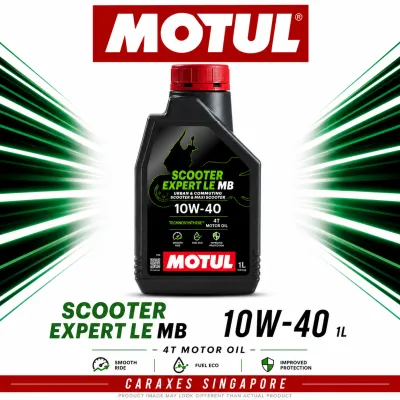
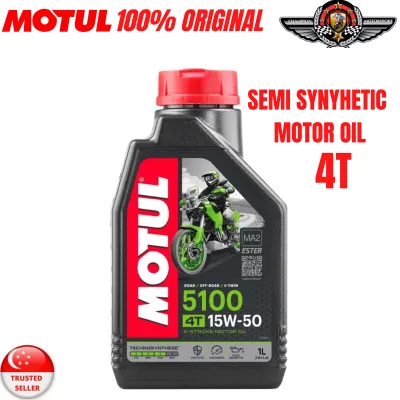
8 Lazada user ratings
Item received in good condition, has been using this brand for long time.
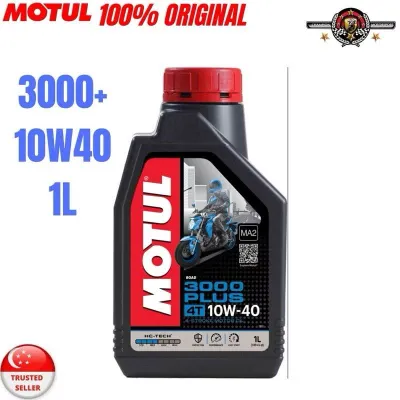
30 Lazada user ratings
Quality:good Appearance:good Performance:best efficient delivery service & good quality of engine oil.
Fast delivery. Received in good condition. Good quality engine oil. Will buy again
Nice seller. Good packaging. Good item. Fast delivery. Thanks seller. Recommended
Super fast delivery. Updated by msgs all process. Good packaging.
Price: great
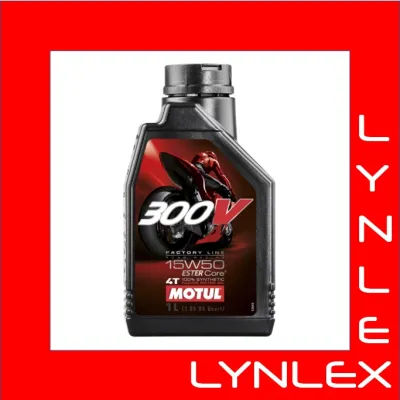
3 Lazada user ratings
Good product and quality engine oil, feel the power when at a congested zone and long distance travel.
3 Lazada user ratings
Item delivered promptly. Well packed with bubble wrap. Thanks Seller!
fast delivery , secure packing.
2 Lazada user ratings
Product came fast

3 Lazada user ratings
I always buy from here. After adding it to my motorcycle, the power feels stronger and the lubrication is much more noticeable. The ride fee…Read full reviewShow less
I always buy from here. After adding it to my motorcycle, the power feels stronger and the lubrication is much more noticeable. The ride feels effortless and there is plenty of product.
Prices are valid at publication and may change. Please refer to the product page for the latest price.
Viscosity refers to a fluid’s internal friction or resistance to flow. For example, honey has a high viscosity because it flows slowly, while water has a low viscosity because it flows freely. In a motorcycle engine, the oil must strike a delicate balance. It needs to be thin enough to circulate instantly when you start the engine, yet thick enough to maintain a protective barrier between moving metal parts when the engine reaches its full operating temperature.
Because this grading system is globally recognized, it serves as the primary reference point in your motorcycle’s owner’s manual. Manufacturers design engines with incredibly tight clearances between components like pistons, bearings, and camshafts. They specify a particular SAE grade because that viscosity matches the oil pump’s capacity and the physical gaps inside the engine, ensuring optimal pressure and lubrication throughout the entire rev range.
Breaking Down the Numbers: What the Label Tells You
Modern motorcycle engine oil is typically “multi-grade,” meaning it is engineered to perform effectively across a wide range of temperatures. A multi-grade oil label consists of two distinct numbers separated by the letter “W.” This dual-rating system indicates that the oil has been chemically modified with viscosity index improvers, allowing it to behave like a thin oil when cold and a thicker oil when hot.

It is a common misconception that these numbers represent direct temperature limits. Instead, they represent relative performance bands determined through standardized laboratory testing. The first part of the code measures the oil’s flow characteristics under cold conditions, while the second part measures its thickness at the standard operating temperature of an active engine.
The Cold Start Rating (The "W" Number)
The letter “W” on your oil bottle stands for “Winter,” not weight. The number preceding the “W”—such as 5, 10, or 15—indicates the oil’s low-temperature viscosity. A lower number before the “W” means the oil remains more fluid and flows more easily at cold temperatures, reducing the drag on your starter motor and battery when you first fire up the bike.
When an engine sits idle, gravity pulls the oil down into the oil pan, leaving the upper engine components dry. During a cold start, the oil pump must rapidly push the lubricant back up to the cylinder head to protect the valvetrain. A lower cold rating, like 10W, ensures the oil circulates much faster than a 20W oil would in cooler conditions. Even in tropical environments like Singapore, where ambient temperatures rarely drop below 24 degrees Celsius, a proper cold-start rating is essential to minimize initial metal-on-metal friction before the engine reaches its normal operating temperature.
Always check your owner’s manual to determine the minimum acceptable cold rating for your riding conditions. While a lower “W” number generally offers faster startup protection, using an oil that is thinner than recommended can sometimes lead to oil pressure issues if the engine clearances are designed for a thicker base fluid.
The Operating Temperature Rating (The Second Number)
The second number in the viscosity grade—such as 30, 40, or 50—represents the oil’s viscosity at 100 degrees Celsius, which is the standard operating temperature for a warmed-up engine. This number indicates the oil’s resistance to thinning out under intense heat and heavy mechanical loads.
As engine oil heats up, its natural physical tendency is to thin out. If the oil becomes too thin, the protective film between moving parts can break down, leading to direct metal-to-metal contact and rapid wear. A higher second number indicates that the oil maintains a thicker, more robust film at high temperatures. This is particularly critical for motorcycles, which typically rev much higher than passenger cars and often rely on air cooling, exposing the lubricant to extreme thermal stress.
However, a higher operating number is not always better. An oil that is too thick at operating temperature creates unnecessary internal drag, which reduces fuel efficiency, increases operating temperatures, and can prevent the oil from reaching tight clearances. Sticking to the manufacturer’s specified operating viscosity ensures that the oil film is exactly the right thickness to protect your engine without causing parasitic power loss.
Why Viscosity Matters for Motorcycle Engine Protection
Engine designers must balance two competing priorities when specifying oil viscosity: minimizing internal friction and maximizing wear protection. A thinner oil reduces drag, allowing the engine to rev more freely and improve fuel economy. Conversely, a thicker oil provides a more durable cushion against heavy shock loads. The recommended viscosity grade represents the optimal compromise for your specific engine design.
This balance is even more complex in motorcycles because of the shared sump design common to most modern bikes. Unlike cars, which use separate lubricants for the engine and the transmission, many motorcycles use a single pool of motorcycle engine oil to lubricate the engine pistons, the high-shear transmission gears, and the wet clutch assembly. The oil must be robust enough to withstand the crushing forces of the gear teeth without shearing, yet it must not contain additives that cause the clutch plates to slip.
Deviating from the manufacturer’s recommended viscosity grade can disrupt this delicate ecosystem. If you use an oil that is too thin, the high-shear environment of the gearbox can quickly degrade the oil’s molecular structure, leading to rough shifting and premature gear wear. If the oil is too thick, it may not flow quickly enough through the clutch plates, causing sluggish clutch engagement, dragging, or difficulty finding neutral when stopped at a traffic light.
How to Match the Correct Specification to Your Motorcycle
To find the correct viscosity grade for your bike, your first and absolute authority should always be the owner’s manual or the manufacturer’s official workshop guide. This documentation is tailored to your specific model, engine configuration, and year of manufacture. It will list the primary recommended viscosity grade and often provide a temperature chart showing acceptable alternatives if you ride in extreme climates.
For quick reference, many motorcycle manufacturers print the recommended oil viscosity directly on or near the oil filler cap, or on the dipstick housing. This is a convenient way to verify the grade before topping up your oil level. However, always cross-reference this with your manual to ensure you are also meeting the required performance standards, such as API or JASO classifications, which are just as critical as the viscosity numbers.
If you find yourself in a situation where the exact recommended viscosity grade is temporarily unavailable, consult your manual’s ambient temperature chart. In consistently warm climates like Singapore, a manual might allow you to step up from a 10W-40 to a 15W-40 or 15W-50 oil without risking engine damage, as the cold-start requirements are less demanding than in freezing climates. Never make these adjustments blindly; always verify that the alternative grade is officially approved by the manufacturer for your typical riding temperatures.
Frequently Asked Questions (FAQ)
Can I use car engine oil with the same viscosity in my motorcycle?
No, you should not use automotive engine oil in a motorcycle, even if the viscosity numbers match perfectly. Car engines and motorcycle engines have fundamentally different lubrication requirements. Because most motorcycles use a wet clutch that shares oil with the engine, they require specific frictional properties to prevent the clutch plates from slipping under acceleration.
Automotive oils are frequently formulated with friction modifiers and energy-conserving additives designed to maximize fuel economy by reducing friction as much as possible. If introduced to a motorcycle, these additives will coat the wet clutch plates, causing them to slip, overheat, and eventually fail. To ensure compatibility, always look for motorcycle-specific certifications on the bottle, such as JASO MA or JASO MA2, which guarantee the oil is safe for wet clutches.
Is a higher viscosity number always better for engine protection?
No, a higher viscosity number is not universally better and can actually harm your engine if it is not designed for it. While a thicker oil might seem like it offers more protection, an excessively high viscosity grade increases internal drag, which raises engine operating temperatures and reduces overall performance.
Furthermore, if the oil is too thick, the oil pump may struggle to push it through the narrow oil passages, leading to localized starvation. This is especially dangerous during cold starts, when the thick oil takes longer to reach the cylinder head, causing dry friction and accelerated wear on the camshafts and valves. Always stick to the viscosity range recommended by your motorcycle’s manufacturer, as it is precisely matched to the engine’s internal clearances and oil pump flow rate.
Community discussion
Share your experience or ask a question. Comments are reviewed before publication.