
Honda transmission oil specifications represent proprietary fluid standards engineered to match the unique internal friction materials, hydraulic pressures, and mechanical designs of Honda gearboxes. Unlike generic multi-vehicle fluids, specifications like ATF DW-1, CVTF, and HCF-2 are formulated for specific clutch designs and belt-and-pulley systems to prevent slippage, shuddering, and premature wear. Understanding these codes is essential for selecting the correct fluid during routine maintenance and protecting the vehicle’s drivetrain from costly mechanical issues.
Why Honda Uses Proprietary Transmission Fluid Specifications
Honda gearboxes, particularly their traditional parallel-shaft automatic transmissions, differ significantly from the planetary-gear automatic systems used by many other automotive manufacturers. Because of this unique mechanical layout, the internal clutch packs require highly specific friction modifiers. These chemical additives control how the clutch plates engage and disengage, preventing harsh shifting, excessive wear, and heat buildup.
Furthermore, the hydraulic control circuits and valve bodies in these transmissions are calibrated for precise fluid viscosity. A fluid that is too thick or too thin under operating temperatures can lead to delayed gear engagement, incorrect line pressures, or shift hesitation.
Products mentioned in this guide
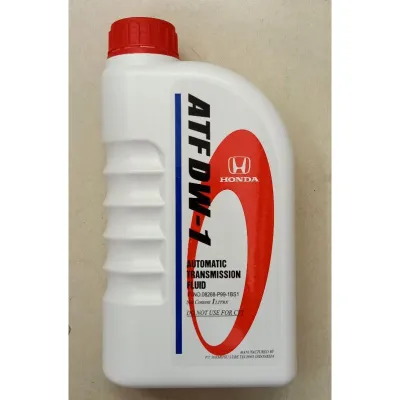
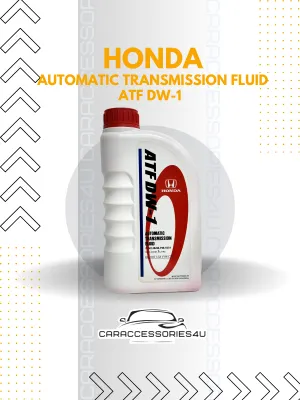
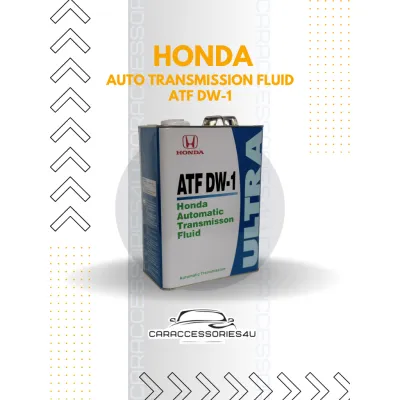
Prices are valid at publication and may change. Please refer to the product page for the latest price.
While general industry standards like DEXRON or MERCON work well for many vehicles, they do not account for these proprietary design choices. Using a generic multi-vehicle fluid can compromise the friction characteristics and hydraulic response, making manufacturer-specific formulas a necessity for long-term reliability.
Understanding Key Honda Transmission Fluid Codes
Finding the correct fluid requires looking past the marketing terms on the front of the bottle and locating the exact technical specification code. These codes are typically printed on the back label under a section labeled “specifications,” “approvals,” or “recommended for.”

It is critical to match the exact alphanumeric code specified by the vehicle manufacturer. Many aftermarket fluids claim “multi-vehicle” compatibility, but these broad formulations often rely on compromise additives to cover a wide range of different gearbox designs. For a Honda vehicle, relying on these general claims instead of a dedicated specification match can lead to suboptimal performance.
ATF DW-1 for Traditional Automatic Transmissions
ATF DW-1 is the primary specification for Honda’s conventional automatic transmissions. It was introduced as the successor to the older ATF-Z1 standard, offering improved low-temperature viscosity and better oxidation stability.
This fluid is specifically engineered to maintain stable friction characteristics across a wide temperature range, which is vital for the smooth operation of Honda’s parallel-shaft gearboxes. It helps protect the internal clutch plates from premature wear while ensuring consistent shift quality.
Before purchasing, drivers must check their owner’s manual to verify if their specific model year requires ATF DW-1. While it is generally backward-compatible with older models that originally specified ATF-Z1, verifying the manufacturer’s official guidelines is always the safest approach.
Honda CVTF for Continuously Variable Transmissions
Continuously Variable Transmissions (CVTs) operate on a completely different mechanical principle than traditional automatic gearboxes, utilizing a steel belt or chain running between adjustable pulleys. Honda CVTF is formulated specifically to provide the high level of metal-on-metal friction required to prevent the belt from slipping against the pulleys.
Using standard automatic transmission fluid like ATF DW-1 in a CVT is a critical error. Standard ATFs contain friction modifiers designed to allow smooth clutch slippage during shifts, which would cause a CVT’s steel belt to slip constantly, leading to immediate and catastrophic mechanical failure.
Additionally, drivers must distinguish between standard CVTF and newer variations such as Honda HCF-2. These fluids are not interchangeable; newer CVT designs require the specific chemical properties of HCF-2, and using the older CVTF formulation in these systems can cause severe belt slippage and pulley damage.
Manual Transmission Fluid (MTF) and Dual Pump Fluid
For vehicles equipped with manual gearboxes, Honda specifies Manual Transmission Fluid (MTF). While some older manuals historically permitted temporary use of motor oil in emergencies, modern manual gearboxes require the dedicated additives in MTF to protect synchronizers and ensure smooth gear changes.
Vehicles equipped with Real-Time All-Wheel Drive (AWD) systems also require a specialized fluid for the rear differential, known as Dual Pump Fluid (often labeled as Dual Pump Fluid II). This fluid is designed specifically for the wet clutch system inside the rear differential assembly and must never be confused with standard transmission fluids or gear oils.
How to Verify the Correct Fluid for Your Honda
To ensure you purchase and install the correct fluid, follow a systematic verification process. First, consult the vehicle owner’s manual under the “Specifications” or “Maintenance” section, which lists the exact fluid requirements for your specific engine and transmission combination.
If the manual is unavailable, open the hood and inspect the emissions and fluid information label, which is often located on the underside of the hood or along the radiator support. You can also check the transmission dipstick loop or the fluid filler cap, as many models have the required fluid type stamped directly onto these components.
If you are still uncertain, contact a certified mechanic or a local dealership service department. Provide them with your Vehicle Identification Number (VIN), which allows them to look up the precise factory specifications for your exact build.
Finally, before opening any replacement bottle or pouring fluid into the system, double-check the label on the container. Ensure the specification code matches your vehicle’s requirements exactly, as retailers cannot accept returns on opened fluid containers, and adding the wrong fluid can necessitate an expensive system flush.
Risks and Symptoms of Using the Wrong Transmission Fluid
Operating a transmission with the incorrect fluid can lead to severe mechanical damage. Over time, incompatible friction modifiers can cause accelerated clutch pack wear, excessive heat generation, and the formation of varnish or sludge that clogs the delicate passages of the valve body. Replacing a damaged transmission assembly can cost thousands of S$ in parts and labor, making fluid vigilance highly economical.
Drivers should remain alert to early warning signs of fluid incompatibility or degradation. Common symptoms include harsh or jerky gear shifts, transmission slipping where the engine revs but the vehicle does not accelerate properly, a distinct shuddering sensation during acceleration, or delayed engagement when shifting from park to drive.
If you discover that the wrong fluid has been added to the transmission, simply topping it off with the correct fluid will not resolve the issue. A complete fluid exchange is necessary to purge the incorrect formula from the torque converter, cooler lines, and valve body.
If you experience severe slipping, loud mechanical noises, or if the transmission warning light illuminates on the dashboard, safety dictates that you stop the vehicle immediately in a safe location. Do not attempt to drive further; instead, consult a qualified professional to have the vehicle towed and inspected to prevent permanent gearbox destruction.
Frequently Asked Questions (FAQ)
Can I mix Honda ATF DW-1 with other brands of ATF?
Mixing Honda ATF DW-1 with generic or multi-vehicle automatic transmission fluids is not recommended. While some aftermarket fluids claim compatibility, mixing different additive packages can alter the friction characteristics and viscosity of the fluid, potentially leading to shift hesitation, increased wear, or shuddering. For optimal performance and component longevity, always perform a complete drain and fill using a single, approved fluid specification.
How often should I change my Honda transmission fluid?
The recommended service interval varies significantly depending on your specific model, year, and driving conditions. Severe driving conditions—such as frequent stop-and-go city driving in hot climates like Singapore, towing, or driving in mountainous areas—will require more frequent fluid changes. Always consult your vehicle’s owner’s manual or follow the Maintenance Minder system alerts on your dashboard to determine the correct interval for your car.
Is Honda CVTF the same as HCF-2?
No, Honda CVTF and Honda HCF-2 are distinct formulations designed for different generations of continuously variable transmissions. HCF-2 is formulated for newer CVT designs and has different physical and chemical properties than the original CVTF. They are not backward-compatible or interchangeable; using the wrong version can lead to belt slippage and severe internal transmission damage. Always verify which specific CVT fluid your vehicle requires before servicing.
Community discussion
Share your experience or ask a question. Comments are reviewed before publication.