
Gear oil labels contain critical technical codes that dictate the health and longevity of your vehicle’s transmission. When you encounter markings like “1000N” and “GEM 4,” it is essential to distinguish between base oil classifications and final performance specifications. The 1000N designation refers to the viscosity grade of the underlying base stock, while GEM 4 typically represents a proprietary, regional, or specific manufacturer formulation identifier that must be carefully cross-referenced with your vehicle’s official requirements before use.
Using the wrong gear oil can lead to accelerated wear, poor shifting performance, or transmission failure. Understanding how to decode these labels ensures you select a fluid that matches your vehicle’s engineering standards. By breaking down these technical terms, you can make informed maintenance decisions and protect your drivetrain.
Understanding the 1000N Viscosity Grade
To understand “1000N,” it is first necessary to look at how lubricants are manufactured. Lubricating oils are blended using a base stock (or base oil) combined with specific chemical additives. The letter “N” stands for “Neutral,” which is a standard industry classification for highly refined, high-quality mineral base oils. These neutral oils are categorized by their viscosity, which is measured at a standard temperature through industry-standard viscosity measurements.
Products mentioned in this guide
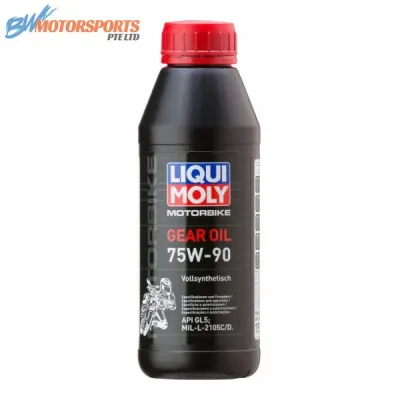
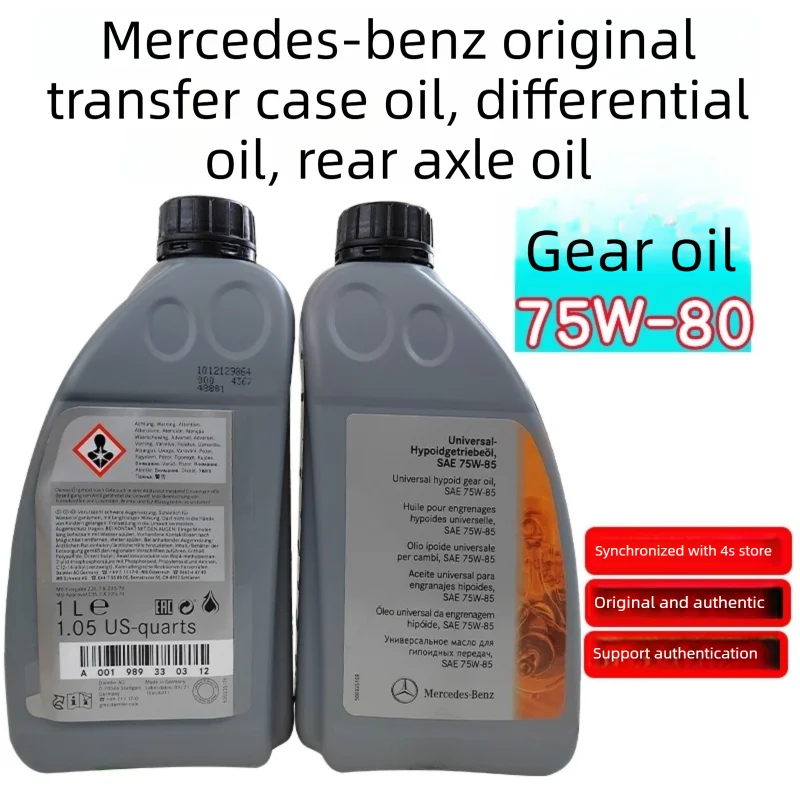
Prices are valid at publication and may change. Please refer to the product page for the latest price.
The number “1000” in 1000N indicates a very high-viscosity base stock. In the lubricant blending industry, a 1000 Neutral oil is a heavy, thick base stock. This type of heavy base oil is typically utilized in heavy-duty, high-load, or industrial gear applications where maintaining a robust lubricating film under extreme pressure is critical to prevent metal-on-metal contact.
However, there is a critical difference between the viscosity of the raw base oil (1000N) and the viscosity grade of the final formulated gear oil, such as an SAE 80W-90 or SAE 140. The final gear oil undergoes blending with viscosity index improvers, pour point depressants, and extreme-pressure additives. These additives modify how the oil flows at both low and high temperatures, which is what the Society of Automotive Engineers (SAE) grade represents.
When selecting gear oil for your vehicle, you should always look for the final SAE grade on the front label. The SAE grade determines the actual operating temperature performance and cold-start flow characteristics. While the 1000N designation tells you about the heavy nature of the base stock used in the blend, it does not replace the standardized SAE viscosity rating required by your vehicle’s manufacturer.
Deciphering the GEM 4 Specification Marking
Alphanumeric codes like “GEM 4” can be confusing because they do not align with standard international classifications. Unlike universal standards established by the American Petroleum Institute (API), codes like GEM 4 often represent proprietary original equipment manufacturer (OEM) approvals, regional industrial standards, or specific manufacturer formulation identifiers.

To determine what GEM 4 means for your specific vehicle, you must locate the official Technical Data Sheet (TDS) or the vehicle owner’s manual. Manufacturers often use proprietary codes to designate fluids that have been tested and approved for specific gearbox designs, synchronizer materials, or operating conditions.
A common and dangerous assumption is that a numerical “4” in a proprietary code like GEM 4 automatically equates to the widely recognized API GL-4 standard. API GL-4 specifies gear oils with mild extreme-pressure additives suitable for manual transmissions, particularly those with yellow metal synchronizers. Assuming GEM 4 is a direct equivalent to API GL-4 without explicit confirmation on the product label or the manufacturer’s official documentation can lead to severe component damage.
When evaluating gear oil, always look for recognized standard markings—such as API GL-4, API GL-5, or specific OEM approval codes—alongside any proprietary labels. If a product only lists a proprietary code like GEM 4, you must verify its compatibility with your vehicle’s requirements before pouring it into your gearbox.
How to Match These Specifications to Your Transmission
Matching these technical specifications to your transmission requires a systematic approach to ensure safety and compatibility. Because transmission repairs are highly expensive, verifying the fluid specifications beforehand is a critical preventive maintenance step.
First, consult your vehicle owner’s manual to identify the exact required API grade (such as GL-4 or GL-5) and the SAE viscosity recommended by the automaker. This is your primary reference point, and any fluid you purchase must meet or exceed these exact standards.
Second, cross-reference the “GEM 4” code with the manufacturer’s approved lubricant list. You can often find this information in the vehicle’s service manual or by contacting the oil brand directly to request a Technical Data Sheet (TDS). The TDS will explicitly state which OEM specifications the fluid meets and whether it is safe for your specific transmission model.
Third, verify that the final formulated SAE grade matches your local climate and operating conditions. For example, in Singapore’s consistently hot, tropical climate, cold-start flow ratings (the “W” or winter number) are less critical than the high-temperature viscosity rating. You need an oil that maintains its protective film and thermal stability under high ambient temperatures and stop-and-go traffic conditions without thinning out excessively.
Fourth, stop and consult a qualified mechanic or an authorized dealership if your manual requires a different specification or if the gear oil label lacks clear, verifiable certifications. Never guess or compromise on transmission fluid specifications, as the wrong additive package can quickly ruin synchronizers, bearings, and gears.
Common Mistakes When Reading Gear Oil Labels
One of the most frequent errors is confusing base oil viscosity, such as 1000N, with the final SAE gear oil grade. This mistake can lead to selecting an improperly thick or thin fluid for the gearbox, resulting in poor lubrication, increased friction, or inadequate wear protection.
Another common mistake is assuming a proprietary code like GEM 4 is a direct, safe substitute for a required API GL-4 or GL-5 rating. Without verifying the additive package via the Technical Data Sheet, you risk using a fluid that lacks the necessary extreme-pressure additives or contains additives that are incompatible with your transmission’s internal components.
Drivers also frequently ignore the fundamental differences between manual transmission fluid (MTF), automatic transmission fluid (ATF), and differential oil. These fluids are engineered for entirely different mechanical environments and cannot be used interchangeably.
Finally, overlooking additive compatibility is a critical error, especially for manual transmissions containing yellow metals like brass synchronizers. Some high-viscosity gear oils designed for differentials contain active sulfur additives that chemically attack and corrode brass components at high temperatures. Always ensure the fluid is explicitly labeled as safe for yellow metals if your manual transmission requires it.
Frequently Asked Questions (FAQ)
Can I use a 1000N base oil gear fluid in a standard passenger car?
While 1000N indicates a high-quality, high-viscosity base stock, the final formulated SAE grade and additive package determine whether the fluid is suitable for your vehicle. Heavy base stocks like 1000N are typically blended into lubricants designed for heavy-duty commercial vehicles or industrial machinery. Standard passenger cars require specific SAE viscosity grades (such as 75W-90) and precise additive formulations. You must strictly follow your vehicle owner’s manual recommendations rather than choosing a fluid based solely on its base oil classification.
Is GEM 4 the same as API GL-4?
No, GEM 4 is not inherently the same as API GL-4. While both contain the number four, GEM 4 is typically a proprietary manufacturer code or regional identifier, whereas API GL-4 is an internationally recognized performance standard. You should never assume a proprietary code is equivalent to an API standard without explicit confirmation. Always check the product’s Technical Data Sheet or label for an official API GL-4 certification mark before using it in a transmission that requires GL-4 fluid.
Community discussion
Share your experience or ask a question. Comments are reviewed before publication.