
Transmission fluids serve as the hydraulic medium, lubricant, and coolant for your vehicle’s gearbox. When looking at a bottle of DRVN transmission fluid, the array of alphanumeric codes, specifications, and acronyms can seem overwhelming. Decoding these DRVN specification codes is essential for safeguarding your vehicle’s transmission health, maintaining smooth shifting performance, and ensuring warranty compliance.
Modern gearboxes are highly engineered systems with tight tolerances. They rely on specific fluid properties to manage internal friction, dissipate heat, and facilitate precise gear changes. Using a fluid with the incorrect specification code can lead to harsh shifting, overheating, premature gear wear, or voided manufacturer warranties.
Before purchasing any fluid or attempting a fluid change, reading the DRVN bottle label and understanding its specification codes is a critical first step. This guide translates those technical designations into clear, actionable terms so you can make an informed decision for your vehicle.
Products mentioned in this guide
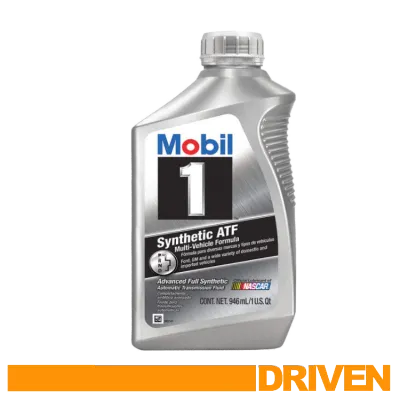
Prices are valid at publication and may change. Please refer to the product page for the latest price.
Understanding DRVN Product Names and Base Types
To find the correct fluid, you must first identify the fundamental transmission type your vehicle uses. DRVN transmission fluids are formulated around specific base types, each tailored to distinct mechanical configurations. These base designations are prominently displayed on the product packaging.
ATF (Automatic Transmission Fluid) This fluid is engineered for traditional planetary automatic transmissions equipped with torque converters. It features specific viscosity characteristics and additive packages designed to facilitate hydraulic pressure control and lubricate complex planetary gear sets.
CVTF (Continuously Variable Transmission Fluid) Formulated specifically for continuously variable transmissions, this fluid is designed to handle the high-pressure, metal-on-metal contact between the steel belt or chain and the pulleys. It provides high friction coefficient properties to prevent belt slippage while protecting the pulley system from wear.
DCTF (Dual-Clutch Transmission Fluid) This fluid is designed for dual-clutch transmissions, which operate similarly to manual gearboxes but use automated clutches. DCTF must provide rapid heat dissipation and precise frictional properties for either wet or dry clutch packs, depending on the specific transmission design.
These base categories are fundamentally different in their chemical makeup and physical properties. They are not interchangeable under any circumstances. Using a CVTF in a standard planetary automatic transmission, or vice versa, will disrupt internal friction levels and can cause immediate mechanical failure. The base product name serves as your primary filter; if the base type does not match your gearbox design, secondary specifications on the label are irrelevant.
Decoding the Key Specification Codes on the Label
Beyond the broad base categories, DRVN labels carry detailed technical codes that define the fluid’s performance limits and compatibility. Understanding these codes helps you determine if the fluid is suitable for your specific driving environment and vehicle model.

Viscosity Grades and Climate Suitability
Viscosity refers to a fluid’s resistance to flow, and it is a critical factor in transmission protection. DRVN technical sheets typically specify kinematic viscosity measured at both 40°C and 100°C. These measurements indicate how the fluid behaves during initial startup and when the transmission reaches its normal operating temperature.
In tropical environments like Singapore, where ambient temperatures remain consistently high and vehicles frequently operate in dense, stop-and-go urban traffic, transmissions run hot. Under these severe operating conditions, a fluid with stable high-temperature viscosity is essential. If the fluid thins out excessively under heat, the protective lubricating film breaks down, leading to increased metal-on-metal friction and accelerated wear on the gears and bearings.
Conversely, the fluid must not be too thick, as this can restrict flow through the intricate hydraulic valve body of the transmission, causing delayed or sluggish gear shifts. Always cross-reference the viscosity parameters listed on the DRVN label or Technical Data Sheet with the viscosity range recommended by your vehicle manufacturer.
OEM Standards and Approvals
Automakers establish their own proprietary performance standards to ensure fluids are compatible with their specific transmission designs. These standards dictate precise friction, wear, and thermal stability characteristics. On a DRVN label, you will find references to these global and manufacturer-specific standards, such as JASO (Japanese Automotive Standards Organization), API (American Petroleum Institute), or proprietary codes like Toyota WS, Honda DW-1, Nissan NS-3, or ZF Lifeguard.
When reading the DRVN label, pay close attention to how these standards are stated. There is a distinct difference between a fluid that is “officially approved” by an automaker and one that “meets or exceeds” the requirements. An approved fluid has undergone formal testing and certification by the vehicle manufacturer. A fluid labeled as “suitable for use” or “meets the requirements” means the fluid manufacturer has conducted internal testing to verify compatibility, but the automaker has not formally certified it.
Always verify that the exact alphanumeric code required by your vehicle manufacturer is explicitly listed on the DRVN packaging. Relying on a generic category match instead of the specific OEM code can compromise transmission performance.
Friction Modifiers and Additive Packages
Transmission fluids contain complex additive packages, including friction modifiers, anti-wear agents, and shear-stable viscosity index improvers. Friction modifiers are chemical compounds that alter the friction characteristics between moving parts, particularly within clutch packs.
Different transmission designs utilize different clutch materials. For example, the wet clutches in a dual-clutch transmission require different friction dynamics than the lock-up clutch in a traditional automatic transmission’s torque converter. The specification codes on the DRVN label serve as a guarantee that the fluid contains the precise balance of friction modifiers required to prevent transmission shudder, clutch slippage, or harsh engagement in compatible systems.
How to Match DRVN Specs to Your Vehicle
To ensure compatibility and prevent costly transmission damage, follow a systematic verification process before purchasing or installing any DRVN transmission fluid.
- Step 1: Locate Your Vehicle's Required Specification
Consult your vehicle’s owner's manual, service booklet, or check the transmission dipstick or under-hood placard. Identify the exact OEM specification code required (for example, "Toyota ATF WS" or "ZF 6HP"). Do not rely on generic terms like "standard automatic fluid." - Step 2: Cross-Reference with the DRVN Label
Examine the back label of the DRVN product or consult its official Technical Data Sheet (TDS). Look for the section listing compatible specifications and search for your vehicle's exact OEM code. Ensure every letter and number matches perfectly. - Step 3: Observe Safety Boundaries
If your vehicle's exact OEM specification code is not explicitly listed on the DRVN label or the official TDS, do not use the fluid. Using an incompatible fluid can lead to clutch slippage, shifting issues, or internal component failure.
Before performing any fluid replacement, always check the vehicle manufacturer’s original instructions for specific filling procedures, fluid level checks, and temperature requirements. If you encounter conflicting instructions, if the transmission type is unidentified, or if you are unsure of cross-compatibility, stop immediately and consult a certified automotive professional or the vehicle dealership.
Frequently Asked Questions (FAQ)
Can I mix different DRVN transmission fluids if the codes are similar?
No, you should not mix different transmission fluids, even if they are from the same brand and have similar names or codes. Mixing fluids with different base oils, viscosity profiles, or additive packages can alter the overall friction characteristics of the fluid mixture. This chemical imbalance can lead to clutch slippage, accelerated wear, or transmission shudder. Always perform a complete fluid exchange or top up using fluid that matches the existing specification code exactly.
Where can I find the official Technical Data Sheet (TDS) for a specific DRVN code?
You can locate the official Technical Data Sheet (TDS) and Safety Data Sheet (SDS) by visiting the official DRVN website or contacting an authorized local distributor. These documents provide detailed technical specifications, including exact kinematic viscosity measurements, density, flash points, and a comprehensive list of approved OEM specification codes. Checking the TDS is the most reliable way to verify compatibility before purchasing.
Community discussion
Share your experience or ask a question. Comments are reviewed before publication.