
Selecting the right motorcycle rain gear requires understanding the difference between weather protection and impact safety. When evaluating an Arai raincoat or rain suit, you must look for specific technical ratings that indicate how well the garment resists water penetration, manages internal moisture, and withstands physical abrasion. Balancing these specifications ensures you stay dry during sudden tropical downpours without compromising your safety on the road.
Clarifying "Protection" in Motorcycle Rain Gear
It is common to confuse weather protection with physical crash protection when shopping for riding gear. Weather protection refers to a garment’s ability to block wind and water, keeping your body dry and warm. Physical crash protection, on the other hand, involves impact absorption and abrasion resistance designed to protect your skin and bones during a slide or fall.
Most standard motorcycle over-suits are designed primarily as weather shields. They are typically constructed from lightweight, waterproof membranes intended to be worn over your regular protective riding apparel. Unless a rain suit explicitly states that it includes integrated armor or abrasion-resistant fabrics, you should assume it relies on your base riding jacket and trousers to provide crash safety.
Products mentioned in this guide
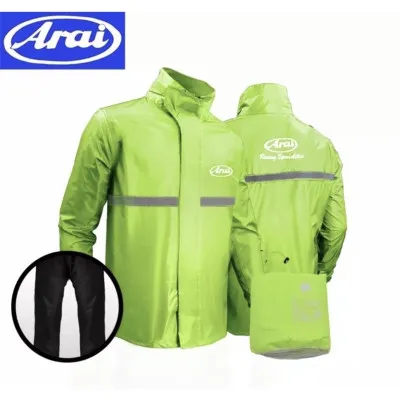
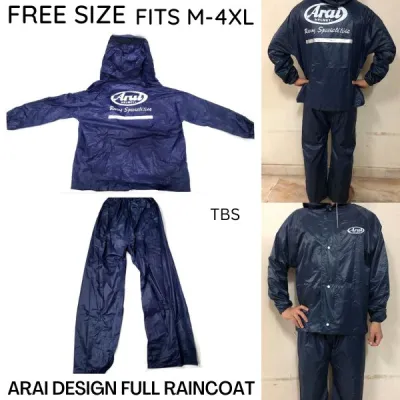
Prices are valid at publication and may change. Please refer to the product page for the latest price.
When inspecting Arai rain gear, look closely at the product tags and inner labels. You will want to identify separate ratings for waterproofing, breathability, and any European Conformity (CE) safety standards. Understanding these distinct labels prevents the dangerous mistake of replacing a fully armored riding jacket with a simple, unarmored rain shell.
Weather Shielding: Waterproof and Breathability Ratings Explained
Waterproof performance is typically measured using the hydrostatic head test, expressed in millimeters (mm H2O). This rating indicates the height of a water column the fabric can support before moisture begins to seep through. For high-speed highway riding or enduring heavy tropical storms, look for a rating of at least 10,000 mm, though 20,000 mm or higher offers much greater security against wind-driven rain.

Breathability is equally critical, especially when riding in hot, humid climates. Measured in grams of water vapor per square meter over 24 hours (g/m²/24h), this rating determines how effectively sweat can escape the garment. A rating of 8,000 g/m²/24h or higher helps prevent the “sauna effect,” keeping you comfortable during stop-and-go city traffic where airflow is minimal.
However, high fabric ratings mean very little if the garment’s construction is flawed. Water is highly opportunistic and will quickly find its way through needle holes and standard closures. Always verify that the rain suit features fully taped or welded seams on the inside, along with water-resistant zippers protected by external storm flaps.
Physical Safety: Abrasion Resistance and Armor Compatibility
If you plan to wear a rain suit as a standalone outer layer rather than an over-suit, you must check its CE EN 17092 classification. This European standard grades motorcycle garments from Class AAA (highest protection) to Class C (impact protector wearers only). A standalone riding rain jacket should ideally carry a Class A or Class B rating to offer basic slide protection on asphalt.
Additionally, check the interior of the garment for dedicated armor pockets. These pockets should be designed to hold impact protectors certified under EN 1621-1 for elbows and shoulders, and EN 1621-2 for the back. Without these pockets and corresponding armor inserts, the suit cannot protect you from impact forces during an accident.
In cases where formal CE ratings are not present, inspect the material specifications for high-denier reinforcements. Look for heavy-duty fabrics, such as 500D or 1000D nylon, strategically placed in high-impact zones like the shoulders, elbows, and knees. These reinforced panels provide a secondary line of defense against friction and tearing if you slide across the road surface.
Visibility and Wind Protection Specifications
Riding in the rain drastically reduces visibility for all road users, making active safety features essential. Look for rain suits that incorporate high-visibility fluorescent panels and retroreflective strips. These reflective elements should be strategically positioned across the chest, back, and sleeves to ensure you remain visible to other motorists from all angles in low-light conditions.
Wind protection is another vital factor that directly influences rider fatigue and body temperature. High windproof ratings prevent cold air from cutting through the fabric, which can lead to shivering and loss of concentration. Ensure the suit features adjustable cuffs, high collar seals, and elasticated waist adjusters to seal out drafts and prevent the fabric from flapping violently at highway speeds.
How to Choose the Right Specs for Your Riding Style
Your choice of specifications should align directly with your typical riding environment and habits. For daily urban commuting in hot, humid regions, prioritize high breathability ratings and lightweight construction. This combination allows you to stay cool in slow-moving traffic while still defending against sudden afternoon downpours.
For long-distance touring or frequent highway travel, shift your focus toward maximum waterproof ratings and robust physical protection. Look for heavy-duty over-suits with reinforced seams, high-denier fabrics, and comprehensive reflective detailing. While spending S$150 to S$300 on a high-quality rain suit may seem like a significant upfront cost, it is a vital investment for year-round riding comfort and safety.
Before making a purchase, use this quick verification checklist:
- Check the inner labels for hydrostatic head (minimum 10,000 mm) and breathability ratings.
- Inspect the seams to confirm they are fully taped, sealed, or welded.
- Verify armor compatibility by looking for internal pockets designed for CE-certified protectors.
- Examine the closures for storm flaps, adjustable cuffs, and secure collar seals.
- Review care instructions to ensure the waterproof membrane can be maintained easily over time.
Frequently Asked Questions (FAQ)
Can I use a rain suit as my primary protective motorcycle jacket?
Most lightweight rain suits are designed strictly as over-suits to provide weather protection over your existing gear. They generally lack the necessary abrasion-resistant fabrics and impact armor required to protect you during a crash. Unless the rain suit carries an explicit CE EN 17092 safety rating and includes integrated armor, you must wear it over a dedicated, protective motorcycle jacket.
How does maintenance affect the waterproof rating over time?
Regular wear, dirt, and improper washing can gradually degrade the waterproof membrane and the Durable Water Repellent (DWR) coating on the outer fabric. To preserve the garment’s performance, avoid harsh detergents, fabric softeners, and high-heat drying cycles, which can delaminate the taped seams. Always follow the manufacturer’s specific care label and periodically reapply a spray-on DWR treatment to maintain water-beading performance.
Community discussion
Share your experience or ask a question. Comments are reviewed before publication.