
Choosing between the DDPAI Z60 and other Land Transport Authority (LTA) compliant dash cams in Singapore requires looking beyond basic video resolutions to evaluate real-world thermal stability, power management, and legal installation boundaries. While the DDPAI Z60 offers modern app connectivity and high-resolution recording, its suitability compared to alternative models depends on how well its hardware design handles Singapore’s intense tropical heat and whether its installation complies with local regulatory frameworks. A systematic comparison of these factors ensures you select a device that remains legally compliant and fully operational when you need it most.
Navigating the crowded market of car electronics in Singapore can be challenging, especially with numerous brands competing on pixel counts and smart features. For a dash cam to be truly effective, it must not only capture clear footage during critical moments but also operate reliably without interfering with your vehicle’s safety systems or violating local road regulations. By analyzing the core technical specifications, installation requirements, and environmental durability of the DDPAI Z60 alongside other compliant options, drivers can make an informed decision tailored to their specific vehicle and driving habits.
Verifying Dash Cam Compliance in Singapore
Before purchasing any dash cam, including the DDPAI Z60, verifying its regulatory status in Singapore is essential. Any device utilizing wireless technologies like Wi-Fi or Bluetooth must be registered with the Info-communications Media Development Authority (IMDA). Buyers should look for the official IMDA compliance label on the product packaging or within the manufacturer’s documentation to ensure the wireless transmitter operates within approved local frequency bands. Using non-compliant wireless equipment can lead to interference issues and potential regulatory penalties.
Products mentioned in this guide
![[4K+4K] DDPAI Z90 Master Front 4K & Rear 4K HDR Sony Starvis 2 Series Dash Cam with 4G Connectivity](https://img.lazcdn.com/g/p/1066b3d8e9d2a6914fc4e514db155f17.jpg_400x400q80.jpg_.webp)
Prices are valid at publication and may change. Please refer to the product page for the latest price.
LTA guidelines focus primarily on driver visibility and vehicle safety. Dash cams must be mounted in a position that does not obstruct the driver’s clear view of the road. Typically, this means placing the unit high up on the front windshield, ideally behind or adjacent to the rearview mirror. The physical size of the camera and its mounting bracket must be evaluated to ensure it fits within this zone without creeping into the driver’s primary line of sight.
Additionally, Singapore’s strict window tinting regulations can affect both the legality of the installation and the performance of the camera. If your vehicle has aftermarket solar films, mounting adhesive brackets directly onto the film can cause damage or peeling over time due to heat. You must verify that the camera’s placement does not interfere with the safety sensors, rain sensors, or advanced driver-assistance systems (ADAS) housed near the top of the windshield. Consulting your vehicle’s manual is highly recommended to identify these sensor zones before sticking any mount to the glass.
DDPAI Z60 Feature and Specification Overview
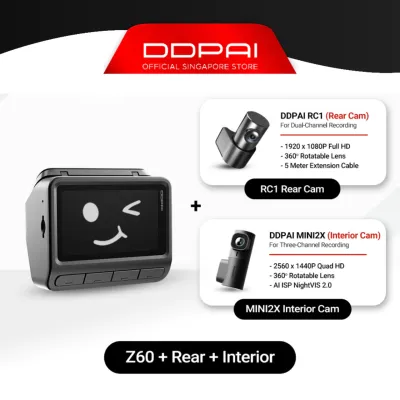
The DDPAI Z60 is designed as a compact, modern dash cam that balances high-definition recording with user-friendly smart features. According to standard manufacturer specifications, the unit features high-resolution video capture paired with a wide-angle lens to cover multiple lanes of traffic. It utilizes a built-in display screen on the rear of the housing, allowing drivers to check alignment, view status indicators, and navigate menus directly on the unit without needing to pull out a smartphone for basic adjustments.

For connectivity, the Z60 integrates built-in Wi-Fi to pair with the proprietary DDPAI companion mobile application. This app-based ecosystem allows users to adjust settings, view live feeds, and download recorded video files directly to a smartphone. This wireless transfer capability is particularly useful for retrieving footage quickly at the scene of an incident without having to remove the microSD card and find a compatible card reader.
The physical form factor is relatively discreet, utilizing an adhesive mount that attaches directly to the windshield. Standard retail packages typically include the main camera unit, a power cable designed for a standard 12V auxiliary power outlet, and basic mounting accessories. However, users looking for continuous monitoring must verify the availability of compatible hardwire kits separately, as these are often sold as optional accessories rather than standard in-box items.
Critical Comparison Dimensions for Local Driving Conditions
Evaluating a dash cam for Singapore roads requires looking past marketing buzzwords and focusing on how the hardware performs under specific local conditions. From the intense glare of the midday sun to the dark corners of multi-story car parks, a camera must be engineered to handle rapid environmental changes. Comparing the DDPAI Z60 against other LTA-compliant models involves analyzing three critical performance pillars: video clarity, heat resistance, and power management.
Video Clarity and Low-Light Performance
When comparing the DDPAI Z60 to other market options, video clarity under challenging lighting is a primary differentiator. While high pixel counts look impressive on paper, actual license plate readability depends heavily on the physical size of the image sensor and the lens aperture. A larger sensor allows more light to reach the pixels, which is critical for capturing clear details on poorly lit roads or during nighttime driving.
Singapore’s urban environment features frequent transitions between bright sunlight and dark underground tunnels or multi-story car parks. Dash cams equipped with true High Dynamic Range (HDR) or Wide Dynamic Range (WDR) processing handle these rapid exposure changes more effectively. When evaluating the Z60 against competitors, check the specifications for active exposure compensation features that prevent headlight glare from washing out license plates.
Frame rate consistency is another factor to verify. A steady frame rate ensures that fast-moving vehicles do not appear blurry in the recorded footage. Review the manufacturer’s technical specifications to confirm the camera maintains its target frame rate under high-temperature operating conditions, as some lower-quality processors may throttle performance and drop frames when they overheat.
Heat Resistance and Reliability
Singapore’s tropical climate presents a severe challenge for car electronics, especially when vehicles are parked in open-air car parks under direct sunlight. The internal power source of a dash cam is the single most critical factor for long-term reliability. Dash cams utilizing supercapacitors are generally far more heat-resistant and stable than those relying on traditional lithium-ion batteries, which can swell, degrade, or fail under extreme cabin temperatures.
Before finalizing a purchase, check the manufacturer’s stated operating and storage temperature ranges. A robust dash cam designed for tropical climates should specify an operating limit that safely exceeds typical cabin temperatures, which can easily surpass 60 degrees Celsius when parked in the sun. Verify whether the DDPAI Z60 utilizes a supercapacitor design, as this is a key indicator of its ability to withstand prolonged thermal stress.
The physical design and mounting angle also play a role in heat management. Compact form factors that sit flush against the windshield may absorb more direct heat from the glass. Ensure the mounting position allows for adequate passive airflow around the camera body to prevent thermal shutdown during long drives, and consider using sunshades that do not completely block the camera’s ventilation paths if you must park in direct sunlight.
Parking Surveillance and Power Management
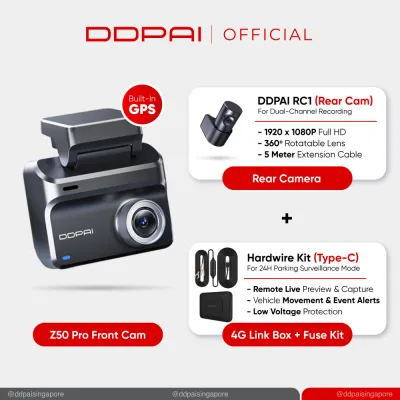
For drivers who require 24-hour protection, parking surveillance features must be compared carefully. Operating a dash cam while the engine is switched off requires a dedicated hardwire kit connected directly to the vehicle’s fuse box. This installation must include an adjustable low-voltage cutoff mechanism to protect your car battery from draining completely, preventing a dead battery situation.
Different dash cams handle parking mode in various ways. Some models offer continuous time-lapse recording, while others remain in a low-power standby state and only trigger recording when the internal G-sensor detects an impact or when the camera detects motion. Compare these modes to determine which aligns with your parking environment and battery capacity, keeping in mind that continuous recording draws more power over time.
Because electrical work on modern vehicles can impact manufacturer warranties and safety systems, any hardwire installation should be performed by a qualified professional. Ensure that the hardwire kit used is fully compatible with both the DDPAI Z60 and your specific vehicle model’s electrical architecture. Never attempt to bypass safety fuses or modify original vehicle wiring without consulting the vehicle manufacturer’s guidelines.
Decision Framework: Choosing Your Dash Cam
To make an informed decision, evaluate your specific driving habits, parking situations, and vehicle setup against the following criteria:
- Choose the DDPAI Z60 if you prioritize a compact, screen-equipped design with straightforward smartphone app integration for quick footage retrieval, and you primarily park in shaded or indoor areas where extreme heat exposure is minimized. Its standard feature set provides a reliable baseline for daily commuting without requiring overly complex configurations.
- Choose an alternative LTA-compliant model if your daily routine involves parking in unsheltered lots under direct sunlight for extended periods, or if you require advanced dual-channel (front and rear) coverage with specialized low-light sensors optimized specifically for dark, narrow streets. Drivers who operate commercial vehicles or private hire cars may also want to look for models with dedicated cabin-facing cameras and tamper-proof memory card slots.
- Verify first if your vehicle features advanced driver-assistance systems (ADAS), heavily insulated acoustic glass, or complex electrical architectures, as these elements can interfere with GPS signals, wireless connectivity, and physical mounting. Always consult your vehicle's manual or a professional installer to ensure the dash cam's power draw and placement do not conflict with original equipment manufacturer (OEM) electrical systems or void your vehicle's warranty.
Frequently Asked Questions (FAQ)
Do I need to declare my dash cam to the authorities?
In Singapore, private vehicle owners do not need to register or declare standard consumer dash cams to the Land Transport Authority (LTA) or other government bodies, provided the camera is used solely for personal safety and insurance documentation. However, commercial vehicles, private hire cars (PHCs), and taxis may be subject to stricter regulations regarding inward-facing cameras to protect passenger privacy. For private drivers, any recorded footage shared publicly must respect local privacy laws; uploading videos that clearly identify individuals or license plates without consent can lead to legal disputes under the Personal Data Protection Act (PDPA).
Can I use the dash cam's Wi-Fi to download footage while driving?
No, you should never attempt to connect to the dash cam’s Wi-Fi or use the companion mobile application while the vehicle is in motion. Under Singapore traffic laws, holding or operating a mobile device while driving is a serious offense that can lead to heavy fines and demerit points. To review or download footage safely and legally, you must pull over and park the vehicle in a safe, designated parking location before accessing the camera’s wireless network or adjusting any settings on your smartphone.
Community discussion
Share your experience or ask a question. Comments are reviewed before publication.