
Finding the right car phone holder is not about finding a universally perfect product, but rather about matching a mounting system to your specific vehicle cabin and driving habits. The layout of your dashboard, the angle of your windshield, and the design of your air vents all dictate which mounting style will remain secure and visible. By evaluating these physical features alongside local road safety regulations, you can select a mount that keeps your device accessible without compromising your view of the road.
Assessing Your Car's Interior for Mount Compatibility
Before purchasing any phone holder, you must inspect the physical layout and materials of your car’s cabin. Many drivers assume any mount will work in any car, only to find that adhesives fail to stick or clips do not fit. Start by running your hand over your dashboard to evaluate its texture and material. Smooth, flat plastic surfaces are ideal for suction cups and adhesive pads, whereas curved, heavily textured, or soft-touch leather-wrapped dashboards often prevent a proper seal.
Next, examine the shape and structural integrity of your air vent blades. Standard horizontal and vertical vent slats generally accommodate basic clip-on mounts quite well. However, circular, diagonal, or deeply recessed vents often require specialized mounting mechanisms or may be entirely incompatible with standard vent clips. Applying a heavy phone to a weak or loose vent blade can also cause the vent to droop, directing airflow downward and making the screen difficult to read.
Products mentioned in this guide
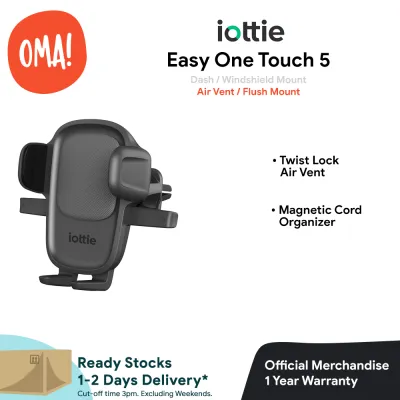
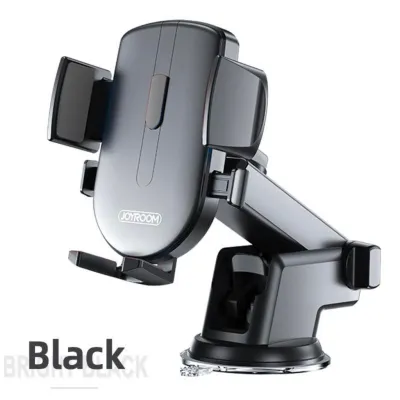
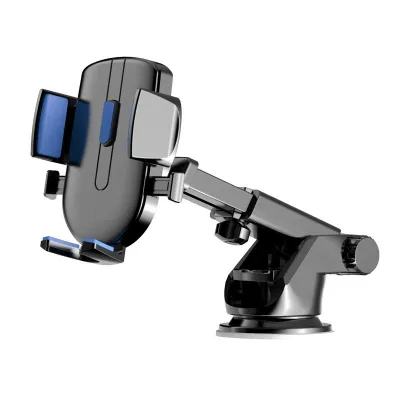
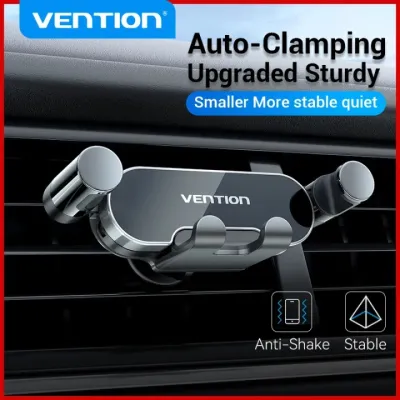
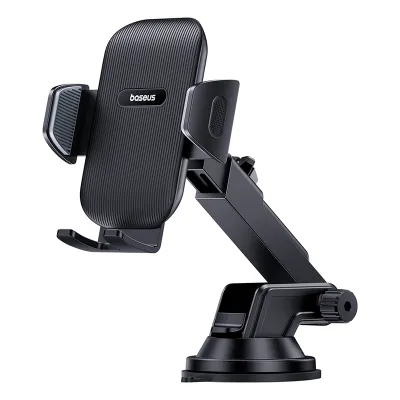
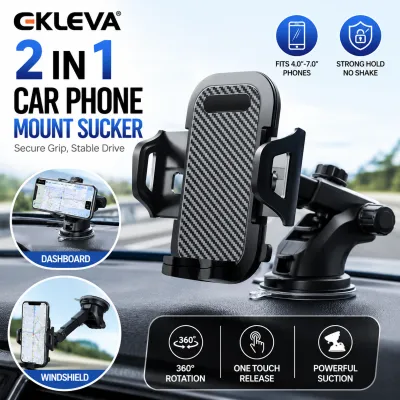
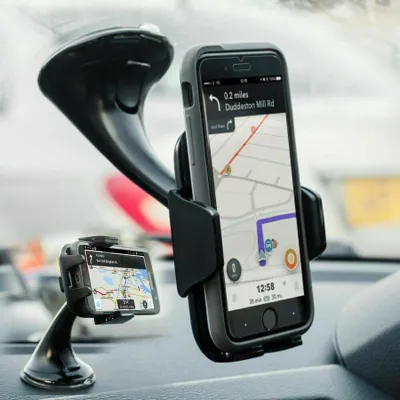
Prices are valid at publication and may change. Please refer to the product page for the latest price.
Finally, consider the slope of your windshield and the overall depth of your dashboard. Vehicles with steeply raked windshields and deep dashboards present a physical challenge for windshield mounts. In these setups, a standard short-arm mount may place the phone too far out of reach, forcing you to lean forward to interact with the screen. Conversely, a long, telescoping arm can bridge this gap but may vibrate excessively on uneven roads or block a significant portion of your forward view.
Dashboard Phone Holders: Line of Sight and Surface Limits
Dashboard phone holders are highly favored because they position your device close to your natural line of sight. By placing the phone just above or level with the instrument cluster, you can glance at navigation prompts without taking your eyes off the road for more than a split second. This positioning helps maintain situational awareness, especially when navigating complex junctions or busy urban environments.

However, achieving a secure dashboard mount requires careful attention to surface preparation and manufacturer instructions. Most adhesive-based mounts utilize high-strength bonding tapes that require a completely clean, oil-free surface to adhere properly. You must clean the area thoroughly and allow the adhesive pad to cure—often for several hours or overnight—before attaching the weight of the phone holder and the device itself. Failing to observe this curing period is the most common cause of premature adhesive failure.
Suction-based dashboard mounts face similar challenges on textured or porous materials. While some suction cups feature a sticky polyurethane gel designed to fill minor surface imperfections, they still require a relatively flat, non-porous surface to maintain a vacuum seal. If your dashboard has been treated with silicone-based interior protectants or detailers, these chemical coatings can severely degrade the suction grip, causing the mount to detach unexpectedly while driving.
When positioning a dashboard mount, you must also verify physical clearances within the driver’s cockpit. Ensure the phone does not block your view of the instrument cluster, warning lights, or side mirrors. Additionally, check that the mount and your phone do not interfere with the physical operation of the steering wheel, gear selector, or wiper stalks, allowing you to drive without any physical obstructions.
Windshield Phone Holders: Adjustability and Legal Restrictions
Windshield phone holders offer exceptional adjustability, making them a popular choice for drivers who share a vehicle or prefer a highly customizable viewing angle. Many models feature long, flexible goosenecks or telescoping arms that allow you to position the phone exactly where you need it. This flexibility is particularly useful in larger vehicles, such as sports utility vehicles or multi-purpose vehicles, where the distance between the driver and the glass is substantial.
Despite their convenience, windshield mounts are subject to strict legal restrictions in many jurisdictions, including Singapore. Local traffic regulations require drivers to maintain a clear, unobstructed view of the road at all times. Placing a large phone holder directly in the center of the windshield can block your view of pedestrians, traffic lights, or oncoming vehicles, potentially leading to traffic fines or safety hazards. To remain compliant, you should position the mount in the lower-right corner of the windshield or low down near the center console, ensuring it sits outside your primary field of vision.
Environmental factors also play a significant role in the reliability of windshield mounts. The glass surface is directly exposed to intense sunlight and high cabin temperatures, especially when parked outdoors. This heat buildup can cause the air inside the suction cup to expand, weakening the vacuum seal and causing the mount to fall off. To prevent sudden drops, you should periodically release the suction lever, clean the glass surface, and re-seat the mount.
When installing a windshield mount, always double-check that the placement does not interfere with your rear-view mirror or block your line of sight to the passenger-side mirror. The goal is to integrate the device into your peripheral vision for navigation while keeping the critical driving zones of your windshield completely clear.
Air Vent Phone Holders: Convenience and Climate Impact
Air vent phone holders are the go-to option for drivers who value simplicity and portability. Unlike dashboard or windshield mounts, vent holders do not rely on adhesives or suction cups, making them incredibly easy to install and remove. This plug-and-play convenience makes them ideal for rental cars, car-sharing services, or drivers who frequently switch between different family vehicles.
However, the physical compatibility of the vent clip with your car’s specific vent design is critical. You must verify that the clip mechanism can grip your vent blades securely without slipping. Some clips use a spring-loaded clamp, while others feature a screw-tightening collar. If your car has fragile, thin, or highly flexible vent louvers, the weight of a modern, heavy smartphone can strain the plastic mechanism, potentially cracking the blades or damaging the internal directional linkage over time.
Another major consideration is the impact of your car’s climate control system on the phone. During cooler weather or when the engine is running hot, using the car’s heater can direct hot air straight onto the back of the mounted phone. Because smartphones generate their own heat during navigation and charging, this external hot airflow can quickly cause the device to overheat, trigger a thermal shutdown, or degrade battery health. To mitigate this, you must remember to close the specific vent dial behind the phone holder when running the heater.
Conversely, during warm weather, the air conditioning system will blow cold air directly onto the device. While this keeps the phone cool, it can also block a significant portion of the airflow intended to cool the cabin. If you rely heavily on central air vents for cabin comfort, blocking one entire vent with a large phone can noticeably reduce the cooling efficiency of your air conditioning system.
Comparing Dashboard, Windshield, and Vent Mounts
To help you weigh the trade-offs of each mounting style, it is helpful to compare them across key operational factors. Each type requires a different level of surface preparation, maintenance, and physical space within your vehicle’s cabin.
| Feature | Dashboard Mount | Windshield Mount | Air Vent Mount |
|---|---|---|---|
| Installation Permanence | Semi-permanent (adhesives require curing) | Temporary (suction cup) | Highly temporary (clip-on) |
| Adjustability | Moderate to high | High (telescoping/flexible arms) | Low to moderate |
| Line of Sight | Excellent (near eye level) | Good (can be adjusted low or high) | Low (requires looking down) |
| Surface Prep Required | High (cleaning, degreasing, curing) | Moderate (cleaning glass surface) | None (direct attachment) |
| Primary Maintenance | Checking adhesive bond | Re-seating suction cup periodically | Checking clip tension and vent wear |
While air vent mounts offer the fastest setup with zero surface preparation, they sacrifice the optimal eye-level line of sight provided by dashboard and windshield options. Conversely, dashboard mounts offer a highly stable and clean look but demand the most rigorous installation process to ensure the adhesive or suction cup does not fail on textured materials.
Decision Framework: Choosing the Best Mount for Your Needs
To finalize your decision, evaluate your vehicle’s physical layout and your personal driving habits against these condition-based rules:
- Choose a dashboard mount if you prefer a clean, integrated look, want your phone positioned close to your natural line of sight, and have a flat, smooth, non-porous dashboard surface that can support adhesives or suction cups.
- Choose a windshield mount if you require maximum adjustability to position a larger device, drive a vehicle with a deep dashboard, and have verified that your chosen placement does not obstruct your view of the road or violate local traffic laws.
- Choose an air vent mount if you frequently switch between different vehicles, prefer a tool-free installation that leaves no residue, and your car features sturdy, standard horizontal vent blades that can support the weight of your device.
Before installing any mount, you must consult your vehicle’s owner’s manual to identify the exact locations of all active airbag deployment zones. Never place a phone holder, adhesive pad, or weighted mount directly on or in the immediate path of an airbag cover. An inflating airbag deploys with extreme force, and any object placed in its path can become a dangerous projectile inside the cabin, posing a severe safety risk to you and your passengers.
Frequently Asked Questions (FAQ)
Can a dashboard phone mount interfere with the passenger airbag?
Yes, an improperly placed dashboard mount can seriously interfere with the deployment of the passenger airbag. To prevent this hazard, you must locate the airbag warning labels or consult your vehicle’s owner’s manual to identify the precise boundaries of the deployment zones. Never mount a phone holder, adhesive base, or magnetic plate directly on, or immediately adjacent to, the airbag cover on the passenger side of the dashboard. Keeping these zones completely clear ensures that the safety restraint systems can deploy as designed in an emergency.
How do I clean a suction cup mount that has lost its grip?
Over time, dust, lint, and dashboard oils can accumulate on the sticky silicone surface of a suction cup, causing it to lose its grip. To restore its adhesion, carefully remove the mount and wash the suction cup under warm running water with a small drop of mild dish soap. Use your fingers to gently wipe away any debris, avoiding abrasive sponges or harsh chemical cleaners that could degrade the silicone. Allow the suction cup to air dry completely; do not use paper towels or cloth, as they will leave lint behind and ruin the restored seal.
Community discussion
Share your experience or ask a question. Comments are reviewed before publication.