
Finding the right car phone mount depends entirely on your vehicle’s physical layout, dashboard materials, and local driving habits. There is no single universal mount; instead, the ideal choice balances driver visibility, structural compatibility, and safety. By evaluating your car’s specific interior features—such as the texture of your dashboard, the design of your air vents, and the angle of your windshield—you can select a mounting style that keeps your device secure and within your line of sight without violating local traffic laws.
How to Assess Your Car Interior for a Phone Mount
Before purchasing any mounting accessory, you must conduct a thorough physical audit of your vehicle’s cabin. Start by examining the dashboard surface. Run your hand over the material to determine if it is smooth, textured, hard plastic, or wrapped in soft leather, as these textures dictate which adhesives or suction bases can successfully bond to the surface.
Next, inspect your air conditioning vents. Note whether the blades run horizontally or vertically, and check if they are deep enough to accommodate a mounting clip. Some modern vehicles feature ultra-thin, curved, or motorized vent louvers that cannot support external weight without risking mechanical failure.
Products mentioned in this guide
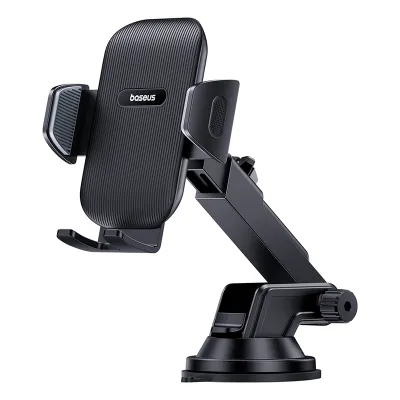
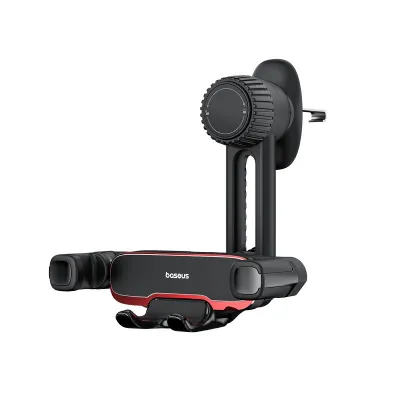
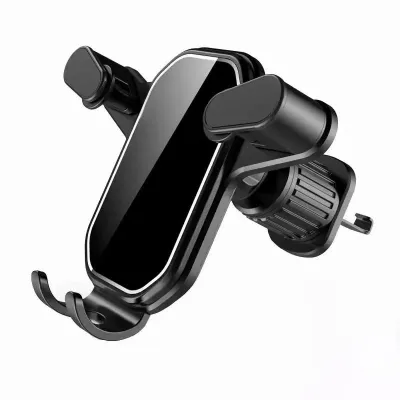
![[OMARS] Ultra Stable Auto-Clamping Mobile Phone Holder](https://img.lazcdn.com/g/p/16d7e76b9f387aec3a3f232d9342fbe1.jpg_400x400q80.jpg_.webp)
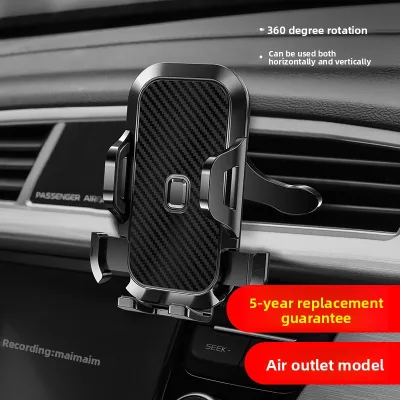
Prices are valid at publication and may change. Please refer to the product page for the latest price.
Look up at your windshield and consider its angle and distance from your driving position. A steeply raked windshield might place a glass-mounted phone too far out of reach, while a vertical windshield could restrict your forward view.
Finally, check your center console for a CD slot. While many modern infotainment systems have phased them out, older vehicles often have an unused CD player slot positioned at an ideal, eye-level height that can serve as a highly stable mounting point.
Dashboard Mounts: Evaluating Stability and Surface Compatibility
Dashboard mounts are highly favored because they position your phone close to your natural line of sight, allowing you to view navigation prompts without looking down. However, their effectiveness relies heavily on the interface between the mount’s base and your dashboard’s material. Suction cups with sticky gel pads require a completely flat, non-porous surface to maintain a vacuum seal, whereas semi-permanent adhesive discs can bond to slightly textured plastics but may fail on highly curved surfaces.

In Singapore’s tropical climate, cabin temperatures can rise significantly when parked in the sun. This intense heat and UV exposure can degrade adhesive backings and cause suction cups to lose suction, potentially causing your phone to fall while driving. You must also ensure that the mount is positioned away from any passenger or driver airbag deployment zones, as a phone mounted in the path of an inflating airbag can become a dangerous projectile.
When choosing a dashboard mount, verify the manufacturer’s specifications regarding surface compatibility. Avoid placing heavy adhesive mounts on premium soft-touch plastics, vinyl, or genuine leather dashboards, as the adhesive can cause permanent discoloration, stretching, or tearing upon removal.
Air Vent Mounts: Weighing Convenience Against Vent Design
Air vent mounts offer a compact, low-profile solution that keeps your dashboard and windshield completely clear. These mounts typically use a spring-loaded clip, a tightening screw, or a rubberized hook that clamps onto one of the horizontal or vertical vent blades. Because they position the phone directly in front of the air conditioning flow, they can help keep your device cool during heavy GPS usage, which is particularly beneficial in warm climates.
However, blocking an air vent reduces the cabin’s cooling efficiency and can lead to condensation forming on the back of your phone when the air conditioning is running at high capacity. You must also evaluate the structural integrity of your vent blades. Standard plastic louvers are designed solely to direct airflow, not to support the weight of a modern, heavy smartphone, especially when driving over speed bumps or uneven road surfaces.
Avoid using vent mounts on fragile, motorized, or active vent systems that adjust automatically. If your vehicle has traditional manual vents, look for mounts that feature a stabilizing kickstand or a dual-point support system to distribute the weight of the phone across the surrounding dash trim rather than putting all the stress on a single plastic blade.
Windshield Mounts: Balancing Adjustability and Legal Restrictions
Windshield mounts utilize heavy-duty suction cups to attach directly to the glass, offering excellent adjustability through rigid extension arms or flexible goosenecks. This style allows you to position your phone precisely where you need it, making it highly adaptable for drivers of different heights.
However, before opting for a windshield mount, you must verify local traffic regulations regarding driver visibility. In Singapore, the Land Transport Authority (LTA) and traffic laws mandate that drivers must have a clear, unobstructed view of the road ahead. Placing a large phone and mount directly in your primary field of vision can be deemed a safety hazard and a legal infraction.
To maintain compliance and safety, position the mount in the lower right corner of the windshield or low down near the center console to minimize blind spots. Additionally, be aware that suction cups may struggle to adhere to windshields with aftermarket solar films or ceramic tints, as the suction pressure and heat buildup can damage the film or cause the mount to drop unexpectedly.
CD Slot Mounts: A Low-Profile Alternative for Older Infotainment Systems
For vehicles equipped with an older infotainment system that includes a physical CD player, a CD slot mount offers an exceptionally stable and low-profile mounting location. These mounts feature an expandable plastic wedge that inserts directly into the CD slot, which is then tightened using a thumb screw or lever to create a friction fit.
Because CD slots are integrated into the rigid structure of the dashboard, these mounts suffer from far less vibration than long-arm windshield or dashboard mounts. They also position your phone within easy reach of the steering wheel, keeping it below the dashboard line to ensure your forward visibility remains completely unobstructed.
Before choosing this option, verify that the expanding mechanism does not interfere with surrounding physical buttons, volume knobs, or touchscreen displays. It is critical to ensure your CD player is not a motorized multi-disc changer or an active loading system, as inserting a mount into these mechanisms can permanently damage the internal gears and drive motors.
Decision Matrix: Matching Mount Types to Your Driving Needs
To help you determine the most suitable mounting style for your vehicle, consider how each option performs across key operational factors. The table below outlines the general characteristics of each mount type to guide your decision.
| Mount Type | Installation Ease | Stability | Visibility Impact | Interior Surface Risk |
|---|---|---|---|---|
| Dashboard | Moderate | High | Low to Moderate | Moderate (Adhesive/UV marks) |
| Air Vent | Very Easy | Moderate | Low | Low (Potential blade strain) |
| Windshield | Easy | High | Moderate to High | Low (Suction on glass only) |
| CD Slot | Easy | Very High | Low | Low (Internal slot wear) |
If you drive a modern vehicle with a leather-wrapped dashboard, sensitive motorized vents, and no CD slot, a windshield mount positioned low and out of your direct line of sight is often the safest choice to protect your interior. Conversely, if you drive an older vehicle with a flat, hard-plastic dashboard, a dashboard suction mount provides excellent stability and keeps your air vents fully functional.
In rare cases where none of these standard mounting styles fit your car’s interior layout—such as vehicles with highly curved dashboards, circular vents, and fully digital touchscreens—you may need to explore specialized vehicle-specific brackets. These custom mounts clip securely into the panel gaps of your specific car model, providing a damage-free mounting base without relying on adhesives or suction.
Essential Installation and Safety Checks Before Driving
Once you have selected the appropriate mount, proper installation is vital to ensure it remains secure while driving. Always clean the mounting surface thoroughly using a lint-free cloth and a cleaning agent approved by your vehicle’s manufacturer for that specific material. Dust, oils, and dashboard protectants will prevent adhesives and suction cups from forming a secure bond.
Before placing your phone in the cradle, test the mount’s stability while the vehicle is stationary. Give the mount a gentle tug to ensure the suction, clip, or adhesive is fully engaged, and verify that the locking mechanism can support your phone’s weight.
Adjust the viewing angle so that you can see the screen with a quick glance, ensuring it does not block your view of the road or critical instrument cluster gauges. Always perform these adjustments before you begin your journey; adjusting a loose or poorly positioned mount while driving is highly dangerous and illegal under local distracted driving laws.
Frequently Asked Questions (FAQ)
Can a dashboard mount damage my car's interior?
Yes, dashboard mounts can potentially damage your vehicle’s interior if not used carefully. Adhesive pads can leave behind a sticky residue that is difficult to clean, and on delicate materials like leather, vinyl, or soft-touch plastics, the adhesive can peel away the top layer of the material during removal. Additionally, leaving a suction cup or adhesive disc in the same spot for an extended period can cause uneven UV fading, leaving a noticeable dark ring on your dashboard where the sun could not reach. To minimize risk, only use adhesives on hard, non-porous plastics, and use specialized adhesive removal techniques recommended by the manufacturer when detaching the mount.
Will an air vent mount break my air conditioning blades?
Air vent mounts can break your air conditioning blades if they are overloaded or installed incorrectly. The plastic louvers in car vents are designed to be lightweight and are not structurally reinforced to carry the weight of modern smartphones, especially larger models. Rough roads, speed bumps, and sudden stops increase the downward leverage on the vent blade, which can snap the plastic pivots. To prevent damage, avoid using simple pinch-style clips on thin blades. Instead, select mounts that feature a mechanical hook that grips the back of the vent structure, or models with an integrated support kickstand that transfers the weight of the phone onto the surrounding dashboard trim.
Community discussion
Share your experience or ask a question. Comments are reviewed before publication.