
Evaluating whether Daoluchi tyres or other budget motorcycle tyre brands represent the best value for your daily commute in Singapore depends on matching exact technical specifications, safety certifications, and your specific riding habits. While premium tyres often highlight advanced racing compounds, budget tyres focus primarily on cost-effective daily commuting. These tyres typically utilize standard rubber compounds designed to balance tread life with basic traction needs.
In Singapore, budget brands are highly popular among riders of underbone motorcycles (often called “kapchais”) and standard class 2B or 2A automatic scooters. These vehicles operate mainly in stop-and-go urban traffic where high-speed performance is secondary to durability and cost efficiency. Choosing the right budget option requires looking past the brand name and examining the physical and certified characteristics of the tyre.
Essential Specifications to Compare Before Buying
Before purchasing any budget tyre, your first step must be verifying the exact dimensions and ratings required by your motorcycle manufacturer. This information is located in your owner’s manual or on the tyre information label affixed to the swingarm or under-seat compartment. A typical tyre designation, such as 80/90-17 or 120/70-13, indicates the width, aspect ratio, and rim diameter. Installing an incorrect size can alter your speedometer readings, compromise handling, and potentially cause the tyre to rub against the mudguard or swingarm.
Products mentioned in this guide
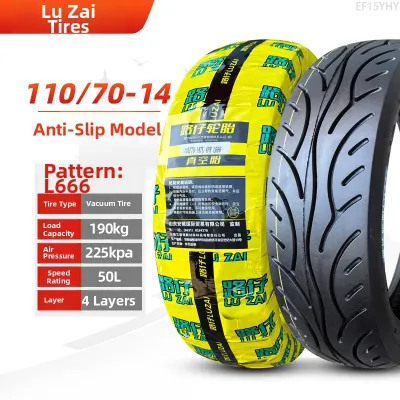
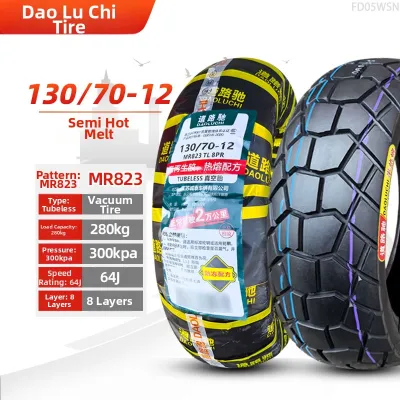
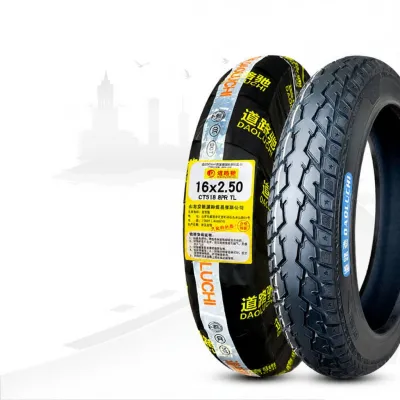
Prices are valid at publication and may change. Please refer to the product page for the latest price.
Beyond physical dimensions, you must match or exceed the original load index and speed rating. The load index is a numerical code indicating the maximum weight the tyre can support, while the speed rating is a letter code representing the maximum safe speed. For example, a rating of “S” indicates safety up to 180 km/h, which is more than sufficient for Singapore’s expressways like the PIE or AYE. Never install a tyre with a lower load or speed rating than specified by the vehicle manufacturer, as this can lead to premature tyre failure under load.
Analyzing the tread pattern is equally critical when comparing Daoluchi to other budget alternatives. Singapore’s tropical climate brings sudden, heavy downpours that can quickly cause standing water on roads. Look for tread designs with deep, continuous grooves extending from the center to the shoulder. These grooves act as channels to evacuate water from the contact patch, reducing the risk of aquaplaning. Commuter-focused budget tyres generally feature a higher groove-to-rubber ratio to prioritize wet-weather safety over dry-cornering grip.
Finally, examine the sidewall markings to identify the construction type. Most budget tyres for smaller motorcycles use bias-ply (cross-ply) construction, indicated by a dash (e.g., 90/90-18) or the letter “B”. Bias-ply tyres have stiff sidewalls that provide good load-carrying capacity and resistance to impact damage from potholes. Radial tyres, indicated by an “R”, offer better heat dissipation and a more flexible contact patch, but they are typically more expensive and less common in the entry-level budget segment.
Verifying Safety Certifications and Compliance
Every motorcycle tyre sold in Singapore must meet strict safety standards to be considered roadworthy. When comparing budget brands, look for recognized international safety marks molded directly into the tyre sidewall. The most common markings are the “DOT” symbol, indicating compliance with the United States Department of Transportation standards, and the “E” mark (such as E4), which shows compliance with European Economic Commission regulations. The presence of these marks indicates that the tyre design has undergone standardized testing for strength, high-speed performance, and endurance.

Another critical detail on the sidewall is the DOT date code, represented by a four-digit number. The first two digits indicate the week of manufacture, while the last two digits represent the year. For example, a code of “1226” means the tyre was manufactured in the 12th week of 2026. Avoid purchasing tyres that have been sitting in storage for more than five years, even if they are brand new and unused. Over time, the rubber compounds naturally degrade, harden, and lose their essential gripping properties, a process accelerated by Singapore’s high humidity and ambient temperatures.
Using non-compliant or severely worn tyres can lead to failure during periodic vehicle inspections at authorized centers such as VICOM or STA. Inspectors check for visible cracks, sidewall bulges, embedded objects, and tread depth. The legal minimum tread depth in Singapore is 1.0 mm, but replacing tyres before they reach this limit is highly recommended for wet-weather safety. Ensuring your budget tyres carry valid safety marks and are within their usable lifespan prevents costly inspection failures and ensures legal compliance on public roads.
Assessing Real-World Value and Total Cost
Determining the true value of a budget tyre involves calculating the total cost of ownership rather than just comparing the initial retail price. The lifespan of any motorcycle tyre is highly variable and depends on external factors. Heavy braking, rapid acceleration, carrying heavy pillion loads, and riding on rough asphalt will accelerate tread wear. Maintaining correct inflation pressure is the single most effective way to maximize tyre life; under-inflation causes the tyre to run hot and wear rapidly on the shoulders, while over-inflation leads to uneven center wear and reduced traction.
When budgeting for new tyres, remember to factor in the professional installation fees charged by local motorcycle workshops. A typical tyre replacement service in Singapore includes mounting, wheel balancing, and replacing the tubeless valve stem. These service fees can range from S$10 to S$30 per wheel depending on the workshop and the complexity of the motorcycle’s wheel assembly. Choosing an extremely cheap tyre that wears out twice as fast as a slightly more expensive budget alternative can result in higher long-term costs due to repeated installation fees.
Additionally, inquire about the warranty terms offered by the retailer or local distributor. While budget tyres rarely come with extensive mileage guarantees, reputable brands should offer a warranty against manufacturing defects, such as tread separation or carcass deformation. A workshop that stands behind the products they sell and offers a clear path for resolving defects adds significant value to your purchase, protecting you from out-of-pocket expenses if a tyre fails prematurely due to a production fault.
Decision Framework: Choosing Between Daoluchi and Alternatives
To make an informed final decision, use a structured approach based on your specific riding requirements and the options available at your local workshop. If you primarily use your motorcycle for short-distance daily commuting, food delivery, or running errands within urban areas, a budget tyre like Daoluchi can be a highly practical choice. This is especially true if the brand is readily available in your exact required size and your preferred local mechanic is experienced in fitting them.
Conversely, you should consider alternative budget or mid-range brands if your daily route involves high-speed expressway riding over long distances, or if you frequently ride in heavy rain. Brands with a longer history in the Southeast Asian market often offer specialized tread patterns designed specifically for tropical monsoon conditions. If you ride a larger-displacement motorcycle (Class 2A or Class 2), you may also need to look beyond basic budget brands to find tyres that meet the higher speed and load ratings demanded by your bike’s performance capabilities.
Before making any purchase, always perform a final physical check of the tyre at the workshop. Verify that the size, load index, and speed rating match your motorcycle’s specifications exactly. Inspect the tyre for the required safety certification marks and check the DOT date code to ensure you are not buying old stock. By prioritizing these verifiable technical and safety factors over brand marketing, you can confidently select a budget tyre that keeps you safe on Singapore’s roads without overstretching your budget.
Frequently Asked Questions (FAQ)
Are budget motorcycle tyres safe for daily commuting in Singapore?
Yes, budget motorcycle tyres are safe for daily commuting provided they carry recognized safety certifications (such as DOT or ECE marks) and are operated strictly within their specified load and speed limits. Because budget tyres often use harder rubber compounds to extend tread life, they may offer slightly less grip on wet surfaces compared to premium soft-compound tyres. Riders using budget tyres should maintain safe following distances, avoid sudden braking on wet roads, and check their tyre inflation pressure weekly to ensure optimal contact with the road.
How often should I replace my motorcycle tyres regardless of the brand?
Motorcycle tyres should be replaced based on physical wear and age rather than a strict mileage limit. You should replace your tyres immediately if the tread depth reaches the wear indicators or falls below 1.6 mm (well before the legal limit of 1.0 mm) to maintain adequate wet-weather traction. Additionally, inspect the tyres regularly for signs of aging such as dry rot, sidewall cracking, bulges, or uneven wear patterns. Any tyre that is more than five years old should be inspected by a professional and replaced if the rubber has hardened significantly.
Community discussion
Share your experience or ask a question. Comments are reviewed before publication.