
Quick Answer: Which Sunshade Fits the Toyota Noah Best?
A custom-fit sunshade provides superior front windshield coverage for the Toyota Noah compared to a universal option. Because the Toyota Noah is a multi-purpose vehicle (MPV) designed with a massive, steeply sloped front windshield, standard universal shades almost always leave significant gaps at the corners, top edges, and around the rearview mirror housing. These gaps allow intense sunlight and thermal radiation to penetrate the cabin.
While universal sunshades are highly budget-friendly and versatile enough to be shared among different vehicles, custom-fit models are engineered specifically to match the unique glass dimensions of your particular Noah generation. In Singapore’s tropical climate, where parked vehicles are subjected to relentless, year-round solar heat, choosing a custom-fit sunshade is the most effective way to achieve maximum heat rejection, protect your interior materials, and ensure complete coverage without sagging.
Why the Toyota Noah Windshield Needs Careful Measurement
The Toyota Noah is celebrated for its spacious cabin and excellent outward visibility, both of which are made possible by an exceptionally large front glass profile. The windshield of this MPV features a wide surface area, a sharp aerodynamic slope, and a deep dashboard layout. These architectural design choices mean that a standard passenger car sunshade will simply not have the height or width required to cover the glass from the roofline down to the base of the wipers.
Products mentioned in this guide
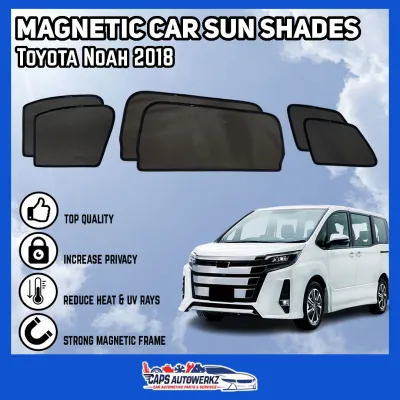
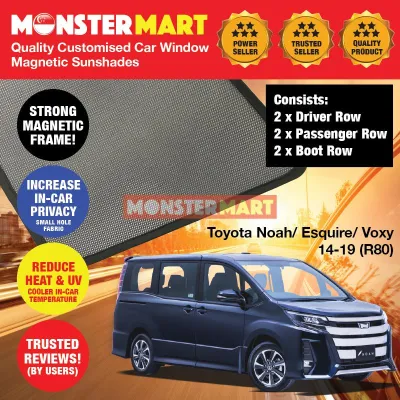
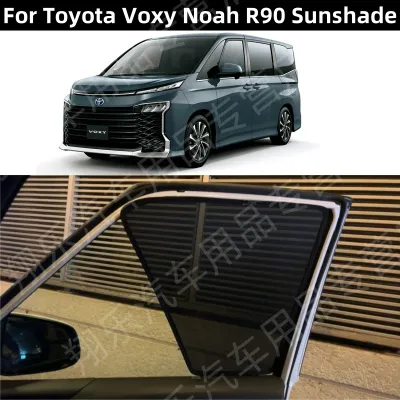
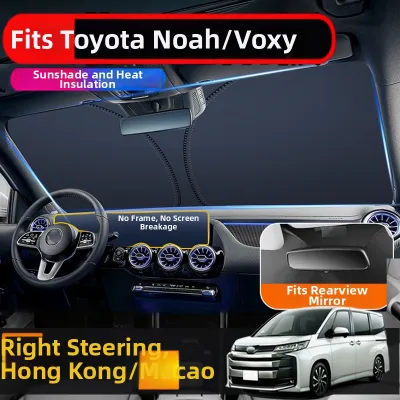
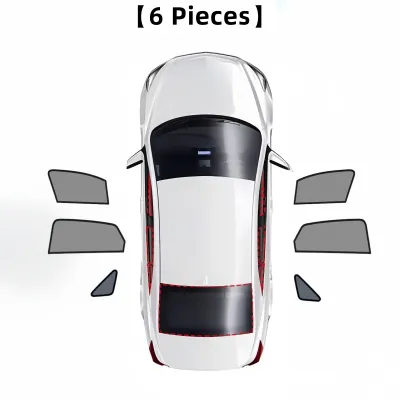
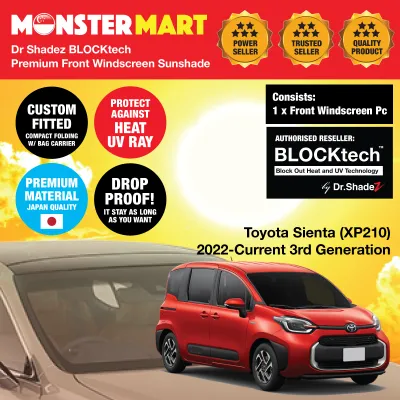
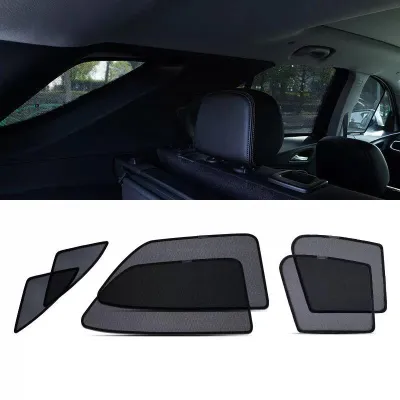
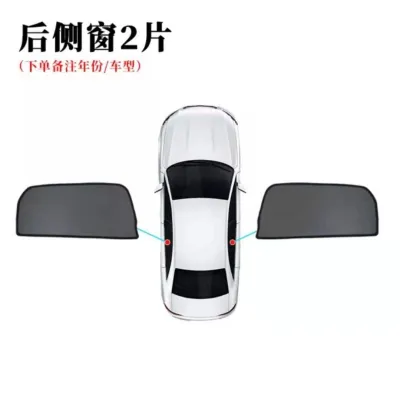
Prices are valid at publication and may change. Please refer to the product page for the latest price.

Before purchasing any interior accessory, you must verify your specific Toyota Noah generation. Windshield dimensions, glass curvature, and rearview mirror mounting points have changed significantly across different model cycles:
- Third Generation (R80; 2014–2021): Features a wide, moderately curved windshield with a distinct dashboard depth.
- Fourth Generation (R90; 2022–Present): Features an even more upright, expansive glass area with updated safety sensor housings near the roofline.
Using a sunshade designed for an R80 on an R90 model—or vice versa—often results in an improper fit, causing the shade to sag or fail to stay secured behind the sun visors.
Safety and Sensor Check
Modern Toyota Noah models are equipped with Toyota Safety Sense (TSS), an advanced driver assistance system. The cameras, radar sensors, and laser apertures for this system are housed in a plastic console mounted directly to the upper windshield behind the rearview mirror.
When choosing a toyota noah sunshade, you must ensure that the product features a precise cutout that accommodates this sensor housing. A poorly fitting shade that presses tightly against the TSS console can apply physical stress to the mounting bracket, potentially misaligning the safety cameras or trapping extreme heat within the housing. Over time, excessive heat buildup around these delicate electronic components can lead to system errors or premature component degradation. Always consult your vehicle owner’s manual to identify the exact boundaries of the sensor housing before installing a rigid or highly pressurized shade.
Coverage and Fit: Custom-Fit vs Universal Shades
The primary function of a sunshade is to block solar radiation and prevent the greenhouse effect from turning your MPV cabin into an oven. The effectiveness of this thermal barrier depends heavily on how tightly the shade seals against the perimeter of the windshield.
Custom-Fit Coverage
Custom-fit sunshades are manufactured using precise 3D laser scans of the specific vehicle model’s windshield. This guarantees an edge-to-edge seal that conforms perfectly to the A-pillars, the lower dashboard line, and the upper roofline.
By eliminating perimeter gaps, custom-fit shades prevent “light leaks.” Even small gaps of a few centimeters can allow concentrated beams of sunlight to strike the steering wheel, leather seat bolsters, and dashboard plastics. Over time, this localized UV exposure causes materials to fade, crack, or warp. A tight, custom-fit seal ensures that virtually all incoming solar energy is either reflected back through the glass or absorbed by the shade itself, keeping your touchpoints cool to the touch.
Universal Coverage
Universal sunshades are typically designed in standard geometric shapes—usually rectangles or pairs of spring-wire circles—intended to fit a wide range of vehicle classes. On a large MPV like the Toyota Noah, these generic shapes present several coverage challenges:
- Sizing Compromises: A universal shade that is wide enough for the Noah's lower windshield is often too tall, causing the material to bunch up and sag away from the glass.
- Corner Gaps: The sharp angles of the Noah's A-pillars mean that rectangular universal shades leave large triangular gaps exposed at the lower corners.
- Overlapping Issues: Some universal designs consist of two separate fabric panels that overlap in the center. On a windshield as wide as the Noah's, these panels often slide apart, creating a vertical gap right down the middle of your dashboard.
Visual Verification Checklist
To evaluate the coverage of your current sunshade or a newly purchased model, perform this quick diagnostic check from inside the cabin during peak daylight hours:
- The A-Pillar Test: Check the far left and right edges. Is there visible light leaking along the vertical frame of the windshield?
- The Roofline Check: Ensure the top edge of the shade rests flush against the headliner without sagging or bowing downward under its own weight.
- The Dashboard Interface: Inspect the bottom edge. Does the shade sit flat against the base of the windshield, or does it curl upward, leaving the lower dashboard exposed to direct sunlight?
- The Mirror Cutout Fit: Look closely at the rearview mirror connection. Does the shade wrap neatly around the mirror stem, or does it leave a large, unprotected void around the safety sensor housing?
Daily Usability: Installation, Storage, and Cabin Space
A sunshade is only useful if you actually deploy it every time you park. The practical, day-to-day ergonomics of installing and storing your shade play a massive role in long-term satisfaction.
Installation Effort
Deploying a sunshade inside the Toyota Noah can be a physical challenge due to the sheer depth of the dashboard. Reaching the bottom edge of the windshield requires stretching across the cabin.
- Custom-Fit Shades: These models are typically rigid, constructed with firm board cores or sturdy multi-layer fabrics. Because they are pre-shaped to match the windshield, they slide into place relatively easily. You simply slide the bottom edge down to the dashboard, position the cutout around the rearview mirror, and flip down the sun visors to secure the top edge. Some custom shades are designed as folding umbrellas; while highly convenient, you must open them carefully within the cabin to avoid striking the central infotainment screen or the dashboard camera.
- Universal Shades: Accordion-style or spring-loaded pop-up universal shades often require significant adjustment. Because they do not match the exact proportions of the Noah, you may find yourself repeatedly pulling, stretching, and wedging the material behind the visors or grab handles to keep it from collapsing.
Storage Solutions
Once you are ready to drive, you must store the sunshade within the vehicle. The Toyota Noah offers excellent cabin storage, but a large sunshade can still clutter the interior if not managed properly.
- Folding Custom-Fit Shades: These typically fold flat along pre-creased lines. They can be slid easily into the pocket behind the front passenger seat or laid flat along the floor of the second row. Roll-up custom shades, however, remain quite bulky when rolled and may require dedicated storage straps, occupying valuable footwell space.
- Universal Pop-Up Shades: These spring-wire designs twist and fold down into highly compact discs. They can easily fit into the front door bins, under-seat storage compartments, or the glovebox, making them highly convenient for drivers who prioritize a clutter-free cabin.
Parking Scenarios
Consider your daily parking routine in Singapore when making your choice. If you primarily park in sheltered multi-storey car parks at home and work, a quick-deploy, highly compact universal shade may be perfectly adequate for occasional outdoor trips. However, if your daily routine involves parking on exposed HDB rooftop decks or open-air industrial estates, the superior thermal protection of a custom-fit shade justifies the extra storage footprint.
Material and Heat Rejection: What Matters Beyond the Fit
While physical fit determines how much light enters the cabin, the material composition of the sunshade dictates its actual thermal performance. A perfectly fitting shade made of cheap material can still allow heat to radiate directly into your vehicle.
Common Sunshade Materials
Sunshades generally fall into three material categories, each offering distinct thermal properties:
- Reflective Aluminum Foil: This material uses a shiny metallic outer layer to bounce infrared and visible light back out through the windshield. High-quality variants feature a dual-layer bubble-wrap core that acts as a thermal break, slowing down conductive heat transfer. Cheap foil shades, however, can degrade rapidly under intense UV exposure, leading to flaking and a messy cabin.
- Multi-Layer Fabric: Premium custom-fit shades often utilize up to five layers of material, including a reflective outer polyester film, an insulating foam core, and a soft felt inner backing. This structure provides exceptional heat rejection and prevents the shade from transferring heat to the interior air. The soft backing also ensures that the shade will not scratch your dashboard or windshield-mounted accessories.
- Umbrella-Style Canopy Fabrics: These shades use high-density cloth coated with a silver-gel or titanium-dioxide layer. They are lightweight, highly reflective, and block UV rays effectively, though the mechanical metal ribs of the umbrella frame add potential points of physical wear against your dashboard.
The Fit vs. Material Trade-Off
It is a common misconception that any “custom-fit” shade is inherently superior in heat rejection. A custom-fit shade made of single-layer, non-reflective black fabric will absorb solar energy rather than reflect it, radiating that heat directly into your cabin. Conversely, a high-quality, multi-layer universal shade with excellent reflective properties will perform poorly if massive gaps along the A-pillars allow hot air to circulate freely. For the best results, prioritize a reflective, multi-layer material that is cut precisely to your Noah’s dimensions.
Verifying Specifications
Before making a purchase, check the manufacturer’s product documentation for verified performance ratings. Look for labels indicating UPF 50+ (Ultraviolet Protection Factor) and specific infrared (IR) rejection percentages. Avoid relying on generic marketing claims like “heat-proof” without supporting specifications. Additionally, remember that highly reflective silver surfaces are ideal for bouncing heat away, while dark inner linings help absorb ambient cabin light, reducing glare when you return to the vehicle.
How to Choose the Right Sunshade for Your Noah
To make the final decision for your Toyota Noah, evaluate your budget, parking habits, and specific vehicle configuration against this practical framework.
Choose a Custom-Fit Sunshade If:
- You regularly park outdoors in direct sunlight for extended periods.
- You want to protect the dashboard, steering wheel, and leather upholstery from long-term UV damage.
- You own a newer Toyota Noah (such as the R90 generation) with a complex Toyota Safety Sense sensor array that requires a precise, non-interfering cutout.
- You prefer a clean, tailored aesthetic that stays securely in place without constant adjustment.
Choose a Universal Sunshade If:
- You are on a strict budget and need an immediate, low-cost solution.
- You drive a rental or short-term leased Toyota Noah and do not want to invest in vehicle-specific accessories.
- You need a temporary sunshade that can be easily transferred to other family vehicles.
- Cabin storage space is extremely limited, and you require a shade that twists down into a tiny, pocket-sized disc.
Verification Steps Before Buying Online
If you decide to purchase your sunshade from an online marketplace, protect your investment by performing these verification steps:
- Confirm the Model Code: Double-check that the product listing explicitly mentions your Noah's model code (e.g., ZWR80 or MZRA90) rather than just stating "fits Toyota Noah."
- Inspect the Cutout Design: Look closely at the product photos to ensure the rearview mirror cutout is deep enough to clear your ADAS sensor housing.
- Read MPV-Specific Reviews: Filter user reviews to look for feedback from other MPV or Toyota Noah owners. Pay close attention to comments regarding sagging, ease of folding, and whether the shade requires the sun visors to be pulled down at extreme angles to stay up.
- Check the Return Policy: Ensure the seller offers hassle-free returns or exchanges in case the shade arrives with incorrect dimensions or interferes with your driver sightlines.
Frequently Asked Questions (FAQ)
Can I use a universal sunshade for the Toyota Noah's side windows?
While universal mesh slip-on covers or static-cling films can provide basic shade for passenger windows, they rarely fit the Toyota Noah’s large, rectangular sliding door windows perfectly. Universal options often leave gaps at the corners or sag when the sliding door is operated. For the side windows, custom-fit magnetic shades that snap directly onto the metal window frame are highly recommended. These allow you to roll down the windows for ventilation while keeping insects and direct sunlight out. Always ensure that any installed side shades do not obstruct your view of the side mirrors or block blind-spot monitoring indicators.
Does a sunshade affect the Toyota Noah's dashboard sensors or cameras?
A properly designed and correctly installed sunshade will not affect your vehicle’s electronics. However, if you use a thick, rigid, or poorly fitted shade that must be forced into place, it can press against the plastic housing of the Toyota Safety Sense camera behind the rearview mirror. This physical pressure can misalign the camera calibration or trap extreme heat inside the housing, potentially triggering system error lights on your dashboard. To prevent this, always choose a sunshade with a dedicated cutout for the mirror stem and sensor console, and ensure the material rests gently around the housing rather than pushing against it.
Community discussion
Share your experience or ask a question. Comments are reviewed before publication.