
Maintaining proper tire pressure is essential for vehicle safety, fuel efficiency, and tire longevity. For drivers in Singapore, where stop-start city traffic and weekend road trips across the border demand optimal vehicle performance, keeping a reliable tire inflator in your vehicle is a highly practical decision. However, when choosing a portable compressor, you must decide between two distinct power designs: cordless (battery-powered) and corded (12V accessory socket-powered) models.
Selecting the right power type depends on your specific usage patterns, storage conditions, and maintenance habits. Cordless inflators offer exceptional portability, making them ideal for quick top-ups, tight HDB multi-storey carpark lots where power outlets are unavailable, and multi-sport use. Conversely, corded 12V inflators provide continuous, reliable power directly from your vehicle’s electrical system, making them the preferred choice for heavy-duty inflation, long road trips, and emergency kits that might sit unused for months.
Evaluating the trade-offs in power delivery, inflation speed, physical footprint, and long-term durability will help you select the tool that best fits your driving routine and vehicle requirements.
Products mentioned in this guide
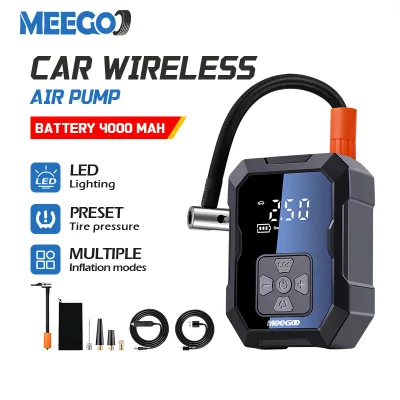
![[SG Stock] Air Pump Car Inflator Compressor Portable Ball Bike Bicycle Rechargeable Basketball Soccer Volleyball Tyre Wheel Tire 12V LED Fast Auto Shut-off Emergency](https://img.lazcdn.com/g/p/cc7d92c566c3860fbbfa1d535cc6f3bb.jpg_400x400q80.jpg_.webp)

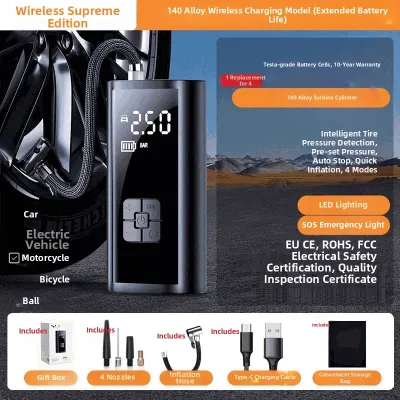
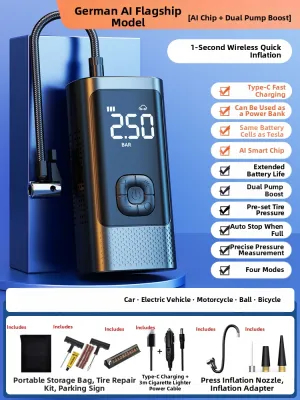
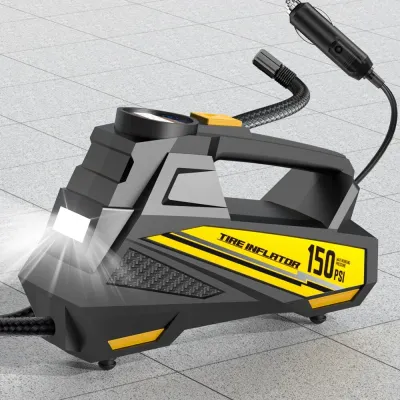
![[SG Seller]Portable Car Electric Inflator portable air pump car electric pump wireless air pump car electric pump汽车充气泵](https://img.lazcdn.com/g/p/11d7062f8a657612c19945cd3cdafcdb.jpg_400x400q80.jpg_.webp)
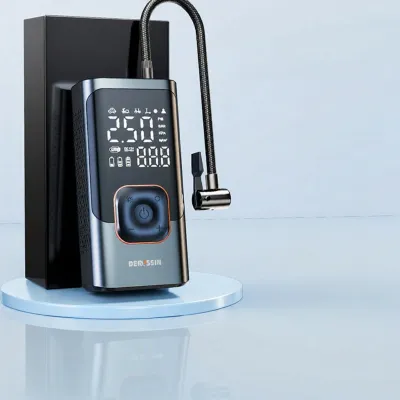
Prices are valid at publication and may change. Please refer to the product page for the latest price.
Core Differences: Power Delivery, Portability, and Performance
To understand which tire inflator suits your needs, you must first examine how these devices generate and sustain the pressure required to fill a car tire. While both types use a small electric motor to drive a piston that compresses air, their power sources dictate their operational limits, continuous run times, and overall performance.
Power Delivery and Duty Cycle
Cordless tire inflators rely on internal lithium-ion batteries to power their motors. While this design eliminates the need for external cables, it introduces limitations related to battery capacity and heat generation. High-draw electric motors place a heavy load on lithium-ion cells, causing them to heat up rapidly during operation. To prevent permanent battery damage or thermal runaway, most cordless models feature built-in thermal protection that automatically shuts down the unit after 10 to 15 minutes of continuous use, requiring a cool-down period before you can resume.
In contrast, corded 12V inflators draw direct current (DC) from your vehicle’s accessory socket (commonly known as the cigarette lighter) or directly from the car battery via clamps. Because they do not rely on a chemical battery to discharge power, corded models generally support longer duty cycles. However, this continuous draw relies heavily on your vehicle’s electrical health. To prevent draining your car battery, you must keep the vehicle’s engine running while operating a 12V inflator. This allows the alternator to supply the necessary current, maintaining a stable voltage of around 13.8V to 14.4V, which ensures the compressor runs at peak efficiency.
Inflation Speed and Pressure Capacity
Inflation speed is determined by the compressor’s airflow rate, typically measured in Litres per Minute (LPM) or Cubic Feet per Minute (CFM). The physical size of the motor and the cylinder bore directly influence this rate. Because corded models are not constrained by the weight and space requirements of an internal battery pack, they often feature larger, more robust motors capable of sustaining higher airflow rates under load.
While premium cordless inflators can match the speed of standard 12V corded models when performing minor pressure adjustments (such as topping up a tire from 30 PSI to 35 PSI), they struggle when faced with larger volumes. If you need to inflate a large SUV, commercial van, or 4×4 tire from completely flat, a cordless unit may exhaust its battery charge or trigger its thermal cutoff before the job is complete. Corded models maintain a consistent flow rate over extended periods, making them far more efficient for high-volume tasks.
Portability and Storage
Physical design and storage convenience represent a major point of divergence between the two formats. Cordless inflators are highly compact, often styled like a power drill or a thick handheld block. With no power cables to wind or store, they take up minimal space and can easily fit into a glove compartment, door pocket, or under-seat storage tray. This streamlined form factor makes them exceptionally easy to deploy quickly without untangling cords.
Corded 12V models require dedicated storage space for both the air hose and a long power cable, which typically needs to be at least 3 to 3.5 meters long to comfortably reach from the dashboard accessory socket to the rear tires of a standard sedan or SUV. Managing, wrapping, and storing these cables can be cumbersome, especially in wet weather or dirty roadside environments. Consequently, corded models are usually stored in larger carry bags within the trunk, making them slightly less accessible for quick, everyday pressure checks.
Cordless Tire Inflators: Pros, Cons, and Best Use Cases
Cordless tire inflators have surged in popularity due to their modern design and user-friendly operation. Understanding their specific strengths and limitations is key to determining if they fit your vehicle maintenance routine.

Advantages of Cordless Models
The primary benefit of a cordless inflator is total operational freedom. You are not tethered to a vehicle’s power socket, allowing you to inflate tires in tight parking spaces, narrow garage lanes, or busy urban environments where managing a long cable across the ground poses a tripping hazard or gets dirty. This untethered design also extends the tool’s utility far beyond passenger cars; it is highly effective for inflating bicycle tires (including high-pressure road bike tires), motorcycle tires, sports balls, and inflatable leisure equipment.
Additionally, cordless models almost universally feature modern digital interfaces. These screens allow you to pre-select your target pressure, display real-time pressure readings, and feature automatic shutoff mechanisms that stop the compressor the moment the target pressure is reached. Many also double as emergency power banks, allowing you to charge mobile devices via USB ports, and include built-in LED work lights for nighttime operation.
Disadvantages of Cordless Models
The reliance on lithium-ion battery technology introduces several distinct drawbacks. All lithium-ion batteries self-discharge over time, meaning a cordless inflator stored in your trunk for several months may not have sufficient charge when an emergency arises. To ensure reliability, you must commit to a preventative maintenance schedule, taking the unit indoors to recharge it every three to six months.
Furthermore, battery longevity is highly sensitive to environmental conditions. Singapore’s tropical climate presents a significant challenge; cabin temperatures in vehicles parked in direct sunlight can easily exceed 60°C. Prolonged exposure to high heat accelerates battery degradation, permanently reducing the runtime of the cells and, in extreme cases, posing a risk of battery swelling or thermal failure. Finally, quality cordless models carrying reliable, high-capacity cells generally command a higher upfront price, typically ranging from S$60 to over S$150, compared to entry-level corded options.
Ideal User Profile
A cordless inflator is best suited for urban commuters who park in multi-storey carparks, where space is tight and maneuverability is limited. It is an excellent fit for multi-vehicle households, active individuals who regularly ride bicycles or play sports, and drivers who perform routine, monthly tire pressure top-ups at home rather than waiting to visit a petrol station.
Corded 12V Tire Inflators: Pros, Cons, and Best Use Cases
For drivers who prioritize absolute reliability and emergency preparedness above all else, the traditional corded 12V tire inflator remains the industry standard. This design focuses on mechanical simplicity and consistent power delivery.
Advantages of Corded Models
The most significant advantage of a corded 12V inflator is its unlimited runtime. Because it draws power directly from the vehicle, it will run for as long as your engine is operating and fuel is in the tank. This eliminates any anxiety regarding battery levels, making it a dependable tool for inflating multiple tires or handling large-volume inflation tasks without interruption.
Because they lack expensive lithium-ion battery packs and complex battery management systems, corded models are highly cost-effective, with reputable, durable options widely available in the S$30 to S$70 range. More importantly, they are exceptionally resilient to long-term storage in harsh environments. You can store a 12V inflator in your trunk for years in high tropical heat without worrying about battery degradation, capacity loss, or safety hazards, ensuring it is fully operational the moment you experience a roadside puncture.
Disadvantages of Corded Models
The primary drawback of the corded design is the physical limitation of the power cable. You must route the cable through open car doors or windows to reach all four wheels, which can be highly inconvenient during heavy downpours. The cable itself can collect road grime, mud, and water, which then gets transferred back into your vehicle’s interior upon storage.
Operating a corded model also requires your vehicle’s engine to be running to prevent draining the car battery. This can be problematic in enclosed garages, underground parking structures, or areas with strict anti-idling regulations. Furthermore, these devices are limited by the amperage capacity of your vehicle’s 12V accessory circuit. Most passenger cars use a 10-ampere or 15-ampere fuse for the cigarette lighter socket, limiting the maximum power draw of the compressor to approximately 120W to 180W. Attempting to run a high-power corded compressor on a lower-rated circuit will instantly blow the vehicle’s fuse, disabling both the socket and the inflator.
Ideal User Profile
Corded models are highly recommended for drivers who frequently embark on long-distance road trips, such as driving up the North-South Highway in Malaysia, where roadside assistance may be far away. They are also the logical choice for owners of larger vehicles, such as SUVs, MPVs, and light commercial vans, which require higher air volumes. If you want a “buy-it-and-forget-it” emergency tool that requires zero maintenance and is guaranteed to work when needed, the corded 12V design is the correct choice.
Beyond Power: Essential Features to Verify Before Buying
Regardless of whether you choose a cordless or corded design, several critical mechanical and safety specifications must be verified to ensure the tool is safe, accurate, and compatible with your vehicle.
Accuracy and Auto-Shutoff
An inaccurate pressure gauge can lead to underinflation or overinflation, both of which compromise vehicle safety. Underinflated tires increase rolling resistance, raising fuel consumption and causing excessive heat buildup in the tire sidewalls. Overinflated tires reduce the contact patch with the road surface, reducing grip—particularly in wet weather—and causing rapid wear along the center of the tread.
When purchasing an inflator, verify the manufacturer’s specified gauge accuracy, which should ideally be within ±1 PSI. Look for models featuring a digital readout with an integrated auto-shutoff mechanism. This feature allows you to input your vehicle’s exact recommended cold tire pressure (found on the tire placard on your driver’s door B-pillar) and walk away safely while the unit operates, knowing it will stop automatically before overinflating the tire.
Valve Compatibility and Hose Length
Ensure the inflator’s air hose connector is compatible with your vehicles. Most passenger cars, motorcycles, and mountain bikes use standard Schrader valves. However, road bicycles often utilize narrower Presta valves. If you plan to use the inflator across multiple types of equipment, verify that the package includes high-quality brass adapters for Presta valves, sports balls, and inflatable toys.
Additionally, evaluate the physical length of the air hose. The hose must be long enough to reach the tire valve when it is positioned at the very top of the wheel rotation. For larger SUVs or trucks with high ground clearance, a short, stiff hose will force the inflator to hang in the air, placing stress on the connector and the hose casing, which can lead to premature wear or air leaks.
Heat Dissipation and Build Quality
Air compression naturally generates significant thermal energy. During operation, the cylinder head of a portable compressor can quickly reach temperatures high enough to cause skin burns or melt cheap plastic housings.
Prioritize models constructed with metal gearboxes, aluminum alloy cylinders, and heat-resistant rubber hoses wrapped in braided nylon. Avoid units with entirely plastic internal components, as they degrade rapidly under high heat. High-quality inflators also feature built-in thermal overload protection, which temporarily cuts power to the motor if it exceeds safe operating temperatures, protecting the internal seals and motor windings from permanent damage.
How to Choose: Decision Framework for Your Vehicle
To finalize your purchase decision, evaluate your driving habits, vehicle type, and storage preferences against this structured framework:
- Choose a Cordless Inflator if:
- You park in tight spaces or HDB multi-storey estates where managing long cables is impractical.
- You want a single, versatile tool to maintain passenger cars, road or city bicycles, and sports equipment.
- You perform regular, preventative pressure checks and do not mind bringing the device indoors to recharge every few months.
- You prefer a clean, cable-free trunk setup and want a compact device that fits in your glovebox.
- Choose a Corded 12V Inflator if:
- You want a dedicated emergency tool that can sit in your trunk for years without maintenance and work instantly when needed.
- You drive a larger vehicle, such as an SUV, MPV, or commercial van, which requires high-volume air delivery.
- You frequently drive long distances or cross-border, where self-sufficiency during roadside emergencies is critical.
- You park your vehicle in unshaded, open-air carparks where high cabin temperatures would degrade lithium-ion batteries.
- Important Verification Checks Before Operating:
- For Corded Models: Check your vehicle's owner manual to verify the amperage rating of your 12V accessory socket. Ensure the inflator's maximum current draw (measured in Amperes) does not exceed this limit.
- For Cordless Models: Avoid storing the unit on the dashboard, parcel shelf, or in direct sunlight. Store it in the coolest part of the vehicle, such as under the front seats or in the spare tire well, to protect the battery from extreme heat.
- For All Models: Always consult your vehicle's tire placard (usually located on the driver's door frame) for the correct cold inflation pressures. Never exceed the maximum pressure rating stamped on the tire sidewall.
Frequently Asked Questions (FAQ)
Can I leave a cordless tire inflator in my car in hot weather?
It is highly recommended to avoid storing cordless tire inflators in your car during hot weather if the vehicle is parked in direct sunlight. Lithium-ion batteries are sensitive to extreme heat. Sustained exposure to temperatures above 60°C—which passenger cabins can easily reach when parked outdoors in Singapore—accelerates battery degradation, reduces overall lifespan, and can cause the cells to swell, creating a safety hazard. If you must keep it in the car, store it in the trunk or spare tire well, which remains slightly cooler than the cabin, or bring the unit indoors when parking in unshaded areas for extended periods.
Will a 12V tire inflator drain my car battery?
Yes, a 12V tire inflator can drain your car battery if you operate it while the engine is turned off. High-output portable compressors draw significant current, typically between 10 to 15 amperes. Running the compressor solely on the battery’s resting charge will deplete it quickly, potentially leaving you unable to start the engine afterward. Always keep your vehicle’s engine running while operating a corded 12V inflator. This ensures the alternator supplies the electrical current, protecting your battery from draining and providing the stable voltage required for optimal compressor performance.
Community discussion
Share your experience or ask a question. Comments are reviewed before publication.