
Selecting the ideal car rear mirror configuration is not a matter of finding a single superior design, but rather understanding how different mirror types serve specific positions on your vehicle. The choice between convex and flat mirrors depends entirely on where the mirror is mounted and your immediate driving needs. Drivers must balance the necessity of accurate distance judgment with the demand for a wider field of view to eliminate blind spots.
For the driver’s side and the interior rearview position, flat mirrors are standard and highly recommended because they preserve true depth perception. This allows you to judge the speed and distance of trailing vehicles accurately. Conversely, convex mirrors are best suited for the passenger side or as auxiliary, stick-on blind spot mirrors. Their curved surface expands your peripheral vision, making them excellent for detecting vehicles in adjacent lanes that would otherwise remain hidden.
Any adjustment or replacement of your vehicle’s mirrors must align with local traffic regulations and original equipment manufacturer (OEM) specifications. In Singapore, vehicle modifications are closely monitored to ensure safety standards are maintained. Altering critical safety components like your mirrors with non-compliant aftermarket parts can compromise your road safety, void your motor insurance, or cause your vehicle to fail periodic roadworthiness inspections.
Products mentioned in this guide
Prices are valid at publication and may change. Please refer to the product page for the latest price.
Convex vs Flat Car Rear Mirrors: Core Functional Differences
To make an informed decision about your car rear mirror setup, it is essential to understand the physical and optical principles that govern how flat and convex mirrors project images. These two mirror types manipulate light in fundamentally different ways, directly influencing how you perceive the traffic environment behind you.
The Optical Mechanics of Flat Mirrors
Flat mirrors, as the name suggests, feature a completely flat reflective surface. From an optical standpoint, they reflect light rays at the exact same angle at which they strike the surface, creating a 1:1 reflection. This means the virtual image you see in a flat mirror is the same size and distance as the actual object in real life.
This lack of distortion is the primary advantage of flat mirrors. When you look at a flat driver-side or interior mirror, you can instantly and accurately judge how far away a trailing vehicle is and how fast it is approaching. However, this accuracy comes at a cost: the field of view is strictly limited by the physical size of the mirror housing. You only see a narrow corridor directly behind your vehicle, leaving significant blind spots along the rear quarters of your car.
The Optical Mechanics of Convex Mirrors
Convex mirrors feature a curved reflective surface that bulges outward toward the viewer. This spherical curvature causes parallel light rays to diverge, or spread apart, when they reflect off the glass. By bending the light rays outward, a convex mirror compresses a much wider physical area into a relatively small reflective space.
This compression dramatically expands your field of view, allowing you to see vehicles, cyclists, and pedestrians that would remain completely invisible in a flat mirror of the same size. However, this optical expansion introduces a significant trade-off: the compressed image makes objects appear smaller than they actually are. Because human depth perception relies heavily on the relative size of objects, this shrinkage tricks the brain into believing that trailing vehicles are much further away than their actual position. This phenomenon is the reason why passenger-side mirrors in many markets carry the engraved warning: “Objects in mirror are closer than they appear.”
Comparing Flat and Convex Mirror Characteristics
To help visualize these functional trade-offs, the table below outlines the primary performance characteristics of both mirror types across key driving metrics:
| Feature | Flat Mirror | Convex Mirror |
|---|---|---|
| Field of View | Narrow, restricted to a direct line of sight | Wide, capturing adjacent lanes and blind spots |
| Distance Perception | Highly accurate (1:1 scale) | Distorted (objects appear smaller and further away) |
| Blind Spot Reduction | Minimal; requires physical head checks | Excellent; significantly minimizes lateral blind spots |
| Typical Placement | Driver-side mirror (in some regions) and interior rearview | Passenger-side mirror and auxiliary blind spot attachments |
| Image Distortion | None | High curvature distortion toward the outer edges |
Glare Management and Night Driving
Another critical difference between these mirror types is how they handle light at night. Flat mirrors reflect headlight glare from trailing vehicles directly into your eyes at full intensity. To combat this, interior flat mirrors often feature a manual day/night flip tab or an automatic electrochromic dimming system that darkens the glass when high beams are detected.
Convex mirrors handle glare differently due to their curved shape. Because the convex surface diverges light rays, it scatters the incoming headlight beams across a wider angle. This natural diffusion can sometimes reduce the concentrated intensity of headlight glare from vehicles behind you, making night driving slightly more comfortable. However, because the light is spread out, it can also create a broader halo effect around light sources, which some drivers find distracting.
Safety, Blind Spots, and Legal Compliance
Because mirrors are safety-critical components, any decision to replace or modify your car rear mirror must be guided by safety boundaries, vehicle manufacturer guidelines, and local legal frameworks.

Safety Boundaries of Mirror Distortion
Maintaining a precise understanding of your surroundings is vital when driving at high speeds. If you replace a flat driver-side mirror with a highly curved convex mirror, you introduce a dangerous level of visual distortion to your primary field of view. When changing lanes on busy expressways, misjudging the distance of an overtaking vehicle by even a few meters can lead to severe side-swipe collisions.
For this reason, automotive safety experts and manufacturers advise keeping a flat or minimally distorted mirror on the driver’s side. This ensures that when you make split-second decisions to merge or exit, your brain is working with accurate, undistorted spatial data.
Legal and Regulatory Compliance in Singapore
Before purchasing aftermarket mirror glass or complete housing assemblies, you must verify that the components comply with local traffic laws. In Singapore, the Land Transport Authority (LTA) enforces strict guidelines regarding vehicle modifications to ensure that all cars on the road remain safe for both occupants and other road users.
Mirrors are classified as safety-critical equipment. Installing aftermarket mirrors with extreme curvature, unauthorized tinting, or non-compliant dimensions can result in your vehicle failing its periodic roadworthiness inspection at authorized centers like VICOM or STA. Furthermore, driving a vehicle with non-compliant safety equipment can void your motor insurance policy, leaving you personally liable for damages in the event of an accident. Always ensure that any replacement mirror glass carries recognized safety certifications and matches the physical specifications approved for your specific car model.
Adhering to OEM Specifications and Aspherical Alternatives
To maintain the safety profile of your vehicle, always consult your owner’s manual or contact an authorized dealer to identify the exact OEM specifications for your mirrors. Modern vehicles are designed with carefully calculated mirror curvatures tailored to the car’s body shape, seating position, and window geometry.
Many European vehicle manufacturers utilize aspherical mirrors as a middle ground. An aspherical mirror features a split design: the inner two-thirds of the glass is flat to provide accurate distance judgment, while the outer one-third curves outward progressively to capture a wider angle. The two zones are typically separated by a thin, dotted line printed on the glass. If your car came equipped with aspherical mirrors from the factory, replacing them with standard flat or fully convex glass could severely disrupt your established driving habits and situational awareness.
Electrical and Sensor Integration
Modern car rear mirror assemblies are no longer simple pieces of glass housed in plastic. They are highly integrated electronic systems that contain a variety of advanced driver-assistance systems (ADAS). Before attempting to replace a mirror, you must identify if your vehicle features:
- Heated Mirror Glass: Internal heating elements designed to clear condensation or mist.
- Blind-Spot Monitoring (BSM): Radar-linked LED warning indicators embedded directly in the glass.
- Auto-Dimming (Electrochromic) Technology: Sensors and chemical layers that automatically darken the glass to prevent glare.
- Integrated Turn Signals: LED indicator strips built into the mirror housing.
Replacing these complex assemblies requires matching the exact electrical resistance and connector interfaces of your vehicle’s wiring harness. Installing incompatible aftermarket glass can trigger diagnostic trouble codes (DTCs) in your car’s computer system, disable your blind-spot monitoring safety features, or cause electrical short circuits. For any mirror replacement involving electrical components, professional installation by a qualified automotive technician is strongly recommended to guarantee proper calibration and prevent water ingress.
Decision Guide: Matching Mirrors to Your Vehicle and Habits
To choose the right mirror configuration, you should evaluate your vehicle type, your primary driving environments, and your specific comfort levels with visual distortion.
Choose Flat Mirrors If:
- You are replacing the driver-side mirror: Maintaining an undistorted 1:1 view of traffic on your immediate right is critical for safe lane changes and merging.
- You prioritize precise speed and distance tracking: If you drive frequently on high-speed expressways, flat glass provides the reliable depth perception needed to judge the closing speeds of trailing vehicles.
- Your vehicle's OEM specifications mandate flat glass: Many cars are engineered specifically to use flat glass on the driver's side to meet regional safety standards.
Choose Convex Mirrors If:
- You are replacing the passenger-side mirror: The passenger-side mirror is located further from the driver's eyes, making a wider field of view far more valuable than 1:1 distance accuracy.
- You drive a large vehicle: SUVs, MPVs, and commercial vans have large physical profiles and extensive blind spots. Convex glass helps you monitor these large blind zones more effectively.
- You frequently navigate tight urban environments: If your daily commute involves squeezing through narrow streets, parallel parking in tight spaces, or reversing into compact multi-storey carparks, the wide-angle perspective of a convex mirror helps you spot low-lying curbs, pillars, and obstacles.
Verify First If:
- Your mirror housing contains active sensors: Look for small icons on the glass that light up when a vehicle enters your blind spot. If these are present, you must buy specialized OEM-equivalent replacement glass.
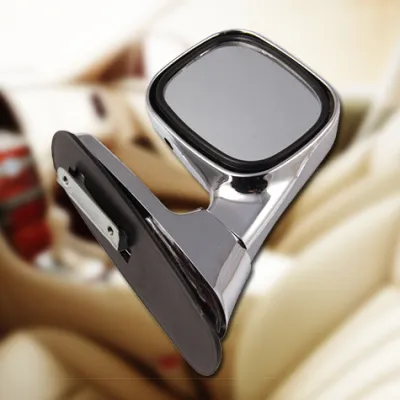
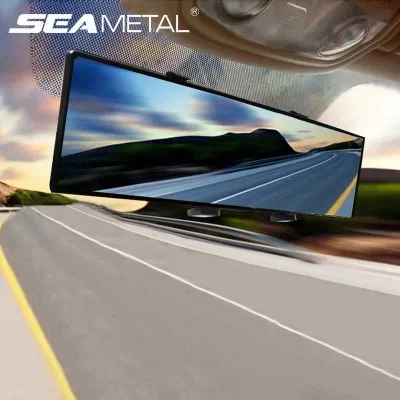
- You are considering aftermarket wide-angle clip-on mirrors: While popular, large clip-on panoramic interior mirrors can sometimes block your sun visors or vibrate excessively while driving, which degrades image clarity.
Alternative Solutions: Stick-On Blind Spot Mirrors
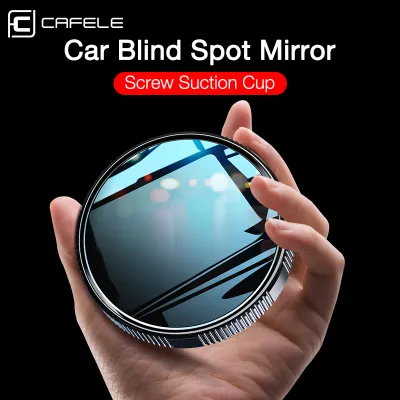
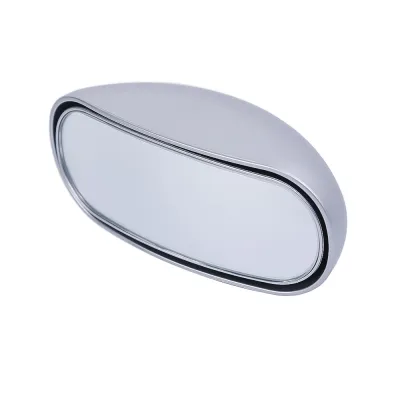
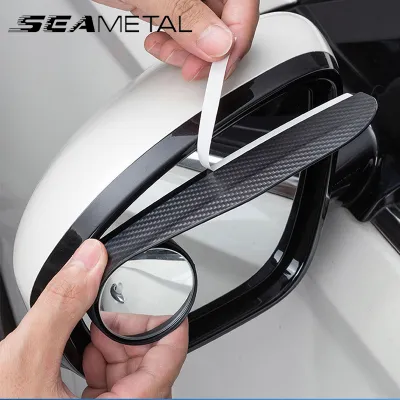
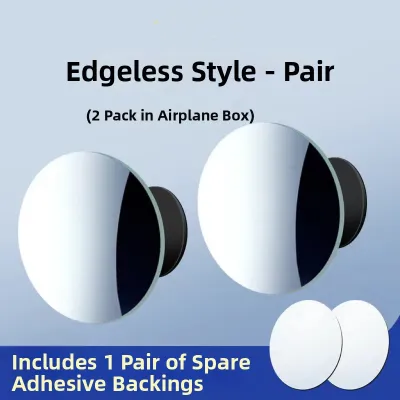
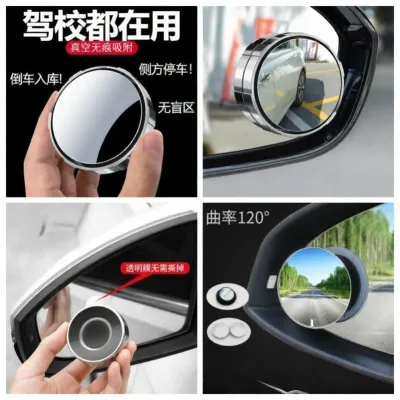
If you want to expand your field of view but are hesitant to lose the accurate distance judgment of your factory flat mirrors, stick-on convex blind spot mirrors offer an excellent, low-risk compromise. These are small, circular, or wedge-shaped curved mirrors that adhere directly to the outer corner of your existing flat mirror glass.
This approach allows you to retain the best of both worlds. You can use the primary flat portion of your mirror to judge distances accurately when preparing to change lanes, while glancing at the small stick-on convex mirror to confirm that no vehicles are hiding in your immediate blind spot. When installing these, ensure they are placed in a position that does not obstruct your view of the horizon or trailing traffic, typically the bottom-outer or top-outer corner of the mirror glass. Always clean the glass surface thoroughly with an authorized glass cleaner before applying the adhesive backing to ensure a secure, long-lasting bond.
Frequently Asked Questions (FAQ)
Can I replace my flat driver-side mirror with a convex one?
You should avoid replacing a flat driver-side mirror with a fully convex one unless your vehicle manufacturer explicitly designed it that way or local regulations permit it. Flat mirrors are critical on the driver’s side because they provide an accurate 1:1 representation of distance and speed. Installing a convex mirror on this side will distort your depth perception, making overtaking vehicles appear much further away than they actually are. This visual miscalculation significantly increases the risk of lane-change collisions on fast-moving roads.
Do convex mirrors eliminate blind spots completely?
While convex mirrors significantly widen your field of view and reduce the size of blind spots, they do not eliminate them entirely. There are still areas immediately adjacent to your vehicle’s rear doors or rear bumper that may remain invisible even in a wide-angle mirror. Because of these physical limitations, you should never rely solely on your mirrors when changing lanes. Performing a quick physical shoulder check to look over your shoulder remains a mandatory safety habit to ensure the lane is completely clear before merging.
Are blind spot mirrors a good alternative to full convex mirrors?
Yes, small stick-on convex blind spot mirrors are a highly effective, reversible, and cost-effective alternative to replacing your entire mirror glass. They allow you to keep your main, flat OEM mirror glass for accurate speed and distance evaluation while adding a dedicated wide-angle zone to monitor your blind spots. To get the most benefit, purchase high-quality glass stick-on mirrors with adjustable angles, and mount them on the outer edge of your existing mirrors so they do not block your primary line of sight.
Community discussion
Share your experience or ask a question. Comments are reviewed before publication.