
Why Curvature and Size Matter for Convex Mirrors
To eliminate blind spots and improve road safety, many drivers turn to a convex mirror as a supplementary safety device. Unlike standard flat mirrors, which reflect light in a straight path, a convex mirror curves outward. This curved surface diverges the reflected light, capturing a wider angle of the surrounding road and bringing hidden vehicles, cyclists, or obstacles into your line of sight.
However, this expanded field of view comes with an inherent optical trade-off. Because the mirror curves outward, it compresses the reflected image, making objects appear smaller and further away than they actually are. This visual distortion can lead to dangerous spatial misjudgments if you are not careful.
Choosing the right specifications—specifically the curvature radius and physical dimensions—is critical to balancing visibility and depth perception. Selecting incorrect specs can make it difficult to judge the speed of approaching vehicles on high-speed expressways or navigate tight parking situations safely.
Products mentioned in this guide
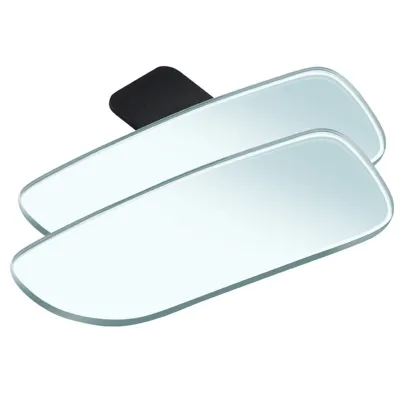
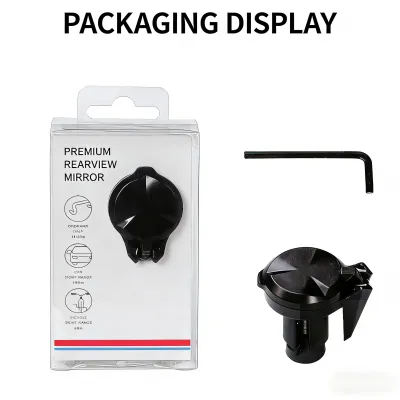
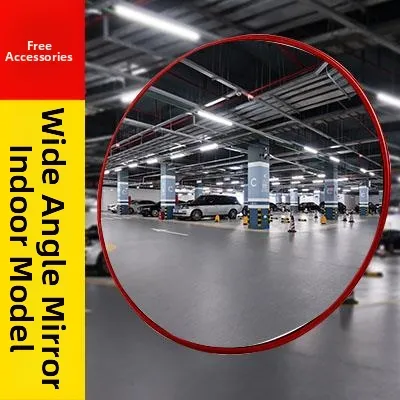

![[SG LOCAL STOCK]Outdoor Wide Angle Convex Mirror 45cm Traffic Parking Mirror High Quality](https://img.lazcdn.com/g/p/db34236e37b93e91e39a41141c545370.jpg_400x400q80.jpg_.webp)
Prices are valid at publication and may change. Please refer to the product page for the latest price.
Decoding Curvature Radius: Field of View vs. Distortion
When shopping for an aftermarket convex mirror, the most critical technical specification you will encounter is the curvature radius, commonly denoted by an “R-value” measured in millimeters (such as R800, R1000, or R1200). This value represents the radius of the sphere from which the curved mirror is cut. Understanding this number is key to predicting how the mirror will perform on your vehicle.

A smaller R-value indicates a tighter, more aggressive curve. For instance, an R800 mirror has a highly curved surface that projects an exceptionally wide field of view. While this is effective at revealing blind spots immediately adjacent to your vehicle, it also introduces high visual distortion. Objects will appear much smaller, and vehicles that are actually close to your rear bumper may seem safely distant.
Conversely, a larger R-value, like R1200 or R1400, represents a flatter surface with a gentler curve. This offers a more natural representation of distance and speed, minimizing distortion. The trade-off is a narrower field of view, meaning you will not see as far into your side blind spots as you would with a more aggressively curved mirror.
This variation in depth judgment directly impacts how you react on the road. A highly distorted image can cause you to cut off another vehicle during a lane change because you misjudged its proximity. On the other hand, a mirror with too little curvature might fail to show a motorcycle riding in your immediate blind spot.
Before purchasing, carefully inspect the product packaging or online specifications for this R-value. High-quality manufacturers clearly label their mirrors with the specific curvature rating. If a product does not list its curvature radius and is simply labeled “wide-angle,” it is best to proceed with caution, as you will have no way of knowing how severe the distance distortion will be until it is installed on your car.
Choosing the Right Mirror Size and Shape
Selecting the physical dimensions of your convex mirror is just as important as choosing its curvature. While a larger mirror physically captures more visual information, bigger is not always better for passenger cars. Excessively large external mirrors can create noticeable wind noise at high speeds, increase aerodynamic drag, and even partially block your forward peripheral view, creating new blind spots near the A-pillars.
The shape of the mirror also dictates how well it integrates with your vehicle. Round mirrors are the most common shape for small, stick-on blind spot accessories, offering a symmetrical view that works well in almost any position. Rectangular mirrors are typically utilized for full-glass replacements or large towing extensions, making them ideal for commercial vans or utility vehicles. Wedge, fan, or teardrop shapes are specifically engineered to fit snugly into the outer or inner corners of modern side-mirror housings, maximizing usable surface area without looking out of place.
To ensure a seamless fit, you must measure your existing side-mirror housing before buying any add-on or replacement glass. Use a flexible measuring tape to determine the exact height and width of the flat surface of your factory mirror. If you are planning to install a stick-on blind spot mirror, ensure that its footprint leaves enough room for your primary mirror to remain functional. For full-glass replacements, verify that the backing plate dimensions and mounting clips match your vehicle’s specific make, model, and manufacturing year to avoid loose fitment or mechanical failure.
Matching Specs to Your Vehicle and Driving Environment
Your vehicle type and daily driving habits should dictate the specific convex mirror specifications you choose. Compact cars and sedans generally benefit from moderate curvature, such as R1000 to R1200, paired with small, unobtrusive stick-on mirrors. This combination provides sufficient coverage to eliminate immediate side blind spots without overwhelming you with heavily distorted images of highway traffic.
For larger vehicles like SUVs, vans, and commercial trucks, larger mirror dimensions and tighter curvature radii (such as R800) are highly advantageous. These vehicles have much larger and taller blind spots that require a wider viewing angle to monitor effectively. The increased height of these vehicles also means that a more curved mirror helps track low-lying obstacles, such as short barriers or curb edges, which are otherwise invisible from the high cabin seating position.
Your typical driving environment also plays a major role. If your daily commute consists primarily of navigating tight urban areas, narrow lanes, and multi-story carparks, a wider-angle convex mirror is highly useful for tight maneuvers. Conversely, if you spend most of your time on expressways, you will want a flatter mirror with less distortion to accurately judge the speed and distance of fast-approaching vehicles before changing lanes.
Safety and compliance must always remain a top priority when altering your vehicle’s mirrors. In Singapore, the Land Transport Authority (LTA) maintains strict safety standards regarding vehicle modifications, including visibility and mirror requirements. The primary driver-side mirror is often restricted to flat or very mildly curved aspheric glass to prevent dangerous distance misjudgments. Before replacing or modifying your primary driver-side mirror with a highly convex alternative, always verify the latest LTA guidelines or consult a certified workshop to ensure your vehicle remains road-legal and safe.
Installation and Adjustment for Maximum Effectiveness
Once you have selected the right convex mirror, proper placement and adjustment are essential to achieving the desired safety benefits. For small, add-on blind spot mirrors, mounting them in the outer lower corner of your existing side mirror is generally recommended for lane-change visibility. If your primary concern is parking near curbs and avoiding wheel damage, placing the add-on in the inner lower corner can provide a better view of the rear tire and the ground.
To adjust your mirrors correctly, start by positioning your vehicle on a flat, quiet street. First, adjust your main flat side mirrors so you can just barely see the side of your own car in the inner edge of the glass. Next, adjust your convex mirror so its field of view begins exactly where the main mirror’s view ends. This seamless transition ensures that as an overtaking vehicle moves out of your main mirror, it immediately appears in the convex mirror, eliminating the blind spot without duplicating the view.
Maintaining your mirrors is crucial for long-term safety and performance. In hot and humid climates, the adhesive backing on stick-on convex mirrors can degrade over time due to intense sun exposure and heavy rain. Regularly check the physical stability of your stick-on mirrors by giving them a gentle wiggle, replacing them if the adhesive begins to lift. Additionally, keep the glass surfaces clean and free of water spots, dirt, and road grime by wiping them down with a microfiber cloth and a dedicated glass cleaner.
Frequently Asked Questions (FAQ)
Are convex mirrors legal on the driver's side in Singapore?
While convex mirrors are standard and legally permitted on the passenger side of vehicles in Singapore, the primary driver-side mirror is subject to stricter regulations. To prevent dangerous distance misjudgments, local vehicle safety standards often require the driver’s primary mirror to be flat or feature only a very mild aspheric curvature. Before replacing or modifying your factory driver-side mirror with an aftermarket convex model, you should check the latest Land Transport Authority (LTA) guidelines or consult a certified automotive workshop to ensure compliance.
Can I just use a flat mirror instead of a convex one?
Yes, and indeed flat mirrors are typically preferred or legally required for the driver-side primary mirror because they provide a true, 1:1 representation of distance and speed. However, flat mirrors have a much narrower field of view, which leaves significant blind spots on both sides of your vehicle. For the passenger side, or as supplementary add-on blind spot mirrors, convex glass is highly recommended because its curved surface is specifically designed to reveal vehicles and hazards that a flat mirror cannot capture.
Community discussion
Share your experience or ask a question. Comments are reviewed before publication.