
Finding a compatible aftermarket spoiler for a Volkswagen Club Sport model requires a precise understanding of your vehicle’s specific generation and factory aerodynamic package. Because the “Clubsport” designation represents specialized track-focused variants, these cars do not share the exact hatch profile or mounting configurations of standard Golf models. Installing an incompatible spoiler can lead to severe alignment issues, paint damage, water leaks, or failure during local vehicle inspections.
To achieve a seamless, modification-free fitment, you must identify your exact chassis code, select a spoiler style designed specifically for the Clubsport hatch, choose high-quality materials that resist warping, and follow strict installation and regulatory guidelines.
Verify Your Exact VW Club Sport Chassis Code First
Searching online marketplaces or parts catalogs using generic terms like “VW Club Sport spoiler” often leads to purchasing incompatible components. The Clubsport badge spans multiple vehicle generations, each featuring distinct body panels, hatch geometries, and factory spoiler designs. For example, a spoiler designed for a standard Golf Mk7 GTI will not fit a Mk7 Clubsport, because the Clubsport model comes equipped with a unique, two-part factory roof spoiler that features different mounting channels and a more aggressive profile.
Products mentioned in this guide
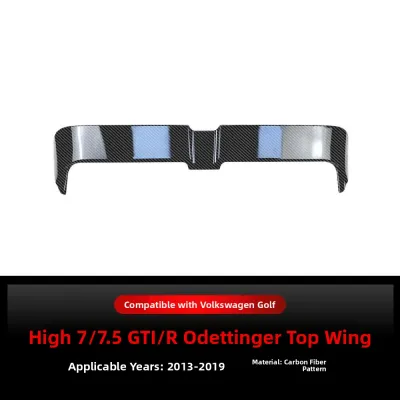
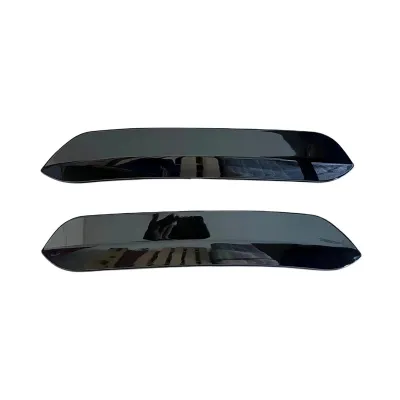
Prices are valid at publication and may change. Please refer to the product page for the latest price.
To guarantee a perfect fit, you must identify your vehicle’s exact chassis code. For the Golf Mk7 Clubsport and Clubsport S, the chassis designation is typically 5G1 (produced from 2013 to 2020). For the Golf Mk8 Clubsport, the chassis code is CD1 (produced from 2020 onwards). You can locate this designation on your vehicle registration log card via the Land Transport Authority (LTA) OneMotoring portal, or by running your Vehicle Identification Number (VIN) through an official VW decoder.
Even minor mid-generation facelifts can introduce subtle design variations that affect spoiler fitment. The transition from the Mk7 to the Mk7.5 involved minor updates to the rear bumper and tail lights, and while the metal hatch frame remained largely identical, aftermarket manufacturers sometimes alter their mounting brackets or adhesive channels to accommodate these changes. A mismatch of even two millimeters along the mounting edge can prevent adhesive tape from sealing correctly, leading to high-speed vibration or water entry.
Before ordering any part, compare the seller’s application list against your specific model year and chassis code. If a listing claims a spoiler fits “all Golf Mk7 models including GTI, R, and Clubsport,” treat this claim with caution. The Clubsport’s factory two-piece spoiler uses specific mounting holes and side fins that standard GTI or Golf R hatches do not have, meaning a universal spoiler will require extensive modification, drilling, or custom fabrication to sit flush.
Spoiler Styles That Offer Direct, Modification-Free Fitment
If your goal is to enhance your vehicle’s aerodynamics and styling without drilling into the factory metalwork or performing extensive body modifications, you must select a spoiler style designed for direct, non-destructive installation. These styles preserve the structural integrity of your tailgate and allow you to return the car to its original factory condition if needed.

OEM-Style Hatch Replacements
OEM-style replacements involve removing the factory Clubsport spoiler assembly entirely and replacing it with an upgraded, model-specific wing. These premium options are engineered to utilize the exact factory mounting holes, alignment pins, and wiring channels. This design is highly beneficial because it allows you to route the wiring for the high-mount third brake light and the washer fluid line for the rear wiper without cutting or splicing.
When choosing an OEM-style replacement, verify that the kit includes matching base plates and rubber gaskets. The base plates must match the contour of your hatch perfectly to prevent water from pooling in the mounting recesses. This style offers the cleanest aesthetic integration, mimicking the look of high-end factory packages while maintaining original panel gaps.
Adhesive Lip Extensions
Adhesive lip extensions, often referred to as spoiler caps or gurney flaps, are designed to mount directly onto the trailing edge of your existing factory Clubsport spoiler. This is the most popular option for owners who want to add visual aggression without removing any original components. These extensions are lightweight and feature a recessed underside specifically contoured to hug the curves of the OEM wing.
Because these parts rely entirely on high-strength adhesive tape, the precision of the mold is critical. A high-quality extension will snap or rest into place naturally before any adhesive is applied. If you have to apply significant physical pressure to make the extension conform to the shape of your factory spoiler during a dry fit, the material is under tension and the adhesive tape will eventually fail.
Bolt-On Wings Using Factory Holes
For a more aggressive, track-inspired appearance, some aftermarket manufacturers produce larger wing assemblies that bolt directly into the mounting holes left behind when the factory Clubsport spoiler is removed. These kits often feature CNC-machined aluminum or carbon fiber brackets that align with the original hatch mounting points.
When evaluating these bolt-on wings, confirm that the manufacturer has designed the brackets specifically for the Clubsport hatch. Standard Golf hatches have different internal reinforcing structures, and a wing designed for a standard model may place excessive stress on unreinforced sections of the Clubsport tailgate, leading to sheet metal distortion over time under aerodynamic load.
Choose the Right Material for Precision Fitment
The material composition of an aftermarket spoiler directly dictates its manufacturing tolerances, durability, and ease of installation. Selecting the wrong material can result in unsightly panel gaps, warping under intense sunlight, or the need for professional body shop modification to achieve a flush fit.
- ABS Plastic: This is the recommended choice for owners seeking a hassle-free, direct-fit installation. Injection-molded ABS plastic offers exceptional dimensional consistency, meaning every part produced matches the master mold precisely. ABS is highly impact-resistant, lightweight, and handles the extreme thermal expansion cycles caused by parking under direct sunlight without warping or cracking. Furthermore, ABS plastic holds paint exceptionally well and typically matches the texture and quality of your vehicle's factory plastic trim.
- Carbon Fiber: Carbon fiber spoilers provide a premium, motorsport-inspired aesthetic and high structural rigidity. However, fitment quality varies significantly depending on the manufacturing process. Spoilers made from vacuum-bagged, autoclaved "dry" carbon fiber offer excellent dimensional accuracy and minimal weight. In contrast, cheaper "wet" hand-laid carbon fiber parts often suffer from slight warping, resin pooling, and uneven mounting surfaces. If you choose carbon fiber, ensure the manufacturer applies a high-quality, automotive-grade UV-resistant clear coat to prevent the resin from yellowing or hazing under intense tropical UV radiation.
- FRP (Fiberglass Reinforced Plastic): FRP is highly discouraged for those seeking a modification-free installation. Fiberglass parts are typically hand-laid in budget molds, leading to inconsistent material thickness, rough mounting surfaces, and warping. To make an FRP spoiler fit flush against your hatch, a professional body shop must usually sand down high spots, fill low spots with body filler, prime, and paint the piece. This manual prep work adds substantial labor costs and defeats the purpose of a direct-fit component.
Installation Methods: Avoiding Drilling and Bodywork
To preserve your vehicle’s resale value and prevent rust, you should focus on installation methods that do not require drilling new holes into the metal hatch. Proper execution of these non-destructive methods ensures your spoiler remains securely attached at highway speeds and during heavy downpours.
Adhesive Mounting (3M VHB Tape)
For adhesive lip extensions and lightweight spoilers, double-sided acrylic foam tape, such as 3M VHB (Very High Bond), provides an incredibly strong connection, provided you follow a meticulous surface preparation workflow. Standard car wash soap leaves behind waxes and polymers that prevent the adhesive from bonding to the clear coat.
Begin by washing the mounting area with a wax-stripping shampoo, followed by a thorough wipe-down using a 70% isopropyl alcohol (IPA) solution to remove all residual oils and grease. Apply a thin layer of liquid adhesion promoter (such as 3M Primer 94) to the mounting path on both the spoiler and the vehicle. Mount the spoiler in a dry, dust-free environment with ambient temperatures between 21°C and 38°C. Once applied, maintain firm, uniform pressure across the entire bonding surface for at least 60 seconds, and allow the adhesive to cure fully for 24 hours before driving or exposing the vehicle to moisture.
Bolt-On Sealing
If you are installing an OEM-style replacement or a bracketed wing that utilizes the factory mounting holes, preventing water ingress is your primary concern. The factory spoiler assembly relies on specialized rubber compression gaskets to seal the mounting holes. When installing the aftermarket unit, you must either transfer these gaskets if they are in pristine condition or install new, model-specific rubber seals.
For added protection against water leaks, apply a thin bead of non-corrosive, marine-grade silicone sealant around the perimeter of each bolt hole on the underside of the spoiler base plate. When tightening the mounting bolts, use a torque wrench to tighten them to the manufacturer’s specified torque rating (typically between 5 to 9 Nm). Over-tightening can crush the plastic or carbon fiber mounting tabs, crack the paint, or distort the sheet metal of the hatch, while under-tightening will allow water to slowly seep into the boot interior, damaging the rear wiper motor and electronic latches.
The Drilling Rule
If you purchase an aftermarket spoiler and find that the pre-drilled holes do not align with your factory mounting points, or if the instructions direct you to drill new holes into the metal tailgate, stop immediately. Drilling into the hatch bypasses the factory corrosion protection layers, exposing raw steel to moisture and accelerating rust formation. If a part requires new holes to be drilled, it fails the modification-free criteria and should be returned to the seller.
Singapore LTA Compliance for Aftermarket Spoilers
In Singapore, all vehicle modifications are strictly regulated by the Land Transport Authority (LTA). Before purchasing and installing an aftermarket spoiler on your VW Club Sport, you must ensure the component complies with local safety and roadworthiness guidelines to avoid costly fines, insurance complications, or failure during your periodic vehicle inspection at authorized centers like VICOM or STA.
According to LTA guidelines, aerodynamic body kits, including front splitters, side skirts, rear diffusers, and spoilers, do not require prior approval from the LTA, provided they meet the following safety criteria:
- Dimensional Limits: The installed spoiler must not protrude beyond the original length or width of the vehicle. This means the wing cannot extend past the outermost edges of the rear fenders (excluding the side mirrors) and must not overhang past the rear bumper profile.
- No Sharp Edges: The spoiler must not feature any sharp corners, pointed protrusions, or jagged edges that could pose an increased risk of injury to pedestrians or other road users in the event of a collision. All edges must have a minimum radius of curvature (typically 2.5mm or greater).
- Driver Visibility: The spoiler must not obstruct the driver's rearward line of sight through the rear windshield or side mirrors. If the wing blade is positioned high, it must be designed so that the driver can still clearly see traffic behind them.
- Structural Integrity: The spoiler must be securely fastened to the vehicle. During periodic inspections, inspectors will physically check the mounting of the spoiler. If there is any play, loose adhesive, or structural cracking in the brackets, the vehicle will fail the inspection and cannot be road-taxed until the issue is rectified.
- Brake Light Visibility: The high-mount third brake light is a mandatory safety feature. If your aftermarket spoiler covers or obscures the factory third brake light, the spoiler must feature an integrated, fully functional LED brake light that connects to the vehicle's electrical system without causing dashboard error lights.
If you are considering a large, track-oriented GT wing with elevated metal uprights, consult with a certified local workshop that has experience navigating LTA regulations. Many extreme wing designs fail inspections due to pedestrian safety concerns and protruding dimensions.
Your Pre-Purchase Fitment Checklist
To ensure a smooth buying process and avoid the hassle of return shipping and restocking fees, use this checklist before completing your purchase:
- Verify Chassis Code: Confirm your VW's exact chassis code (e.g., 5G1 for Mk7, CD1 for Mk8) and production year match the seller's fitment database.
- Confirm Trim Compatibility: Explicitly ask the seller if the spoiler is compatible with the unique "Clubsport" hatch, as standard GTI and Golf R fitments often differ.
- Check Hardware and Seals: Ensure the package includes all necessary mounting brackets, rubber gaskets, and high-strength adhesive tape.
- Determine Paint Requirements: Check if the spoiler is pre-painted to match your VW paint code (e.g., Pure White LC9A or Deep Black Pearl LC9X) or if it arrives in raw primer, which will require professional painting.
- Review Return Policy: Confirm the seller's return policy covers fitment discrepancies, and ensure they accept returns for parts that do not align with factory mounting points during a dry test-fit.
Frequently Asked Questions (FAQ)
Will an aftermarket spoiler void my VW warranty?
Installing an aftermarket spoiler does not void your entire vehicle warranty. Under consumer protection principles, the dealership can only deny warranty coverage if they can prove that the aftermarket part or its installation directly caused the failure in question. For example, if you install an adhesive spoiler extension, your engine, transmission, and suspension warranties remain fully intact. However, if a bolt-on spoiler is installed incorrectly and allows water to leak into the tailgate, damaging the rear wiper motor, rear-view camera, or latch electronics, those specific repairs will not be covered under the factory warranty.
Can I fit a Golf R spoiler onto a Golf Club Sport?
While the Golf R and the Golf Club Sport share the same underlying steel hatch frame, they feature completely different factory spoiler assemblies. The Mk7 Clubsport, for instance, uses a specialized two-piece spoiler that mounts using unique side fins and specific mounting channels on the hatch. A standard Golf R spoiler will not bolt directly onto a Clubsport hatch without removing the entire Clubsport aerodynamic assembly and sourcing the corresponding Golf R trim pieces, mounting brackets, and side glass extensions. To avoid complex parts swapping, always purchase spoilers designed specifically for the Clubsport trim.
Community discussion
Share your experience or ask a question. Comments are reviewed before publication.