
Choosing the right rear tire brand for your Yamaha MX King 150 requires looking beyond marketing claims and focusing on how a tire’s physical specifications, rubber compound, and tread design align with your daily riding environment. The Yamaha MX King 150 is a popular underbone motorcycle known for its agile handling and daily utility, meaning its rear tire must balance load-carrying capacity, wet-weather safety, and long-term durability. Rather than searching for a single universal winner, you should evaluate how different tire characteristics perform under your specific riding conditions, whether you are navigating daily urban commutes or riding on wet, rain-slicked roads.
To make an informed purchase, you must first understand the technical baseline of your motorcycle. The rear tire is responsible for delivering engine power to the road surface, maintaining stability during acceleration, and providing the necessary grip during cornering. By systematically comparing tire specifications, rubber compounds, and tread patterns, you can select a tire that enhances your riding experience while ensuring maximum safety on every journey.
Key Specifications to Verify Before Comparing Brands
Before you begin comparing different tire brands, you must verify the exact physical dimensions and safety ratings required for your Yamaha MX King 150. Installing a tire with incorrect specifications can severely compromise the motorcycle’s handling, trigger clearance issues, and even lead to catastrophic tire failure at high speeds.
Products mentioned in this guide
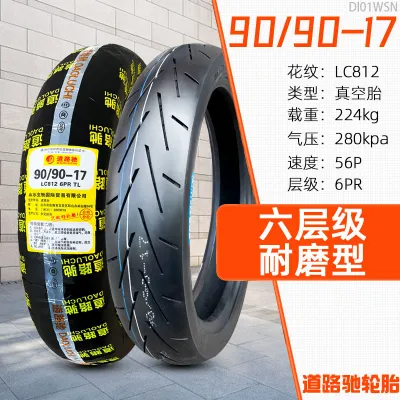
Prices are valid at publication and may change. Please refer to the product page for the latest price.
Start by locating the original equipment manufacturer (OEM) rear tire size. This information is typically printed on the swingarm sticker near the chain guard or detailed in your owner’s manual. The standard rear tire size for the Yamaha MX King 150 is generally 120/70-17. Deviating from this standard size without a clear understanding of the physical limits of your swingarm and rim can result in the tire rubbing against the chain guard, mudguard, or swingarm itself.
Next, you must verify the load index and speed rating of any candidate tire. These ratings are represented by a number and a letter code on the tire sidewall, such as 58P or 58S. The load index indicates the maximum weight the tire can safely support when fully inflated, while the speed rating indicates the maximum speed the tire can sustain. Ensure that any aftermarket tire you consider meets or exceeds the minimum load and speed ratings specified by Yamaha to guarantee safe operation under load.
Finally, confirm whether your motorcycle’s rims require a tubeless (TL) or tube-type (TT) tire. The Yamaha MX King 150 is equipped with cast alloy wheels designed specifically for tubeless tires. Installing a tube-type tire on a tubeless rim without an inner tube is highly dangerous, as the tire bead will not seat correctly, leading to sudden air loss. Always check the tire sidewall markings to ensure you are purchasing a certified tubeless tire that matches your wheel setup.
Evaluating Tread Patterns and Rubber Compounds
Once you have filtered your options by size and safety ratings, the next step is to evaluate the rubber compounds and tread designs offered by different brands. These two factors directly determine how the tire behaves in dry and wet conditions, as well as how quickly the tread will wear down over time.

Rubber compounds generally fall along a spectrum between hard and soft formulations. Hard compounds contain denser rubber structures that resist wear, making them highly economical for daily city commuting and long-distance riding. However, they typically offer less traction during aggressive cornering. Soft compounds, often found in sport-oriented tires, conform more easily to road surface irregularities, providing exceptional grip and shorter braking distances. The trade-off is a significantly shorter lifespan, as the softer rubber wears away much faster under daily use.
Tread patterns are engineered to balance dry traction with wet-weather safety. In tropical climates prone to sudden, heavy downpours, water evacuation is a critical safety consideration. Look for tread designs with deep, continuous grooves and strategic siping (small slits in the tread blocks) that channel water away from the contact patch to prevent hydroplaning. Conversely, if your riding is almost exclusively on dry, well-maintained asphalt, a tire with larger solid tread blocks and fewer grooves will maximize the rubber-to-road contact area, enhancing dry grip.
Always check the manufacturing date code, commonly known as the DOT code, on the tire sidewall before purchasing. This four-digit code represents the week and year of manufacture; for example, “2426” indicates the tire was produced in the 24th week of 2026. Rubber naturally degrades, hardens, and loses its elastomeric properties over time, even when stored on a shelf. Avoid buying old stock that has been sitting in a warehouse for several years, as aged rubber offers significantly reduced grip and is more prone to cracking.
Assessing Durability and Real-World Value
Evaluating the real-world value of a rear tire involves looking past the initial purchase price in S$ and calculating the long-term cost-per-kilometer. A cheap tire that requires replacement after a short distance is often more expensive over time than a premium tire with a higher upfront cost but a much longer service life.
To monitor tire wear and assess durability, locate the Tread Wear Indicators (TWI) on the tire. These are small raised bumps situated inside the main tread grooves, often marked by a tiny triangle or the letters “TWI” on the outer sidewall. As the tire wears down, the tread surface will eventually become flush with these indicators. Once the tread reaches this level, the tire has reached its legal and physical wear limit, losing its ability to disperse water safely, and must be replaced immediately.
Your personal riding habits play a massive role in how long a tire lasts. Frequent heavy acceleration, hard braking, and carrying a pillion passenger or heavy cargo place immense stress on the rear tire, accelerating center-tread wear. If your daily routine involves carrying heavy loads or riding with a passenger, you should prioritize tires with reinforced carcasses and dual-compound technology, which feature harder rubber in the center to resist flat-spotting and softer rubber on the shoulders for cornering grip.
When comparing brands, weigh the initial cost in S$ against the expected mileage reported by other riders under similar conditions. A tire costing S$80 that lasts for 8,000 kilometers has a higher operating cost than a S$130 tire that safely delivers 16,000 kilometers of service. Additionally, factor in the cost and inconvenience of frequent tire changes when determining the true value of your purchase.
Safety and Installation Considerations
Installing a new rear tire is a safety-critical task that directly impacts the stability and handling of your Yamaha MX King 150. Even the highest-quality tire from a premium brand will perform poorly—and may even be dangerous—if it is installed incorrectly or mounted on a damaged wheel.
During every tire replacement, it is highly recommended to replace the tubeless valve stem. Rubber valve stems degrade over time due to heat, ozone, and physical stress, which can lead to slow air leaks or sudden failure at high speeds. Additionally, the mechanic should thoroughly inspect the alloy rim for any signs of corrosion, dents, or bends along the bead seat. A damaged rim bead seat will prevent the tire from sealing correctly, resulting in persistent pressure loss.
Proper wheel balancing is essential after mounting a new tire. Unbalanced wheels cause high-speed vibrations that accelerate bearing wear, unevenly wear down the new tread, and compromise rider control. Furthermore, when reinstalling the rear wheel assembly, the rear axle nut must be tightened to the exact torque specification detailed in the Yamaha service manual. Under-tightening can cause the wheel to shift or detach, while over-tightening can crush the wheel spacers, damage the bearings, or strip the axle threads.
Because tire mounting, bead seating, wheel balancing, and precise torque application require specialized tools and technical expertise, you should avoid DIY attempts unless you are fully equipped and trained. Always have your new rear tire fitted, balanced, and verified by a qualified motorcycle mechanic at a professional workshop to ensure your safety on the road.
Decision Framework: Which Tire Profile Fits Your Riding Style?
To narrow down your choices, you must match the tire’s design profile to your primary riding habits, typical weather conditions, and load requirements. There is no single tire that excels in every category, so identifying your priorities is key to making the right choice.
If you prioritize maximum grip, frequently ride at higher speeds, and enjoy spirited cornering on weekend rides, you should choose a premium sport-touring tire. These tires typically feature advanced dual-compound rubber and sport-oriented tread profiles that offer rapid steering response and exceptional wet and dry traction, though they may wear out faster under heavy daily commuting.
If your primary goal is daily city commuting, delivery work, or maximizing your budget, a standard commuter tire is the most practical choice. These tires are designed with harder rubber compounds and deep, robust tread patterns optimized for long mileage, resistance to punctures, and stable performance when carrying heavy loads. They offer excellent cost-per-kilometer value and reliable performance in daily traffic.
For riders who frequently carry a pillion passenger or heavy cargo in unpredictable weather, always verify the tire’s load index and wet-weather ratings first. Check the manufacturer’s technical specifications to ensure the tire carcass is reinforced to handle sustained heavy loads without overheating or flexing excessively, ensuring a stable and safe ride.
Frequently Asked Questions (FAQ)
Can I install a wider rear tire on the MX King 150 for better grip?
While it is physically possible to mount a slightly wider tire on the rear rim of the Yamaha MX King 150, doing so carries significant risks and handling trade-offs. A tire that is too wide can rub against the swingarm, chain guard, or rear mudguard, causing physical damage to both the tire and the motorcycle.
Furthermore, mounting a wide tire on a rim that is too narrow pinches the tire’s carcass, distorting its intended profile into an exaggerated balloon shape. This distortion actually reduces the effective contact patch when leaning into corners, slows down steering response, and makes the motorcycle feel sluggish. It can also alter speedometer accuracy and increase fuel consumption. For optimal safety and handling, it is highly recommended to stick to the manufacturer’s recommended tire dimensions.
How often should I check the rear tire pressure?
You should check your rear tire pressure at least once a week, or before any long journey, using a reliable, calibrated pressure gauge. Always measure the pressure when the tire is completely cold, meaning the motorcycle has been parked for at least three hours or ridden less than one kilometer.
Running a tire with incorrect pressure severely compromises safety and accelerates wear. Under-inflation causes the tire sidewalls to flex excessively, generating extreme heat that can lead to tread separation or sudden blowouts, while also causing sluggish handling and rapid edge wear. Over-inflation reduces the size of the contact patch, leading to a harsh ride, reduced traction, and an increased risk of punctures. Always refer to the cold inflation pressures listed on the swingarm sticker or in the owner’s manual rather than the maximum pressure printed on the tire sidewall.
Community discussion
Share your experience or ask a question. Comments are reviewed before publication.