
Selecting a car camera dashcam in Singapore requires looking beyond basic video quality to ensure the device complies with local road safety and telecommunications laws. An LTA-compliant dashcam must not obstruct the driver’s view, must use approved wireless frequencies if it features smart connectivity, and must withstand the extreme thermal demands of tropical parking conditions. Rather than focusing on a single brand, drivers should compare manufacturers based on physical dimensions, mounting flexibility, power delivery systems, and certification marks. This approach ensures your recording setup remains legally compliant while providing reliable evidence in the event of a traffic dispute.
Understanding LTA and IMDA Regulations for Dash Cams
The Land Transport Authority (LTA) regulates any aftermarket accessories attached to a vehicle’s windscreen to maintain clear driver visibility. Under local guidelines, any installed car camera dashcam must be mounted in a position that does not impede the driver’s direct line of sight. Typically, this means placing the device high up on the windscreen, ideally behind or adjacent to the rearview mirror. The physical footprint of the camera and its mounting bracket must be compact enough to avoid creating a blind spot. Drivers should avoid oversized models or those with bulky suction mounts that extend deep into the primary viewing field.
In addition to physical placement, wireless communication features are governed by the Info-communications Media Development Authority (IMDA). Any dashcam that utilizes Wi-Fi, Bluetooth, or cellular data to transfer footage to a smartphone must comply with IMDA’s technical specifications. Authorized distributors in Singapore must obtain IMDA registration for these devices, which is often indicated by a compliance label on the packaging or within the product manual. Importing unapproved wireless equipment can lead to interference issues and potential regulatory non-compliance.
Products mentioned in this guide
![[NEW] 70mai A810S Dash Cam 4K Resolution + HDR | 4G Connectivity | Built-in GPS & ADAS | Dual SONY HDR | Supercapacitor](https://img.lazcdn.com/g/p/12b3e825bd363ef619248cedda0ec9fd.jpg_400x400q80.jpg_.webp)
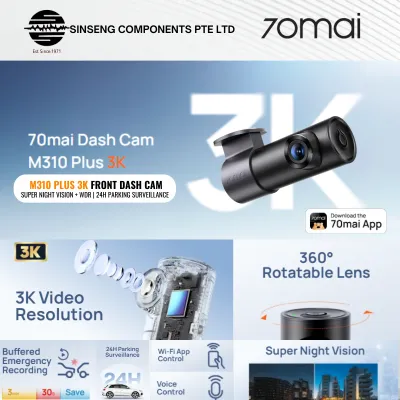
![[NEW] 70mai M310 Plus 3K Front Dashcam Car Recorder QHD Resolution | Night Vision | Voice & Apps Control](https://img.lazcdn.com/g/p/6f89bbbfc161f2edfa1cdb7255587354.jpg_400x400q80.jpg_.webp)
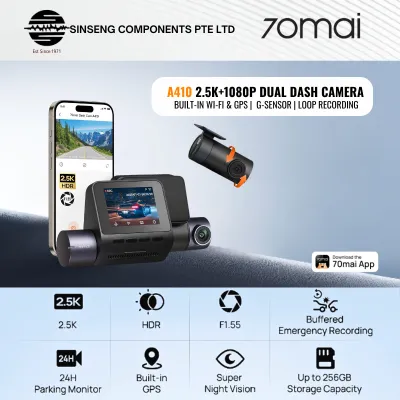
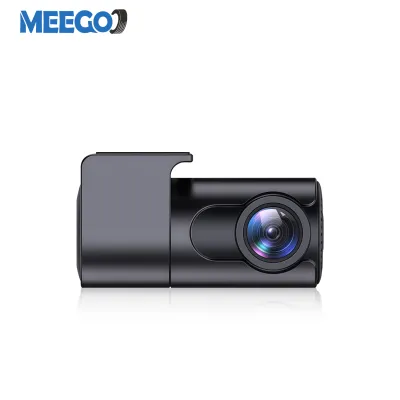
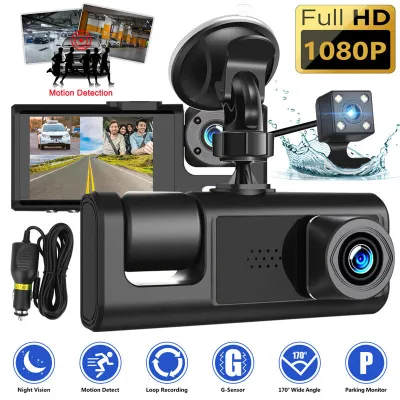
![[SG Local Seller] 7-STAR* Latest Touch Screen 4” inch Car DVR Dashcam Full HD 1080P Car Recorder Camera Dual-lens (Front and Back) 2Ch Driving Data Car Recorder 170° Wide Angle Night-Vision Loop-Recording G-Sensor](https://img.lazcdn.com/g/p/e183a5bd7644cabfd1116b60d588f41b.png_400x400q80.png_.webp)
Prices are valid at publication and may change. Please refer to the product page for the latest price.
Furthermore, drivers must be mindful of external lighting regulations. Dashcams equipped with high-intensity infrared (IR) emitters or bright status lights facing outward can distract other road users or cause glare on the windscreen at night. LTA regulations prohibit unauthorized external lighting modifications, meaning any outward-facing camera must rely on optical sensor sensitivity rather than active visible light illumination to capture night footage. Status LEDs facing the cabin should also be dimmable or positioned so they do not distract the driver during night journeys.
Core Features to Compare Across Brands
When evaluating different dashcam brands, video clarity under challenging environmental conditions is a primary differentiator. Singapore’s frequent heavy downpours and rapid transitions between bright sunlight and shaded expressways require a high-quality image sensor and robust dynamic range processing. A camera’s ability to resolve license plates depends heavily on its sensor’s light sensitivity and exposure management rather than resolution alone. When comparing brands, look for models that feature High Dynamic Range (HDR) or Wide Dynamic Range (WDR) technologies, which balance extreme highlights and deep shadows to keep crucial details visible.

Thermal resilience is another critical factor due to Singapore’s year-round tropical climate. Vehicles parked in open-air car parks can experience extreme cabin temperatures. Dashcams powered by traditional lithium-ion batteries are highly susceptible to swelling, leakage, and permanent failure under these conditions. In contrast, brands that utilize supercapacitors offer significantly higher heat tolerance and a longer operational lifespan. Supercapacitors store just enough energy to safely save the current recording and shut down when the vehicle’s engine is turned off, making them highly suitable for local reliability.
For drivers who require continuous monitoring, parking surveillance modes are essential. However, constant recording can drain the vehicle’s starter battery if not managed correctly. Reliable dashcam brands offer dedicated hardwire kits equipped with adjustable low-voltage protection. This safety feature monitors the car battery’s voltage and automatically cuts power to the dashcam if the voltage drops below a pre-set threshold (such as 12.0V or 11.8V). When comparing brands, verify whether their hardwire kits allow you to customize these voltage cutoffs and whether they support energy-saving parking modes, such as time-lapse or impact-only detection.
Choosing the Right Camera Configuration
The physical layout of your car camera dashcam system directly influences its installation complexity, storage requirements, and overall cost. Drivers must decide whether a single forward-facing lens is sufficient or if comprehensive multi-angle coverage is necessary to protect against various road incidents.
Front-Only Dash Cams
A front-only dashcam serves as the baseline option for capturing forward collision evidence and traffic light disputes. These single-channel systems are highly cost-effective and feature a straightforward installation process, typically requiring only a single power cable routed to the accessory socket or fuse box. Because they only record one video stream, they place less demand on memory card write cycles and storage capacity. However, the primary limitation of a front-only setup is its inability to capture rear-end collisions, side-swipe incidents, or hit-and-run events occurring behind the vehicle, which constitute a significant portion of local traffic accidents.
Front and Rear Dual-Channel Systems
Front and rear dual-channel systems provide comprehensive coverage by recording both the road ahead and the traffic behind. This configuration is highly valuable for resolving multi-vehicle pile-ups or proving liability in rear-end disputes. However, installing a dual-channel system involves routing a secondary coaxial or USB cable from the front windscreen, through the vehicle’s cabin headliner, to the rear window. Drivers must also consider potential video degradation caused by heavy rear-window tinting, aftermarket solar films, or the heating elements of rear defroster lines, which can obstruct or distort the rear camera’s view.
Cabin-Facing and Ride-Hailing Setups
For commercial drivers and ride-hailing operators, cabin-facing cameras offer essential protection against passenger disputes and false claims. These setups often feature interior-facing lenses equipped with infrared night vision to capture clear footage in low-cabin light. When choosing an interior camera, drivers must navigate strict privacy considerations. Under local personal data protection guidelines, commercial drivers must display clear notices informing passengers that audio and video recording is active inside the vehicle. Additionally, the interior camera’s mounting position must comply with LTA rules, ensuring it does not block the driver’s rear-view mirror visibility or create distracting light reflections.
Installation, Wiring, and Vehicle Safety
Proper installation is just as important as selecting a compliant dashcam brand. While basic plug-and-play installations using a cigarette lighter adapter are simple, they leave visible wires hanging across the dashboard and occupy a valuable power outlet. Many drivers prefer a hardwired installation for a cleaner look and to enable parking mode features. However, DIY hardwiring carries significant risks. Tapping into the wrong fuse or misrouting wires can disrupt the vehicle’s electronic control units (ECUs), drain the battery prematurely, or even void the manufacturer’s vehicle warranty.
For modern vehicles, particularly hybrids and electric vehicles (EVs), the electrical architecture is highly sensitive. These vehicles utilize complex low-voltage and high-voltage systems that require specialized knowledge to tap safely. If you are unfamiliar with automotive electrical systems, it is highly recommended to stop and consult the vehicle manufacturer or a certified automotive electrician. Professional installers can identify safe ignition-switched and constant-power fuse slots using dedicated diagnostic tools, ensuring the dashcam operates correctly without triggering dashboard error lights or interfering with the vehicle’s onboard computers.
Cable management is another critical safety aspect that is often overlooked during self-installation. Modern cars are equipped with side curtain airbags housed within the A-pillars and roofline. If a dashcam cable is routed directly across these airbag deployment zones, it can prevent the airbag from inflating correctly during an accident or turn the cable into a dangerous projectile. Professional installation ensures that all wiring is routed securely behind the airbag modules and fastened tightly to prevent interior rattling noises and physical wear over time.
Decision Framework: Selecting Your Ideal Dashcam
To finalize your choice, evaluate your daily driving habits, parking conditions, and vehicle specifications against the following decision framework:
- Daily Commuters with Sheltered Parking: If you primarily drive during daylight hours and park in secure, sheltered corporate or residential car parks, a front-only supercapacitor model is often a highly practical choice. It provides essential forward coverage, avoids the heat-related risks of lithium batteries, and keeps installation simple and cost-effective.
- Frequent Roadside or Open-Air Parking: If you regularly park in unmonitored, high-traffic, or open-air areas, prioritize a dual-channel system equipped with a hardwire kit. Ensure the brand's software supports low-voltage cutoff customization to protect your starter battery during extended parking sessions.
- Vehicles with Specialized Windscreen Features: Before purchasing, inspect your windscreen for heavy metallic solar films, acoustic glass, or embedded heating elements. These materials can severely degrade GPS signal reception and Wi-Fi connectivity. If your vehicle has these features, look for brands that offer external GPS antenna options or physical button controls that do not rely solely on wireless smartphone apps.
- Advanced Driver-Assistance Systems (ADAS): Many modern vehicles feature camera and radar arrays mounted near the rearview mirror for lane-keep assist and emergency braking. Ensure your chosen dashcam's mounting bracket allows for placement outside the exclusion zones specified in your vehicle's owner manual, preventing any interference with these critical safety systems.
Frequently Asked Questions (FAQ)
Do I need to declare my dashcam to LTA or my car insurance provider?
You do not need to declare a standard, non-obstructive aftermarket dashcam to the Land Transport Authority, provided it is mounted safely and complies with basic visibility guidelines. However, it is highly advisable to inform your motor insurance provider. While some insurers in Singapore offer premium discounts for vehicles equipped with active dashcams, others may require you to declare any permanently wired accessories to ensure full coverage and to streamline the claims process if you ever need to submit recorded footage as evidence.
Can I use a dashcam with a built-in screen while driving?
Yes, you can use a dashcam with a built-in screen, but its operation must comply with local driver distraction laws. The screen must not display active video playback or distracting menus while the vehicle is in motion. To maintain compliance, select a dashcam brand that features an automatic screen-timeout function, which turns off the display after a few seconds of driving. The physical unit must also be mounted high enough on the windscreen so that the screen does not obstruct your forward view of the road.
Community discussion
Share your experience or ask a question. Comments are reviewed before publication.