
Selecting a dash cam for your vehicle in Singapore requires balancing legal compliance, video clarity under intense tropical light, and long-term reliability in high-temperature environments. While many manufacturers advertise high-resolution recording and advanced parking surveillance, local drivers must evaluate these claims against specific regulatory standards and environmental challenges. A compliant, high-performing setup ensures that your footage is legally admissible and physically intact when you need it most.
Understanding how different hardware specifications translate to real-world performance on local roads is key to making an informed purchase. Rather than relying on generic brand promises, drivers should focus on verifiable technical features such as sensor types, power delivery mechanisms, and mounting configurations. This analytical approach helps you identify a system that remains functional and legally compliant throughout its operational lifespan.
Establishing the LTA Compliance Baseline
Before comparing specific camera features, you must ensure that any device you install meets the safety and legal standards set by the Land Transport Authority (LTA). The primary concern for any aftermarket vehicle accessory is that it must not compromise the safe operation of the vehicle or endanger its occupants.
Products mentioned in this guide
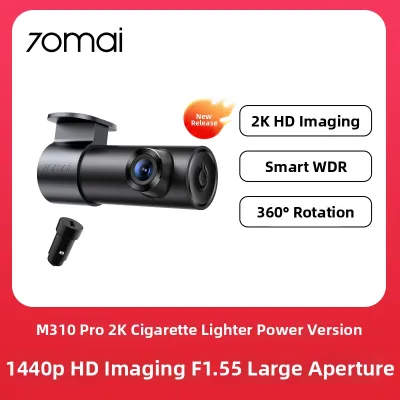
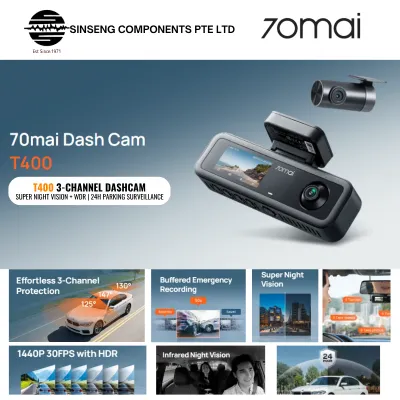
![[2026 NEW] 70mai A810 Lite Dashcam 4K Resolution + HDR | 4G Connectivity | Supercapacitor | Built-in GPS | Dual Recording](https://img.lazcdn.com/g/p/dde058960afcc39bbcd48d9d52298a3d.png_400x400q80.png_.webp)
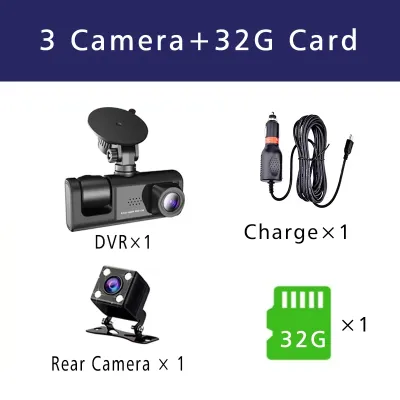

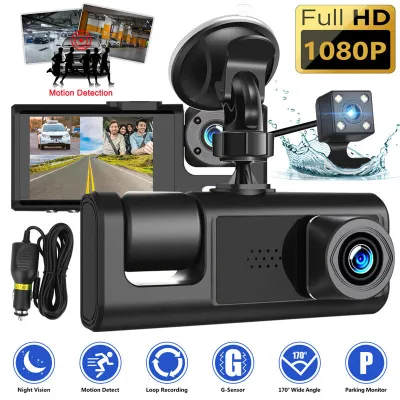
![[SG Local Seller] 7-STAR* Latest Touch Screen 4” inch Car DVR Dashcam Full HD 1080P Car Recorder Camera Dual-lens (Front and Back) 2Ch Driving Data Car Recorder 170° Wide Angle Night-Vision Loop-Recording G-Sensor](https://img.lazcdn.com/g/p/e183a5bd7644cabfd1116b60d588f41b.png_400x400q80.png_.webp)
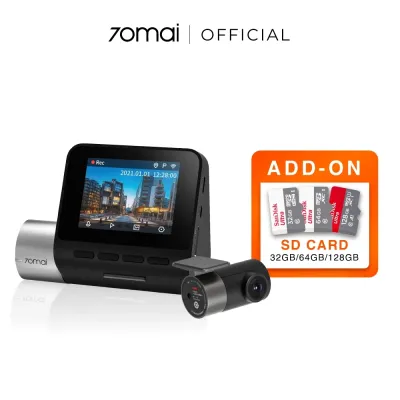
Prices are valid at publication and may change. Please refer to the product page for the latest price.
Mounting position is the first critical factor to verify. The dash cam must be installed in a location that does not obstruct your forward view of the road. Typically, the optimal position is directly behind or adjacent to the rearview mirror, within the swept area of the windscreen wipers but completely outside your primary line of sight.
You must also ensure that the camera unit and its accompanying cables do not interfere with the deployment zones of your vehicle’s airbags. Routing cables across the A-pillar or near side-curtain airbags without proper clearance can prevent them from deploying correctly in an accident. Always consult your vehicle’s official owner manual to locate these safety systems before planning your installation path.
Local regulations also govern driver distraction and privacy. If your dash cam features an integrated display screen, it must not show active video playback to the driver while the vehicle is in motion. Many compliant models address this by incorporating an automatic screen-off timer that disables the display shortly after the engine starts.
Additionally, if you operate a commercial vehicle or carry passengers for hire, you must be mindful of the Personal Data Protection Act (PDPA) regarding audio and video recording inside the cabin. Clear warning decals indicating that recording is in progress are often required to maintain compliance when carrying members of the public.
Comparing Video Quality for Singapore Roads
Video quality is not merely a matter of choosing the highest advertised resolution. On Singapore roads, a dash cam must perform reliably under a wide range of challenging lighting conditions, from the blinding glare of midday tropical sun to the dim interiors of multi-story car parks.

While 1080p (Full HD) is the standard baseline, upgrading to 2K or 4K resolution provides a significant advantage when attempting to read license plates at a distance. The extra pixels allow you to crop into a frame during post-incident analysis without turning the image into a pixelated blur. However, higher resolutions demand faster memory card write speeds and consume storage space much more rapidly.
Frame rate is another key specification to consider. A camera recording at 60 frames per second (fps) captures smoother motion than one recording at 30 fps, making it easier to freeze-frame a clear image of a fast-moving vehicle on expressways like the PIE or AYE. If your primary driving consists of highway commuting, prioritizing a higher frame rate at 1080p or 2K is often more beneficial than a lower frame rate at 4K.
To handle the extreme contrast of Singapore’s weather, look for cameras equipped with true High Dynamic Range (HDR) or Wide Dynamic Range (WDR) technology. These systems combine multiple exposures in real-time to balance bright skies and dark shadows. This capability is crucial when exiting a dark tunnel, such as the KPE, directly into bright sunlight, preventing the video from becoming temporarily blinded or completely blacked out.
Nighttime clarity relies heavily on the physical size of the camera’s image sensor and its lens aperture. A wider aperture, denoted by a lower f-number like f/1.8 or f/1.6, allows more light to reach the sensor. This hardware configuration is essential for capturing legible details on poorly lit residential streets or within older, dimly lit public housing car parks.
Evaluating Heat Resistance and Long-Term Reliability
Singapore’s tropical climate presents a severe challenge to electronic components mounted directly against a vehicle’s windscreen. When parked outdoors under direct sunlight, cabin temperatures can easily climb to levels that degrade cheap plastics and sensitive circuitry.
When comparing models, always check the manufacturer’s official specifications for the maximum operating and storage temperature limits. High-quality dash cams designed for tropical climates are typically rated to operate safely in temperatures up to 60 or 70 degrees Celsius.
The internal power source of the dash cam is the single most critical factor in determining its heat tolerance. Traditional lithium-ion batteries are highly susceptible to thermal degradation, which can lead to swelling, chemical leakage, or even fire hazards when exposed to sustained cabin heat.
For maximum safety and longevity, select a dash cam that utilizes a supercapacitor instead of a lithium battery. Supercapacitors do not store energy to run the camera for long periods; instead, they hold just enough charge to safely save the current video file and shut down the system when the vehicle’s engine is turned off. This design is significantly more resilient to extreme heat and drastically reduces the risk of hardware failure.
If you plan to use parking surveillance mode, thermal management becomes even more critical. Because the camera continues to run while the vehicle is stationary and uncooled, it generates internal heat on top of the ambient cabin temperature. Reliable systems feature built-in thermal sensors that automatically cut power to the device if internal temperatures exceed safe limits, protecting both the camera and your vehicle’s battery.
Decision Framework: Choosing the Right Dash Cam Setup
Selecting the right dash cam setup depends on your daily driving habits, parking situation, and budget. Creating a clear checklist of your requirements will help you narrow down the options without overspending on unnecessary features.
For drivers on a strict budget, a basic single-lens, front-facing camera costing under S$150 can provide sufficient protection for forward-facing incidents. This setup is straightforward to install using a standard accessory power outlet and offers a cost-effective entry point for casual drivers who primarily park in sheltered car parks.
If you commute daily on busy expressways, a dual-channel (front and rear) system is highly recommended. Rear-end collisions and tailgating disputes are common on local roads, and having a secondary camera mounted on the rear windscreen ensures comprehensive coverage of these incidents. Ensure the rear camera’s cable routing does not interfere with rear window sunshades or defroster lines.
Before purchasing any advanced system, you must verify its power requirements and compatibility with your vehicle’s electrical system. Enabling parking mode typically requires hardwiring the dash cam directly to your vehicle’s fuse box or installing a dedicated external dash cam battery pack.
Hardwiring is a precise electrical modification that carries inherent safety risks. Incorrect installation can drain your vehicle’s main battery, trigger diagnostic error codes, or void your manufacturer’s warranty. Always refer to your vehicle’s original wiring diagrams and manual before attempting any electrical work. If you are not experienced with automotive electronics, it is highly recommended to seek qualified professional installation to ensure the system is safely fused and integrated.
Frequently Asked Questions (FAQ)
Do I need to declare my dash cam to LTA or insurance providers?
You do not need to register or declare a standard, non-intrusive dash cam to the Land Transport Authority, as it is classified as a non-customized vehicle accessory. For insurance purposes, formal declaration prior to an incident is rarely mandatory, but having functional dash cam footage is highly beneficial. Most motor insurers in Singapore actively encourage the use of dash cams to expedite claims processing and resolve liability disputes. Some insurers may even offer premium discounts for vehicles equipped with approved, functional recording systems.
How often should I replace the memory card in my dash cam?
Because dash cams continuously overwrite old footage through loop recording, microSD cards undergo intense write cycles that lead to rapid physical wear. Standard memory cards are not designed for this constant stress and can fail without warning. It is essential to use high-endurance microSD cards specifically rated for continuous video recording. Even with high-endurance cards, you should format the card monthly using the dash cam’s built-in menu and plan to replace the card entirely every 12 to 18 months to prevent critical recording failures.
Community discussion
Share your experience or ask a question. Comments are reviewed before publication.