
Quick Answer: Can Universal Mats Truly Fit Your Vehicle?
Full-surround universal car mats are designed to cover not just the flat footwell area but also to extend upward along the transmission tunnel, side sills, and rear footwells. While they promise broad compatibility across various vehicle makes and models, achieving a custom-like, gap-free fit is rarely guaranteed out of the box. Because vehicle floor pans feature highly specific contours, seat rail placements, and pedal configurations, a universal mat’s actual coverage depends heavily on its material flexibility and whether it includes trimmable zones.
For drivers seeking edge-to-edge protection, a universal mat can offer a highly functional shield against dirt and spills, but it requires physical verification. Without careful measurement and manual trimming, you may encounter gaps, bunching, or shifting. To ensure safety and coverage, you must evaluate how the mat’s dimensions align with your specific vehicle’s cabin layout before finalizing your purchase.
Key Dimensions for Evaluating Universal Car Mat Fit and Coverage
To compare different universal options effectively, you must look past marketing claims and focus on the physical characteristics of the mats. The following four dimensions determine how well a universal design will adapt to your vehicle’s interior.
Products mentioned in this guide

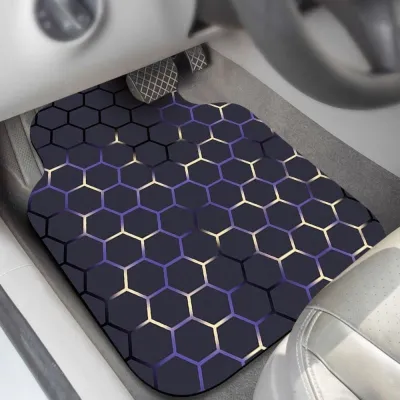
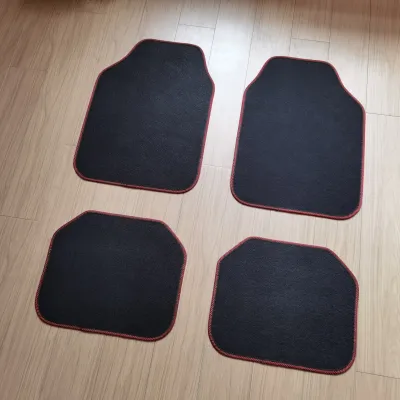
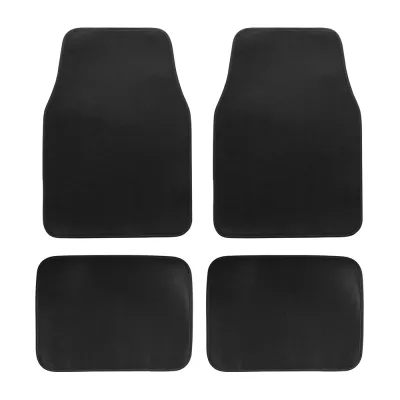
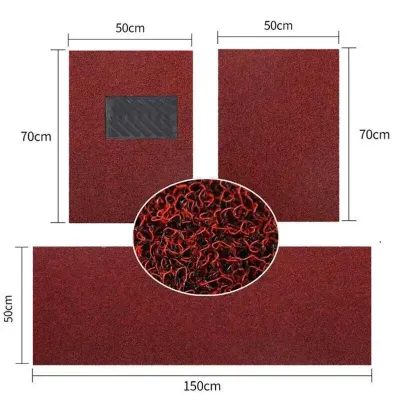
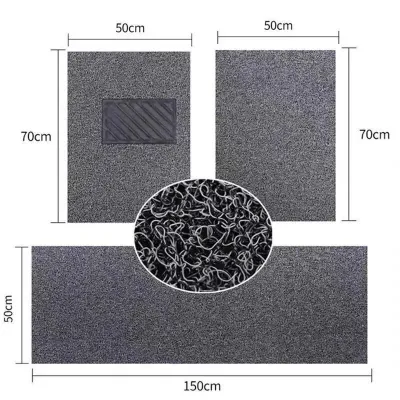
Prices are valid at publication and may change. Please refer to the product page for the latest price.

Material Flexibility and Memory The ability of a mat to conform to the complex curves of a footwell depends on its material composition. Heavy-duty rubber and thermoplastic elastomers (TPE) are common choices. High-quality TPE offers excellent “memory,” meaning it can bend to follow the slope of the firewall and transmission tunnel without curling back or lifting at the edges. Stiffer plastics may resist bending, resulting in raised edges that catch on shoes or block passenger feet. When evaluating mats, look for materials that remain pliable in both hot and cool cabin temperatures, as extreme heat can cause thin materials to warp, while cold can make rigid materials brittle.
Trimmable Edge Design Because a universal mat must accommodate everything from compact hatchbacks to large sport utility vehicles, manufacturers include molded trim lines. These lines act as guides, allowing you to cut away excess material using heavy-duty shears without compromising the structural integrity of the mat. A well-designed trimmable mat features distinct channels that prevent water from running off the cut edges. If a mat lacks these defined channels, trimming it to fit a narrow footwell may flatten the protective lip, allowing liquid spills to drain directly onto your vehicle’s carpet.
Lip Height and Containment Volume The primary purpose of a full-surround mat is to contain liquid, mud, and debris. The height of the outer lip determines how much liquid the mat can hold before it overflows onto the surrounding carpet. However, a taller lip requires more space. In vehicles with low-mounted seat rails or tight clearances around the center console, an excessively tall, rigid lip may buckle or fold inward. You must measure the vertical clearance along the sides of your footwells to ensure the mat’s raised edges can stand upright without being crushed by seat adjustments.
Anti-Slip Backing and Retention Compatibility A floor mat that shifts during transit is a severe safety hazard. Universal mats employ various methods to stay in place, such as molded nibs on the underside that grip the vehicle’s carpet fibers. Additionally, you must check if the universal mat features pre-marked areas or built-in grommets that align with your vehicle’s factory floor hooks or retention clips. If your vehicle uses a specific twist-lock or snap-in retention system, verify whether the mat’s design allows you to install compatible retention fasteners safely.
How to Verify Edge-to-Edge Coverage and Pedal Clearance
Safety must be your primary concern when installing any aftermarket interior accessory. Because universal mats are not engineered for a single specific model, you must perform rigorous checks to ensure they do not interfere with vehicle operation.
Checking Pedal Travel and Safety Boundaries The driver’s side mat requires the most critical inspection. Before driving, you must verify that the accelerator, brake, and clutch pedals can be fully depressed and released without catching on the edge of the mat. A mat that is too long can bunch up beneath the pedals, preventing full braking force or causing the accelerator to stick. Always consult your vehicle’s original manual regarding floor mat installation and safety boundaries. Never stack a new universal mat on top of existing carpet mats; always remove the factory mats first to ensure the new mat sits directly on the vehicle’s floor pan and can be secured properly.
Identifying Floor Obstructions Vehicle floors are rarely flat. They contain structural humps, seat mounting brackets, fuel door release levers, and heating vents. When laying out a universal mat, observe how it drapes over these elements. If the mat rides up over a seat rail, it can prevent the seat from sliding forward or backward, potentially damaging the seat motor or the mat itself. If the mat covers a floor-mounted fuel door release or trunk lever, you must determine if the mat can be trimmed around the lever without losing its protective shape.
Trimming and Structural Integrity When trimming is required to clear obstacles, proceed slowly and cut in small increments. Use sharp utility shears to ensure clean edges. Avoid cutting through the main structural ribs of the mat, as these ribs provide the stiffness needed to keep the edges upright. If you must trim away a significant portion of the outer protective lip to clear a pedal assembly or a footrest, keep in mind that this area will no longer contain liquids. If a safe fit requires removing essential protective barriers, the universal mat may not be suitable for your vehicle.
Recognizing Fitment Limits There are times when a universal mat simply cannot be made to fit safely. If the mat continues to slide forward even after securing it, or if the material is so stiff that it arches up under the pedals, stop the installation immediately. Do not attempt to modify the vehicle’s pedals or floor structure to accommodate a universal mat. In such cases, you should seek custom-fit mats designed specifically for your vehicle’s exact year, make, and model, or consult a professional installer to explore compatible options.
Decision Framework: Choosing the Right Universal Mat Design
Selecting the right universal mat involves balancing your vehicle’s layout with your daily usage patterns. Use the following framework to guide your choice.
Heavy-Duty Deep-Tray Designs These mats feature thick walls and deep channels designed to hold significant amounts of water, mud, or sand. They are highly suitable for drivers who frequently transport outdoor gear, pets, or work equipment. This is particularly relevant in tropical climates like Singapore, where sudden downpours mean passengers frequently enter the vehicle with wet shoes and umbrellas, making effective liquid containment a priority.
- Best suited for: Vehicles with relatively flat, spacious floor pans, such as larger sedans, SUVs, and pickup trucks.
- Limitations: Their rigid construction makes them difficult to bend around tight corners or high transmission tunnels. If your vehicle has a cramped footwell, a deep-tray design may sit unevenly, creating trip hazards or blocking pedal movement.
Flexible Multi-Piece Trimmable Designs These sets often consist of multiple smaller pieces or feature highly flexible materials with numerous trim lines. They allow you to customize the shape for complex floor layouts.
- Best suited for: Compact cars, hybrid vehicles with battery humps under the seats, or vehicles with prominent center consoles.
- Limitations: Because they are thinner and more flexible, they generally have lower containment lips. They offer excellent surface protection against dirt and light moisture but may overflow if subjected to large liquid spills.
Evaluating Vehicle-Specific Obstacles Before purchasing, inspect your vehicle’s floor for specific features:
- Under-Seat Vents: Many modern vehicles have climate control vents located directly under the front seats. A thick, high-sided universal mat can block these vents, restricting airflow to the rear passengers and potentially causing the climate control system to work harder.
- Fixed Floor Tunnels: Rear passenger footwells often feature a raised center tunnel. Some universal rear mats are one-piece designs that drape over this tunnel. If the tunnel is exceptionally high or narrow, a universal one-piece mat may bunch up, creating an unstable surface.
If your vehicle features highly irregular floor geometry, specialized floor-mounted pedals (such as organ-style accelerator pedals), or unique safety brackets, universal mats may not provide a safe or effective fit. In these scenarios, investing in custom-molded mats is the recommended path to ensure both safety and complete coverage.
Installation and Maintenance Checks for Long-Term Protection
Proper installation and ongoing maintenance are essential to maximize the lifespan of your mats and protect your vehicle’s original carpeting.
Pre-Installation Preparation Before placing your new universal mats into the vehicle, remove all existing floor mats. Vacuum the carpet thoroughly to remove loose dirt, sand, and debris, which can act as abrasives under the new mat and wear down the carpet fibers. If the carpet is damp or has existing spills, clean and dry it completely. Installing a non-porous rubber or TPE mat over wet carpet traps moisture, leading to mold, mildew, and unpleasant odors that are difficult to eradicate.
Securing the Mats Position the mats so they lie completely flat against the floor pan. If your vehicle has factory retention posts, align the mat’s retention points and secure them firmly. If the universal mat does not have matching holes, use the manufacturer-approved aftermarket fasteners or clips provided with the mat to anchor it to the carpet. Double-check that the driver’s mat cannot slide forward or rotate under foot pressure.
Routine Cleaning and Care To clean your mats, remove them from the vehicle and shake off loose dirt. Refer to the manufacturer’s care label for specific cleaning instructions. For most rubber and TPE mats, washing with mild soap and water is sufficient. Avoid using harsh household chemicals, bleach, or silicone-based tire shines, as these can degrade the material, cause premature cracking, and leave the surface dangerously slick. Allow the mats to dry completely in a well-ventilated area away from direct, intense sunlight before reinstalling them.
Frequently Asked Questions (FAQ)
Do universal full-surround mats block under-seat air conditioning vents?
Yes, universal mats can block under-seat air conditioning vents if they are not properly positioned or trimmed. Many modern vehicles feature climate control ducts on the floor beneath the front seats to distribute air to the rear cabin. Before installing rear universal mats, slide the front seats fully forward to locate these vents. If the mat covers the vent opening, use the molded trim lines to cut away the overlapping material, ensuring a clear path for airflow while maintaining coverage over the rest of the footwell.
Can I use one-piece universal mats in a vehicle with a fixed center console?
One-piece universal rear mats, which are designed to drape over the center tunnel, generally cannot lay flat if your vehicle has a fixed center console that extends all the way to the rear seat base. Attempting to force a one-piece mat into this space will cause the material to buckle, creating a safety hazard and leaving gaps where dirt can accumulate. For vehicles with continuous center consoles, you should use a multi-piece mat set that features separate left and right mats, or trim a one-piece mat along its designated center lines to split it into individual pieces.
Community discussion
Share your experience or ask a question. Comments are reviewed before publication.