
Finding the most precise full-surround floor mat for your Hyundai Avante requires looking beyond generic brand promises and focusing on generation-specific molding. Because the interior floor pan of the Avante has undergone radical structural redesigns across its model years, a generic “custom-fit” label is rarely sufficient to guarantee complete coverage or, more importantly, pedal safety. Achieving a seamless fit that protects your car’s carpet from dirt, spills, and daily wear in Singapore’s humid climate depends on verifying the exact physical dimensions of your vehicle’s cabin floor.
To secure a perfect fit, you must match the mat to your specific Avante generation, such as the sixth-generation AD model or the seventh-generation CN7 model. A truly precise full-surround mat acts as a molded second skin, locking into place using factory retention hooks and matching every contour of the footwell. This guide outlines the critical evaluation criteria, high-risk coverage zones, and safety checks necessary to assess any aftermarket brand’s fitment claims before you make a purchase.
What Defines a Precise Fit for the Hyundai Avante
A precise fit for the Hyundai Avante is defined by how closely the floor mat conforms to the complex three-dimensional geometry of the footwells. Unlike flat, universal rubber mats that leave large areas of the original carpet exposed, high-coverage full-surround mats feature raised vertical walls designed to line the entire footwell. This includes the vertical sides of the center console, the door sill edges, and the steep incline of the driver’s dead pedal. The mat must lay completely flat against these surfaces without buckling, warping, or creating air pockets that can catch on your footwear.
Products mentioned in this guide
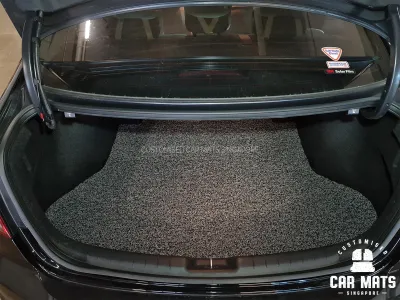
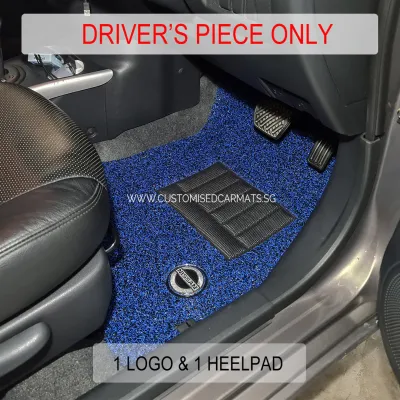
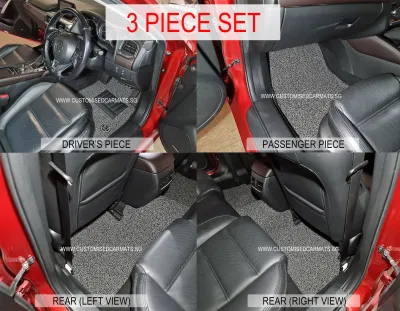
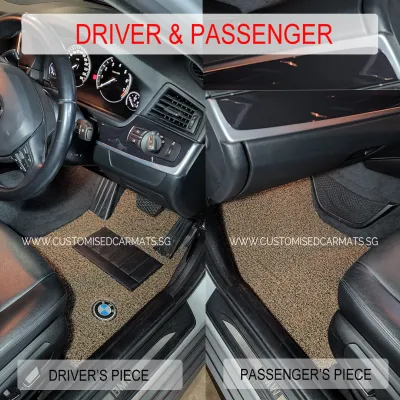
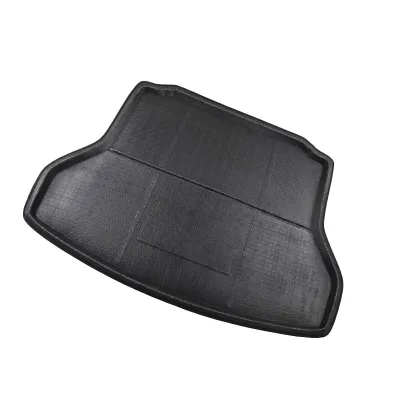
Prices are valid at publication and may change. Please refer to the product page for the latest price.
The fundamental difference lies between flexible, semi-custom mats and rigid, 3D-scanned molded options. Semi-custom mats are often made of highly pliable materials that rely on gravity and friction to stay in place, which frequently leads to shifting and edge curling over time. In contrast, premium full-surround mats utilize laser-scanning technology to map the exact floor pan of the Avante. These mats are constructed with a multi-layer semi-rigid core that retains its molded shape, ensuring the vertical walls remain upright and flush against the interior trim panels.
Understanding your Hyundai Avante’s generation code is the single most critical step in verifying compatibility. For instance, the Avante AD (produced from 2015 to 2020) and the Avante CN7 (introduced in 2020) have completely different floor pan layouts, seat rail configurations, and pedal designs. Attempting to install an AD-specific mat into a CN7, or vice versa, will inevitably result in severe fitment failures, such as blocked floor vents, loose edges, and dangerous interference with the driver’s pedals. Always confirm that the product listing explicitly references your vehicle’s specific model year and generation code rather than a broad “Hyundai Avante” label.
Critical Coverage Zones to Inspect Before Buying
When evaluating a full-surround floor mat, the driver-side footwell demands the most rigorous inspection. The alignment of the heel pad—the reinforced section where your feet rest while operating the pedals—must sit naturally under your heels without causing a lip that could catch your shoe. Furthermore, the clearance boundary around the pedals is non-negotiable. The seventh-generation Avante CN7 features a floor-mounted, organ-type accelerator pedal, which requires a highly specific cutout at its base to allow the pedal to pivot freely. A poorly designed mat that covers this base or bunches up behind it can cause the accelerator to stick, presenting an extreme safety hazard.

In the rear passenger cabin, the central floor hump is a primary failure point for low-quality mats. A precise full-surround mat must feature a perfectly contoured bridge that hugs this hump tightly without lifting or sliding when passengers move across the cabin. If the bridge is too loose, it creates a tripping hazard and allows dirt to accumulate underneath. Additionally, you must check the clearance around the rear floor air vents located beneath the front seats. If the mat’s vertical walls are too high or poorly angled, they can block these vents, restricting airflow and causing the air conditioning system to work harder to cool the cabin.
Another critical zone is the integration with the front seat rails and adjustment mechanisms. The edges of the floor mats must slide neatly underneath or run parallel to the metal seat tracks without obstructing them. If you have power-adjustable seats, a mat that is too thick or has flared edges can jam the electric motors or cause the seat to halt mid-travel. For manually adjustable seats, ensure the adjustment bar at the front of the seat can be pulled upward fully without pinching the mat’s material.
How to Verify Brand Fitment Claims Online
When shopping on online marketplaces or local automotive accessory platforms, verifying “custom-fit” claims requires a systematic approach. Start by examining the product listings for highly specific SKU details. A reputable manufacturer will list separate product codes for the Avante AD and CN7, often specifying the exact trim levels if they affect the floor layout. Avoid listings that use generic, catch-all phrases like “fits most Hyundai models” or “trim-to-fit DIY design,” as these are universal mats that will not provide the seamless, high-wall coverage of a true full-surround system.
User reviews and community forums are invaluable resources for identifying real-world fitment issues. Look specifically for feedback from other Hyundai Avante owners, paying close attention to mentions of edge curling, sliding, or gaps near the dead pedal. If multiple reviews highlight that the edges begin to sag after a few months of exposure to heat and humidity, it indicates that the mat’s core material lacks the structural integrity required to maintain its shape. Photos uploaded by actual buyers can also give you a realistic view of how well the mat aligns with the Avante’s plastic trim panels.
Before finalizing your purchase, contact the seller to request template photos or confirmation of 3D laser-scanning data for your specific model year. A professional seller should be able to provide images of the mats installed in an actual Avante cabin. Additionally, always review the seller’s return and exchange policy. Because minor manufacturing variances can occur, ensure you have the right to return the mats for a full refund or exchange if you discover any structural interference or poor fitment during the initial test fitting.
Decision Framework: Choosing the Right Mat Profile
Choosing the right material profile for your full-surround mats depends on your daily driving habits, aesthetic preferences, and maintenance routine. If you prioritize a premium, executive cabin feel and primarily drive in urban environments, high-coverage polyurethane (PU) leather mats are an excellent choice. These mats feature decorative stitching that complements the Avante’s modern interior, provide a soft cushioning underfoot, and can be easily wiped clean with a damp microfiber cloth. However, they require careful maintenance to prevent moisture from seeping into the stitched seams during heavy downpours.
For drivers who frequently deal with wet weather, outdoor activities, or muddy footwear, heavy-duty thermoplastic elastomer (TPE) or deep-dish rubber mats offer superior protection. TPE is a highly durable, odorless material that combines the flexibility of rubber with the rigidity of plastic. These mats feature deep channels and raised outer lips that trap water, mud, and spilled liquids, preventing them from overflowing onto your car’s carpet. They are exceptionally easy to clean, as they can be removed from the vehicle and hosed down without risk of water absorption or mold growth.
Regardless of the material you choose, you must verify that the mat’s edge thickness does not interfere with the vehicle’s door sills or seat adjustments. Some multi-layer luxury mats can be quite thick, which may cause them to rub against the bottom of the doors when closed or pinch against the center console trim. Opt for a profile that balances robust protection with a slim, high-density construction to ensure all cabin components operate smoothly.
Safety Boundaries and Installation Checks
Before driving with newly installed full-surround floor mats, you must perform a series of rigorous safety checks to ensure they do not compromise vehicle control. With the engine turned off, fully depress both the accelerator and brake pedals to their absolute limits. Verify that there is a clear gap between the pedal arms and the edges of the mat at all points of travel. The pedals must return to their resting positions instantly and smoothly without catching, rubbing, or clicking against the mat’s surface.
Securing the mats firmly to the floor pan is critical to prevent them from sliding forward during sudden braking. Always utilize the factory retention clips located on the Avante’s floor carpet, ensuring the mat’s grommets click securely into place. If the aftermarket mats do not align perfectly with these factory clips, do not attempt to force them or leave them unanchored. Many high-quality full-surround mats also feature an anti-slip nibbed backing or integrated hook-and-loop (Velcro) strips along the vertical walls to grip the side carpets and prevent any lateral movement.
If you observe any persistent curling, lifting, or structural warping that cannot be resolved during installation, stop using the mats immediately. A mat that lifts near the driver’s feet can easily trap a pedal or catch your shoe during an emergency maneuver. In such cases, it is best to return the product and consult the manufacturer or a qualified automotive accessory professional to find a compatible, safety-compliant alternative.
Frequently Asked Questions (FAQ)
Do I need to remove the factory carpet mats before installing full-surround ones?
Yes, you must always remove the original factory carpet mats before installing full-surround floor mats. Stacking multiple layers of mats is a severe safety hazard, as it raises the floor height and significantly increases the risk of the accelerator or brake pedal getting trapped. Stacking also prevents the full-surround mat’s retention grommets from locking onto the factory floor clips, allowing the entire assembly to slide forward while driving. Before laying down your new mats, thoroughly vacuum the original floor carpet and ensure it is completely dry to prevent moisture and mold from becoming trapped underneath.
How do I clean high-coverage mats without damaging the Avante's interior?
To clean your high-coverage mats safely, always remove them from the vehicle first to avoid spilling dirty water or cleaning agents onto the Avante’s interior plastics and electronics. Gently release the retention clips and lift the mats straight up, taking care not to scratch the plastic door sills or seat tracks with the rigid edges of the mats. For PU leather mats, wipe them down with a damp cloth and a mild, pH-neutral interior cleaner; avoid harsh chemical solvents or silicone-based dressings, which can make the surface dangerously slippery. For TPE or rubber mats, hose them down outside the car, scrub with a soft brush and mild soap, and allow them to dry completely in a shaded area before reinstalling them.

Community discussion
Share your experience or ask a question. Comments are reviewed before publication.