
Direct Answer: Choosing the Right Full-Surround Mat Type for Your Audi A3
Determining which full-surround floor mat brand offers the best fit and coverage for your Audi A3 depends on your specific material preferences, driving conditions, and vehicle generation. No single brand is universally superior because different manufacturing technologies excel in distinct areas.
To make the right choice, consider this quick decision framework:
- Choose 3D-scanned TPE (Thermoplastic Elastomer) brands if your priority is absolute precision, lightweight handling, effortless cleaning, and maximum driving safety. These mats are laser-measured to match the exact contours of the footwell without warping.
- Choose multi-layer Leather or XPE/EVA foam brands if you want a luxury aesthetic with maximum vertical coverage. These mats extend higher up the transmission tunnel and door sills, though they require more careful maintenance in humid environments.
- Choose heavy-duty thermoplastic or rigid rubber tray brands if you frequently deal with wet weather, mud, or heavy spills. They offer deep liquid containment and rigid edge retention, though they are bulkier and have slightly lower side-wall coverage.
Before comparing specific brand names, the most critical step is verifying your vehicle’s exact model year (such as the 8V versus the newer 8Y generation) and ensuring full compatibility with Right-Hand Drive (RHD) configurations. Installing an incorrect variant can compromise safety and ruin the interior aesthetics of your Audi.
Products mentioned in this guide
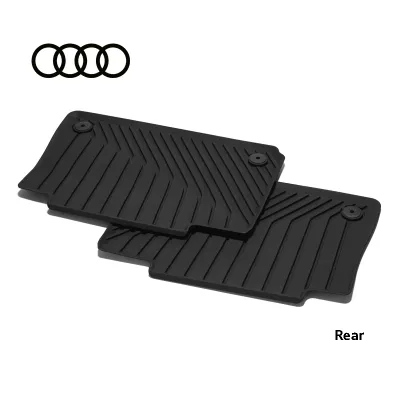
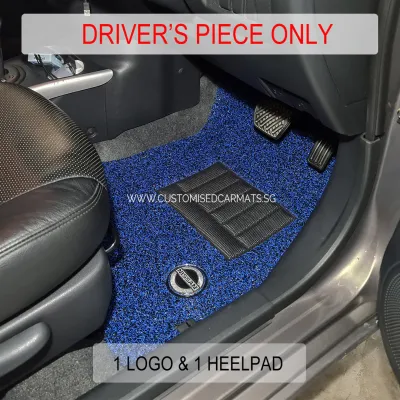
Prices are valid at publication and may change. Please refer to the product page for the latest price.
Key Dimensions to Evaluate Fit and Coverage Claims
When shopping for custom floor mats, many brands claim to offer a “perfect, custom fit” for the Audi A3. To look past marketing claims and evaluate these products objectively, you must understand the technical design elements that determine true edge-to-edge coverage and long-term cabin safety.

3D Laser Scanning vs. Generic Molding
Premium floor mat brands utilize advanced 3D laser scanners to map the entire floor pan of the Audi A3 down to the millimeter. This digital mapping captures every unique contour, including the angle of the dead pedal, the slope of the transmission tunnel, and the precise location of the seat rail brackets. In contrast, brands that rely on generic or semi-custom flat templates often produce mats that bunch up, slide, or leave large gaps of exposed carpet. Laser-scanned mats lay completely flat, ensuring that dirt and liquids cannot slip underneath the edges.
Edge Height and Contour Hugging
A true full-surround mat must feature raised vertical edges that follow the exact perimeter of the A3’s footwell. The mat should hug the plastic door sills and the side of the center console tightly without gaping or buckling. High-quality materials maintain their structural rigidity over time, keeping these vertical edges flush against the interior trim. If the edges warp or sag, they not only look untidy but also allow debris to accumulate on the original factory carpet, defeating the purpose of a full-surround design.
Pedal Clearance and Safety Margins
The driver’s side footwell is a critical safety zone where design flaws can lead to severe consequences. The floor mat must provide ample, unobstructed clearance around the accelerator, brake, and clutch pedals (if applicable). The heel pad area—where your feet rest while driving—should be reinforced for durability but must not add excessive thickness that interferes with pedal travel. A well-designed mat ensures that even when the accelerator is fully depressed, the pedal arm does not catch or rub against the edge of the mat.
Anchor Point Compatibility
Audi vehicles are equipped with factory floor mat retention pegs designed to lock the mats securely in place. Any reputable custom mat brand must feature built-in, factory-compatible anchor points that snap directly onto these pegs. These locking caps prevent the driver’s mat from sliding forward under foot pressure during daily driving or sudden braking. Avoid any brand that relies on universal clips or lacks dedicated anchor points that match the Audi OEM specifications.
Comparing Popular Full-Surround Mat Materials and Constructions
Different manufacturing materials behave uniquely under daily wear, temperature fluctuations, and moisture exposure. Understanding the trade-offs of each material class will help you choose a product that suits your lifestyle and maintains its fit over years of use.
3D-Scanned TPE (Thermoplastic Elastomer) Brands
Thermoplastic Elastomer (TPE) is a modern, rubber-like material that offers exceptional durability and structural memory. TPE mats are highly resistant to extreme temperatures, making them highly suitable for tropical climates like Singapore’s. Even when the vehicle is parked in direct sunlight with cabin temperatures soaring, high-quality TPE mats will not warp, melt, or emit unpleasant chemical odors or volatile organic compounds (VOCs).
These mats are lightweight, making them incredibly easy to remove, hose down, and dry within minutes. Because TPE is relatively rigid, it holds its molded shape perfectly over its lifespan. However, the trade-off is that TPE side walls generally do not extend as high up the center console or door sills as soft, multi-layer leather options. They focus on protecting the floor pan and the immediate lower vertical walls, providing a clean, modern, and highly functional look.
Leather and XPE/EVA Foam Brands
Luxury-style full-surround mats typically feature a multi-layer construction. This usually consists of a synthetic leather (PU) top layer for a premium appearance, a cushioning XPE or EVA foam middle layer for underfoot comfort and sound insulation, and an anti-slip bottom mesh. These brands offer the highest visual coverage available, wrapping high up the transmission tunnel, covering the dead pedal completely, and extending deep under the front seats.
While they provide a highly tailored, luxurious appearance that complements the Audi A3’s premium cabin, they present specific challenges in hot and humid climates. High humidity can cause moisture to become trapped within the foam layers if the mats are not maintained properly. Over time, the heat can degrade the adhesives holding the layers together, leading to delamination, creasing, or structural sagging. If the vertical side walls begin to sag, they can lean inward and potentially interfere with the driver’s feet or the pedal assembly, requiring regular inspection and adjustment.
Heavy-Duty Thermoplastic and Rubber Brands
Heavy-duty tray-style mats are engineered for maximum utility and containment. Constructed from thick, dense rubber or heavy thermoplastics, these mats feature deep channels, raised ridges, and high outer walls designed to trap large volumes of water, mud, sand, or spilled drinks. They are virtually indestructible and highly resistant to chemical wear, making them excellent for drivers who frequently engage in outdoor activities.
However, these rugged designs can sometimes look out of place in a sophisticated, compact luxury vehicle like the Audi A3. The rigid, heavy edges must be carefully checked during installation to ensure they do not press too tightly against or scratch the delicate plastic interior trim panels. Additionally, their heavy weight makes them more cumbersome to remove for cleaning, and they generally offer lower side-wall coverage than leather alternatives, leaving the upper carpeted areas of the footwell exposed to dirt.
Crucial Fit Variables: Generations, Body Styles, and Driving Side
The “Audi A3” nameplate spans several decades and multiple body configurations. Assuming that a floor mat labeled for an Audi A3 will fit any model year is a common mistake that can result in a useless purchase and a dangerous driving environment.
8V (2013–2020) vs. 8Y (2021–Present)
The floor pan layout, seat rail positions, and center console contours differ significantly between the third-generation (8V) and fourth-generation (8Y) Audi A3. The newer 8Y platform features a redesigned cockpit with different footwell angles and electronic throttle pedal placements. A floor mat designed for an 8V chassis will not align correctly with the anchor points or the floor contours of an 8Y, leading to severe buckling and sliding. Always verify your vehicle’s specific chassis code before ordering.
Sedan vs. Sportback (Hatchback)
While the front driver and passenger footwells are typically identical between the sedan and Sportback (hatchback) body styles of the same generation, the rear passenger floor pans can vary. The slope under the rear seats and the spacing near the door sills may differ slightly. Furthermore, if you are purchasing a complete interior set that includes a trunk or boot mat, the cargo floor dimensions are entirely different between the Sedan and the Sportback. Ensure the product listing explicitly matches your specific body style.
Right-Hand Drive (RHD) vs. Left-Hand Drive (LHD)
Because Singapore is a Right-Hand Drive (RHD) market, you must exercise extreme caution when purchasing floor mats online. Many international manufacturers and e-commerce listings default to Left-Hand Drive (LHD) configurations. An LHD driver’s mat cannot be used in an RHD Audi A3. The dead pedal cutout will be on the wrong side, the accelerator pedal clearance will be completely incorrect, and the factory anchor points will not align. Forcing an LHD mat into an RHD footwell is highly dangerous as it will warp and likely jam the pedals. Always explicitly confirm RHD compatibility with the seller prior to purchase.
Post-Installation Safety and Fit Verification Checklist
Your safety on the road depends on the correct installation of your floor mats. Before driving with newly installed full-surround mats, perform this comprehensive safety and fitment check. Always refer to your Audi owner’s manual for specific guidelines regarding interior accessories and pedal clearances.
- Enforce the Pre-Installation Rule: Completely remove all existing carpet or rubber floor mats from your vehicle before installing the new full-surround mats. Never stack mats. Stacking prevents the bottom mat's anchor points from engaging, raises the floor profile, and significantly increases the risk of the mat shifting and jamming the pedals.
- Perform the Pedal Travel Test: With the engine turned off and the vehicle safely parked, sit in the driver's seat. Depress the accelerator, brake, and clutch pedals (if equipped) slowly and completely to the floorboards. Visually and physically verify that there is absolute clearance between the pedal arms, pads, and any part of the floor mat. The pedals must travel smoothly through their entire range of motion without rubbing against the mat's heel pad or raised edges.
- Check Seat Rail and Track Clearance: Slide both front seats fully forward and backward along their tracks. Verify that the rear edges of the front mats do not bunch up, block the seat rails, or interfere with manual or electric seat adjusters. Bunching can damage the mat's backing and force the mat to shift forward over time.
- Verify Anti-Slip Stability: Attempt to slide the driver's mat forward, backward, and side-to-side using your feet. The mat must remain firmly locked in place. If the mat moves or slides away from its locked position, do not drive the vehicle. Recheck the installation, ensure the factory clips are fully engaged, or consult the manufacturer's installation guide. If the fitment issue cannot be resolved, seek assistance from a qualified automotive accessory professional. Do not rely on temporary or improvised fixes.
Frequently Asked Questions (FAQ)
Do I need to remove the original Audi A3 carpet mats before installing full-surround mats?
Yes, you must remove the original factory carpet mats entirely before installing full-surround mats. Stacking mats creates an unstable, elevated surface that can easily slide forward and interfere with pedal operation. Full-surround mats are engineered to sit directly on the vehicle’s bare floor carpet, utilizing the built-in retention clips for secure anchoring.
Will full-surround floor mats block the under-seat air vents in the Audi A3?
Many Audi A3 models are equipped with rear passenger air conditioning vents located directly under the front seats. Poorly designed or generic full-surround mats can block these vents, restricting airflow and reducing cabin cooling efficiency—a major drawback in Singapore’s hot climate. Before purchasing, verify that the rear mats feature precise cutouts for these vents, and check after installation that the material does not sag or obstruct the airflow.
How do I clean and maintain leather full-surround mats in a humid climate?
To maintain leather or synthetic leather full-surround mats in a humid environment, regularly wipe the surface with a damp microfiber cloth and a mild, non-abrasive interior cleaner. Avoid using harsh chemicals, solvents, or excessive amounts of water, which can seep into the seams and degrade the inner foam core or adhesive backing. Ensure the mats are completely air-dried in a shaded area before reinstalling them to prevent mold, mildew, and unpleasant odors from developing inside your cabin.
Community discussion
Share your experience or ask a question. Comments are reviewed before publication.