
Quick Answer: Evaluating GLB Full-Surround Mats
Finding the right full-surround car mat for your Mercedes-Benz GLB depends on balancing material durability with precise edge-to-edge coverage. There is no single universal winner for every driver, as the ideal choice hinges on your specific cabin configuration and daily usage patterns.
If you prioritize rugged, weather-resistant protection that can handle wet umbrellas and dirt, a heavy-duty thermoplastic elastomer (TPE) mat is often the most practical choice. Conversely, if you want to match the premium aesthetic of the GLB’s cabin, multi-layer synthetic leather options offer a more integrated, luxurious appearance.
Before comparing brands, you must verify your vehicle’s seating layout. The GLB is unique in its class for offering both five-seat and seven-seat configurations. A mat set designed for the five-seat model will not fit the seven-seat variant properly due to differences in the second-row seat rails and the presence of third-row footwells.
Products mentioned in this guide
![[PRE-ORDER] ENZO Car Mat - Mercedes-Benz GLB-Class 1st Gen Model X247 Petrol & Mild-Hybrid (2020-2026) [Ship Out Within 14 days)](https://img.lazcdn.com/g/p/cc9d40c5171fe6c4d2ca0d8b969e5839.jpg_400x400q80.jpg_.webp)
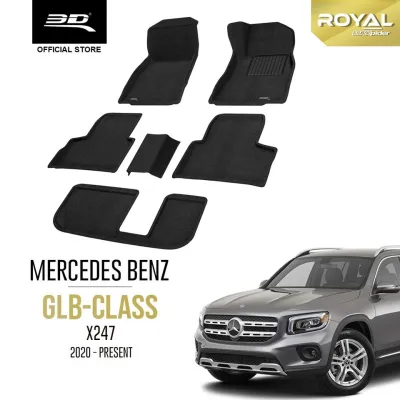
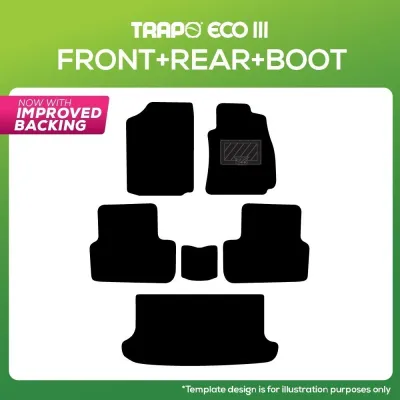
![[TOP CAR MAT FOR MERCEDES BENZ] Car Models/Anti-Bacterial / Hygiene / Odourless / Premium / Waterproof [BLACK BASE BLACK LINING]](https://img.lazcdn.com/g/p/d82913b68b72258396483469981e3fb9.jpg_400x400q80.jpg_.webp)
Prices are valid at publication and may change. Please refer to the product page for the latest price.
Additionally, consider the physical trade-offs of thicker materials. While multi-layer composite mats provide excellent sound dampening and a cushioned feel underfoot, their added bulk can sometimes obstruct the smooth sliding of the GLB’s adjustable rear seats. Precise molding is essential to prevent these clearance issues.
Defining Edge-to-Edge Coverage for the GLB Interior
To evaluate different brands, it is important to understand what true full-surround coverage entails. Standard flat mats only cover the flat footwell areas, leaving the vertical carpeted walls exposed to dirt, moisture, and friction.

3D molded trays offer a step up by featuring raised edges, typically one to two inches high. These are excellent for containing liquid spills but still leave the upper footwell walls and the sides of the center console unprotected.
True full-surround mats, often referred to as high-wall or 5D/6D mats, extend much higher. They are designed to cover almost all visible carpeted surfaces in the footwell, climbing up the sides of the transmission tunnel, the footrests, and the areas beneath the seats.
When inspecting a mat’s coverage for the GLB, pay close attention to several critical zones. The driver’s side dead pedal must be fully covered without the mat slipping downward. The vertical sides of the center console should be shielded against scuffs from passenger footwear.
In the rear passenger compartment, the middle floor hump is a high-wear area. A quality full-surround mat should feature a continuous bridge over this hump or a highly secure interlocking system that prevents the pieces from separating.
Always check whether a brand uses vehicle-specific 3D laser scanning to design their mats. Generic “universal-fit” high-wall mats often rely on trim-to-fit lines or flexible materials that inevitably leave gaps, sag over time, or bunch up in the tight corners of the GLB’s footwells.
Assessing Material Quality and Durability Standards
Because performance claims vary widely among manufacturers, understanding the base materials is the most reliable way to assess durability. The most common materials used in premium car mats are TPE, XPE, PU leather, and multi-layer composites.
- Thermoplastic Elastomer (TPE): This material is highly durable, flexible, and resistant to extreme temperatures. TPE mats are typically injection-molded or thermoformed, resulting in a rigid, tray-like structure that retains its shape over years of use. They are completely waterproof and exceptionally easy to hose down.
- Cross-Linked Polyethylene (XPE): Often used as an inner foam layer in multi-layer mats, XPE provides excellent cushioning and thermal insulation. It is lightweight and semi-rigid, helping the mat maintain its 3D structure without adding excessive weight to the vehicle.
- Polyurethane (PU) Leather: This synthetic leather is favored for its premium appearance, mimicking the GLB's luxury upholstery. High-quality PU leather is scratch-resistant and water-resistant, though it requires more careful cleaning than solid plastic mats to prevent the stitching from degrading.
- Multi-Layer Composites: These mats combine a decorative top layer (such as PU leather or a woven textile) with a cushioned XPE core and an anti-slip bottom layer. This structure offers superior sound dampening and comfort but can be bulkier and more challenging to dry if water penetrates the seams.
When evaluating these materials in person or reviewing specifications, use this inspection checklist:
- Odor levels: High-quality polymers should be virtually odorless. Avoid mats that emit a strong chemical or rubber smell, as this indicates the use of low-grade plasticizers that will off-gas intensely in a hot car parked under the sun.
- Surface texture: Look for deep channels or textured patterns on the surface. These designs channel water away from your shoes and provide essential grip, preventing your feet from slipping when entering the vehicle in wet weather.
- Core density: Press firmly on the mat. A quality composite mat should feel firm and resilient, springing back immediately. If the inner foam feels hollow or collapses easily, the mat is likely to crease and wear through quickly under your heels.
Do not assume that a material’s name alone guarantees absolute performance. Always check the manufacturer’s specific care instructions and material safety data sheets to verify heat resistance and chemical compatibility.
Fitment Verification: Ensuring Pedal and Seat Clearance
Safety must be your primary concern when installing high-coverage mats in any vehicle. In the Mercedes-Benz GLB, the driver’s footwell is relatively compact, making precise fitment critical to safe vehicle operation.
The most vital safety check is pedal clearance. The driver’s side mat must not interfere with the accelerator, brake, or emergency pedal paths. When the accelerator is pressed fully to the floor, there must be a clear gap between the pedal arm and the edge of the mat.
Thick, multi-layer mats can sometimes catch the edge of a pedal as it returns to its resting position. If a mat is too thick or sags near the pedals, it can cause the throttle to stick or prevent you from applying full braking force in an emergency.
Another common issue with full-surround mats in the GLB is interference with the seat adjustment tracks. The GLB features low-profile seat rails, especially on models equipped with power-adjustable front seats. If the mat’s side walls are too thick or poorly molded, the seat brackets can catch on the material, stalling the electric motors or damaging the mat.
For the rear seats, the GLB’s sliding mechanism requires special consideration. If you frequently slide the second-row seats forward to access the cargo area or the optional third row, the mat must not block the tracks or bunch up behind the seats.
Finally, verify the retention system. The GLB floor is equipped with factory mounting pegs. Your chosen mats must feature matching retention clips that snap securely onto these pegs. Relying solely on an anti-slip backing is insufficient for a high-wall driver’s mat, as it can still slide forward over time.
Decision Framework: Matching Mat Features to Your Driving Needs
To simplify your decision, consider how you use your Mercedes-Benz GLB on a daily basis. Different lifestyles demand different material properties and coverage levels.
- The Active Lifestyle Choice: If your routine involves outdoor sports, beach trips, or transporting pets, high-wall TPE or XPE mats are highly recommended. Their impervious surface makes it easy to wash away sand, mud, and spilled liquids. They are also highly resistant to scratching from pet claws and heavy gear.
- The Luxury and Comfort Choice: If you primarily use your GLB for daily commuting, business, or family trips where comfort is paramount, multi-layer PU leather or composite mats are an excellent fit. They complement the Mercedes-Benz interior design language, dampen road noise, and provide a softer feel underfoot for passengers.
- The Seating Configuration Factor: Your choice is heavily dictated by whether you have the 5-seat or 7-seat GLB.
- 5-Seat GLB: You have more flexibility. You can choose a standard two-row set and a matching trunk mat. The second-row mat is typically a single, continuous piece that covers the footwells and the center hump.
- 7-Seat GLB: You must look for specialized, multi-piece designs. The second-row mats must accommodate the sliding tracks for third-row access, and the third-row mats must be thin enough to allow the seats to fold completely flat into the floor when not in use.
Installation Checks and Maintenance Requirements
Once you have purchased your mats, proper installation and ongoing maintenance are essential to preserve both the mats and your GLB’s interior.
Begin by removing all existing factory carpet mats; never layer full-surround mats on top of other mats, as this severely compromises pedal clearance and anchor security. Align the new mats with the floor contours and press the locking clips firmly onto the factory pegs until you hear a distinct click.
Perform a physical test by manually sliding the front seats through their entire range of motion. Check that the seat tracks do not pinch or tear the mat’s side walls. Sit in the driver’s seat and depress both the brake and accelerator pedals fully several times to ensure there is absolutely no contact with the mat.
For routine maintenance, adapt your cleaning method to the material. For TPE or XPE mats, simply wipe them down with a damp microfiber cloth or remove them from the vehicle to wash them with mild soap and water. Allow them to dry completely in a shaded area before reinstallation.
For PU leather or composite mats, vacuum the surface regularly to remove abrasive dirt. Wipe the synthetic leather sections with a damp cloth and a mild interior cleaner. Avoid using harsh household detergents, bleach, or silicone-based dressings, which can make the surface dangerously slick.
In Singapore’s hot and humid climate, interior temperatures can rise significantly when the car is parked outdoors. Periodically inspect the mats for any signs of warping, curling at the edges, or backing degradation. If the mats begin to shift, lose their shape, or emit a persistent chemical odor, discontinue use and contact the manufacturer.
Frequently Asked Questions (FAQ)
Do full-surround mats affect the GLB's ambient lighting or footwell sensors?
High-wall mats can occasionally block the GLB’s footwell ambient lighting strips if the vertical walls are molded too high or lack precise cutouts. When selecting a brand, verify that the upper edges are designed to sit just below the light fixtures. Additionally, ensure the mats do not cover any climate control vents or sensors located under the front seats, as blocking these can disrupt cabin airflow and temperature regulation.
How do I clean the high walls of a full-surround mat without removing it?
To clean the vertical sections of your mats without removing the entire set, start by vacuuming any loose debris from the crevices. Spray a small amount of mild automotive interior cleaner onto a clean microfiber cloth rather than directly onto the mat. Gently wipe down the high walls, taking care not to let liquid seep behind the mat onto the vehicle’s original carpeting. Avoid using abrasive brushes or harsh chemicals that could scratch the synthetic leather or damage the adjacent plastic door sills.
Are custom-molded mats necessary for the GLB, or will universal high-wall mats work?
Custom-molded mats are highly recommended for the GLB. Universal high-wall mats are designed to fit a wide variety of vehicles, which means they often rely on excess material that must be folded or trimmed. In the GLB’s compact footwells, this excess material can easily bunch up near the pedals, creating a serious safety hazard. Custom-molded mats, designed using 3D scans of the GLB cabin, ensure precise pedal clearance, secure attachment to factory anchor points, and seamless edge-to-edge coverage.
Community discussion
Share your experience or ask a question. Comments are reviewed before publication.