
Choosing the right audio amplifier for your vehicle is a balancing act between power efficiency, physical space, and acoustic performance. The decision between Class D and Class AB topologies ultimately depends on which of these factors you prioritize for your specific car audio goals. Class D amplifiers excel in high-power applications, such as driving heavy subwoofers, and are highly suited for compact installations due to their high electrical efficiency and minimal heat generation. On the other hand, Class AB amplifiers remain a favored choice for mid-range and high-frequency speakers, where listeners often seek a highly nuanced soundstage and minimal signal distortion, provided the vehicle has sufficient mounting space and adequate ventilation. Understanding how these two technologies operate and interact with your vehicle’s electrical system is the key to building a reliable, high-performing car audio setup.
Core Architectural Differences
To understand why these two amplifier classes perform so differently in a vehicle, it is helpful to look at their internal electronic designs. Class AB amplifiers utilize a linear operating design where the output transistors remain partially active throughout the audio signal cycle. Specifically, the transistors conduct electrical current for more than half, but less than the full, signal cycle. This design effectively eliminates crossover distortion—the harsh noise that can occur when a signal transitions between positive and negative phases—by keeping the transistors in a ready state. However, because these transistors are constantly conducting current even when the audio signal is low, a significant portion of the drawn electrical energy is lost as heat rather than being converted into sound.
In contrast, Class D amplifiers operate on a high-speed switching principle. Instead of varying the output continuously, Class D circuitry uses pulse-width modulation (PWM) to rapidly switch the output transistors fully on or fully off, often hundreds of thousands of times per second. Because the transistors are either completely open (conducting current with almost zero resistance) or completely closed (conducting no current), they waste very little energy. This switching process creates a series of high-frequency square pulses that must be smoothed out before reaching your speakers. A specialized low-pass output filter is integrated into the amplifier’s output stage to remove the high-frequency switching noise, leaving behind a clean, analog audio signal. These foundational differences in power delivery and thermal management dictate how each amplifier class behaves within the tight confines of a 12V automotive electrical system.
Products mentioned in this guide
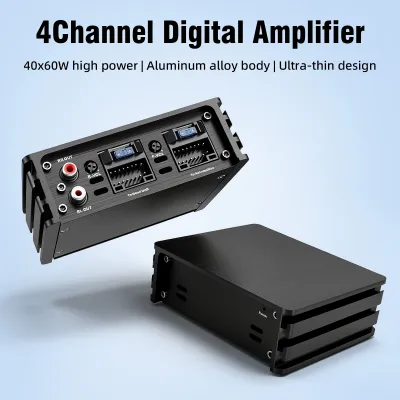
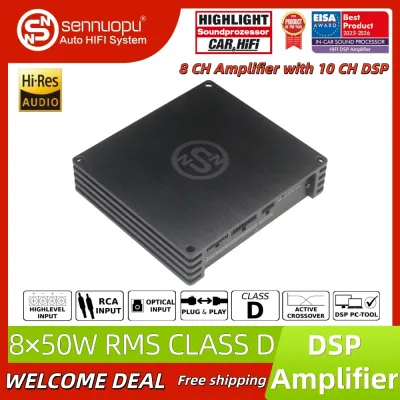
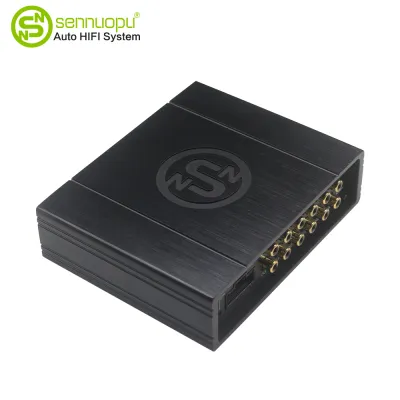

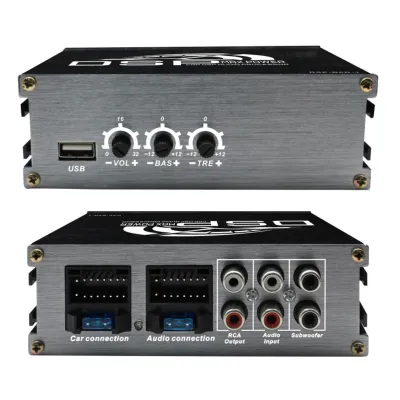


Prices are valid at publication and may change. Please refer to the product page for the latest price.
Key Comparison Dimensions for Car Audio
Evaluating how these architectural differences translate to real-world performance requires looking at several practical dimensions. From electrical strain to physical placement, each amplifier class imposes distinct demands on your vehicle.

Efficiency, Power Draw, and Heat
The electrical efficiency of an amplifier directly impacts how much strain is placed on your vehicle’s alternator and battery. Class D amplifiers are highly efficient, typically converting 80% to 90% of their drawn electrical power into usable audio signals, with only a small fraction lost as heat. This high efficiency makes them an excellent choice for modern vehicles with sensitive electrical systems, as they deliver substantial output power without demanding excessive current. Class AB amplifiers, by comparison, generally operate at around 50% to 60% efficiency. The remaining 40% to 50% of the energy drawn from your car’s electrical system is converted directly into heat.
This thermal output dictates the physical design of the amplifier. Class AB units require large, heavy aluminum heat sinks to draw heat away from the internal transistors and dissipate it into the surrounding air. Without this substantial thermal mass, a Class AB amplifier would quickly overheat and enter thermal protection mode—a safety state that shuts down the amplifier to prevent permanent component damage. Class D amplifiers, because they generate minimal waste heat, can utilize much smaller heat sinks, allowing for highly compact chassis designs. When comparing models, always check the manufacturer’s specifications for continuous power (RMS) rather than peak power ratings, as RMS ratings provide a realistic measure of how the amplifier handles power and heat over extended listening sessions.
Sound Quality and Signal Fidelity
Acoustic performance is another critical area of comparison, particularly regarding Total Harmonic Distortion (THD) and signal-to-noise ratio (SNR). Historically, Class AB amplifiers have been regarded as the benchmark for sound quality in car audio. Their linear design provides an exceptionally clean, smooth, and accurate reproduction of mid-range and high-frequency signals, making them highly popular for driving component speaker systems and tweeters. The continuous conduction of the transistors ensures that subtle details in the music are preserved without the risk of high-frequency interference.
Class D amplifiers were once relegated strictly to subwoofer duty because early switching designs struggled with high-frequency distortion and electromagnetic interference. However, modern engineering has significantly closed this gap. High-speed switching transistors, advanced feedback loops, and highly sophisticated output filters allow modern full-range Class D amplifiers to deliver clean, high-fidelity sound across the entire audible spectrum. While some audiophiles still prefer the traditional warmth and linearity of a Class AB amplifier for their front stage speakers, high-quality Class D amplifiers now offer competitive THD and SNR specifications. When choosing, it is advisable to compare the manufacturer’s THD ratings at rated power and, if possible, perform an in-person listening test to determine if you can perceive a difference in your specific vehicle cabin.
Physical Size and Installation Constraints
The physical dimensions of your amplifier can make or break an installation project. Because Class AB amplifiers require large heat sinks to manage their thermal output, they tend to have a much larger footprint and weigh significantly more than Class D models of equivalent power output. This physical bulk can limit your mounting options. Finding a suitable location for a large Class AB amplifier in a modern compact car, truck, or SUV can be challenging, especially if you want to keep the equipment hidden from view.
Class D amplifiers offer immense installation flexibility due to their compact size. Many modern Class D models are small enough to be mounted under front seats, behind the dashboard, or inside compact side panels in the trunk. However, regardless of the amplifier class you choose, you must ensure adequate ventilation clearance as specified in the manufacturer’s installation manual. Even highly efficient Class D amplifiers require some airflow to prevent heat buildup over time. Mounting any amplifier in a completely sealed, unventilated space can lead to premature thermal shutdown or long-term component degradation.
Decision Framework: Choosing the Right Amplifier
Selecting the right amplifier class requires analyzing your specific audio goals, physical space limitations, and your vehicle’s electrical capacity.
Choose a Class AB amplifier if your primary goal is achieving high sound fidelity for mid-range and high-frequency component speakers, and you have ample mounting space with unrestricted airflow. If you enjoy critical listening and want to capture the subtle nuances of acoustic instruments and vocals, the linear performance of a Class AB amplifier is well-suited for this task, provided your vehicle’s mounting location can accommodate its larger physical size and thermal dissipation needs.
Conversely, you should choose a Class D amplifier if you are powering a subwoofer system, have limited installation space, or want to minimize the electrical load on your vehicle. Subwoofers require massive amounts of power to move large speaker cones, and the high efficiency of Class D makes it the logical choice for delivering this power without draining your battery or overheating your trunk. Additionally, if you plan to hide the amplifier under a seat or inside a tight compartment, the compact footprint of a Class D unit is highly advantageous.
Neither amplifier class may fit your needs if your vehicle’s existing electrical system cannot support the total current draw. Before purchasing any high-power amplifier, you must verify your alternator’s output capacity and ensure your battery is in good health. Additionally, if the nominal impedance of your speakers falls below the amplifier’s stable minimum rating (such as running a 1-ohm load on an amplifier only rated stable down to 2 ohms), the system will experience instability, excessive heat, and potential damage. Always verify speaker impedance and wiring configurations first, especially if you plan on bridging channels or running multiple speakers in parallel, by consulting the amplifier’s manual for stable ohm ratings and approved wiring diagrams.
Pre-Purchase and Installation Checks
Before finalizing your purchase and beginning the installation, several critical checks must be performed to ensure a safe and successful integration. First, verify your vehicle’s specific model year, electrical interface, and mounting dimensions in the vehicle documentation to ensure physical and electrical compatibility before purchasing.
Next, verify the required power and ground wiring gauge based on the amplifier’s total fuse rating and the length of the cable run from the battery. Using undersized wiring can cause a significant voltage drop, reducing amplifier performance and creating a serious fire hazard. Always refer to a standard wire gauge chart and the manufacturer’s instructions to select the appropriate copper power cable. Additionally, check your head unit’s pre-out voltages. A higher pre-out voltage (typically 4V or higher) provides a cleaner signal to the amplifier, allowing you to set the amplifier’s input gain lower, which significantly minimizes the system’s background noise floor.
Because installing an amplifier involves modifying your vehicle’s electrical system, safety must be your top priority. Always disconnect the negative battery terminal before starting and consult your vehicle’s original wiring instructions. Review both your vehicle’s owner’s manual and the amplifier’s installation guide to understand specific electrical limits, mounting clearances, and airbag deployment zones. If you are uncomfortable with electrical disassembly, routing heavy-gauge wire through the firewall, or integrating with advanced factory-installed DSP systems, stop and seek qualified professional installation to prevent electrical shorts or damage to factory systems.
Frequently Asked Questions (FAQ)
Can I mix Class D and Class AB amplifiers in the same system?
Yes, mixing amplifier classes is a very common and highly effective practice in car audio systems. Many enthusiasts choose to run a Class AB amplifier to power their front component speakers for optimal soundstage clarity, while utilizing a high-power Class D amplifier to drive their subwoofers. When setting up a multi-amplifier system, ensure you use proper power distribution blocks with appropriate fusing for each run. You must also match the gain settings correctly and configure the crossover frequencies on each amplifier to ensure seamless integration between your mid-high speakers and your subwoofers, while verifying that your vehicle’s alternator can handle the combined current draw of both units.
Do modern Class D amplifiers still have sound quality issues?
No, modern Class D amplifiers do not suffer from the severe sound quality issues that plagued early designs. While early iterations of Class D technology struggled with high-frequency distortion and switching noise, modern units utilize advanced high-speed switching transistors, sophisticated feedback loops, and high-quality output filters to deliver clean, full-range audio. Many modern Class D amplifiers offer sound quality that is virtually indistinguishable from Class AB to the average listener. To ensure high-fidelity performance, check the manufacturer’s specifications for low Total Harmonic Distortion (THD) and a high signal-to-noise ratio (SNR) when shopping for a full-range Class D amplifier.

Community discussion
Share your experience or ask a question. Comments are reviewed before publication.