
Selecting the best Sonax car shampoo for a ceramic-coated vehicle in Singapore depends on whether you want to preserve the pure, unaltered characteristics of your existing coating or actively replenish its hydrophobic properties. For routine maintenance that leaves the coating completely untouched, a pure, pH-neutral formulation is the ideal choice. If your coating is starting to show signs of diminished water-beading performance due to environmental wear, an SiO2-infused ceramic wash variant serves as an excellent maintenance booster. In Singapore’s tropical climate, where vehicles are constantly exposed to intense heat, sudden downpours, and industrial fallout, choosing the correct formulation is essential to prevent premature degradation of your paint protection.
Maintaining a ceramic-coated car requires a shift in how you view car care. Traditional shampoos often rely on aggressive surfactants or heavy gloss enhancers to make a vehicle look clean and shiny. However, these ingredients can leave behind residues that mask the natural hydrophobic properties of a ceramic coating. By understanding the specific characteristics of different Sonax formulations, you can select a product that safely removes road grime while keeping your ceramic layer performing at its peak.
Key Criteria for Washing Ceramic-Coated Cars
Evaluating a car shampoo for a ceramic-coated vehicle requires looking closely at its chemical properties and how they interact with silica-based protection. The first and most critical factor is the pH level of the shampoo. Ceramic coatings are highly durable, but prolonged exposure to highly acidic or highly alkaline chemicals can gradually weaken the covalent bonds that hold the coating to your vehicle’s paintwork. A pH-neutral shampoo, which sits at a neutral pH 7 on the scale, ensures that the cleaning action relies on safe surfactant technology rather than chemical aggression.
Products mentioned in this guide
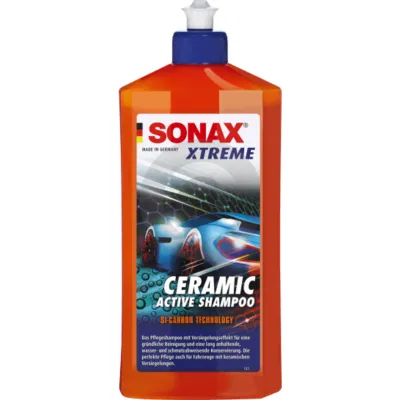
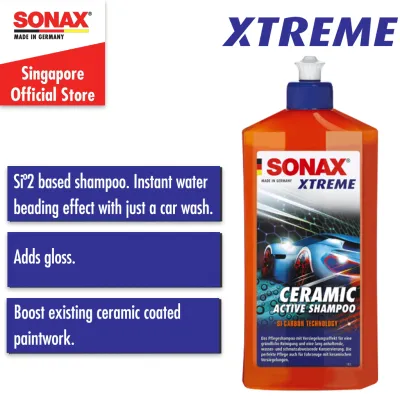
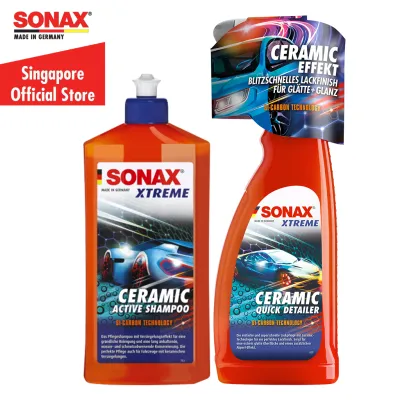
Prices are valid at publication and may change. Please refer to the product page for the latest price.
Another essential criterion is the balance between lubrication and cleaning power. When you wash a car, physical friction is the primary cause of micro-marring and swirl marks. A high-quality shampoo must provide excellent lubricity, creating a slick barrier that allows your wash mitt to glide effortlessly over the surface. This lubrication encapsulates dirt particles, lifting them away from the paintwork and reducing the risk of scratching the delicate ceramic topcoat. The shampoo must achieve this high level of lubrication without relying on heavy oils or gloss-enhancing additives that leave a stubborn film behind.
Finally, always look for explicit compatibility statements on the product packaging. Reputable manufacturers like Sonax clearly state whether a product is safe for sealed surfaces, paint protection films, or ceramic coatings. These statements indicate that the formula has been tested to ensure it will not strip, dull, or chemically degrade modern paint protection systems. Relying on these official guidelines prevents accidental damage and ensures your maintenance routine aligns with professional detailing standards.
Understanding Sonax Car Shampoo Formulations
The Sonax product lineup features several distinct shampoo formulations, each engineered for specific detailing needs. Understanding these categories allows you to match the right product to the current state of your ceramic coating.

Pure Shampoos
Pure shampoos are designed with a single goal: to clean the surface thoroughly without leaving anything behind. These formulas contain high-lubricity surfactants that lift dirt, road film, and environmental contaminants, which then rinse away completely clean. Because they do not contain waxes, silicones, or gloss enhancers, they leave the ceramic coating in its natural state. This is the preferred choice for brand-new ceramic coatings, as it allows the coating’s native hydrophobic and self-cleaning properties to function exactly as the manufacturer intended.
Wash & Wax or Sealant Blends
Wash and wax formulations contain added polymers, carnauba wax, or synthetic sealants designed to deposit a temporary protective layer on the paintwork. While these products are highly convenient for uncoated vehicles, they are generally not recommended for ceramic-coated cars. The wax or polymer residue deposited by these shampoos has a much lower surface energy than a cured ceramic coating. Applying them over a ceramic layer essentially covers a high-performance, self-cleaning surface with a temporary, lower-performing wax. This can lead to a noticeable drop in water-beading performance, increased dust attraction, and occasional smearing under Singapore’s humid conditions.
Ceramic and SiO2-Infused Washes
Ceramic-infused shampoos are specifically formulated with active silica (SiO2) nanoparticles. As you wash the vehicle, these nanoparticles bond temporarily to the existing ceramic coating, filling in microscopic voids and wear points. This process actively replenishes the hydrophobic layer, restoring dramatic water-beading and sheeting behavior. These washes are ideal for maintaining coatings that are several months or years old, helping to extend the overall lifespan of the protection. However, they should be used as a targeted maintenance tool rather than a daily wash if you prefer to keep the original coating’s characteristics completely unaltered.
How to Evaluate and Select Your Variant
To choose the right Sonax variant for your vehicle, start by reading the product’s back-label carefully. Look for specific instructions regarding dilution ratios and surface compatibility. A product that is explicitly marked as safe for ceramic coatings or designed for sealed surfaces is always a reliable starting point. Avoid products that make vague claims without specifying their pH level or chemical composition.
Next, assess the current condition of your ceramic coating. If your vehicle was coated recently and water still sheets off the panels rapidly, a pure, pH-neutral shampoo is all you need to maintain the surface. If you notice that water is beginning to pool on flat surfaces or that the self-cleaning properties have diminished, it is time to select an SiO2-infused maintenance shampoo. This targeted approach ensures you are only adding silica polymers when the existing coating actually requires a boost.
Finally, strict adherence to the manufacturer’s recommended dilution ratios is critical. In Singapore’s warm and humid climate, water evaporates quickly from car panels during a wash. If you use too much shampoo concentrate, the excess surfactants can dry on the paintwork, leaving a sticky film that is difficult to rinse off. This residue can mask the coating’s hydrophobic properties, making it appear as though the coating has failed when it is simply clogged with dried soap. Using a precise measuring cup ensures you achieve the perfect balance of cleaning power, lubrication, and clean rinsing.
Comparing Formulation Types for Ceramic Maintenance
The following table provides a structured overview of how different car shampoo formulation types perform when used on ceramic-coated vehicles. Use this as a general guide to align your maintenance goals with the correct product characteristics.
| Formulation Type | Primary Function | Compatibility Checks | Ideal Use Case |
|---|---|---|---|
| Pure pH-Neutral | Gentle cleaning with zero residue | Verify pH 7 on label; check for clean-rinsing claims | Routine washing of new or highly active ceramic coatings |
| Wash & Wax Blends | Cleans and deposits temporary wax | Check for carnauba or polymer additives (avoid on coatings) | Uncoated vehicles requiring basic gloss and temporary protection |
| SiO2-Infused Washes | Cleans and deposits silica nanoparticles | Confirm compatibility with existing ceramic coatings | Reviving older coatings with diminished water-beading performance |
Note: This table serves as a categorical reference. Always consult the specific product’s official label, instructions, and manufacturer guidelines before making a final purchase or applying a product to your vehicle.
Best Practices for Washing Ceramic-Coated Vehicles
Even the highest-quality Sonax shampoo cannot protect your paintwork if your washing technique is flawed. To prevent physical damage and maintain the integrity of your ceramic coating, always implement a careful, multi-step washing process.
Begin with a thorough pre-wash. Before touching the paintwork with a wash mitt, use a pressure washer or a foam lance to apply a layer of pre-wash foam. This foam clings to the surface, loosening abrasive road grime, dust, and bird droppings. Rinse the foam off thoroughly to remove as much loose dirt as possible. This step significantly reduces the amount of abrasive debris left on the paint, minimizing the risk of creating swirl marks during the contact wash.
For the contact wash, always use the two-bucket method. Fill one bucket with your diluted Sonax shampoo solution and a second bucket with clean water. Equip both buckets with grit guards to trap dirt particles at the bottom. Dip your high-quality microfiber wash mitt into the shampoo bucket, wash a single panel of the vehicle using straight, linear motions, and then rinse the mitt thoroughly in the clean water bucket before reloading it with fresh shampoo. This technique ensures that dirt lifted from the car is not transferred back onto the paintwork.
Environmental conditions play a massive role in the success of your wash, especially in Singapore. Never wash your vehicle under direct sunlight or when the body panels are hot to the touch. The intense tropical heat causes water and shampoo to dry almost instantly on the surface, leading to severe mineral spotting and soap etching that can damage both the clear coat and the ceramic layer. Instead, perform your wash in a shaded area, a multi-storey car park, or during the cooler early morning and late evening hours. Once the wash is complete, dry the vehicle immediately using a plush, clean microfiber drying towel or a dedicated automotive air blower to prevent water spots from forming.
Frequently Asked Questions (FAQ)
Can I use a standard dish soap or heavy-duty degreaser on a ceramic coating?
No, you should never use dish soap or heavy-duty household degreasers on a ceramic-coated vehicle. These products are formulated with highly alkaline surfactants designed to strip away grease and oils. When applied to automotive paintwork, they can chemically attack and degrade the hydrophobic top layer of your ceramic coating, drastically shortening its lifespan. Additionally, dish soaps can dry out plastic trim and rubber seals, leading to premature fading and cracking. Always stick to dedicated, pH-balanced automotive shampoos.
How often should I wash a ceramic-coated car?
In Singapore’s tropical environment, it is highly recommended to wash your ceramic-coated car once every one to two weeks. The frequent rain-dry cycles in the region mean that atmospheric pollution, industrial soot, and acid rain are constantly deposited on your vehicle. If left untreated, these contaminants can bake onto the surface under the hot sun, eventually bonding to and clogging the ceramic coating. Regular, gentle washing prevents this buildup and ensures the self-cleaning properties of the coating remain active.
Do I need to reapply the ceramic coating if I use the wrong shampoo?
In most cases, a single wash with an incompatible shampoo—such as a wash-and-wax product—will not permanently destroy a professional ceramic coating. Instead, the wax or silicone residue simply sits on top of the coating, masking its hydrophobic behavior. To remedy this, wash the vehicle thoroughly with a pure, pH-neutral automotive shampoo to strip away the temporary wax film. After rinsing and drying, test the water-beading properties. If the hydrophobic behavior does not return, consult a professional detailer to inspect the coating or apply a compatible ceramic booster to restore the surface performance.

Community discussion
Share your experience or ask a question. Comments are reviewed before publication.