
When configuring a motorcycle repair toolkit, choosing the right securing tools is just as critical as selecting your wrenches or sockets. To build a safe, efficient workspace, you should include a strategic mix of heavy-duty tie-downs, medium-duty cargo straps, and light-duty utility straps rather than relying on a single, one-size-fits-all fastener. Integrating a dedicated set of rok strap motorcycle tie-downs, cargo straps, and utility bands ensures your bike remains perfectly stable during high-torque maintenance, while delicate removed components are kept safe from workbench drops. This guide breaks down how to select and apply each strap variant to optimize your motorcycle repair toolkit.
Decoding ROK Strap Motorcycle Variants for the Workshop
To select the right tools for your garage, it is essential to understand the unique engineering behind these fasteners. Unlike traditional, rigid ratchet straps or highly unpredictable bungee cords, these straps feature a signature two-piece design. One section consists of solid, non-elastic polyester webbing that provides structural strength and adjustable length. This is permanently joined via a heavy-duty quick-release buckle to a highly durable, solid rubber elastic section. This combination provides constant, dynamic tension that absorbs minor movements without slipping or loosening under load.
Within a motorcycle repair context, these straps are generally categorized into three distinct classes:
Products mentioned in this guide
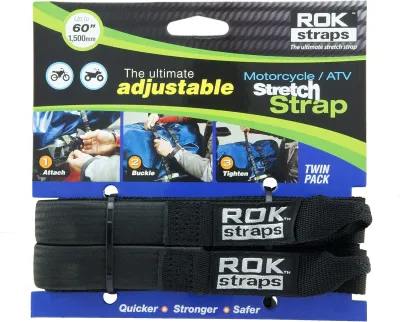
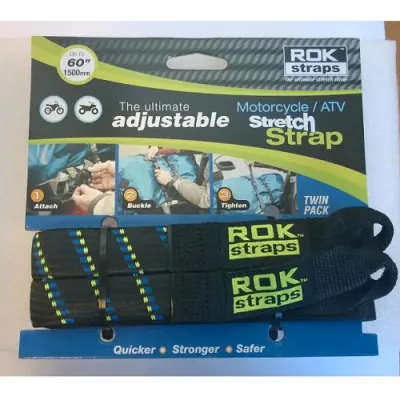
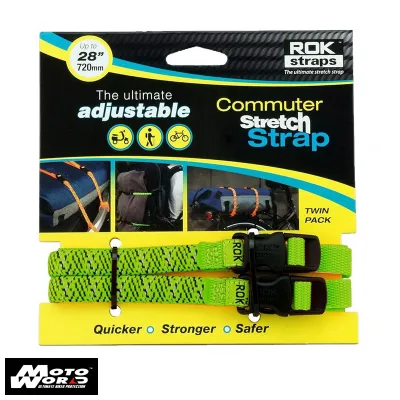
Prices are valid at publication and may change. Please refer to the product page for the latest price.
- Heavy-Duty Tie-Downs: These are wide, robust straps designed for high-tension applications. They are built to handle substantial forces, such as compressing a front suspension during fork service or securing a heavy motorcycle to a trailer or hydraulic lift.
- Medium-Duty Cargo Straps: These mid-sized straps are ideal for securing bulkier, awkwardly shaped components that have been removed from the bike. They keep items like exhaust mufflers, fuel tanks, or wheel assemblies firmly anchored to your workbench or parts rack.
- Light-Duty Utility Straps: These are narrower, highly flexible straps designed for quick organization. They excel at bundling loose wiring harnesses, securing hoses out of the way of hot engine components, or keeping small hand tools grouped together.
While these material descriptions highlight their intended uses, you must never assume a strap’s load capacity based on its size or appearance alone. Always locate and inspect the manufacturer’s Working Load Limit (WLL) tag sewn into the physical strap before subjecting it to any load.
Securing the Bike: Heavy-Duty Tie-Down Scenarios
Stabilizing a motorcycle during major service requires absolute precision and high-strength equipment. For instance, when you are replacing worn front fork seals, you must safely compress the front suspension to access internal components or secure the bike’s rear end to keep it from tipping while the front wheel is completely removed. Similar high-tension demands arise when you must secure a disabled motorcycle onto a trailer or a utility vehicle for transport to a specialist workshop in Singapore, where navigating heavy traffic and uneven road surfaces requires a rock-solid tie-down setup.

For these demanding scenarios, heavy-duty tie-downs are mandatory. You need straps with a high WLL, robust locking buckles, and secure hook configurations. Because direct metal-on-metal contact can easily gouge anodized fork tubes or scratch expensive paintwork, always pair these straps with high-quality soft loop extensions. These soft loops wrap securely around your handlebars, triple trees, or frame members, providing a safe, fabric-to-fabric connection point for the heavy metal hooks of your tie-downs.
When applying these straps, always refer to your motorcycle’s factory workshop manual to identify approved structural anchoring points. Safe attachment zones typically include the lower triple clamp (triple tree), main steel or aluminum frame spars, or designated tie-down brackets. Never anchor straps to fragile components such as plastic fairings, aluminum handlebars near the controls, brake lines, electrical wiring looms, or turn signals. Doing so risks catastrophic structural failure of the component or sudden loss of strap tension.
Crucially, you must observe a strict safety boundary: tie-down straps must never be used as the sole method of keeping a motorcycle upright. A heavy-duty strap is designed for stabilization and suspension compression, not for primary vertical support. Always place the motorcycle on a stable paddock stand, a robust center stand, or a dedicated hydraulic motorcycle lift first. Once the bike’s primary weight is securely supported by a mechanical stand, use the straps to pull the bike down into a stable, compressed state, preventing any lateral movement or tipping while you apply high torque to stubborn bolts.
Managing Parts: Cargo and Utility Strap Applications
A disorganized workshop is a primary source of accidental component damage and personal injury. When performing extensive teardowns, such as an engine rebuild or a full suspension overhaul, you will inevitably accumulate heavy, bulky, and awkwardly shaped parts. Medium-duty cargo straps are invaluable for securing these items to your workbench or parts storage rack. For example, a heavy stock exhaust header or a freshly cleaned wheel set can easily roll off a flat surface if left unsecured. Wrapping a medium-duty strap around these components and anchoring them to the bench frame ensures they remain stationary, protecting your investment in expensive replacement parts.
For lighter organization tasks, light-duty utility straps keep your workspace clear and highly efficient. During complex electrical repairs, you often need to pull the main wiring harness away from the frame to access hidden engine bolts. A light-duty strap allows you to gently bundle and secure the harness to an out-of-the-way section of the frame without pinching the delicate copper wires. These utility straps are also excellent for grouping loose fluid lines, holding radiator hoses clear of your work area, or securing mesh parts bags containing specific bolt groups to their corresponding assemblies.
Choosing the right strap for these tasks requires matching the strap’s width and hook design to the fragility of the component. Heavy-duty straps with large, exposed metal hooks should never be used on delicate parts. The high tension and hard metal can easily crush thin-walled aluminum radiator cores, crack carbon fiber bodywork, or tear soft leather seats.
Instead, manage these risks by selecting light-duty utility straps that feature plastic-coated hooks, integrated loop ends, or hook-and-loop fasteners. If you must use a stronger strap on a finished surface, always place a thick microfiber towel or a dedicated rubber protective sleeve between the strap webbing and the component to distribute the pressure and prevent surface marring.
Cross-Scenario Compatibility: Can One Strap Do It All?
When building a mobile motorcycle repair toolkit, space and weight are always at a premium. It is highly tempting to try and streamline your kit by carrying only one type of strap to handle every possible task. However, attempting to use a single strap class across all workshop scenarios is a dangerous compromise that compromises both safety and efficiency.
For example, attempting to substitute a medium-duty cargo strap for a heavy-duty tie-down during bike stabilization is highly discouraged. Medium-duty straps lack the necessary Working Load Limit and robust buckle mechanisms required to withstand the immense dynamic forces of a compressing motorcycle suspension. Under high tension, the elastic core of a lighter strap can overstretch or the buckle can slip, leading to a sudden, catastrophic tip-over of the motorcycle.
Conversely, using light-duty utility straps for cargo-holding tasks carries an exceptionally high risk of failure. These thin straps are engineered for light organizing, not for holding heavy, metallic components. Subjecting a utility strap to the weight of an exhaust system or a brake caliper assembly can cause the elastic to snap violently, potentially throwing the heavy component onto the floor or injuring the mechanic.
To balance toolkit space with safety, a functional motorcycle repair toolkit should adopt a tiered approach. Your baseline kit should include at least one pair of dedicated, heavy-duty tie-downs with soft loops specifically reserved for stabilizing the motorcycle itself. Supplement this pair with a mixed set of two medium-duty cargo straps and three to four light-duty utility straps. This combination provides complete coverage for both heavy stabilization and delicate parts management without adding excessive bulk to your tool roll.
To protect your investment, pay close attention to how you store your straps in Singapore’s tropical climate. High humidity, elevated temperatures, and ambient UV exposure can rapidly degrade both the synthetic polyester webbing and the internal natural rubber elastic core. Always store your straps in a cool, dry, and dark toolbox or storage bag. Keep them far away from direct heat sources, such as workshop lights or heaters, and ensure they are never stored in contact with harsh chemical solvents, which can silently dissolve the synthetic fibers from the inside out.
Inspection and Safety Rules for Workshop Straps
Because workshop straps are subjected to high tension and harsh environments, maintaining a rigorous inspection routine is vital to prevent sudden failures. Before every single use, perform a thorough visual and physical inspection of each strap in your toolkit. Look closely for any signs of fraying along the edges of the polyester webbing, loose or unravelling stitching near the buckle attachments, or noticeable fading and stiffness, which indicate advanced UV degradation. Check the elastic section for permanent stretching, cracks, or dry rot. Finally, inspect the metal hooks and buckles for any signs of deformation, cracking, or rust that could compromise their structural integrity.
Chemical exposure is another silent killer of synthetic workshop equipment. During routine maintenance, straps frequently come into contact with aggressive fluids such as DOT 4 brake fluid, heavy-duty degreasers, chain lubricants, and engine oil. These chemicals can rapidly break down the polymer chains in the polyester webbing or dissolve the elastic rubber core. If a strap becomes contaminated with any workshop fluid, immediately wipe it down with a clean, damp cloth and a mild soap solution. Never store a chemically contaminated strap.
Establish a strict retirement policy for your workshop straps. If a strap exhibits any visible fraying, has a bent metal hook, shows signs of dry-rotted elastic, or has been heavily saturated with corrosive chemicals like brake fluid, discard it immediately. The minor cost of replacing a worn strap (typically ranging from S$15 to S$40 depending on the model) is a fraction of the cost of repairing a damaged motorcycle engine casing, replacing a cracked fairing, or treating a personal injury caused by a dropped bike.
Frequently Asked Questions (FAQ)
Can I use ROK straps to lift a motorcycle engine or heavy components?
No, you must never use ROK straps or any other tie-down straps to lift, hoist, or suspend a motorcycle engine or other heavy components vertically. Tie-down straps are engineered strictly for horizontal tension and securing loads against a flat surface. They are not rated for overhead lifting or vertical suspension. Attempting to lift an engine with these straps can cause the elastic section to stretch uncontrollably or snap, resulting in a dropped engine, severe component damage, and extreme risk of physical injury to anyone nearby. For lifting tasks, always use properly rated polyester lifting slings, a dedicated engine hoist, or a mechanical chain block.
How do I prevent the metal hooks from scratching my motorcycle frame?
To prevent metal hooks from scratching or gouging your motorcycle’s painted, powder-coated, or polished frame members, you should always utilize soft loop extensions, commonly known as soft ties. To use them, wrap the soft fabric loop around the solid frame tube or triple clamp, thread one end through the other to choke it tightly against the metal, and then attach the metal hook of your strap directly to the remaining fabric loop. This ensures that only soft, non-abrasive polyester webbing makes contact with your bike’s finish, completely isolating the hard metal hook from your paintwork.
Community discussion
Share your experience or ask a question. Comments are reviewed before publication.