
Securing cargo to a roof rack requires a precise understanding of the equipment you use. While a roof rack provides the physical platform, the tie-down system is what guarantees your gear remains safely attached to your vehicle at highway speeds. Choosing the wrong type of ratchet strap can lead to cargo failure, vehicle damage, or severe road hazards. The ideal ratchet strap depends on the weight, fragility, and aerodynamic profile of your cargo. For light sports gear and bicycles, a 1-inch (25 mm) wide light-duty strap or cam buckle is best to prevent frame damage. For broad luggage and storage boxes, a medium-duty 1-inch to 1.5-inch strap with edge protectors ensures even pressure. For heavy, high-wind-lift cargo like kayaks and canoes, heavy-duty 1.5-inch to 2-inch straps with high Working Load Limits (WLL) paired with bow and stern tie-downs are essential. Before purchasing or using any tie-down system, always verify your vehicle’s roof load capacity, the rack manufacturer’s dynamic and static weight limits, and the strap’s certified ratings.
Understanding Ratchet Strap Specifications for Roof Racks
To select the correct tie-down gear, you must understand the technical specifications printed on the manufacturer’s tags. Every certified ratchet strap features a tag detailing its Working Load Limit (WLL) and Break Strength. The WLL is the maximum safe weight capacity the strap is designed to support under normal operating conditions, whereas the Break Strength is the point of physical failure under extreme tension. As a safety standard, the WLL is typically rated at one-third of the total Break Strength. Never calculate your cargo security based on Break Strength; always use the WLL as your primary safety metric.
When calculating the required WLL, you must account for dynamic forces, not just the static weight of your cargo. A kayak weighing 25 kilograms can exert several times that force when subjected to wind lift at 90 kilometers per hour. Additionally, you must cross-reference your cargo’s total weight with the dynamic load limit of your vehicle’s roof and the specific roof rack system installed. These limits are detailed in your vehicle’s owner manual and the rack manufacturer’s documentation. Exceeding these limits can compromise vehicle handling, damage the roof structure, or void your vehicle warranty.
Products mentioned in this guide
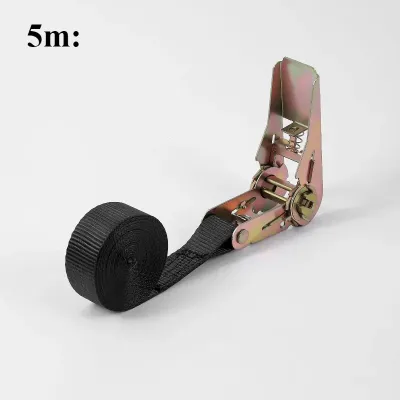
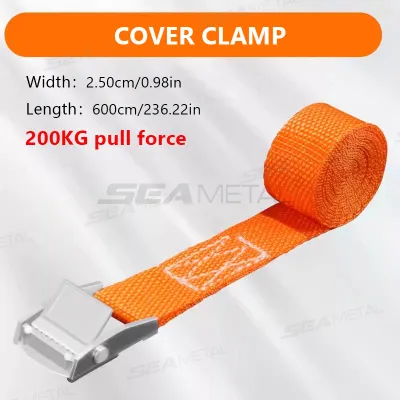
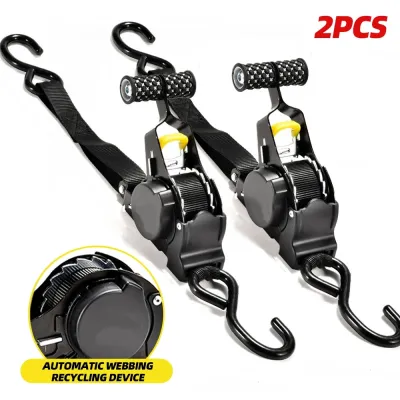
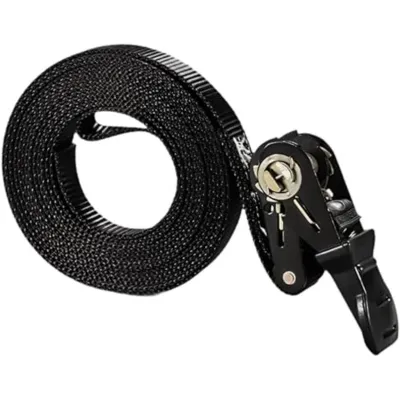
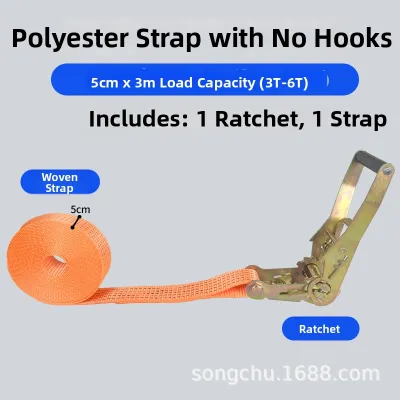
Prices are valid at publication and may change. Please refer to the product page for the latest price.
Strap width and length are equally critical dimensions to evaluate. Standard strap widths for consumer roof racks generally range from 1 inch (25 mm) to 1.5 inches (38 mm), with 2-inch (50 mm) options reserved for exceptionally heavy industrial loads. The length of the strap must be sufficient to wrap around the cargo, route through the roof rack crossbars, and reach the designated anchor points. However, using excessively long straps creates a hazard. Any loose webbing left over after tensioning must be meticulously tied down; otherwise, it will flap violently at highway speeds, causing distracting cabin noise and rapid friction-induced degradation of the polyester fibers.
Matching Strap Types to Specific Cargo
Different types of cargo present unique physical profiles, structural vulnerabilities, and aerodynamic challenges. Securing a carbon fiber bicycle requires an entirely different tensioning approach than strapping down a heavy polyethylene kayak or a fabric duffel bag.

Bicycles and Light Sports Gear
For bicycles, surfboards, and light sports equipment, structural preservation is just as important as securement. Standard heavy-duty ratchet straps can easily apply hundreds of kilograms of clamping force, which can instantly crush thin-walled aluminum or delicate carbon fiber bicycle frames. For these applications, a narrower 1-inch (25 mm) light-duty strap or a spring-loaded cam buckle strap is highly recommended. Cam buckles rely on manual pulling force rather than a mechanical lever, significantly reducing the risk of accidental over-tensioning.
To protect the finish of your sports gear and the powder-coated surface of your roof rack crossbars, avoid bare metal hooks. Instead, select straps equipped with rubber-coated hooks or utilize soft loop tie-down straps. Soft loops are short lengths of webbing that wrap around the frame or crossbar, creating a secure fabric anchor point for the strap hooks. This configuration prevents metal-to-metal contact, eliminating scratches and reducing the likelihood of the hook slipping under vibration.
Luggage and Storage Boxes
When securing soft-sided duffel bags, plastic storage tubs, or hard-shell cargo boxes, the primary goal is even pressure distribution. Medium-width straps, ranging from 1 inch to 1.5 inches, are ideal for this task. The wider webbing spreads the downward force over a larger surface area, preventing the strap from cutting into soft luggage or cracking brittle plastic cargo boxes.
Sharp metal edges on roof baskets or crossbars pose a constant threat to strap integrity. To mitigate this risk, use straps with integrated wear pads or slide-on plastic edge protectors. These protectors sit between the strap and any sharp corners, absorbing friction and preventing the webbing from fraying or snapping during transit. Furthermore, when securing dedicated hard-shell cargo boxes, always route the straps through the manufacturer’s designated tie-down channels or loops rather than wrapping them directly over the top lid, which can warp the plastic and compromise the box’s latching mechanism.
Kayaks, Canoes, and Bulky Equipment
Watercraft like kayaks and canoes present a high aerodynamic profile that generates immense wind lift at highway speeds. To counteract these forces, you must use heavy-duty 1.5-inch straps with a high WLL rating. The straps must be routed directly over the hull of the watercraft and secured tightly to the roof rack crossbars.
However, relying solely on lateral straps over the middle of the watercraft is insufficient for highway travel. You must use auxiliary bow and stern tie-down lines anchored to the front and rear of your vehicle’s chassis. These lines prevent longitudinal shifting, which occurs when sudden braking or acceleration forces the kayak to slide forward or backward.
While these straps must be tight, over-tensioning a ratchet strap on a composite fiberglass or rotomolded plastic hull can cause permanent structural deformation or cracking. To prevent this, always use specialized hull cradles, J-cradles, or foam stackers. These accessories conform to the shape of the hull, distributing the clamping force evenly and allowing you to secure the watercraft firmly without damaging its structure.
Key Mechanisms and Hook Styles for Safe Tie-Downs
The mechanical components of your tie-down system—the tensioning mechanism and the end hooks—determine both the ease of use and the ultimate security of your load. Standard ratchet mechanisms feature large, ergonomic handles designed to maximize leverage. While convenient, these handles make it incredibly easy to over-tighten the strap, potentially damaging both your cargo and your roof rack. For roof rack applications, compact, low-profile ratchets are often preferred. These smaller mechanisms provide sufficient tensioning power while minimizing wind resistance and reducing overall height, which is particularly beneficial when navigating low-clearance areas such as multi-storey car parks.
The style of hook on the end of the strap must match your roof rack’s design. Standard S-hooks and J-hooks are highly versatile and work well with basic steel or aluminum crossbars and cargo baskets. However, if your roof rack features integrated T-track channels or specific mounting loops, specialized hardware like T-slot bolts or carabiner-style locking clips offer a much more secure connection. Carabiner clips are particularly safe because they feature a spring-loaded gate that prevents the hook from detaching if the strap temporarily loses tension due to cargo settling.
Never place bare metal hooks directly against your vehicle’s painted bodywork, glass, or delicate cargo surfaces. Under the vibration of travel, bare metal will rapidly wear away paint, leading to rust, and can easily gouge plastic or composite materials. Always choose hooks with durable vinyl or rubber coatings, or use protective polyester sleeves over the metal components to ensure a safe, non-marring interface.
Safety Checks and Tie-Down Best Practices
Operating a vehicle with roof-mounted cargo requires a disciplined safety routine. Before every trip, perform a comprehensive visual inspection of your ratchet straps. Inspect the entire length of the webbing for signs of UV damage, fraying, cuts, or compromised stitching. Examine the metal ratchet mechanism for rust, debris, or stiff gears that could prevent the pawl from engaging securely. If you identify any defects, replace the strap immediately; a compromised strap can fail suddenly under dynamic road loads.
Singapore’s tropical climate—characterized by intense, year-round UV radiation, high humidity, and heavy rainfall—accelerates the degradation of synthetic webbing. Polyester straps exposed to constant sunlight will fade, lose their elasticity, and suffer a significant reduction in breaking strength over time. To maximize the lifespan of your straps, never leave them permanently mounted to your roof rack when not in use. Store them in a cool, dry, and dark location inside your vehicle’s trunk or at home. If the straps become wet or dirty during a trip, rinse them with clean water, allow them to air dry completely, and lubricate the metal ratchet gears with a light silicone spray before storage.
When tensioning your straps, apply force systematically. Tighten the ratchet until the strap is taut and the cargo does not shift when shaken, but stop before you have to apply extreme body weight to the handle. Over-tensioning can bend roof rack crossbars or damage vehicle mounting points. Once secured, always perform a test drive. Stop after the first 10 to 15 kilometers of driving to inspect the load. Cargo frequently settles, and polyester webbing can stretch slightly under initial wind resistance and road vibrations. Re-tension any loose straps immediately to ensure a safe journey.
Frequently Asked Questions (FAQ)
Can I use one set of ratchet straps for all my roof rack cargo?
While a single set of medium-duty 1-inch straps can physically secure various items, it is not recommended as a universal solution. Heavy-duty straps designed for large watercraft are too bulky and apply too much force for delicate bicycle frames, while light-duty straps or cam buckles lack the strength to counteract the wind lift of a kayak. For optimal safety and cargo protection, maintain at least two sets of straps: a light-duty set with cam buckles or soft loops for sports gear, and a heavy-duty set with robust ratchet mechanisms for bulky or heavy loads.
How often should I replace my ratchet straps?
Ratchet straps do not have a fixed expiration date; instead, their lifespan depends entirely on their physical condition and exposure to environmental elements. In tropical environments like Singapore, intense UV rays and high humidity can degrade polyester webbing within one to two years of frequent use. You must replace your straps immediately if you notice any cuts, fraying, faded webbing, illegible WLL tags, or if the metal ratchet mechanism slips, rusts, or fails to lock smoothly.
Community discussion
Share your experience or ask a question. Comments are reviewed before publication.