
Selecting the ideal Motowolf raincoat for daily commuting in Singapore’s intense tropical downpours requires balancing rapid deployment, reliable waterproofing, and high visibility. Because local monsoon seasons bring sudden, heavy rain that can saturate standard fabrics within minutes, a commuter’s choice depends heavily on matching the raincoat’s design to their specific riding habits, storage capacity, and safety requirements. To find the best model for your daily route, you must evaluate the structural differences between one-piece and two-piece formats, verify the material specifications on the manufacturer’s label, and ensure the fit accommodates your existing protective riding gear without restricting your movement on the road.
Essential Waterproofing and Material Standards
To survive a sudden afternoon deluge on local expressways, your rain gear must meet strict waterproofing and material standards. When browsing different Motowolf models, the first step is to inspect the manufacturer’s product specifications for a verified waterproof rating, typically measured in millimeters of water column pressure. For daily commuting in heavy tropical rain, look for a rating of at least 10,000 mm, which indicates the fabric can withstand significant water pressure before moisture begins to seep through. Additionally, examine the interior construction to ensure all seams are fully taped or heat-sealed; standard stitching creates thousands of tiny needle holes that will quickly leak under the force of wind-driven rain if they are not sealed with a specialized waterproof tape. While high-quality technical rain gear can range from S$40 to over S$100 in local motorcycle accessory shops, verifying these material standards ensures you invest in a suit that keeps you dry.
The outer shell material plays a critical role in both durability and comfort during your commute. Most high-quality motorcycle raincoats utilize heavy-duty polyester or nylon fabrics coated with polyurethane (PU) or polyvinyl chloride (PVC). While PVC offers excellent water resistance, it tends to be stiff and traps heat, making it less comfortable in Singapore’s humid climate. Polyurethane-coated nylon or polyester provides a superior balance of flexibility, tear resistance, and breathability, allowing you to move freely while managing body heat. You should also check the denier rating of the fabric, which measures the thickness of the fibers; a higher denier rating indicates greater abrasion resistance, ensuring the raincoat does not easily tear if it snags on your motorcycle’s hardware or luggage racks.
Products mentioned in this guide
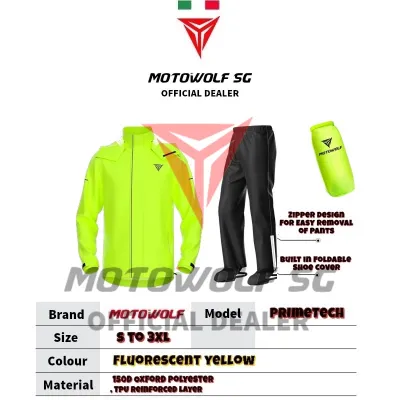
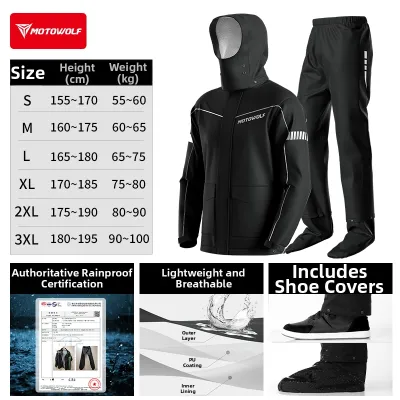
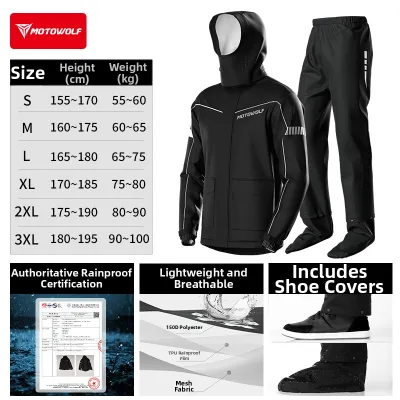
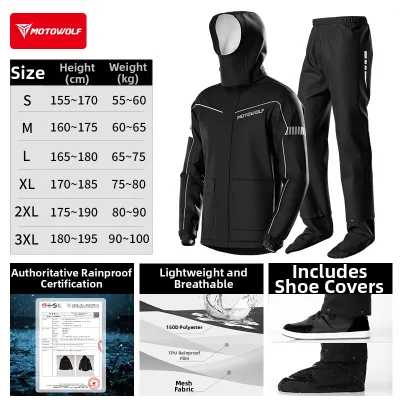
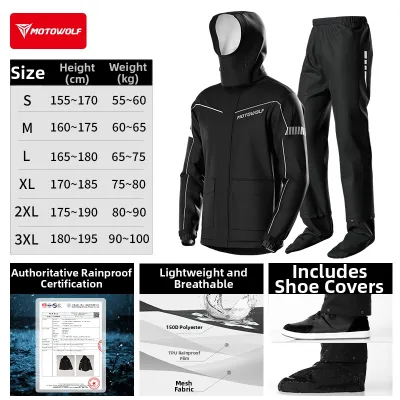
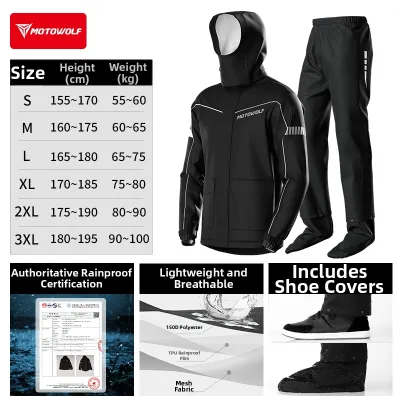
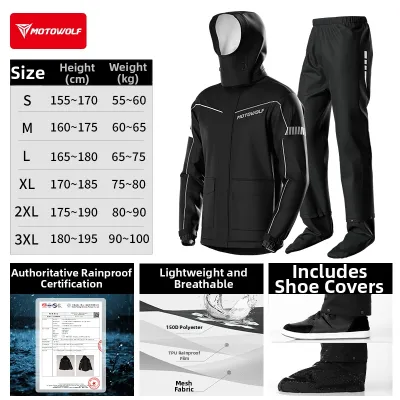
Prices are valid at publication and may change. Please refer to the product page for the latest price.
Another critical defense against water ingress is the design of the closures and ventilation systems. A high-quality raincoat must feature a robust storm flap system over the main front zipper, ideally secured by durable hook-and-loop fasteners or snap buttons to prevent wind from forcing water through the zipper teeth. At the same time, riding in hot, humid weather requires adequate ventilation to prevent the “sauna effect” inside the suit. Look for models that incorporate covered ventilation flaps on the back or under the arms. These vents must be strategically angled downward so that gravity and wind flow prevent rainwater from entering while still allowing hot air and perspiration to escape.
Comparing Motowolf Rain Gear Formats for Urban Riding
Choosing the right format for your Motowolf rain gear depends heavily on your daily routine, the type of motorcycle you ride, and your available storage space. Urban commuters face unique challenges, such as frequent stop-and-go traffic, sudden weather transitions, and limited time to gear up when a storm hits. The two primary formats available are two-piece jacket and pant sets and one-piece suits or long riding coats, each offering distinct trade-offs in terms of packability, weight, and deployment speed.

When evaluating these formats, consider where you will store the gear when it is not in use. If your motorcycle has limited storage, such as a small under-seat compartment or a compact top box, you will need a highly packable model that folds down into a compact carrying pouch. Weight is another factor; heavier, multi-layered suits offer excellent protection but can feel cumbersome during slow-speed filtering through traffic. Deployment speed is equally vital on local roads, where a clear sky can turn into a torrential downpour in a matter of minutes, requiring you to pull over safely and put on your gear as quickly as possible.
Two-Piece Jacket and Pant Sets
Two-piece sets consisting of a separate jacket and pants are highly popular among local commuters due to their versatility and ease of use. If you only experience light drizzle, you might choose to wear just the jacket, saving the pants for more severe downpours. This format is generally much easier to put on and take off in confined spaces, such as office building lobbies or sheltered motorcycle parking lots, without having to remove your boots.
However, to ensure complete dryness, you must carefully inspect the adjustment features of a two-piece set. Look for jackets with adjustable elastic cuffs and hook-and-loop straps that seal tightly around your wrists, preventing water from running up your sleeves when reaching for the handlebars. The pants should feature wide ankle openings with high-quality zippers or gussets, allowing you to slide them over your riding boots quickly, along with adjustable ankle straps to secure the hem and prevent it from flapping or catching on your bike’s footpegs.
One-Piece Suits and Long Riding Coats
For riders who face long, uninterrupted commutes or those who ride during the heaviest monsoon periods, one-piece suits or long riding coats provide unmatched full-body coverage. The primary advantage of a one-piece design is the complete elimination of the waist gap. In a two-piece set, wind can sometimes force water upward under the hem of the jacket, or water pooling on the motorcycle seat can seep through the waistband of the pants; a one-piece suit completely removes this vulnerability, ensuring a dry ride even during prolonged exposure.
The trade-off for this superior protection is increased bulk and a more complex donning process. One-piece suits can be challenging to wiggle into quickly on the side of a busy road, and they typically require more storage space in your top box or backpack. Additionally, because they seal your entire body in a single chamber, they can retain more heat, making them warmer to wear during slow-speed city riding. If you choose this format, prioritizing models with extensive ventilation panels and lightweight, breathable inner mesh linings is essential for maintaining comfort.
Visibility and Safety Features for Wet Conditions
Riding in heavy rain significantly reduces visibility for all road users, making safety features a paramount consideration when selecting your raincoat. In dense urban traffic, spray from larger vehicles and dimmed ambient light can make a motorcyclist virtually invisible to drivers. Therefore, your rain gear must serve as a high-visibility safety barrier. Look for models that feature large, high-quality reflective strips positioned across the shoulders, upper back, chest, and the sides of the arms and legs. These reflective elements should meet international standards for retroreflectivity, ensuring they bounce light directly back to drivers’ headlights from multiple angles.
Color choice is another critical safety factor. While black or dark grey raincoats may look sleek, they offer very little visibility in a dark storm. Opting for high-visibility colors such as neon yellow, bright orange, or vibrant green dramatically increases your chances of being seen by other motorists. If you prefer a darker main color, ensure the model incorporates large, high-contrast fluorescent panels on the upper torso and sleeves to maintain a high level of visual presence on the road.
Additionally, pay close attention to the design of the hood. Many commuter raincoats include an integrated hood to keep your head dry when you take off your helmet. However, when riding, a bulky hood can bunch up around your neck, restricting your ability to perform life-saving blind-spot checks or interfering with the base of your helmet. Ensure the raincoat features a detachable hood or a roll-away design that secures neatly into the collar with a zipper or snap buttons. If you plan to wear the hood under your helmet, verify that it is made of an ultra-thin, stretchable material that does not compromise the snug, safe fit of your helmet.
Sizing, Fit, and Riding Posture Adjustments
Selecting the correct size for a motorcycle raincoat is vastly different from buying casual outerwear. A raincoat that is too tight will restrict your range of motion, pull at the seams, and potentially tear when you mount your bike or reach for the controls. Conversely, a suit that is too loose will flap violently at highway speeds, creating distracting noise, increasing rider fatigue, and allowing wind to force water through the openings. To find the perfect balance, always consult the manufacturer’s specific sizing chart and measure yourself while wearing your typical riding attire.
Crucially, you must account for the extra volume of your protective riding gear. If you wear an armored mesh jacket, a chest protector, or riding pants with knee sliders, your raincoat must be sized to fit comfortably over these bulky items without compressing them. Many riders find they need to select one or two sizes larger than their standard t-shirt size to accommodate their safety gear. Look for raincoats that feature adjustable volume straps on the upper arms, waist, and calves; these allow you to cinch down any excess fabric once the suit is on, preventing flapping while maintaining a comfortable fit over your armor.
Furthermore, the cut of the raincoat should match your active riding posture. When sitting on your motorcycle, your arms are extended forward, and your knees are bent. Standard jackets may pull back at the wrists, exposing your gloves to water, while standard pants may ride up your shins, letting rain pour into your boots. Look for models designed with pre-curved sleeves and articulated knees. The jacket’s back panel should also be slightly longer to ensure it remains tucked over your pants and covers your lower back completely when you lean forward onto the handlebars.
Care and Maintenance to Preserve Waterproofing
Even the highest-quality Motowolf raincoat will lose its effectiveness if it is not properly maintained. Over time, road grime, oil splatters, sweat, and environmental pollutants can clog breathable membranes and degrade the outer water-repellent coatings. To preserve the waterproofing performance over multiple wet seasons, you must follow the manufacturer’s specific care instructions. Never throw your technical rain gear into a standard washing machine with harsh household detergents or fabric softeners, as these chemicals can strip away the durable water repellent finish and delaminate the taped seams. Instead, gently hand wash the gear in cool water using a mild, liquid soap designed specifically for technical outerwear, or wipe it down with a damp microfiber cloth after a dirty ride.
Regular inspections are vital to catch wear before you find yourself soaked during a commute. Before the monsoon season begins, lay your raincoat flat in a well-lit area and inspect the interior seams. Look closely for any signs of peeling, cracking, or lifting of the waterproof seam tape, particularly around high-stress areas like the crotch, underarms, and shoulders. Check that all zippers slide smoothly without catching on the fabric, and clear any dirt or debris from the hook-and-loop fasteners to ensure they seal tightly. If you notice the outer fabric is starting to absorb water rather than letting it bead up and roll off, you may need to apply an aftermarket wash-in or spray-on water-repellent treatment approved for polyurethane-coated fabrics.
Proper storage is the final step in extending the lifespan of your rain gear. After riding through a downpour, never fold up your wet raincoat and stuff it directly into your motorcycle’s top box or under-seat compartment, as this creates a breeding ground for mold, mildew, and unpleasant odors, which will rapidly break down the waterproof coatings. Instead, hang the wet gear on a wide, padded hanger in a well-ventilated, shaded indoor area away from direct sunlight and heat sources. Allow it to dry completely inside and out before folding it loosely and storing it in its designated carrying pouch.
Frequently Asked Questions (FAQ)
Can I wear my Motowolf raincoat over my existing armored riding jacket?
Yes, you can wear your raincoat over an armored riding jacket, but you must select the correct size to accommodate the added bulk. Protective armor, shoulder cups, and elbow guards significantly increase your physical dimensions, meaning a raincoat that fits over a standard t-shirt will likely be too tight over safety gear. When choosing a size, measure your chest and waist circumference while wearing your fully armored jacket, and compare these measurements directly to the brand’s sizing chart. Look for models that feature expandable gussets, stretch panels, or adjustable arm straps, which are specifically designed to accommodate the extra volume of protective gear while allowing you to cinch the fabric tight to prevent flapping at higher speeds.
How do I know if the seams on my raincoat are failing?
You can identify failing seams through a combination of visual inspections and tactile checks. Lay your raincoat inside out under a bright light and examine the clear or colored tape covering the stitched seams. If you see the tape peeling away from the fabric, bubbling, cracking, or showing white, powdery residue along the edges, the adhesive has degraded, and water will easily penetrate those areas. Another common sign of failure is a damp sensation or localized wet spots on your inner clothing after a ride, particularly at high-pressure points such as the crotch, shoulders, or chest. If you observe these signs, the seam tape has failed, and you should either repair it with specialized outdoor gear seam sealer or replace the raincoat to ensure reliable protection.
Community discussion
Share your experience or ask a question. Comments are reviewed before publication.